





— Blogs —
—Products—
 Consumer hotline +8618073152920
 WhatsApp:+8615367865107
Address:Room 102, District D, Houhu Industrial Park, Yuelu District, Changsha City, Hunan Province, China
Product knowledge
Time:2026-01-25 11:19:39 Popularity:653
In modern high-tech greenhouse (Greenhouse Control) projects, real-time and precise monitoring of environmental parameters has become the key to achieving closed-loop automation control, optimizing energy consumption, and improving crop yield. Soil temperature and humidity (Soil temperature and humidity sensor) directly affect root development, nutrient absorption, and the occurrence of pests and diseases, while atmospheric temperature, humidity, and pressure (Outdoor temperature sensor) determine the timing of ventilation, heating, humidification, and CO2 regulation. Traditional single-point or low-response sensors can no longer meet the needs of high-density planting, variable environmental control, and data-driven decision-making.
NiuBoL provides the NBL-S-THR soil temperature and humidity sensor combined with the NBL-W-LBTH louvered box type atmospheric temperature, humidity, and pressure sensor solution, adopting high-precision digital detection and electromagnetic pulse technology, supporting RS485 Modbus RTU protocol, with fast response time and strong long-term stability, tailor-made for agricultural IoT system integrators, greenhouse engineering contractors, and precision agriculture solution providers. This article, from the perspective of system integration, details the role of soil temperature and humidity sensors in greenhouse automation, key selection points, integration practices, and bulk procurement advantages, helping engineering teams build efficient and reliable closed-loop control systems. Through these solutions, integrators can significantly reduce greenhouse energy consumption by 15%–25% and support remote diagnosis and optimization.
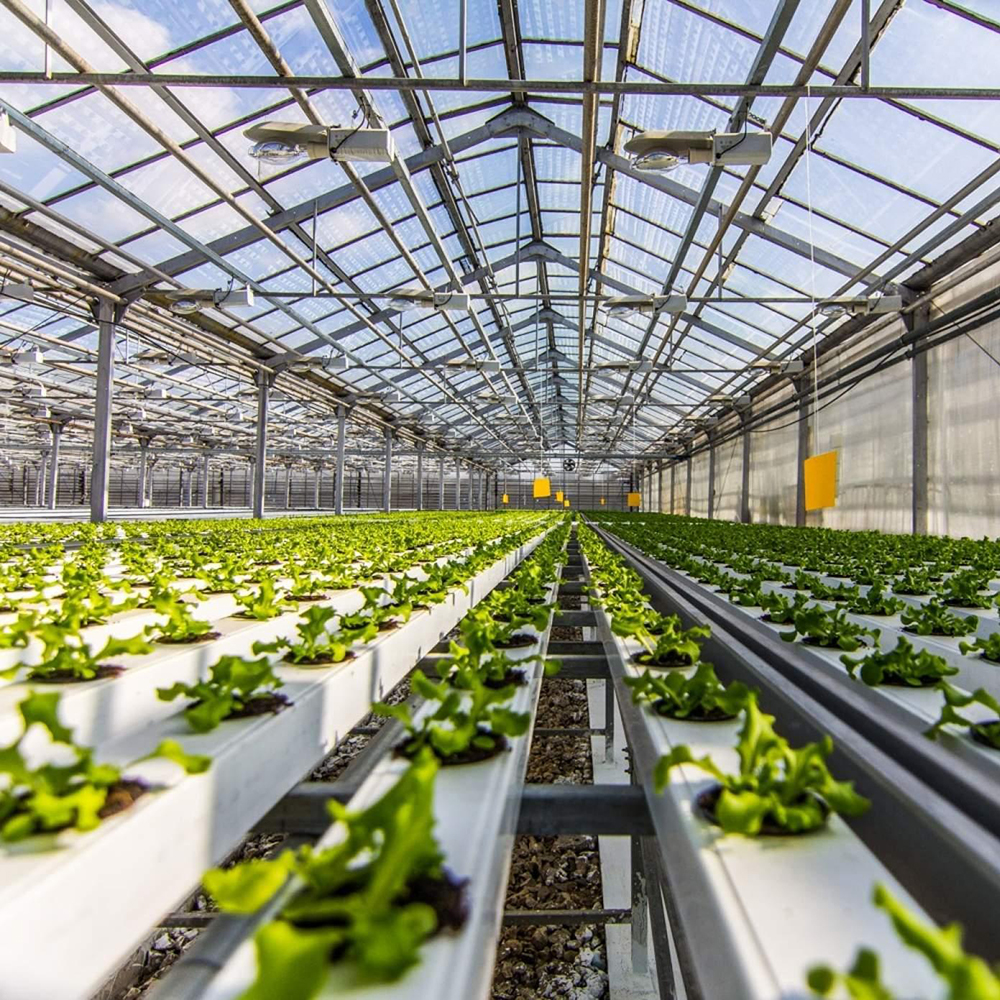
The dynamic changes in soil moisture and temperature in the root zone of greenhouse crops directly determine irrigation timing, fertigation ratios, and disease prevention efficiency. Common problems include:
Soil moisture lag leading to over-irrigation, causing root rot or nutrient leaching
Failure to capture soil temperature in time, affecting root vitality and accumulated temperature calculation
Disconnection between atmospheric and soil parameters, causing conflicts between ventilation and irrigation strategies
High-tech greenhouse projects typically require:
Soil moisture response time <5 seconds, supporting real-time PID closed-loop control
Multi-point deployment to achieve root zone gradient monitoring
Linkage with atmospheric temperature, humidity, and pressure to form a complete environmental regulation model
The NBL-S-THR soil temperature and humidity sensor adopts the electromagnetic pulse (TDR-inspired) principle to measure the apparent dielectric constant of soil, unaffected by fertilizer salt ions; the NBL-W-LBTH louvered box sensor provides three atmospheric parameters (temperature, humidity, pressure). The two work together to achieve soil-atmosphere coupled control, significantly improving water and fertilizer utilization by 15%–30%. In tropical climates such as Singapore vertical farm projects, this coupled monitoring is particularly important and can effectively address condensation water and mold risks in high-humidity environments. With this configuration, integrators can shorten crop growth cycles by 5%–10% and optimize resource allocation.
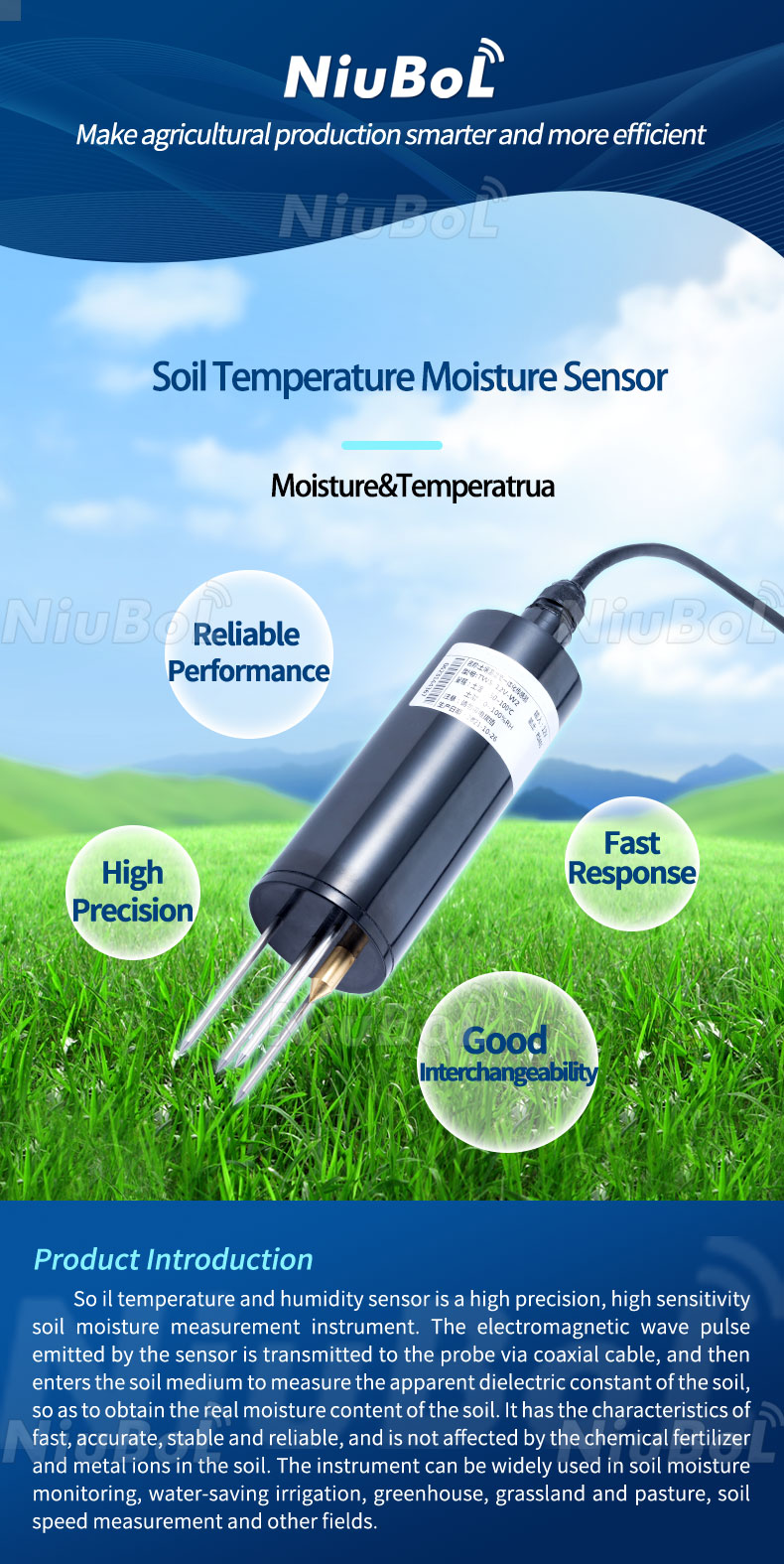
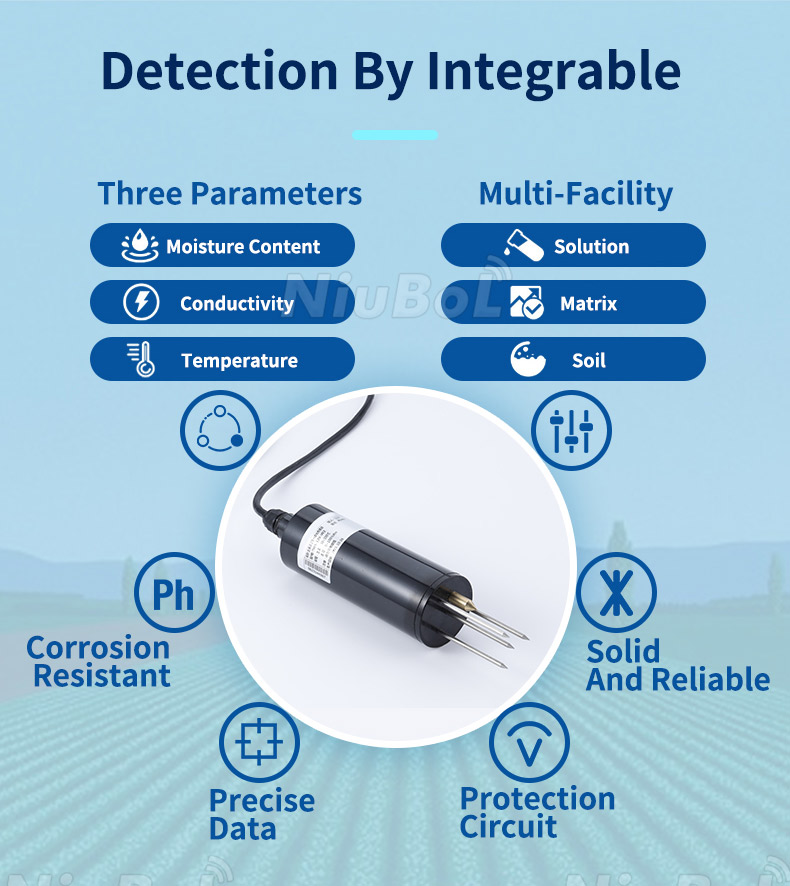
High-precision electromagnetic pulse probe design, integrated soil moisture and temperature measurement, IP68 protection, suitable for long-term burial.
| Parameter | Specification |
|---|---|
| Measurement Range | Soil moisture: 0–100% (VWC) Soil temperature: -50~+100℃ |
| Accuracy | Soil moisture: ±3% Soil temperature: ±0.5℃ |
| Resolution | Soil moisture: 0.1% Soil temperature: 0.1℃ |
| Power Supply | DC 12–24V |
| Output Type | RS485 (Modbus RTU, default) Current 4–20mA (RL≤250Ω) Voltage 0–5V (RL≥1KΩ) |
| Power Consumption | Approx. 0.3W |
| Operating Environment | -40℃~+80℃ |
| Protection Rating | IP68 |
Fully digital integration, high-strength protective structure, suitable for outdoor or greenhouse roof installation.
| Parameter | Specification |
|---|---|
| Temperature Measurement Range | -40~+80℃ |
| Temperature Accuracy | ±0.5℃ |
| Temperature Resolution | 0.1℃ |
| Humidity Measurement Range | 0~100% RH |
| Humidity Accuracy | ±5% RH |
| Humidity Resolution | 0.1% RH |
| Pressure Measurement Range | 10~1200 hPa |
| Pressure Accuracy | ±1.5 hPa |
| Pressure Resolution | 0.1 hPa |
| Power Supply | DC 12–24V |
| Output Type | RS485 (other types customizable) |
| Operating Environment | -40℃~+80℃, 0~100% RH |
| Sensor Model | Key Parameters | Applicable Scenarios | Integration Advantages |
|---|---|---|---|
| NBL-S-THR | Soil moisture ±3%, temperature ±0.5℃ | Root zone irrigation closed-loop control | IP68 protection, electromagnetic pulse response <5s |
| NBL-W-LBTH | Atmospheric temperature ±0.5℃, humidity ±5%RH, pressure ±1.5 hPa | Ventilation/humidification linkage | Louvered box design, RS485 multi-parameter output |
| Combination Solution | Soil + atmosphere coupling | Full greenhouse automation | Modbus RTU unified protocol, 0.3W low power consumption |
Through this comparison, integrators can quickly evaluate solution fit and ensure seamless deployment in high-humidity environments such as Singapore vertical farms.
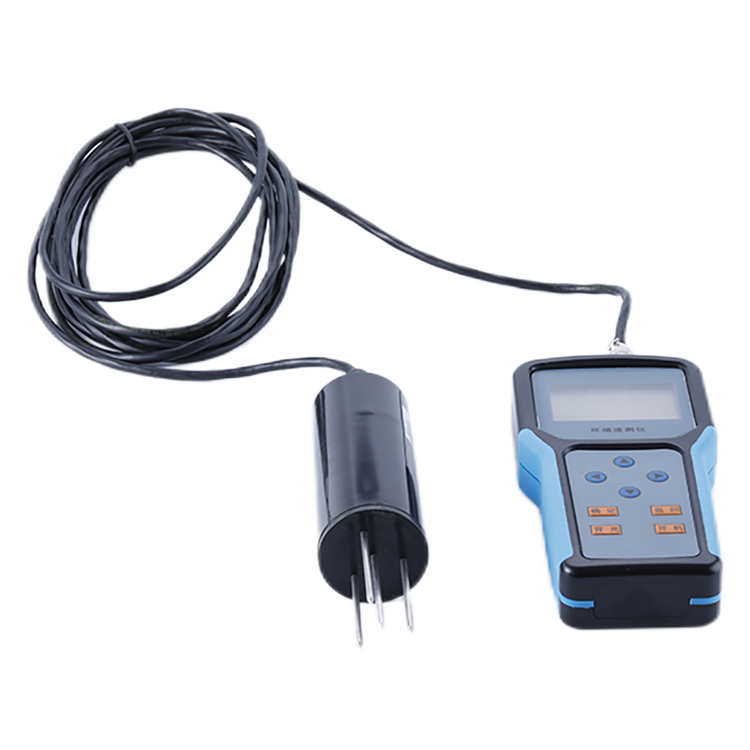
1. Precision Drip Irrigation and Fertigation: The soil temperature and humidity sensor provides real-time feedback on root zone moisture status, triggering solenoid valves or variable frequency pumps to achieve variable irrigation; fast response can reduce over-wet/drought time by more than 50%.
2. Greenhouse Climate Automatic Regulation: Atmospheric temperature, humidity, and pressure data are linked with soil parameters to control skylight opening, shading nets, fans, and humidifiers, avoiding condensation-related diseases.
3. Multi-layer Planting or Vertical Greenhouses: Multi-point deployment of sensors to monitor soil gradients at different heights, supporting zoned independent control and improving overall yield consistency.
4. High-value Crops (Strawberries, Leafy Vegetables, Medicinal Herbs): Combined with light and CO2 sensors to form a multi-parameter closed-loop system, optimizing growth models and disease early warning.
5. Singapore Vertical Farm Case: In tropical high-humidity environments, NiuBoL sensors are integrated into Hydroponic soilless cultivation systems, achieving water optimization with 40% annual water savings, and using pressure data to assist ventilation prediction, reducing mold risk.
NiuBoL sensor RS485 interface is compatible with mainstream PLCs, edge gateways, and agricultural IoT platforms, with short integration cycles and high debugging efficiency. Through these scenarios, integrators can shorten project ROI cycles to 6–12 months.
1. Monitoring Objective: Focus on soil moisture closed-loop control → prioritize NBL-S-THR; need complete climate parameters → pair with NBL-W-LBTH.
2. Response Speed: Electromagnetic pulse technology response <5 seconds, suitable for PID or fuzzy control systems.
3. Interface Compatibility: RS485 Modbus RTU as mainstream; analog output required select 4–20mA/0–5V.
4. Protection and Durability: IP68 soil probe + louvered box structure, suitable for high-humidity/acidic greenhouse environments.
5. Power Supply and Consumption: 0.3W low power consumption, suitable for solar or centralized power supply.
6. Deployment Density: Recommend 3–5 soil sensors + 1 set of atmospheric sensors per 1000㎡.
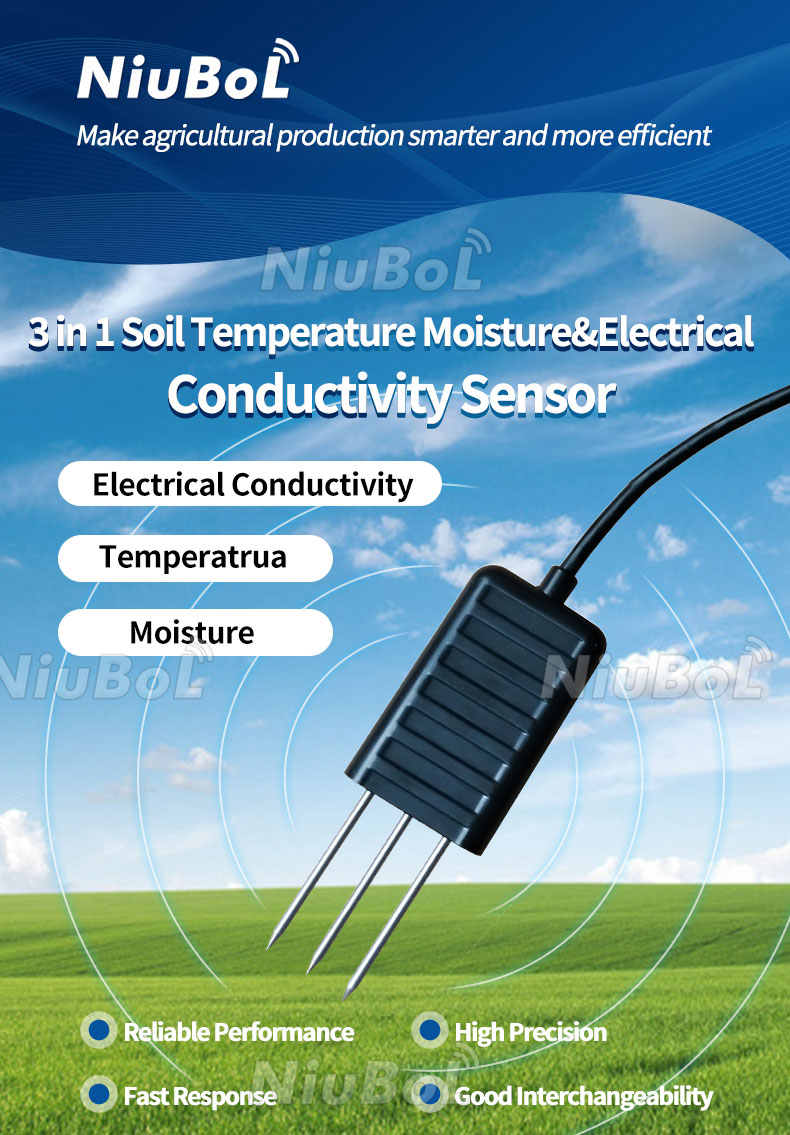
Installation Location: Soil sensors buried in the main root distribution layer (15–30cm), avoiding directly below drippers; atmospheric sensors placed in the center of the greenhouse or near vents.
Soil Calibration: Different substrates (soil, coconut coir, rockwool) have large dielectric differences; on-site calibration is recommended at the beginning of the project.
Communication Wiring: RS485 uses shielded twisted pair, bus length <1200m, add terminating resistors to prevent signal reflection.
Closed-loop Control Logic: Set soil moisture thresholds (e.g. 60%–80% VWC) + temperature upper and lower limits, linking irrigation and ventilation actuators. For example, in PID algorithm set P=0.5, I=0.1, D=0.2, combined with atmospheric humidity feedback to avoid system oscillation.
Data Fusion: Implement soil-atmosphere parameter coupling model at the platform level, supporting ETc calculation (FAO-56) and crop water requirement early warning.
Maintenance Strategy: Check probe surface scaling every season, perform on-site calibration every 1–2 years.
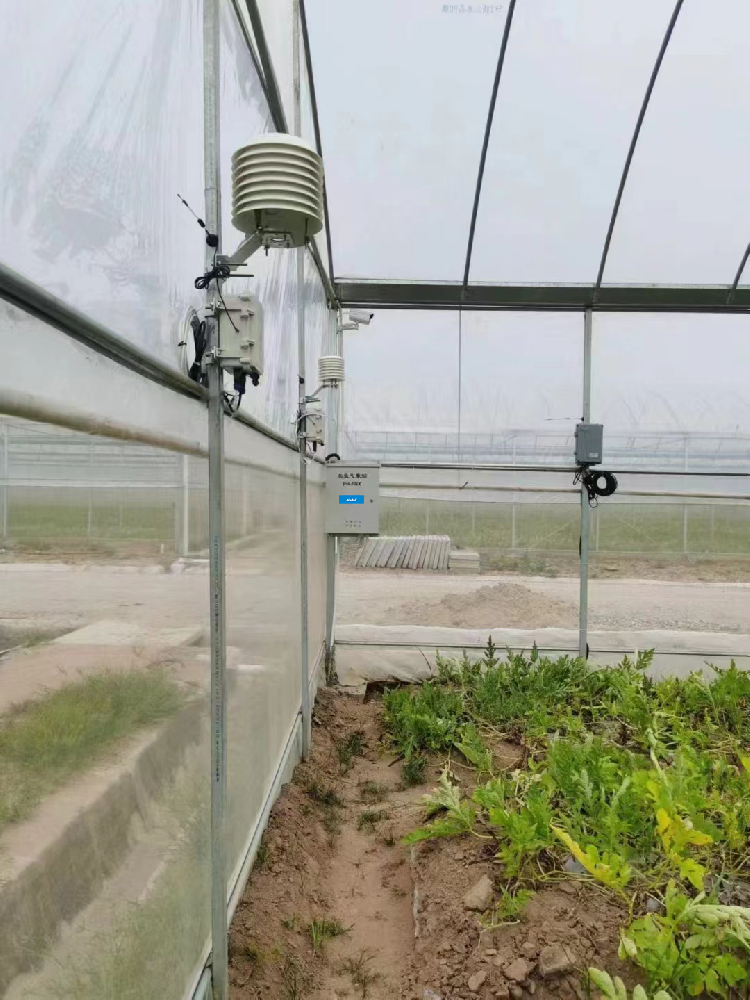
NiuBoL supports:
OEM private labeling (LOGO, housing customization, packaging)
Probe length/layer customization (soil sensor can add EC/salinity)
Interface expansion (LoRa, NB-IoT, 4–20mA multi-channel)
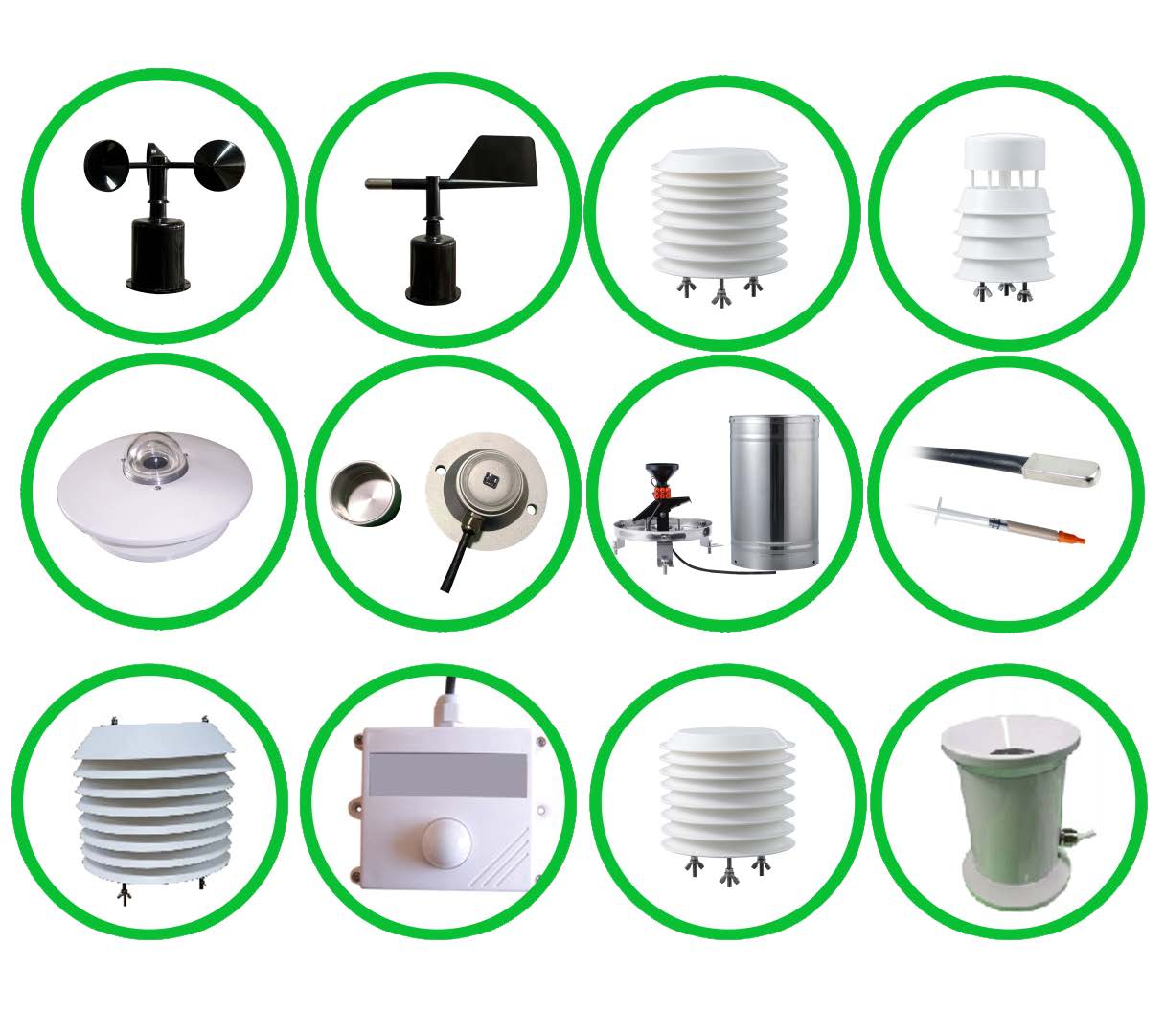
Integrated greenhouse environmental station (soil + atmosphere + light + CO2)
Bulk supply (minimum order 50 units, better discounts for 500+ units)
Fast delivery (standard products within 4 weeks, customized products 6–8 weeks)
Factory testing (temperature and humidity cycling, immersion test, EMC test)
East China Intelligent Leafy Vegetable Greenhouse Cluster (5000㎡ × 8 buildings): Deployed 40 sets of NBL-S-THR + 8 sets of NBL-W-LBTH, connected to local IoT platform, achieving automatic drip irrigation and skylight control, with annual water savings of about 32%, leafy vegetable yield increase of 18%, and disease loss reduction of about 80,000 yuan/year.
Northwest High-end Strawberry Greenhouse Project: Integrated NiuBoL sensors, soil moisture response speed <4 seconds, significantly reduced gray mold incidence, yield per mu increased by 15%, overall energy consumption decreased by 22%.
Q1: What is the impact of soil temperature and humidity sensor response speed on closed-loop control?
A: Response time <5 seconds can capture moisture changes in real time, avoiding lag-induced over-irrigation or water shortage; NBL-S-THR electromagnetic pulse technology meets high-precision PID control requirements.
Q2: Is the soil sensor affected by fertilizer salt ions?
A: Using electromagnetic pulse principle, it is not affected by fertilizer metal ions and is suitable for fertigation systems.
Q3: How to integrate soil and atmospheric sensors into an existing greenhouse control system?
A: RS485 Modbus RTU protocol is compatible with mainstream PLCs and platforms, providing complete register tables and SDK.
Q4: What factors affect the bulk purchase price of Soil temperature and humidity sensor?
A: Quantity, output type (RS485 vs. analog), whether probe length is customized; obvious discounts start from 100 units.
Q5: How is the long-term stability of sensors in high-humidity greenhouse environments?
A: IP68 protection + louvered box structure, full temperature range operation from -40℃~+80℃, verified in high-humidity projects for more than 5 years without failure.
Q6: How stable are greenhouse sensors in high-salt substrates (such as rockwool)?
A: Electromagnetic pulse design is not interfered by salt ions, IP68 protection supports long-term immersion, and accuracy >95% has been verified in rockwool cultivation projects.
In high-tech greenhouse automation projects, the fast response and stable integration of Soil temperature and humidity sensor and atmospheric temperature, humidity, and pressure sensors directly determine closed-loop control accuracy, resource utilization efficiency, and crop economic benefits. Assuming a 1000㎡ greenhouse project, deploying 10 sets of sensor combinations (cost about 2000–5000 USD at bulk price), precise control can save water and fertilizer costs by 20%–30%, shortening ROI cycle to 6–12 months. The NiuBoL NBL-S-THR and NBL-W-LBTH combination solution, with industrial-grade reliability, flexible interfaces, and high cost-performance, has become a reliable choice for agricultural system integrators.
If you are advancing smart greenhouse, precision agriculture IoT, or high-value crop planting projects, welcome to contact the NiuBoL engineering team. We can provide substrate calibration guidance, closed-loop control solution discussions, and bulk quotes tailored to project scale. Book an online demonstration to jointly build an efficient and sustainable modern greenhouse control system.
 NBL-W-PARS-RAR-SENSOR-User-Manual.pdf
NBL-S-THR-Soil-temperature-and-moisture-sensors.pdf
NBL-S-TMC-Soil-temperature-and-moisture-ec-sensor.pdf
NBL-W-LBTH-Atmosphere-temperature-humidity-and-pressure-sensor.pdf
Related recommendations
Sensors & Weather Stations Catalog
Agriculture Sensors and Weather Stations Catalog-NiuBoL.pdf
Weather Stations Catalog-NiuBoL.pdf
Agriculture Sensors Catalog-NiuBoL.pdf
Water Quality Sensor Catalog-NiuBoL.pdf
Related products
 Combined air temperature and relative humidity sensor
 TDR Soil Moisture & Temperature Sensor for irrigation| RS485 |4-20mA| NBL-S-THR
 Soil pH sensor RS485 soil Testing instrument soil ph meter for agriculture |NBL-S-PH
 Wind Speed sensor Output Modbus/RS485/Analog/0-5V/4-20mA
 Tipping bucket rain gauge for weather monitoring auto rainfall sensor RS485/Outdoor/stainless steel
 Pyranometer Solar Radiation Sensor 4-20mA/RS485

Screenshot, WhatsApp to identify the QR code
WhatsApp number:+8615367865107
(Click on WhatsApp to copy and add friends)

