





— Blogs —
—Products—
 Consumer hotline +8618073152920
WhatsApp:+8615367865107
Address:Room 102, District D, Houhu Industrial Park, Yuelu District, Changsha City, Hunan Province, China
Product knowledge
Time:2025-01-22 14:36:55 Popularity:1462
A PV weather station power supply can use a suitable plant circuit or a separately designed solar supply. PV identifies the photovoltaic monitoring application; solar-powered identifies the electrical supply arrangement. A solar-powered station can also monitor a farm, road or research site with no PV generation assessment. Specify the measurement task and the supply separately.
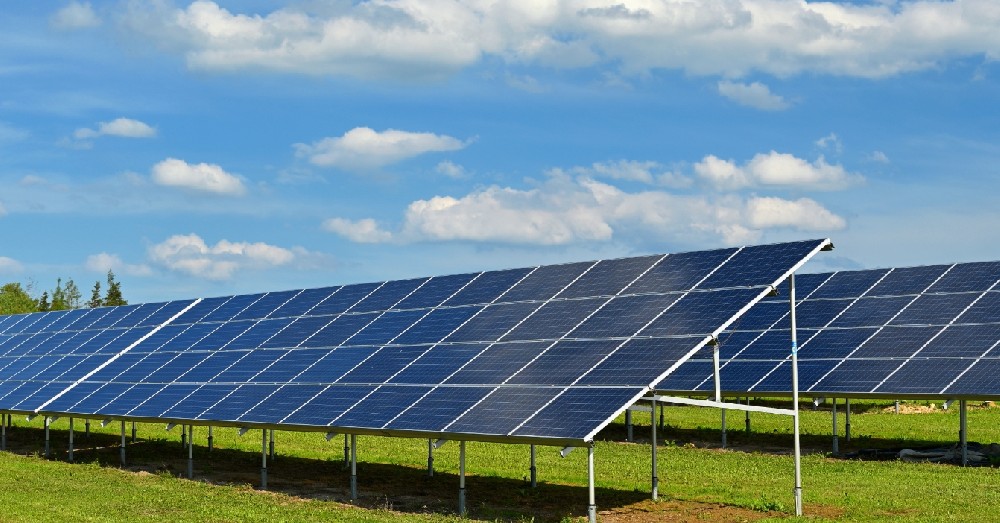
At a PV power plant, the station's purpose is to observe conditions relevant to performance analysis and operation. Irradiance and temperature data can help engineers interpret electrical production when the measurements and time periods are appropriate. The station itself does not generate the plant's electricity, improve module conversion efficiency or include a forecasting service merely because its name contains photovoltaic.
For a standalone solar-powered weather station, a charging panel, suitable charging equipment and energy storage supply the monitoring load. That architecture addresses electrical availability. It does not establish which variables are measured or whether the package meets a PV plant's monitoring specification.
| Proposal description | What it identifies | What still needs specifying |
|---|---|---|
| PV weather station | The photovoltaic monitoring application | Measurement channels, sensor configuration, exposure, data interface and supply |
| Solar-powered weather station | A solar electrical supply arrangement | Monitoring purpose, loads, storage design and site energy conditions |
| PV weather station with solar supply | Both the application and the selected supply concept | The detailed measurement and electrical designs, each verified separately |
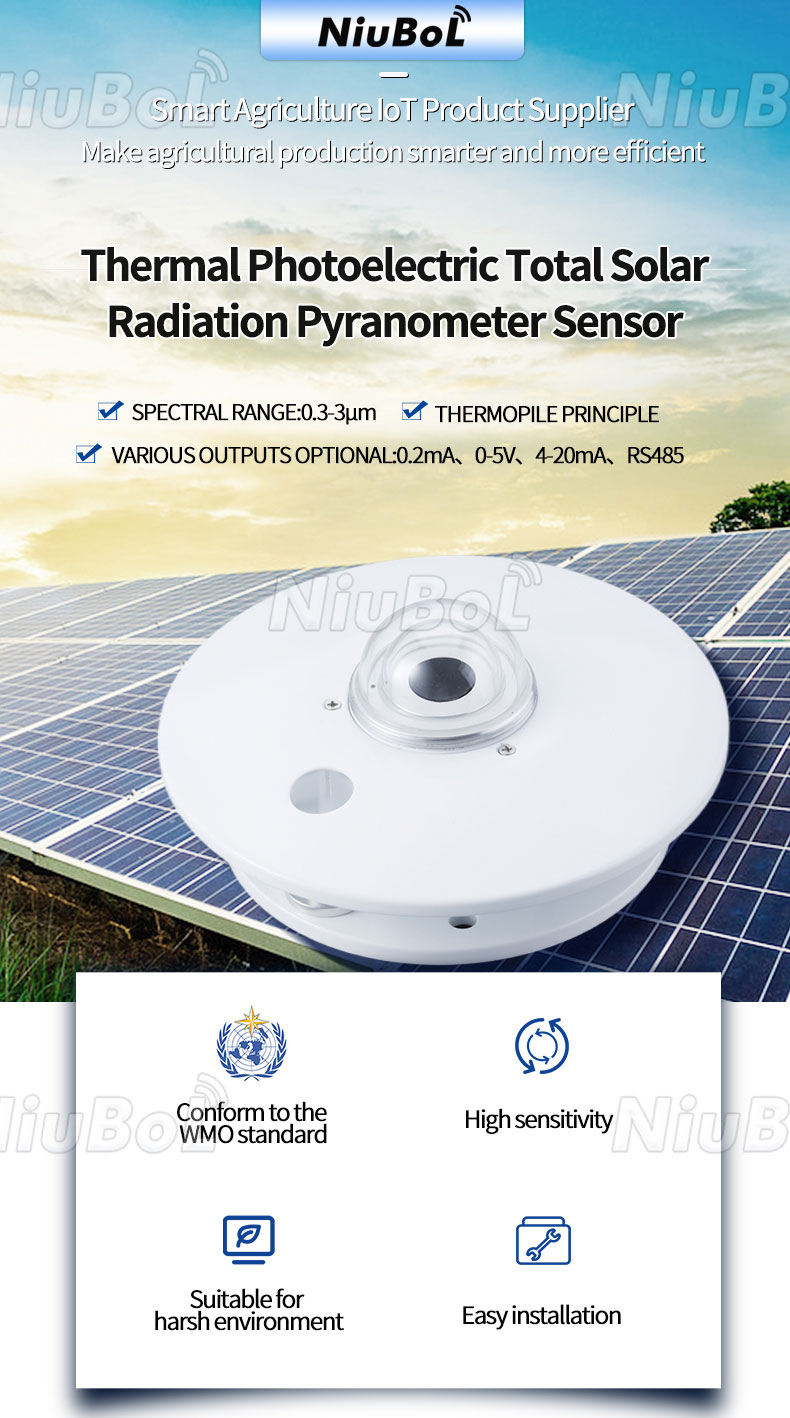
The NiuBoL NBL-W-HPRS pyranometer measures solar irradiance. Its sensing output is used by acquisition equipment; it is not intended to power the logger. W/m2 describes irradiance on the measurement plane, while watts describe electrical power consumed or supplied by equipment.
| NBL-W-HPRS item | Specification | Meaning for the station |
|---|---|---|
| Measurement range | 0-2000 W/m2 | Irradiance measurement, not charging capacity |
| Spectral range | 0.3-3 micrometers | Radiation response of this instrument |
| Output options | Millivolt, voltage, 4-20 mA and optional RS485 versions | Select the receiver interface and conversion for the supplied version |
| Powered versions | DC 5 V, DC 12 V or DC 24 V options | Match the actual transmitter version; do not assume one common supply |
| Response time | 35 seconds or less to 99% | A physical response specification, not the reporting interval |
The monitoring design must identify the required measurement plane. A sensor used for horizontal irradiance and one used for plane-of-array irradiance have different installation objectives. Neither orientation should be chosen simply because it matches the small charging panel's tilt.
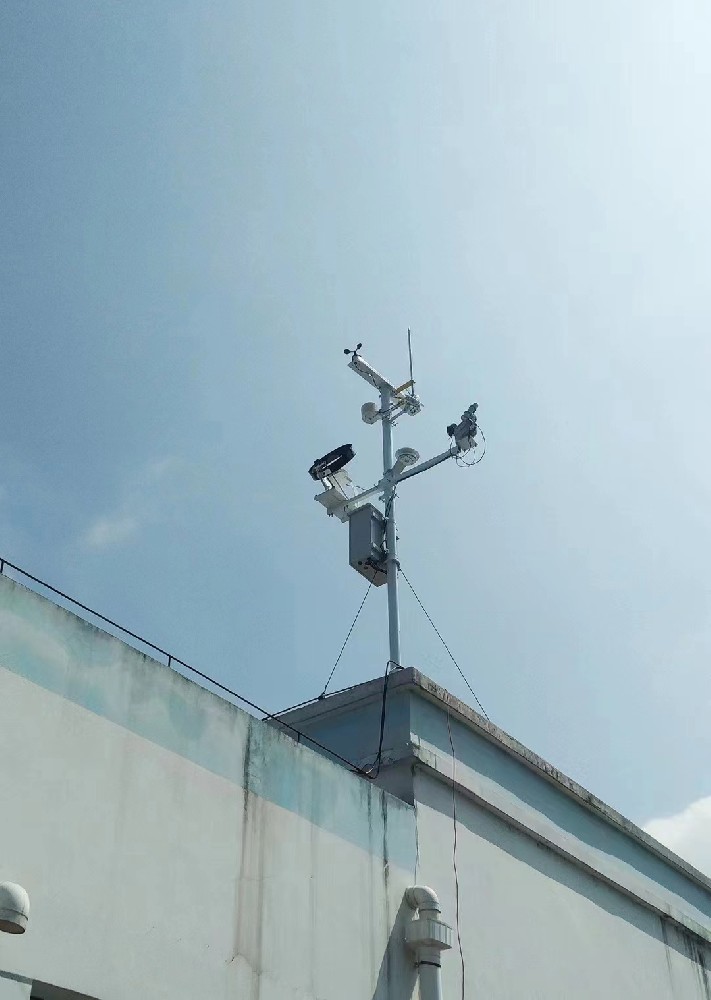
Where a suitable plant auxiliary supply is available, review its voltage, protection, cable route and operating availability. Do not assume the station remains powered whenever the PV modules receive sunlight. The plant circuit may have its own shutdown or maintenance conditions that need to be included in the monitoring design.
A standalone supply may suit a remote measurement point where cabling is impractical. Its design needs the actual continuous and intermittent loads, local solar conditions, battery characteristics and required reserve. A panel photograph or a battery capacity alone does not establish unattended operation through a specified low-sun period.
Neither architecture is universally preferable. Compare the installed supply, maintenance access and consequences of interruption at the actual measuring point. If a quotation offers solar supply as an option, obtain its equipment and design scope rather than assuming it is included with the weather sensors.
The TG462 / TG462S logger supports compatible field acquisition and networking functions. Its DC 5-35 V input range does not make every connected sensor suitable for that entire range. The logger itself is IP30 and needs suitable outdoor protection.
RS485 Modbus RTU connects compatible sensor channels to acquisition equipment. Remote networking may use the selected gateway configuration and receiving platform. Neither a solar panel nor an available plant power circuit establishes a complete SCADA driver, historical archive or forecast model. Confirm the required destination, protocol and data format separately.
Commission the measurements and electrical supply as separate parts of the same installation. Confirm the sensor identities, units and timestamps at the receiver. Then check supply behavior under the configured load and the agreed outage conditions. A live dashboard proves neither a calibration class nor a particular battery autonomy.
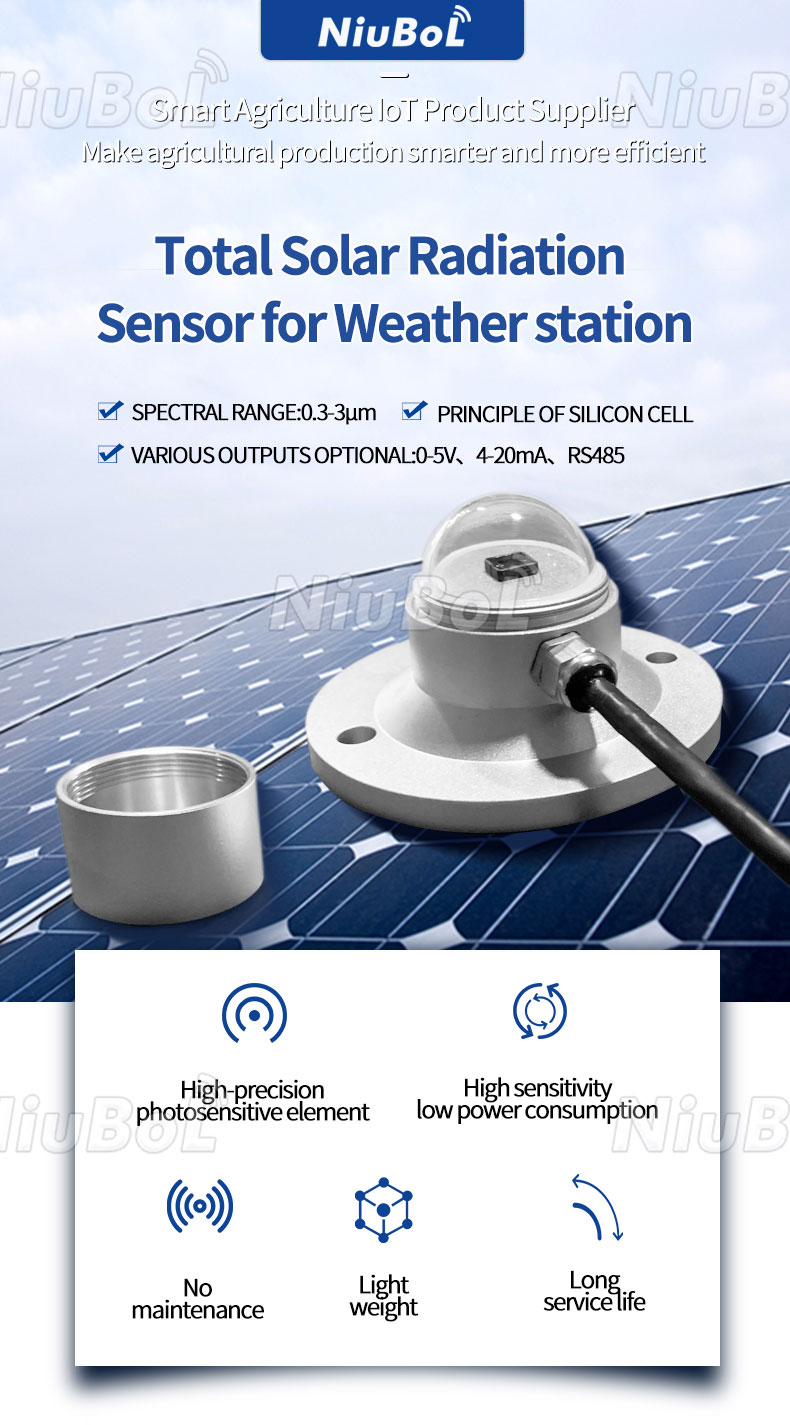
A configurable solar-radiation instrument such as the NBL-W-SRS also needs its ordered output and installation defined. The existence of several radiation instruments on a catalogue page does not mean all of them are included or interchangeable. Keep the actual bill of equipment aligned with the monitoring requirement.
Retain sensor maintenance, radiation-surface inspection and electrical-supply inspection as identifiable work. Solar power does not eliminate those tasks. Likewise, weather observations may support PV analysis, but claims about recovered generation, cleaning savings or return on investment need separate project evidence.
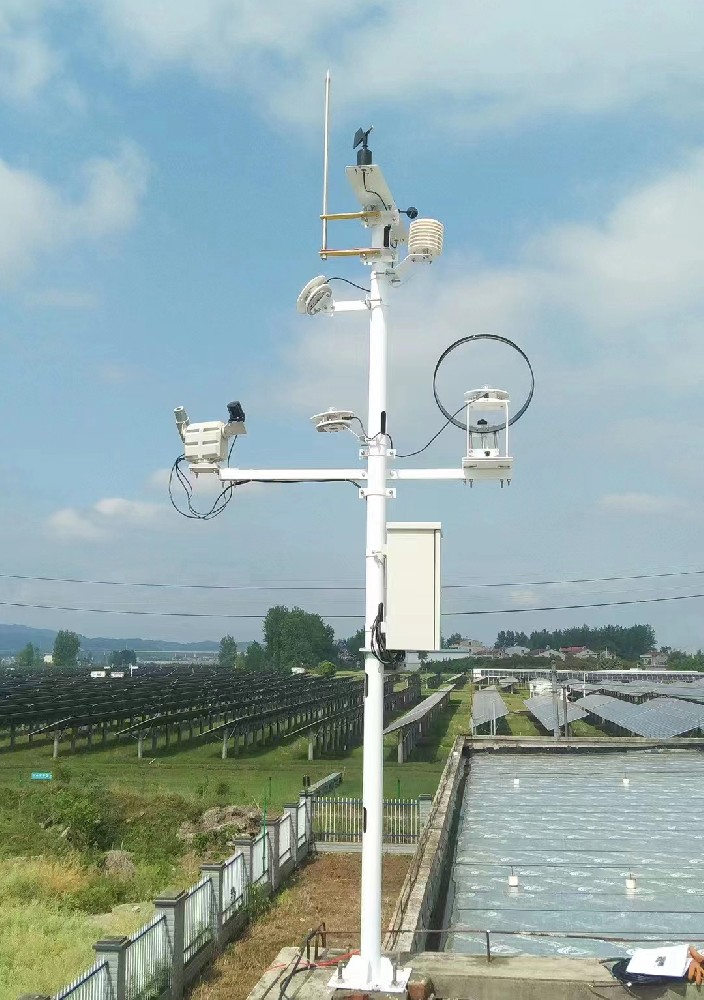
No. A suitable plant supply can be used when its electrical and availability conditions meet the monitoring design. PV describes the application, not a compulsory power architecture.
Not as a substitute for the specified irradiance instrument. Charging output depends on the panel and electrical circuit; it does not automatically provide the required irradiance measurement or calibration evidence.
That depends on usable battery storage, the configured loads and operating conditions. Define the required reserve and obtain a design calculation for the supplied system. A panel rating or nominal battery capacity alone does not establish the duration.
No. It provides a communication path. Forecasting requires a separately defined method, inputs and service; a weather sensor package or logger connection alone does not establish it.
Provide the plant monitoring requirement, required radiation planes, temperature channels, existing platform and available auxiliary supply. If standalone power is needed, include the site location and reserve requirement. NiuBoL can review the measurement and supply scopes separately.
Define the PV weather station power supply independently of the monitoring application. Establish what must be measured, then select a suitable supply architecture and acquisition path. That prevents a solar-supply package from being mistaken for a complete PV monitoring solution.
 NBL-W-SRS-Solar-radiation-sensor-instruction-manual-V4.0.pdf
NBL-W-HPRS-Solar-Radiation-Sensor-Instruction-Manual-V3.0.pdf
Related recommendations
Sensors & Weather Stations Catalog
 Agriculture Sensors and Weather Stations Catalog-NiuBoL.pdf
Weather Stations Catalog-NiuBoL.pdf
Agriculture Sensors Catalog-NiuBoL.pdf
Water Quality Sensor Catalog-NiuBoL.pdf
Related products
 Combined air temperature and relative humidity sensor
 TDR Soil Moisture & Temperature Sensor for irrigation| RS485 |4-20mA| NBL-S-THR
 Soil pH sensor RS485 soil Testing instrument soil ph meter for agriculture |NBL-S-PH
 Wind Speed sensor Output Modbus/RS485/Analog/0-5V/4-20mA
 Tipping bucket rain gauge for weather monitoring auto rainfall sensor RS485/Outdoor/stainless steel
 Pyranometer Solar Radiation Sensor 4-20mA/RS485


Screenshot, WhatsApp to identify the QR code
WhatsApp number:+8615367865107
(Click on WhatsApp to copy and add friends)

