





— Blogs —
—Products—
 Consumer hotline +8618073152920
WhatsApp:+8615367865107
Address:Room 102, District D, Houhu Industrial Park, Yuelu District, Changsha City, Hunan Province, China
Product knowledge
Time:2025-11-05 11:24:15 Popularity:1001
Professional vs home weather stations should be compared against the project requirement, not one claimed accuracy percentage. A compact consumer kit may be adequate for a limited local observation task. A project station needs identified measurement performance, usable records, suitable placement and support for its intended integration. The label alone does not prove that either configuration is suitable.
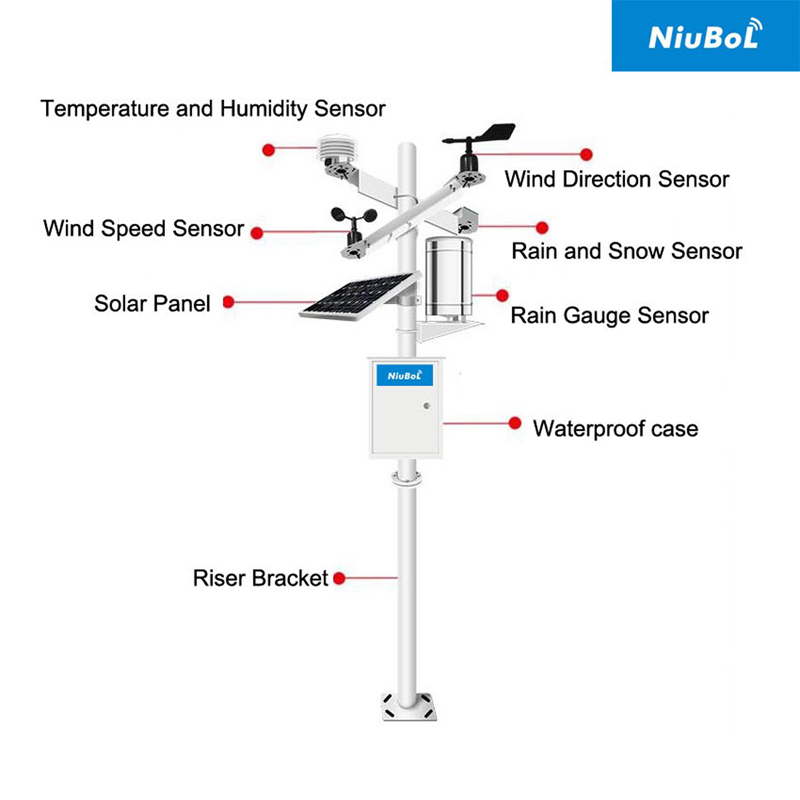
A local display for general weather awareness and a dataset used in a contracted performance assessment have different consequences if records are missing or incorrect. Specify which observations are essential, how they are used and what evidence the customer must retain. This determines the comparison more effectively than dividing all stations into two quality classes.
Do not use an ordinary weather package as an assumed protective system for a turbine, crane or solar tracker. Such functions need their own equipment requirements and engineered response. Neither a professional label nor remote access establishes safety suitability.
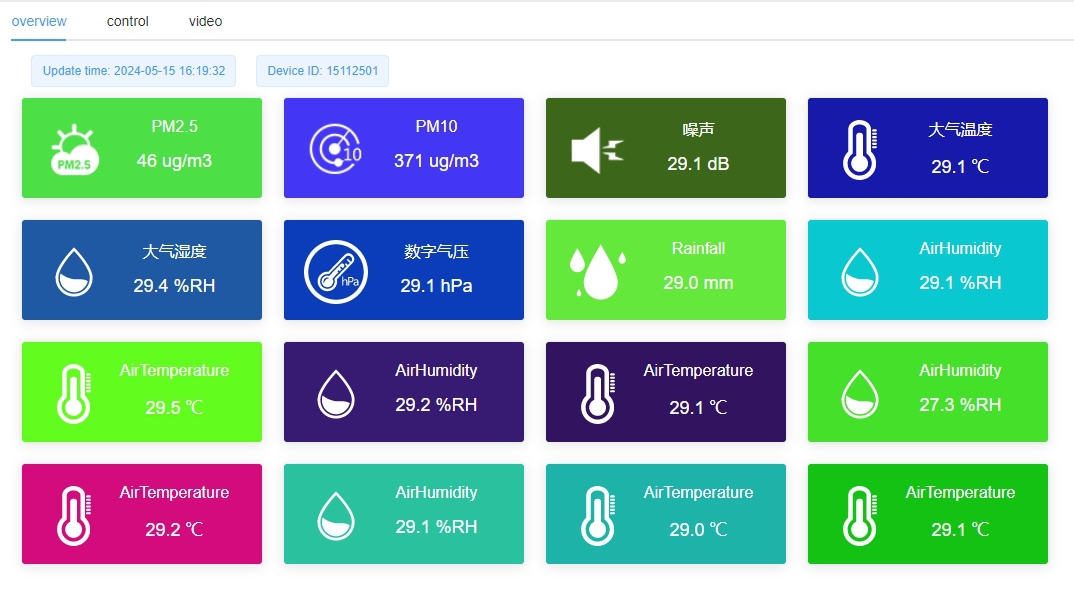
| Project requirement | What to examine | Reason to reject or clarify an offer |
|---|---|---|
| Measurement performance | Named sensor, units, error limits and relevant conditions | One percentage used for unrelated quantities |
| Useful history | Required records, retrieval and service access | Only a live screen when historical evidence is essential |
| Installation | Exposure, mounting and service access for each instrument | Required observations cannot share the proposed position |
| Integration | Output circuit or protocol plus receiving equipment | An interface name offered without a usable connection |
| Serviceability | Replacement scope, settings and parts availability | Unclear consequences of a failed channel |
| Commercial scope | Included equipment, services and ongoing costs | A price comparison between incomplete and complete packages |
Evaluate the candidate equipment against these requirements whether it is sold for domestic, educational or engineering use. A small kit should not be dismissed without checking its actual capability; a more expensive system should not pass without the same review.
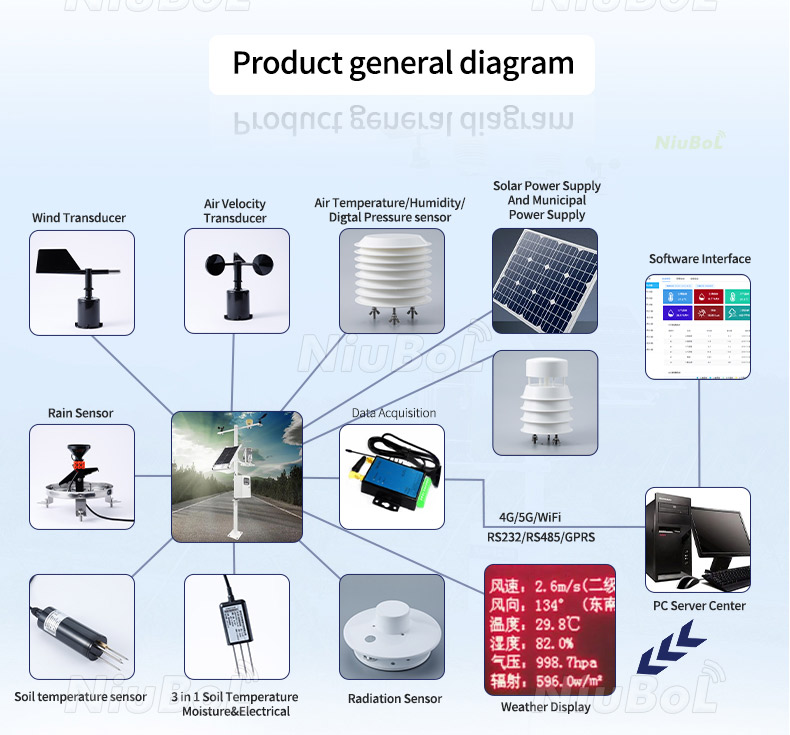
A device that connects to an app may not expose the records needed by an existing PLC, RTU or customer database. Conversely, an RS485 instrument may be straightforward to acquire locally without providing any internet service. Identify the complete route from sensor output to the required destination.
NiuBoL's NBL-PH-1 is an example logger option with local FLASH and a saving interval of 1-240 minutes. Its selected inputs and configured 4G connection need to match the project. Specify storage, retrieval and network service rather than infer a universal app, export format or API.
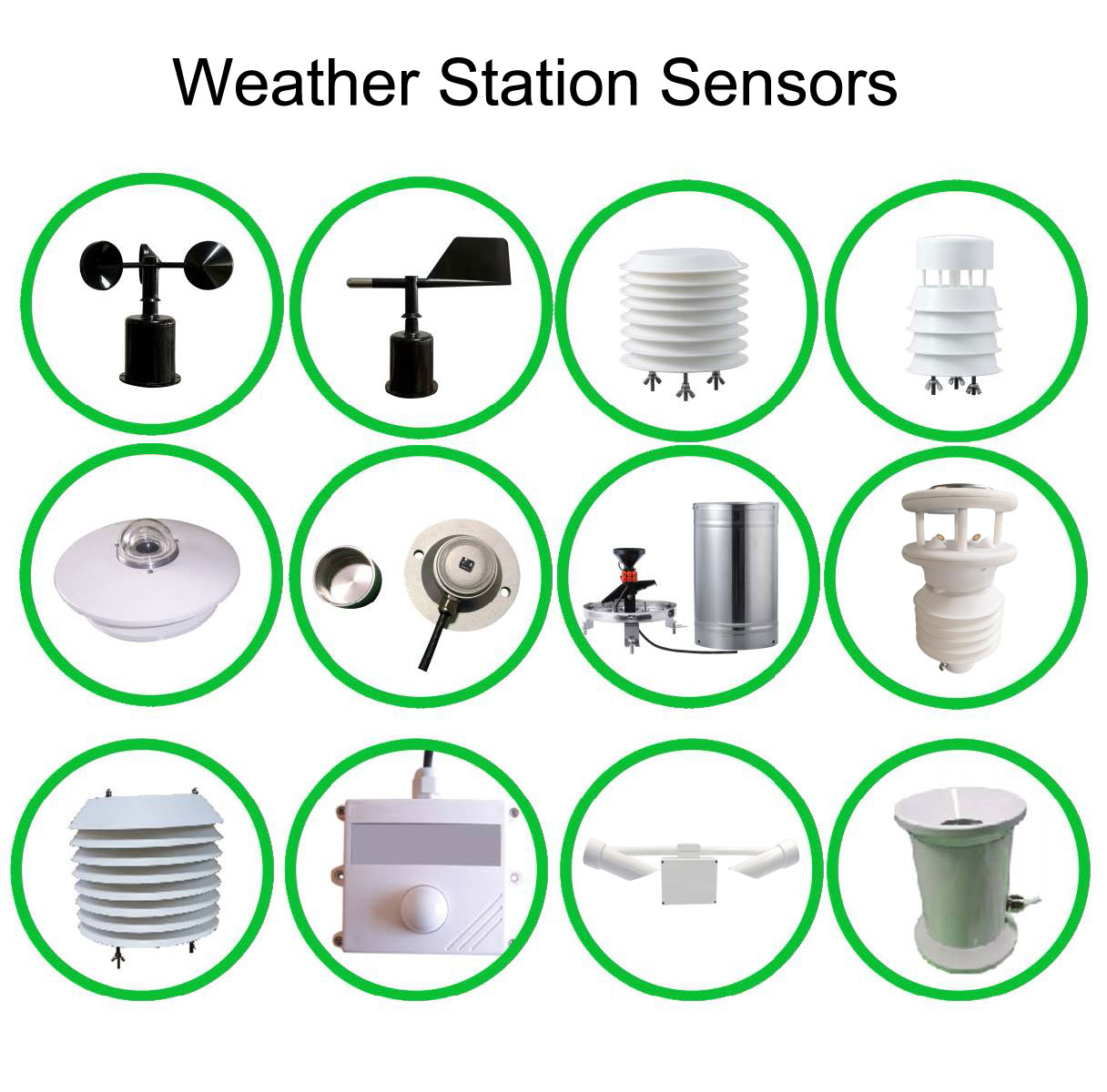
Air temperature error, humidity error, rainfall increment and wind-direction error describe different things. A statement that a complete station is accurate to +/-0.1% cannot replace channel specifications. Resolution also does not establish accuracy merely because the display has more digits.
| NBL-W-LBTH example | Measurement range | Stated accuracy |
|---|---|---|
| Air temperature | -40 to 80 C | +/-0.5 C |
| Relative humidity | 0-100% RH | +/-5% RH |
| Atmospheric pressure | 10-1200 hPa | +/-1.5 hPa |
The NBL-W-LBTH has DC 12-24 V supply and selected RS485 Modbus RTU or 4-20 mA outputs. Compare that specific configuration with the required observation. Do not apply the values to every NiuBoL station or assume they satisfy a more demanding tender.
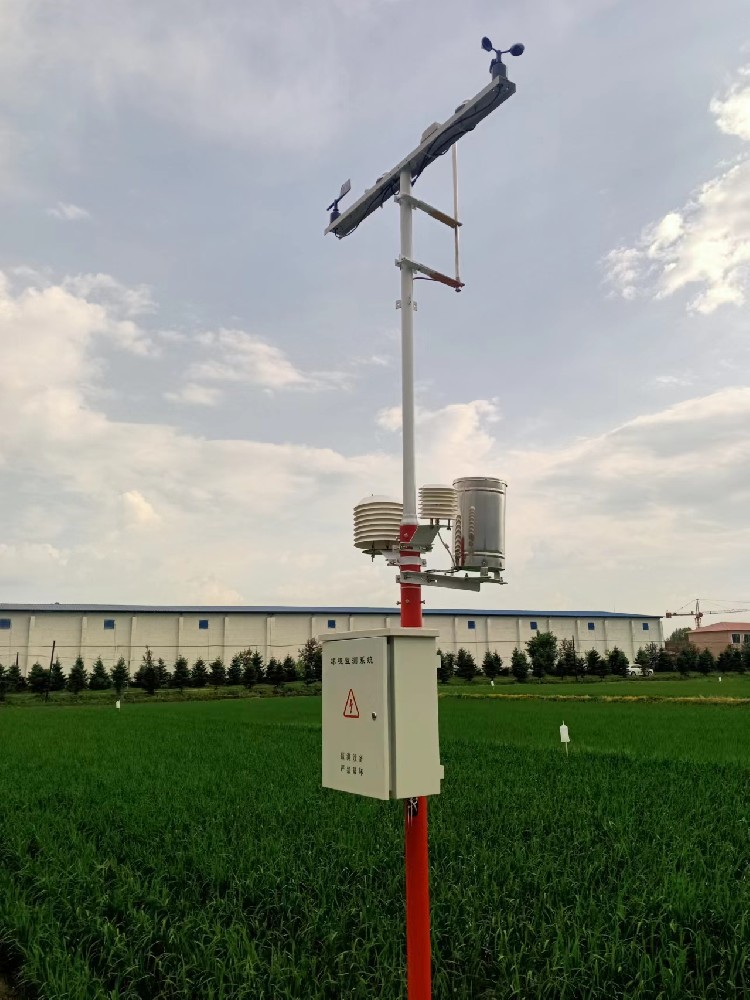
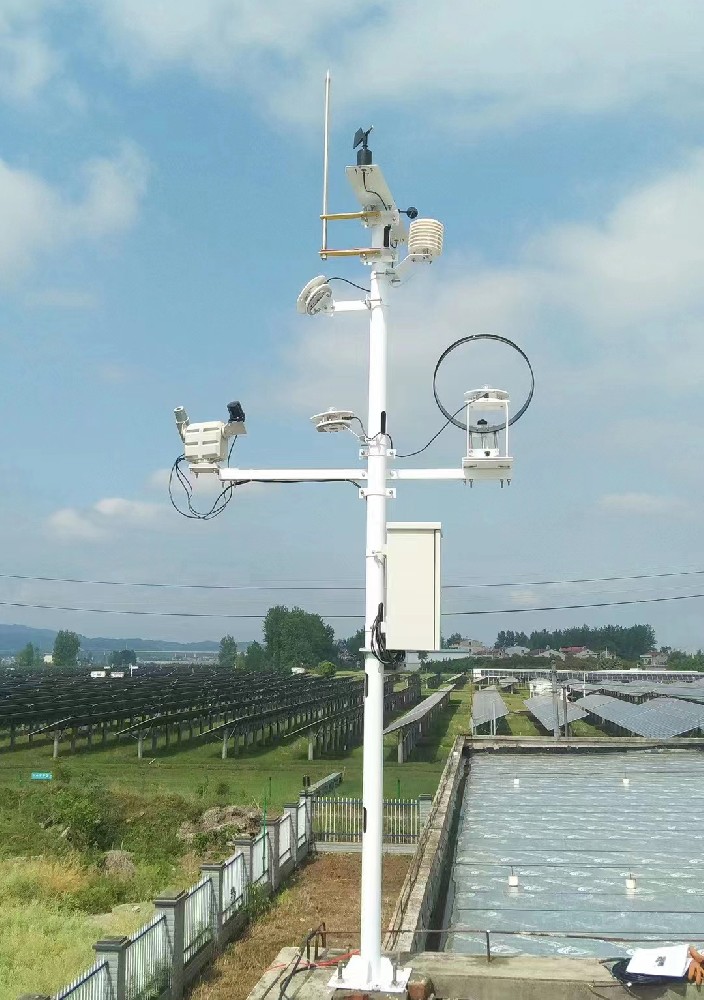
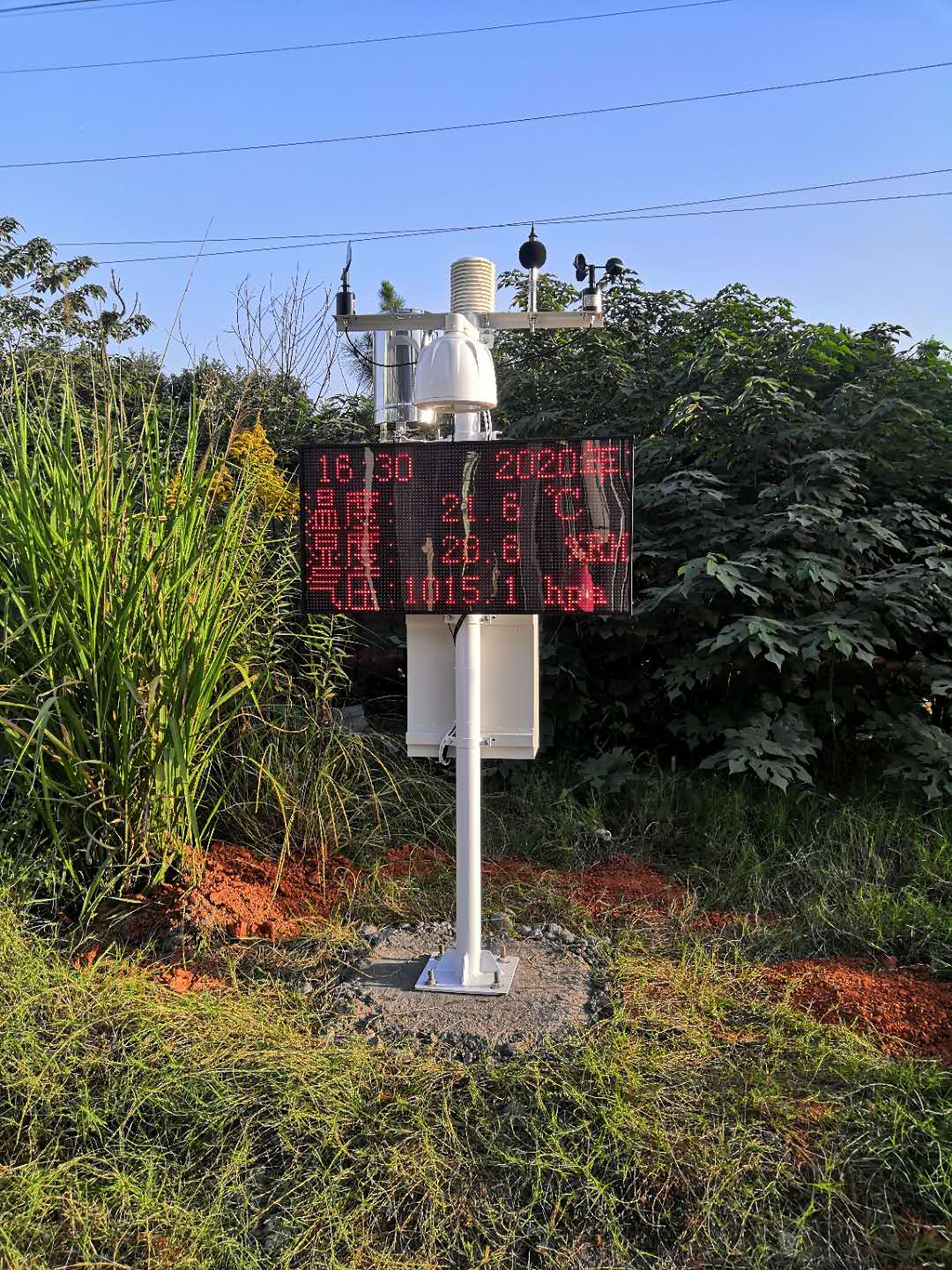
A compact head is useful where its measurements can share one position. A modular system can separate a rain collector, wind instruments and radiation measurement, at the cost of additional mounting and cabling. A single convenient roof position may not represent the field or reference exposure the customer needs.
Specify the task before choosing the mast. A farm observation, a PV radiation comparison and a long-term reference dataset may need different layouts. Do not treat a larger enclosure or taller support as proof of better measurements.
Review the temperature and environmental limits of the sensor, logger, supply and connectors. Use IP65 for separate NBL-W-SS and NBL-W-DS wind sensors. That does not establish IP67 for the complete station, immunity to icing or a corrosion qualification.
Ask what staff must clean, inspect or replace. A sealed instrument can still need exposure checks, and an ultrasonic wind head still needs inspection even without cups or a vane. Establish service intervals from instrument requirements and field checks, not a universal maintenance-free claim.
Include the parts needed to meet the requirement: instruments, receiver, communication, supply, supports and any required data service. Identify the cost of installation access and replacement work. A lower purchase price may be appropriate for a limited task; a more serviceable arrangement may justify a different cost for a demanding installation.
No fixed one- or two-year payback follows from the station category. Quantified benefits require the customer's operating baseline and actual outcomes. Ask NiuBoL for an itemized configuration and compare it against the same observation and service scope.
No. Assess the exact task and equipment. A limited local observation may be acceptable, while contracted monitoring or control integration can impose requirements the kit does not meet.
No. Require channel-level specifications and any evidence the research program needs. A general marketing category is not an uncertainty statement or classification.
Only if it meets the agreed record, retrieval and access requirements. Check what happens when service or connectivity is unavailable and what history can actually be obtained.
Not necessarily; each must suit its installed exposure. Evaluate the complete assembly, including joints and supply equipment, rather than transfer one sensor's rating to every component.
Use the same measurement, installation and record requirements, then compare included components and services line by line. Clarify missing functions before judging the totals.
The practical professional vs home weather stations decision is whether the identified equipment meets the required task. Compare measurement limits, exposure, records and serviceability before labels or parameter counts. A clear requirement supports a defensible purchase without exaggerated precision or financial promises.
Prev:What Is an Automated Weather Station (AWS)? How Does It Work?
Next:IoT Weather Station Data Sharing: One Site, Multiple Applications
Related recommendations
Sensors & Weather Stations Catalog
 Agriculture Sensors and Weather Stations Catalog-NiuBoL.pdf
Weather Stations Catalog-NiuBoL.pdf
Agriculture Sensors Catalog-NiuBoL.pdf
Water Quality Sensor Catalog-NiuBoL.pdf
Related products
 Combined air temperature and relative humidity sensor
 TDR Soil Moisture & Temperature Sensor for irrigation| RS485 |4-20mA| NBL-S-THR
 Soil pH sensor RS485 soil Testing instrument soil ph meter for agriculture |NBL-S-PH
 Wind Speed sensor Output Modbus/RS485/Analog/0-5V/4-20mA
 Tipping bucket rain gauge for weather monitoring auto rainfall sensor RS485/Outdoor/stainless steel
 Pyranometer Solar Radiation Sensor 4-20mA/RS485


Screenshot, WhatsApp to identify the QR code
WhatsApp number:+8615367865107
(Click on WhatsApp to copy and add friends)

