





— Blogs —
—Products—
 Consumer hotline +8618073152920
WhatsApp:+8615367865107
Address:Room 102, District D, Houhu Industrial Park, Yuelu District, Changsha City, Hunan Province, China
Product knowledge
Time:2024-12-22 21:52:34 Popularity:3884
Rooftop weather station siting starts with the intended observation: conditions at the roof, exposure relevant to a rooftop system, or weather representative of a wider area. A roof can provide access and mounting space, but parapets, warm surfaces, exhausts and nearby equipment can distort individual channels. Select and document each measuring position before assuming that a high location is an unobstructed one.
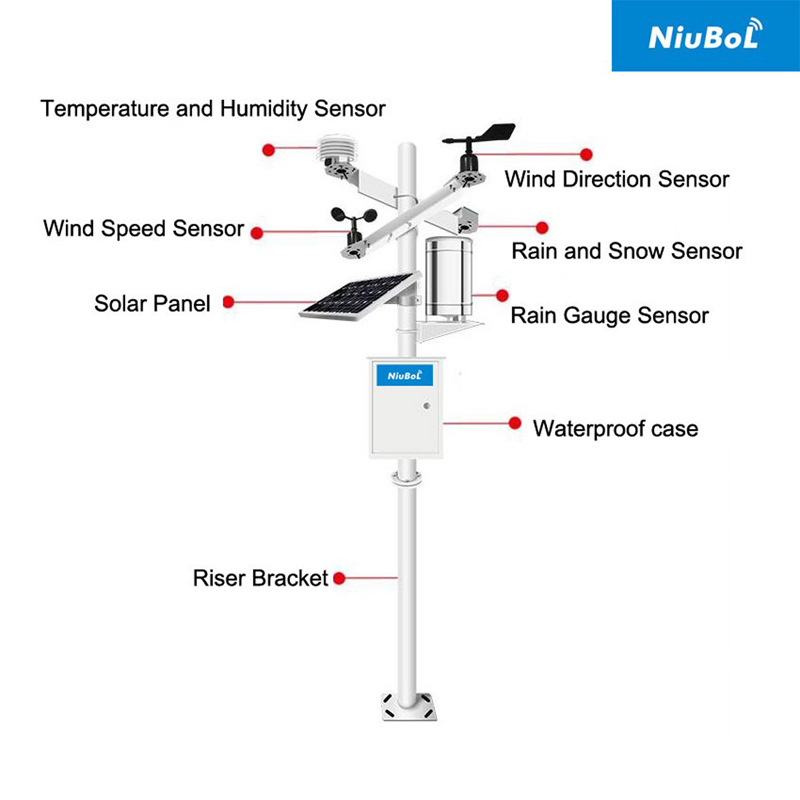
For a rooftop photovoltaic installation, observations near the array may be relevant to its operating environment. For a building ventilation study, an intake or exhaust arrangement may define the question. For a campus wishing to compare weather across years or with an open reference site, the roof's influence becomes a limitation that must be assessed.
These uses are legitimate, but they are not equivalent. A warm roof-level temperature can be useful evidence about that roof while being unsuitable as an unqualified measure of the surrounding neighbourhood. State the observation's purpose in the point description, not just the station's street address.
| Channel | Useful rooftop observation | Claim it cannot establish alone |
|---|---|---|
| Air temperature and humidity | Air conditions at the installed shield and exposure | Indoor server temperature, a whole-building comfort assessment or an open-field reference |
| Wind speed and direction | Wind at the sensor position, subject to building effects | Structural design loads, certified emergency protection or unmodified regional wind |
| Rainfall | Water caught by the gauge at its receiving position | Roof runoff volume or drainage capacity without the relevant area and hydraulic information |
| Solar irradiance | Radiation received on the installed measurement plane | PV conversion efficiency without suitable electrical and operating data |
| Atmospheric pressure | Pressure at the installation elevation | A complete storm forecast or an automatic building-insulation decision |
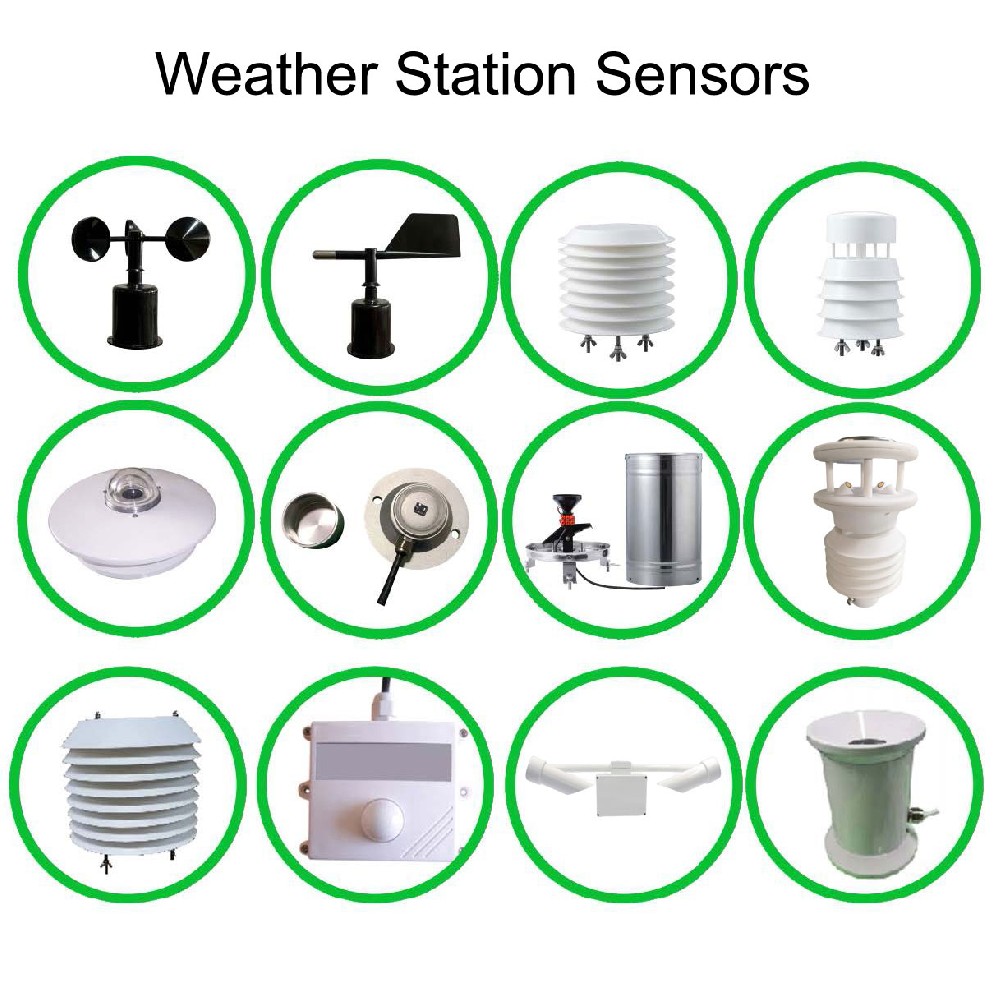
Plot parapets, stair enclosures, solar arrays, cooling equipment and neighbouring structures on the layout. A position that is clear in one direction may be sheltered or turbulent in another. Observe where access routes, exhaust operation and equipment maintenance can change the surroundings during normal use.
Do not solve this assessment with an arbitrary mast extension. A higher support changes structural loading, access, cable routing and lightning-protection considerations, while not necessarily eliminating building-induced airflow. A competent installer must assess the roof and support arrangement. The weather sensor's measuring range is not a structural approval for its mast.
Keep the shield away from direct exhaust plumes and locations dominated by a hot surface if the task is to observe ambient air. Allow suitable ventilation around the sensing assembly. A metal roof, enclosed corner or cabinet can influence the result even when the probe itself is accurate within its specified conditions.
The NiuBoL NBL-W-LBTH provides temperature, humidity and pressure channels. Its instrument accuracy does not quantify the extra error caused by an unsuitable rooftop position. Select the exposure as well as the measuring range.

Wind can accelerate around building edges, separate above roof surfaces or be screened by structures. A roof-mounted anemometer records the wind at that location. If the task concerns equipment exposed at that position, the record may be useful; if the task requires a wider meteorological reference, further siting assessment or a different location may be necessary.
The NBL-W-SS cup wind-speed sensor and NBL-W-DS direction sensor have IP65 protection. Keep that environmental rating separate from mounting suitability, obstruction and vibration. Confirm the vane orientation and what the receiver reports as north before interpreting directional patterns.
A numerical wind alarm is not automatically a certified safety function. Define the measured quantity, averaging or gust treatment, response responsibility and equipment limitations for the intended use. Do not claim that a general rooftop station alone establishes safe crane operation, building structural capacity or an aviation weather service.

A gauge must be level, secure and able to collect precipitation without splash or runoff entering from surrounding objects. A parapet or roof plant can alter exposure; a convenient position beside the cabinet is not necessarily a suitable collecting point. Include access for clearing the funnel and checking drainage from the gauge itself.
The NBL-W-RS tipping-bucket rain gauge can supply rainfall observations as part of a station. It does not directly measure the water discharged by a roof outlet. Rain depth, effective catchment area, storage, losses and drainage flow are separate parts of that question. Do not rename a rainfall channel as runoff volume in the data platform.
A horizontal pyranometer and a sensor aligned with an inclined module plane answer different questions. Select the plane needed by the analysis and retain its orientation. A sensor shadowed by a mast, panel edge or nearby plant during part of the day cannot be assumed to represent an unshaded reference.
The NiuBoL NBL-W-HPRS thermopile pyranometer can be assessed for the required plane and acquisition input. Confirm the supplied interface and mounting arrangement; a horizontal global-radiation measurement does not separately measure direct-beam radiation, nor does it establish PV efficiency on its own.
| Instrument or channel | Relevant specification | Rooftop selection point |
|---|---|---|
| NBL-W-LBTH air temperature | -40 to 80 C; stated accuracy +/-0.5 C | Assess shield exposure and nearby heat sources separately |
| NBL-W-LBTH humidity | 0-100% RH; stated accuracy +/-5% RH | Use a position representing the required air condition |
| NBL-W-SS and NBL-W-DS | IP65 protection | The rating does not establish unobstructed airflow or structural mounting approval |
| NBL-W-HPRS irradiance | 0-2000 W/m2; analog output options and optional RS485 | Specify the measurement plane and matching receiver input |
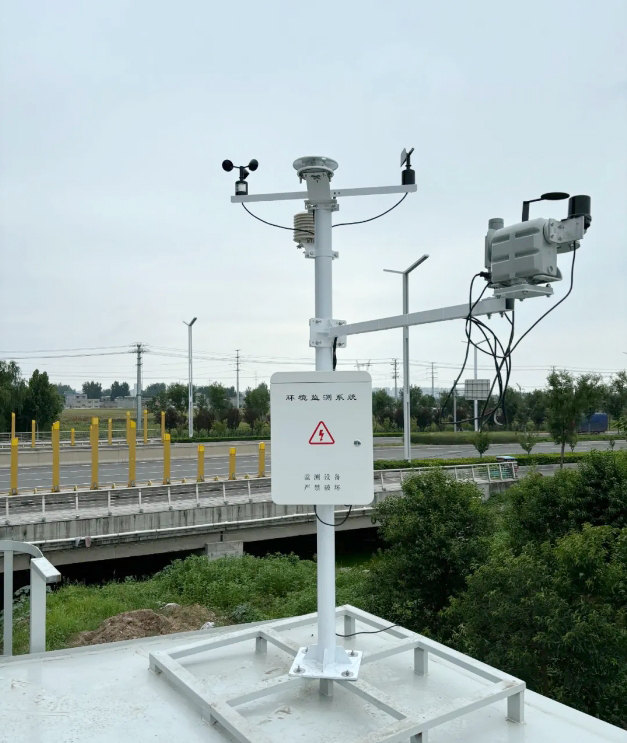
Roof attachment must respect the structure, waterproofing and building access arrangements. Review penetrations, anchorage and loading with the responsible parties before installation. Keep maintenance access workable without requiring staff to step across fragile surfaces or dismantle unrelated equipment to clean a sensor.
Design the electrical route from the roof to the logger and onward to the receiving system. Include cable entry sealing, strain relief and the project's surge and lightning-protection arrangements. A solar supply must be assessed for actual roof shading and the complete station load; daytime panel exposure alone does not establish overnight autonomy.
For RS485 Modbus RTU instruments, check the ordered protocol, addresses and register scaling. Where rain uses pulses or radiation uses a low-level analog output, provide the appropriate input rather than assume every cable can join the same serial bus. The logger configuration should reflect those individual channels.
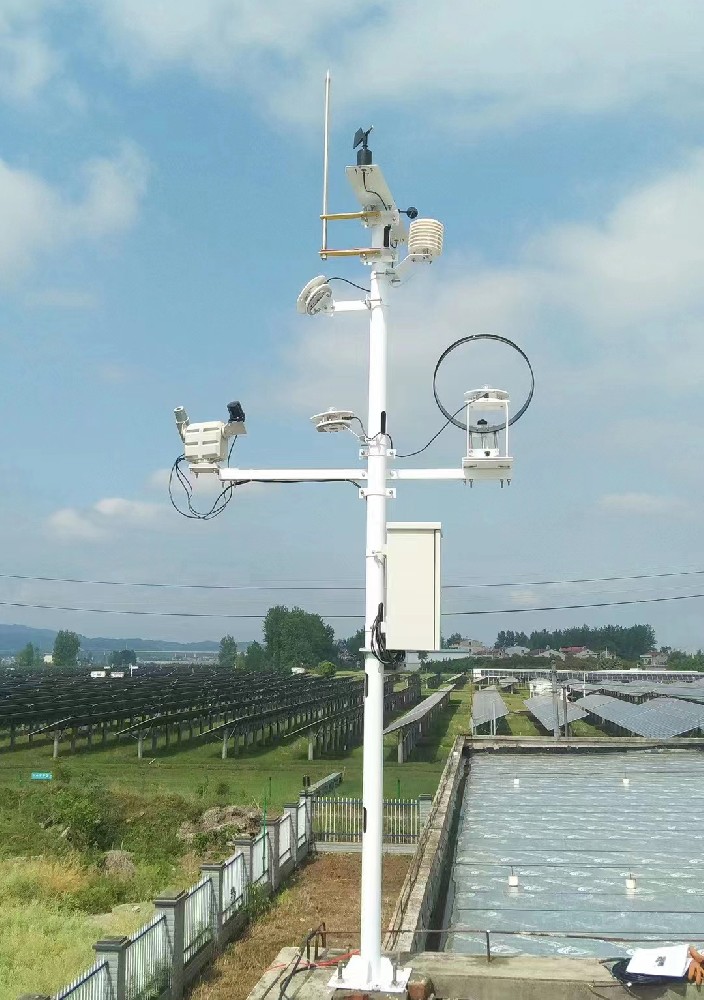
At commissioning, retain the layout, sensor heights relative to the roof, orientation and nearby structures. Check the rain-gauge level, radiation plane, wind-direction reference and shield exposure. Verify the actual quantities and units at the receiver, then record any limitations affecting comparison with other stations.
Review relevant exhaust or cooling equipment while it operates, rather than assess the station only during a quiet installation visit. An abrupt temperature or wind change aligned with building equipment may reflect the local environment, not a regional weather event. Record that context before changing offsets or declaring a sensor fault.
For teaching, these local effects can be an observation topic if labelled clearly. For building-energy analysis, pair weather with the required indoor and plant data. For rooftop PV, retain relevant array and electrical information. These applications make use of the station without claiming that every rooftop record is a general-purpose weather reference.
Provide NiuBoL with roof photographs, dimensions, nearby plant, proposed sensor positions and the intended use. Ask for a configuration and mounting scope that fits those conditions. If the required reference cannot be obtained on the roof, consider separate sensing positions rather than forcing every channel onto one mast.
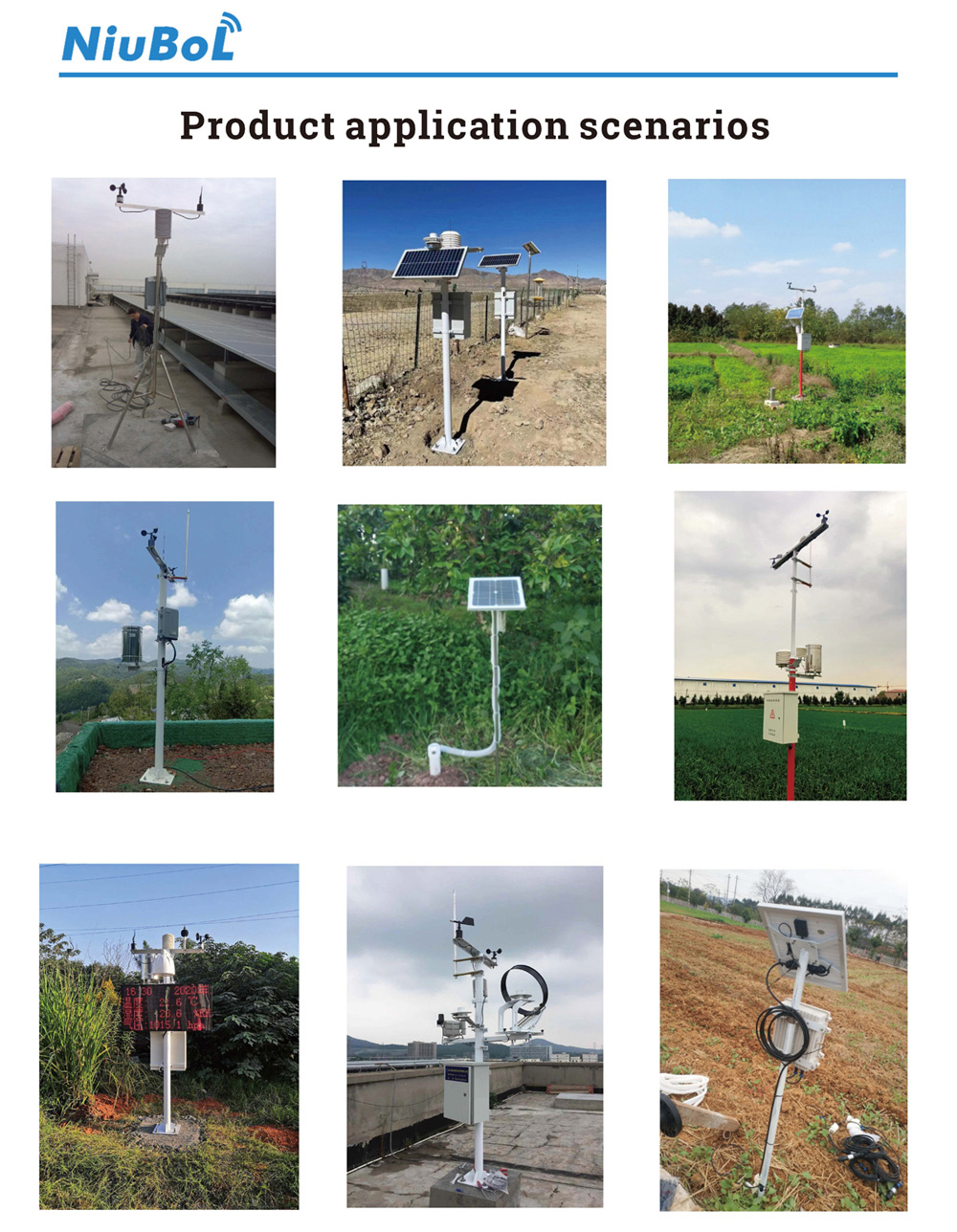
No. Height can reduce some obstructions but the building can introduce acceleration, screening and turbulence. Assess the intended observation and surroundings, not height alone.
Only with attention to exposure, height, instruments and time treatment. Roof heat, exhausts or shielding differences may explain a discrepancy. Do not apply an arbitrary offset simply to make the records agree.
Not by itself. It measures collected rain depth. Drain discharge also depends on the catchment, routing and storage; use appropriate hydraulic information or direct flow measurement for that task.
No. It supplies radiation on its measurement plane. Performance analysis also needs suitable electrical output, geometry and operating information, with any shading or data gaps identified.
New PV rows, roof plant, exhaust arrangements, nearby construction or a moved mast can alter exposure. Record the change and reassess the affected channels before joining the data as one unchanged series.
Include the roof layout and access, intended observation, required channels, proposed attachment and electrical route. Separate equipment supply from structural approval, waterproofing and building electrical work.
Rooftop weather station siting is a channel-specific assessment of the roof and the intended use. Roof conditions can be valuable observations without being equivalent to open-air reference weather. Retain the actual exposure, measurement plane and installation limitations so the resulting data support the decision they were collected for.
Prev:Soil Moisture Sensors for Irrigation: Check Fertigation Effects Before Control
Next:Indoor vs Outdoor Weather Station: Separate Sensors, Shared Logger
Related recommendations
Sensors & Weather Stations Catalog
 Agriculture Sensors and Weather Stations Catalog-NiuBoL.pdf
Weather Stations Catalog-NiuBoL.pdf
Agriculture Sensors Catalog-NiuBoL.pdf
Water Quality Sensor Catalog-NiuBoL.pdf
Related products
 Combined air temperature and relative humidity sensor
 TDR Soil Moisture & Temperature Sensor for irrigation| RS485 |4-20mA| NBL-S-THR
 Soil pH sensor RS485 soil Testing instrument soil ph meter for agriculture |NBL-S-PH
 Wind Speed sensor Output Modbus/RS485/Analog/0-5V/4-20mA
 Tipping bucket rain gauge for weather monitoring auto rainfall sensor RS485/Outdoor/stainless steel
 Pyranometer Solar Radiation Sensor 4-20mA/RS485


Screenshot, WhatsApp to identify the QR code
WhatsApp number:+8615367865107
(Click on WhatsApp to copy and add friends)

