





— Blogs —
—Products—
 Consumer hotline +8618073152920
 WhatsApp:+8615367865107
Address:Room 102, District D, Houhu Industrial Park, Yuelu District, Changsha City, Hunan Province, China
Product knowledge
Time:2026-03-08 15:52:47 Popularity:418
In the process of modern agriculture transforming from "experience-driven" to "data-driven," soil moisture monitoring has become a core perception dimension for precision irrigation, disaster prevention and mitigation, and agricultural scientific research. Soil Moisture Status not only directly reflects the crop growth environment but is also a key decision basis for watershed water resource scheduling and agricultural structure adjustment.
For system integrators and IoT project contractors, building a highly reliable and high-precision soil moisture monitoring system not only requires a deep understanding of soil physical characteristics but also the selection of industrial-grade sensing terminals that can withstand harsh outdoor environments. NiuBoL, with its deep accumulation in environmental sensors, provides FDR-based soil monitoring solutions for global partners.
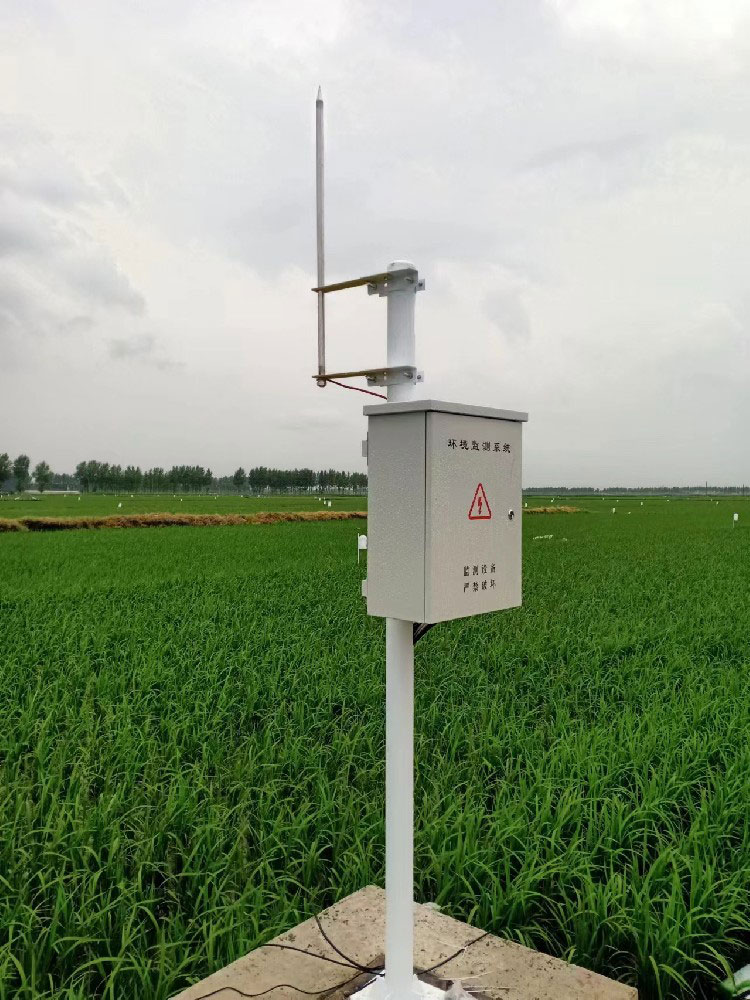
1. Agricultural Structure Adjustment and Precision Decision-Making
Soil moisture monitoring can capture real-time dynamics of water content in different soil layers, providing scientific guidance for important agricultural activities (such as sowing, fertilization, harvesting). Through digital means, integrators can establish quantitative models for water and fertilizer supplementation for end customers, thereby significantly improving fertilizer efficiency ratios.
2. Drought Resistance and Disaster Mitigation and Intensive Utilization of Water Resources
Traditional modes relying on manual on-site investigations have serious lag and subjectivity. Industrial-grade monitoring systems, through automated sampling and reporting, can ensure that drought and flood disaster information is not delayed or missed. Especially in the context of variable climate, high-frequency soil moisture data is the reference cornerstone for researching drought resistance and disaster mitigation technologies and integrating efficient and low-consumption water-saving technologies.
3. National Project Verification and Public Welfare Support
As a foundational public welfare undertaking for developing dryland agriculture, standardized soil moisture monitoring data is an important evaluation basis for verifying the investment effectiveness of national agricultural construction projects. This requires the monitoring system to have institutionalization, standardization, and extremely high data reliability.
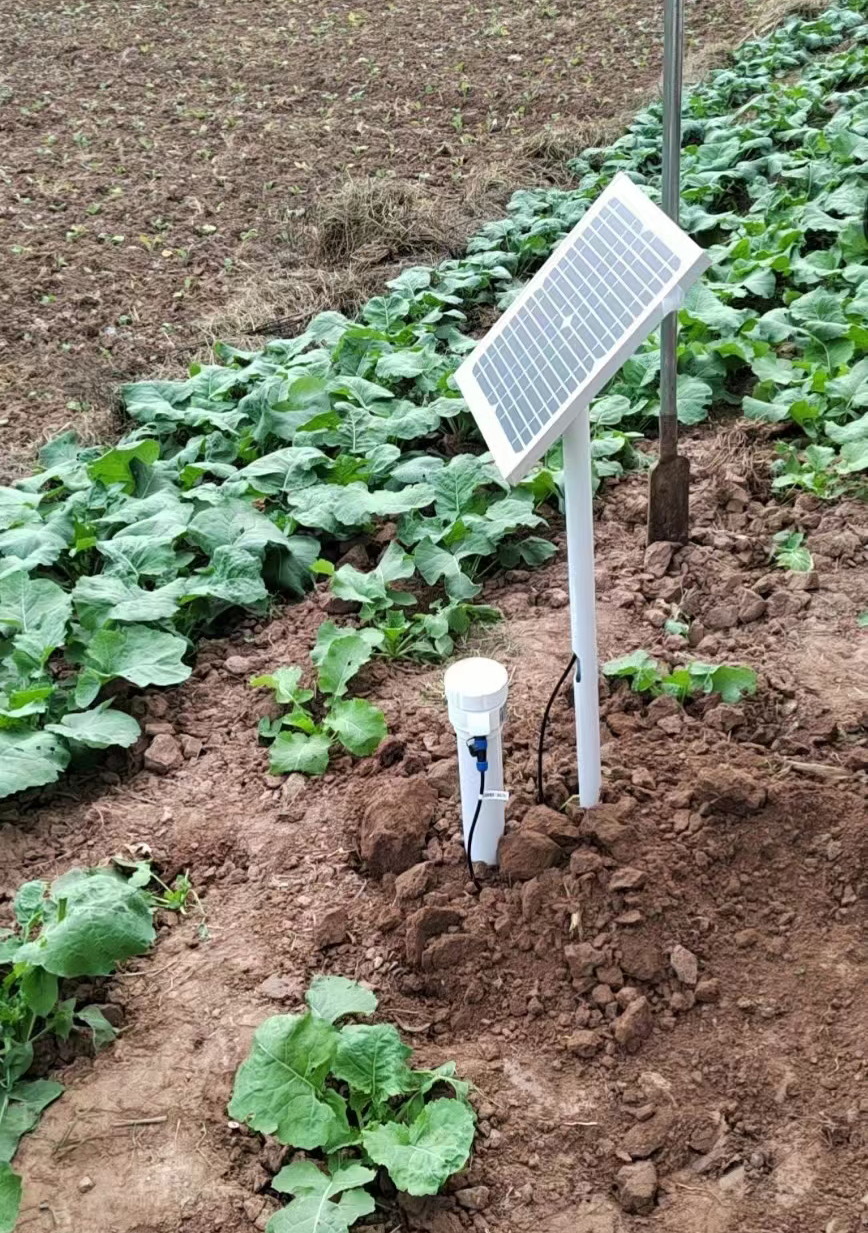
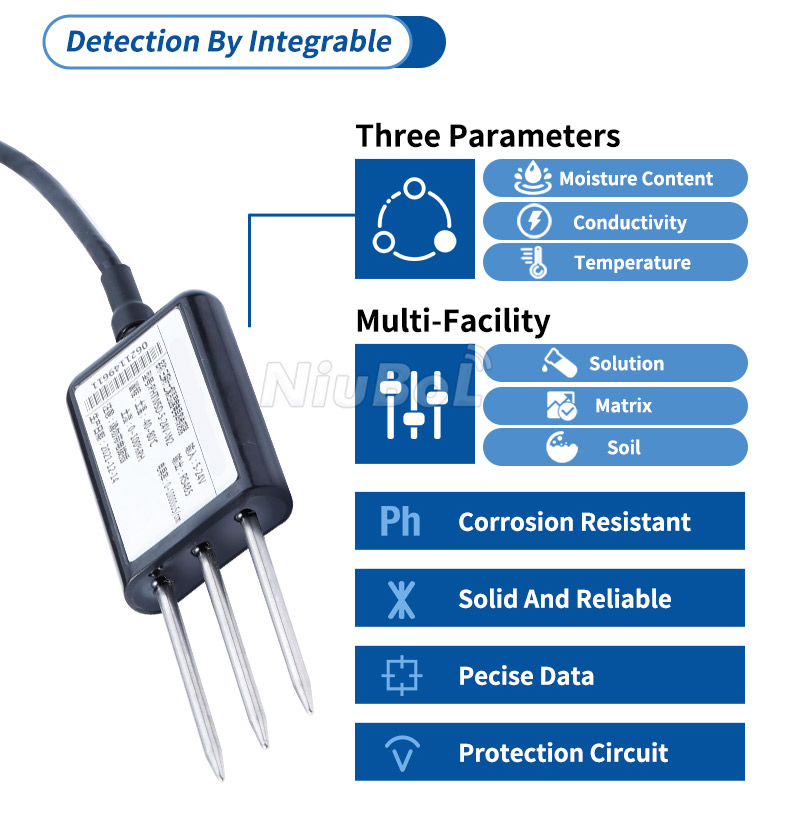
NiuBoL soil temperature and humidity sensors adopt the internationally mainstream FDR (Frequency Domain Reflectometry) frequency domain reflectometry method. This technology, by measuring the apparent dielectric constant of soil, can directly and stably reflect the true water content of various soils, with significant advantages such as fast measurement speed, high accuracy, and low influence from soil conductivity.
This series of sensors is designed for long-term buried monitoring, with electrodes using special alloy materials that can resist acid-alkali corrosion and external impact.
| Parameter Item | Technical Specifications (Temperature) | Technical Specifications (Humidity) |
|---|---|---|
| Measurement Range | -40℃ ~ 80℃ | 0 ~ 100% |
| Measurement Accuracy | ±0.5℃ | ±5% (within 0-50% range) |
| Resolution | 0.1℃ | 0.1% |
| Power Supply Voltage | DC 5V - 24V | DC 5V - 24V |
| Output Signal | RS485 (standard Modbus-RTU protocol) | RS485 (standard Modbus-RTU protocol) |
| Measurement Principle | Thermistor / Platinum Resistor | FDR Frequency Domain Reflectometry |
| Protection Rating | IP68 (supports long-term underwater/buried operation) | IP68 |
| Sealing Material | Flame-Retardant Epoxy Resin | Flame-Retardant Epoxy Resin |
| Electrode Material | Anti-Corrosion Special Alloy | Anti-Corrosion Special Alloy |
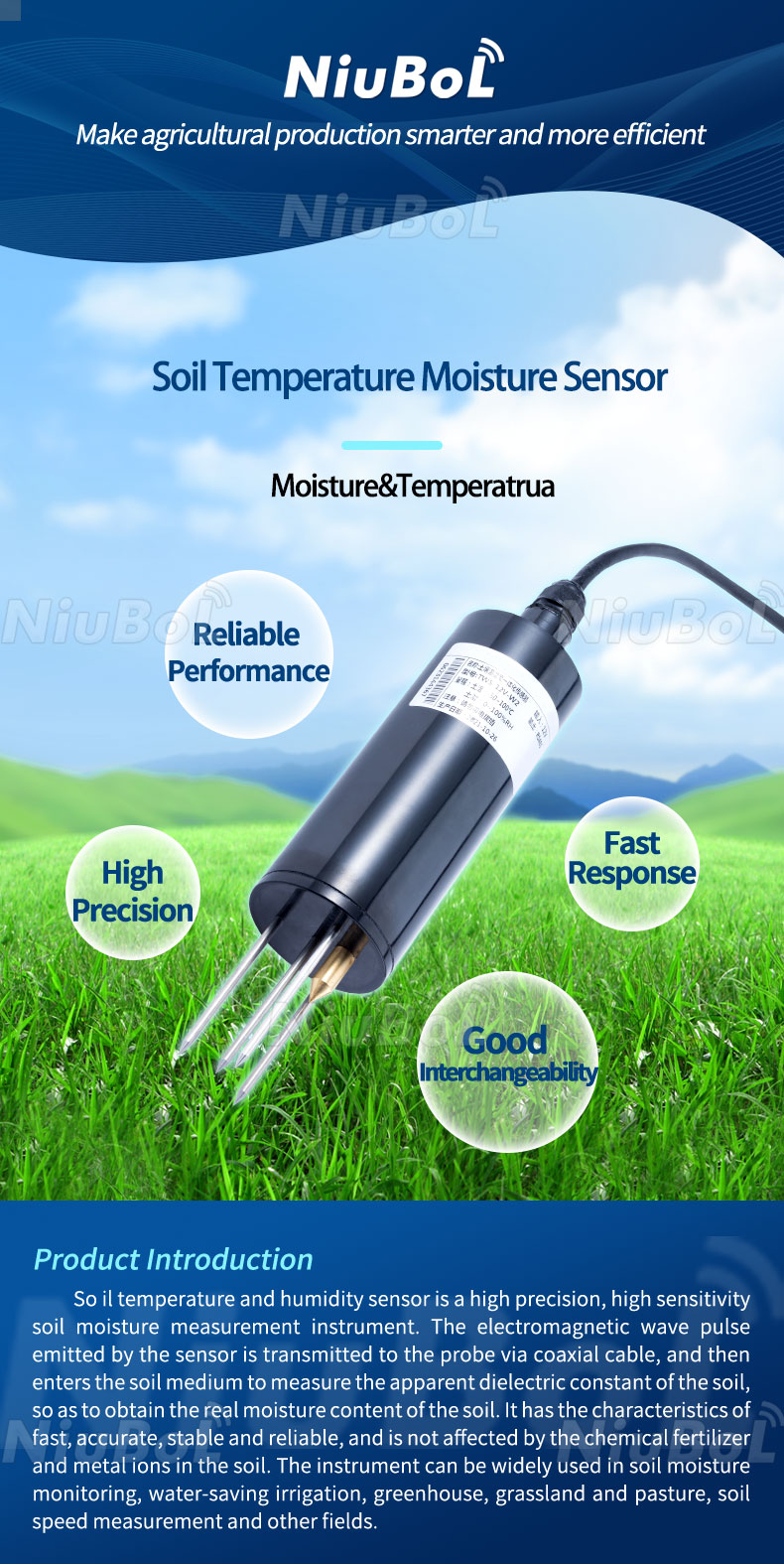
For scientific-grade projects with stricter accuracy requirements, the NBL-S-THR series provides higher humidity accuracy and more diversified signal output methods.
| Parameter Item | Technical Specifications |
|---|---|
| Humidity Accuracy | ±3% |
| Temperature Accuracy | ±0.5℃ |
| Power Supply Method | DC 12V - 24V |
| Signal Output Form | RS485 / 4-20mA / 0-5V |
| Product Power Consumption | About 0.3W |
| Operating Environment | -40℃ ~ 80℃ |
| Probe Length | 50mm |
| Cable Length | Standard 5 meters (customizable) |
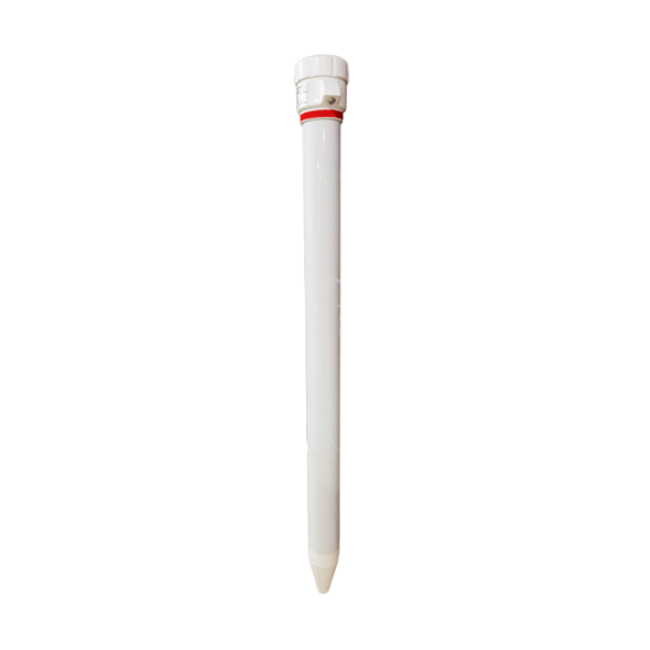
1. Irrigation District Modernization and Smart Water Affairs
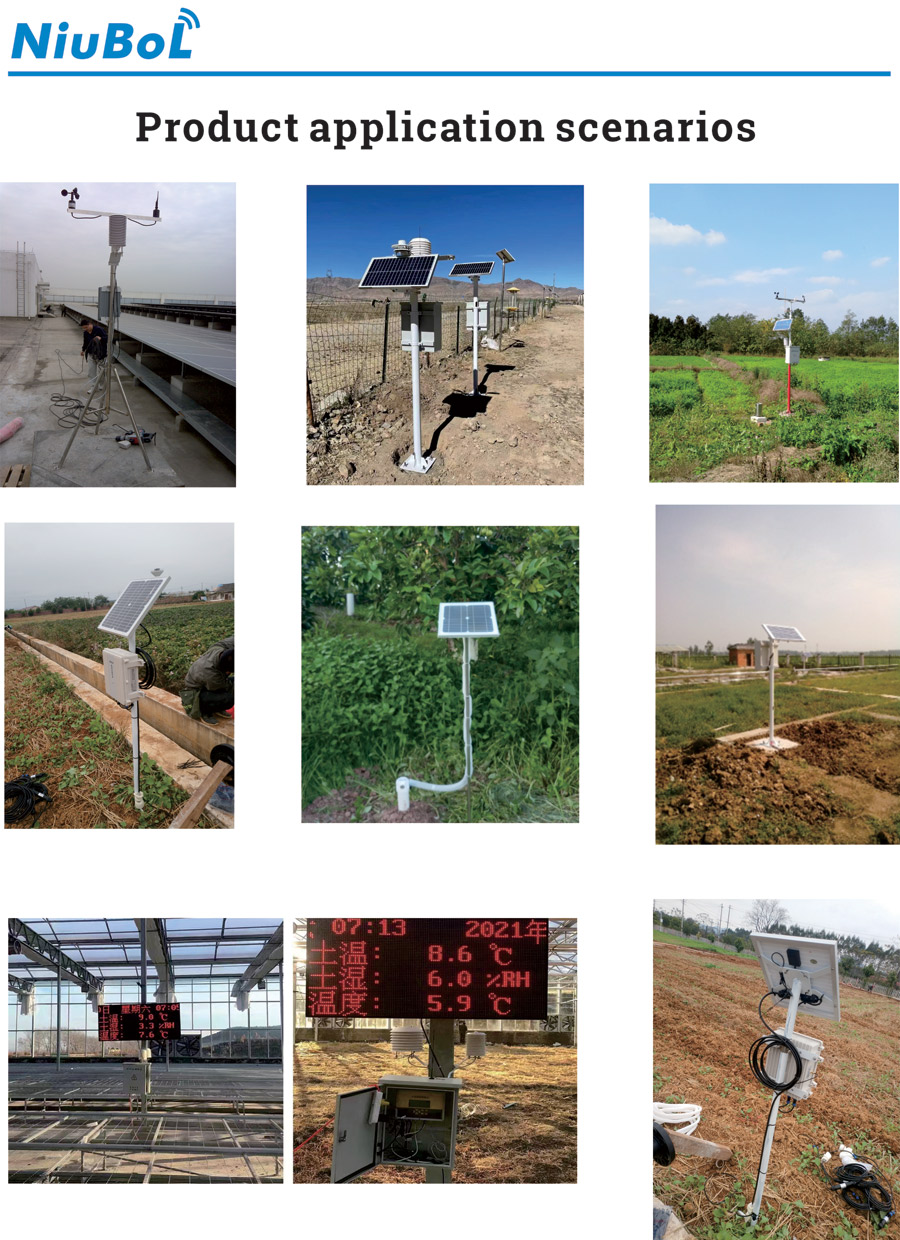
In large irrigation district transformation projects, by arranging NiuBoL soil sensors in different irrigation zones, system integrators can achieve closed-loop control of "automatic perception-automatic decision-automatic irrigation," significantly reducing manual inspection costs.
2. Greenhouses and Flower and Vegetable Cultivation
High-value crops are extremely sensitive to soil water content. The high sensitivity characteristics of NiuBoL sensors can capture subtle humidity fluctuations, and when paired with intelligent gateways, can achieve precise regulation of greenhouse microclimates.
3. Grasslands and Pastures and Ecological Protection
In large-scale grassland management and ecological restoration projects, by deploying non-contact soil moisture meters, dynamic observations of multi-soil layer depths (such as 10cm, 20cm, 50cm) can be performed to evaluate soil water-holding capacity and ecological restoration progress.
4. Landslide Early Warning and Geological Monitoring
Soil water content saturation is one of the key factors inducing landslides. Industrial-grade soil moisture sensors undertake the important task of basic data collection in flood control, drought resistance, and geological disaster early warning systems.
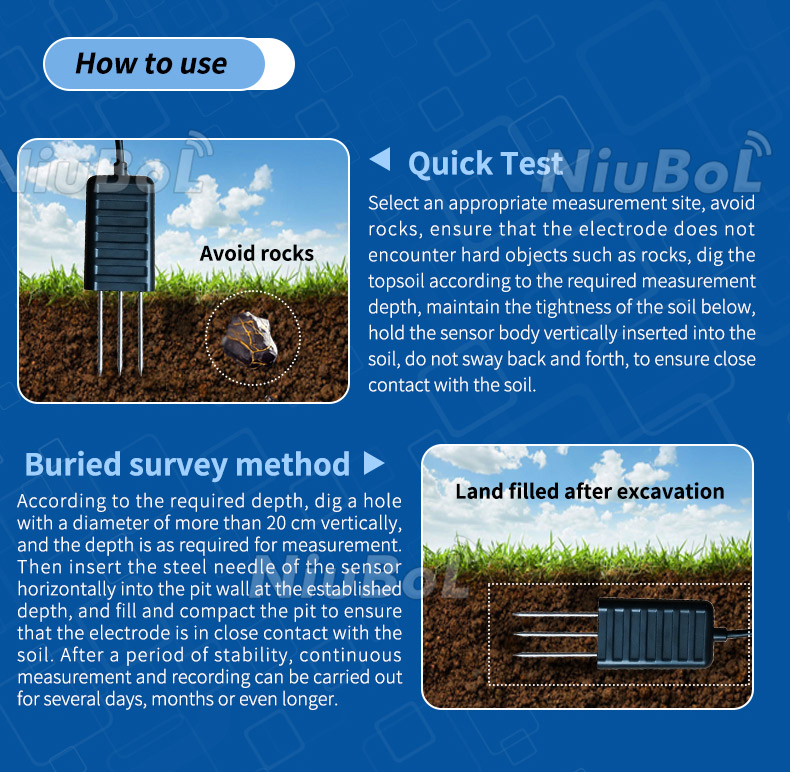
For project contractors, sensor selection and integrated installation directly determine the project's later operation and maintenance costs.
1. Sensor Selection Key Points
Communication Protocol Consistency: Prioritize RS485 Modbus-RTU protocol for multi-point networking and long-distance transmission (theoretically up to 1200 meters).
Protection Rating: Agricultural outdoor environments involve pesticide, fertilizer corrosion, and irrigation water immersion; sensors must have IP68 protection.
Interchangeability and Stability: Select probe insertion-type sensors to ensure no need for recalibrating complex algorithm models when replacing equipment.
2. Integration Considerations
Installation Method: Recommend "vertical insertion" or "horizontal burial" methods. Vertical insertion is suitable for surface quick measurement, horizontal burial for multi-layer depth long-term observation. During installation, ensure the probe is in close contact with the soil, strictly prohibiting air gaps.
Power Management: Sensor power consumption is extremely low (about 0.3W); in areas without power supply outdoors, recommend using "solar panel + lithium battery" combination.
Lightning Protection Design: Agricultural outdoor open areas are highly susceptible to lightning strikes; when integrating the system, be sure to add lightning arresters or surge protectors at the ends of signal and power lines.
Q1: How does the FDR principle ensure accuracy compared to traditional drying methods?
A1: The drying method is the standard method for weight percentage water content but is destructive and cannot be real-time. NiuBoL FDR sensors measure volumetric percentage water content, calibrated in the laboratory with extremely high linear correlation, capable of reflecting the true dynamics of soil moisture in real time, and is currently the internationally recognized standard for real-time online measurement.
Q2: Will salts (fertilizers) in the soil affect measurement accuracy?
A2: NiuBoL NBL-S-THR series sensors optimize electromagnetic wave frequency in design, making them insensitive to electrolytes (fertilizer ions) in soil, effectively filtering interference from conductivity on dielectric constant measurement.
Q3: Does the sensor support operation in frozen soil?
A3: The sensor electronic components support -40℃ environmental operation. However, during soil freezing periods, due to changes in water physical form (dielectric constant drops from 80 to about 3.2), the measured value reflects the content of unfrozen water, determined by physical characteristics.
Q4: How many sensors can RS485 communication mount at most?
A4: Without repeaters, the standard Modbus protocol recommends mounting no more than 32 nodes on a single bus. If more are needed, it is recommended to pair with NiuBoL dedicated bus expanders.
Q5: Will the probe material pollute the soil or be corroded by the soil?
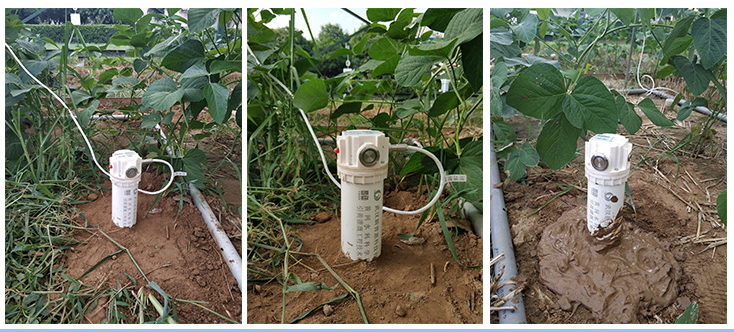
A5: The probe uses anti-corrosion special alloy material with extremely stable chemical properties. The shell uses black flame-retardant epoxy resin, fully sealed, without causing secondary pollution to the soil environment, and has extremely strong acid-alkali corrosion resistance.
Q6: How to handle measurement differences in different textured soils (such as sandy soil, clay soil)?
A6: The sensor is factory-calibrated for standard mineral soils universally. For special soil qualities, integrators can modify internal compensation coefficients via Modbus protocol or establish soil correction models on the cloud platform side.
Q7: What is the response time of the sensor?
A7: The sensor response time after power-on is less than 1 second, and data stabilization time is less than 2 seconds, very suitable as a trigger sensor for automatic irrigation systems.
Q8: How many meters can the device cable be extended?
A8: RS485 signals can be extended to kilometers under standard twisted shielded cables. However, in actual engineering, it is recommended to add signal amplifiers when exceeding 100 meters and ensure that the power supply voltage at the end is not less than 12V.
The construction of soil moisture monitoring systems is not only the basic support for achieving water-saving agriculture and modern agriculture but also the necessary path to enhancing drought resistance and disaster mitigation efficiency. By introducing NiuBoL industrial-grade high-precision soil sensors, system integrators can build a complete chain from perception to decision-making, providing a reliable data base for agriculture, green space control, and scientific experiments.
In the future wave of agricultural digitalization, NiuBoL will continue to deepen sensing technology to help partners achieve higher-dimensional smart agriculture transformation.
If you are preparing a soil moisture monitoring project or need detailed communication protocol documents, please contact the NiuBoL technical expert team, and we will provide you with a full set of technical support from hardware selection to integration guidance.
 NBL-S-TMSMS-Tubular-Multi-depth-Soil-Moisture-Sensor-Instruction-Manual.pdf
NBL-S-TM-Soil-temperature-and-moisture-sensor-Instruction-Manual-4.0.pdf
NBL-S-THR-Soil-temperature-and-moisture-sensors-Instruction-Manual-V4.0.pdf
Prev:Features and Advantages of NiuBoL Soil Moisture Monitoring System
Next:Four Gases and Two Dusts Monitoring Station: NiuBoL Air Quality Monitoring Solution
Related recommendations
Sensors & Weather Stations Catalog
Agriculture Sensors and Weather Stations Catalog-NiuBoL.pdf
Weather Stations Catalog-NiuBoL.pdf
Agriculture Sensors Catalog-NiuBoL.pdf
Water Quality Sensor Catalog-NiuBoL.pdf
Related products
 Combined air temperature and relative humidity sensor
 Soil Moisture Temperature sensor for irrigation|NBL-S-THR
 Soil pH sensor RS485 soil Testing instrument soil ph meter for agriculture |NBL-S-PH
 Wind Speed sensor Output Modbus/RS485/Analog/0-5V/4-20mA
 Tipping bucket rain gauge for weather monitoring auto rainfall sensor RS485/Outdoor/stainless steel
 Pyranometer Solar Radiation Sensor 4-20mA/RS485

Screenshot, WhatsApp to identify the QR code
WhatsApp number:+8615367865107
(Click on WhatsApp to copy and add friends)

