





— Blogs —
—Products—
 Consumer hotline +8618073152920
 WhatsApp:+8615367865107
Address:Room 102, District D, Houhu Industrial Park, Yuelu District, Changsha City, Hunan Province, China
Product knowledge
Time:2026-01-12 09:19:39 Popularity:736
Soil moisture is the "lifeline" of agricultural production. Scientific soil monitoring is not blind measurement, but a systematic project carried out according to geographical location, climatic conditions, soil type, planting system, and irrigation and drainage conditions. In modern agricultural management, we need to centrally measure soil texture, bulk density, and field capacity at different layers, and establish detailed digital archives for each monitoring point.
The NiuBoL soil moisture monitoring instrument is an integrated system designed based on this scientific logic. Through unattended automatic collection, it transforms complex soil physical parameters into intuitive digital indicators, laying a solid foundation for water-saving work and high crop yield.
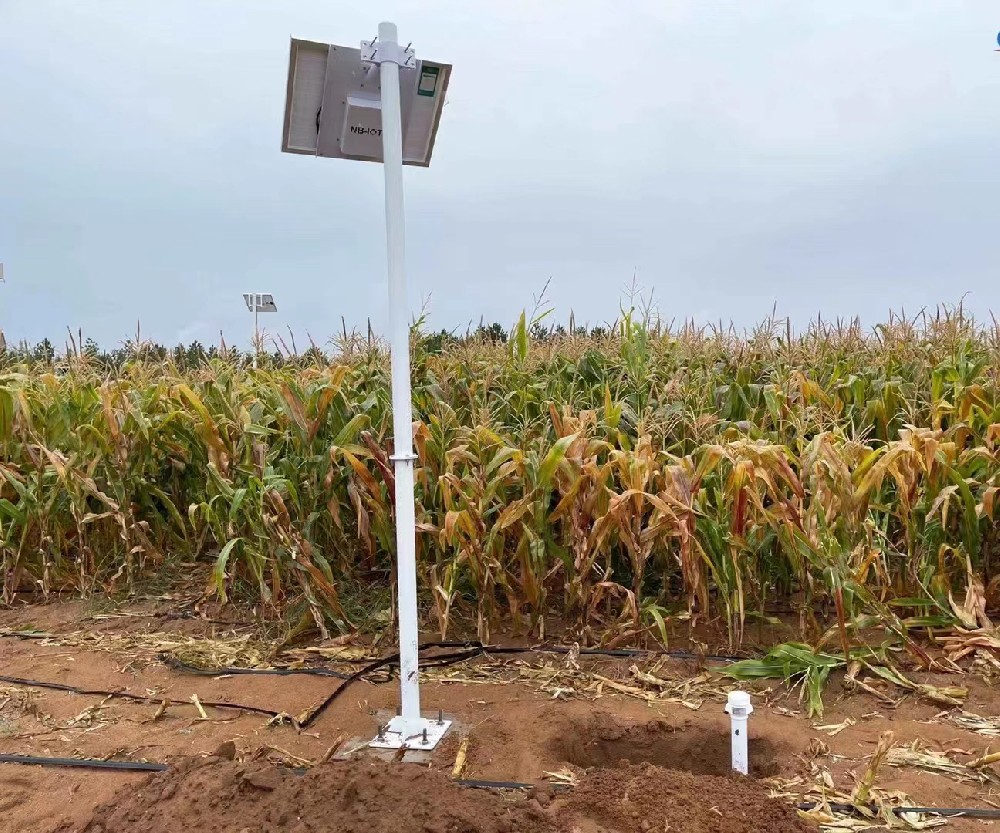
The core of the NiuBoL soil moisture rapid tester (also known as non-contact soil moisture meter) lies in the dielectric constant principle. By using high-precision sensors to sense changes in soil dielectric constant, the system can quickly and accurately convert to soil moisture content.
Scientific monitoring requires profile analysis of soil at different depths. Usually, monitoring indicators are divided into:
Mandatory Layers: 0-20cm and 20-40cm layers – these are the most active areas for crop root development and most frequent moisture exchange.
Deep Monitoring Layers: 40-60cm and 60-100cm layers – used to analyze groundwater recharge and long-term moisture reserves.
NiuBoL adopts a layered point structure, with one temperature observation point on the surface and a temperature-humidity measurement point every 10cm underground, achieving high perception and dynamic observation of the soil environment.
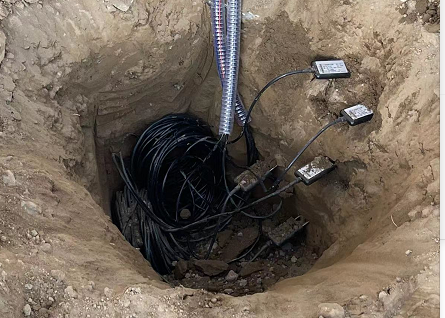
A complete monitoring system is built from the following core modules:
1. Soil Sensors: The system's "antennae", covering temperature-humidity, conductivity, pH, and NPK sensors.
2. Soil Data Collector: Responsible for converting analog signals to digital signals and performing local storage.
3. Communication System: Built-in 4G module to achieve wireless connection between the device and remote monitoring center/cloud.
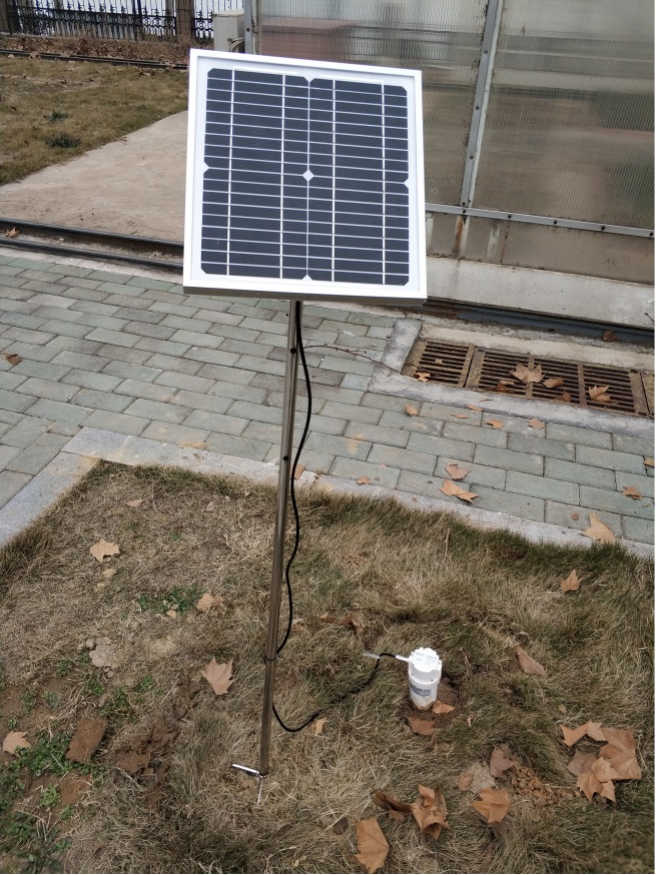
4. Power Supply System: Integrated solar power (60W solar panel + 30AH lithium battery pack) to ensure long-term field operation.
5. Overall Bracket: Provides physical support with good corrosion resistance and stability.
6. Cloud Platform: The "brain" of data, responsible for displaying locations, analyzing records, and exporting reports.
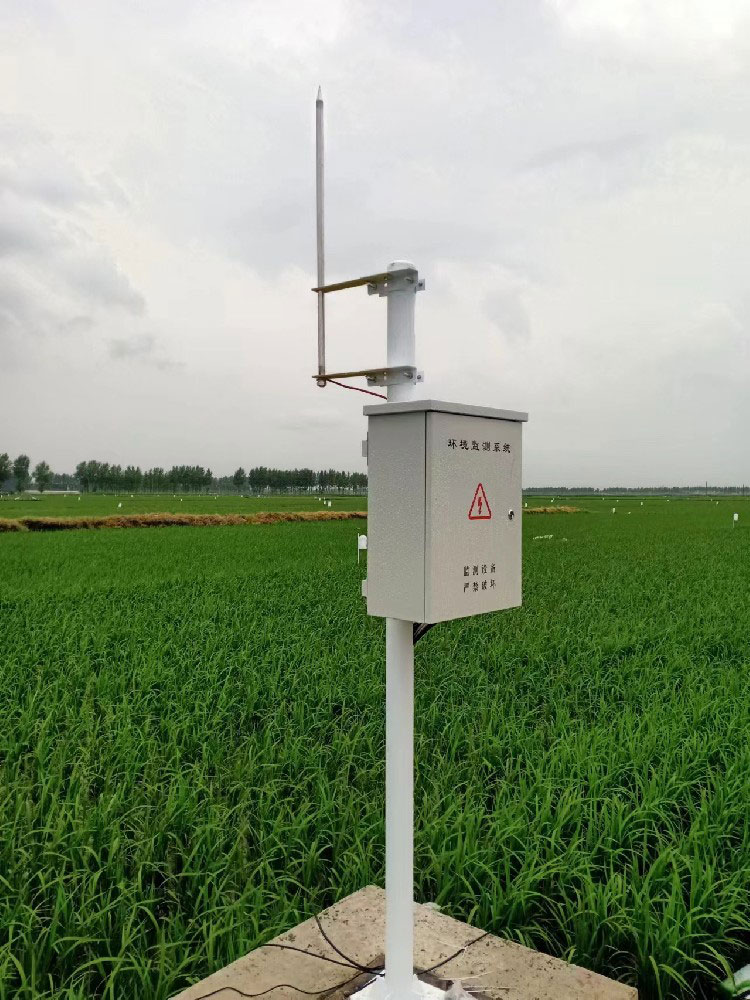
NiuBoL supports parameter customization according to user needs, focusing not only on "moisture" but also on "soil fertility":
Conventional Parameters: Soil temperature, moisture, salinity, conductivity, pH value.
Fertility Parameters: Soil nitrogen, phosphorus, potassium content monitoring to guide precise fertilization.
Physical Parameters: Soil heat flux, soil tension.
Environmental Supplementary Parameters: Groundwater level, water quality, as well as air temperature-humidity and light intensity.
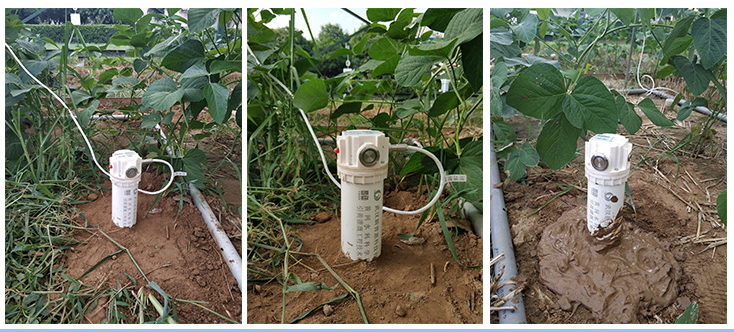
To ensure data representativeness, the installation of NiuBoL monitoring stations must strictly follow these steps:
1. Bracket Fixing and Collector Installation
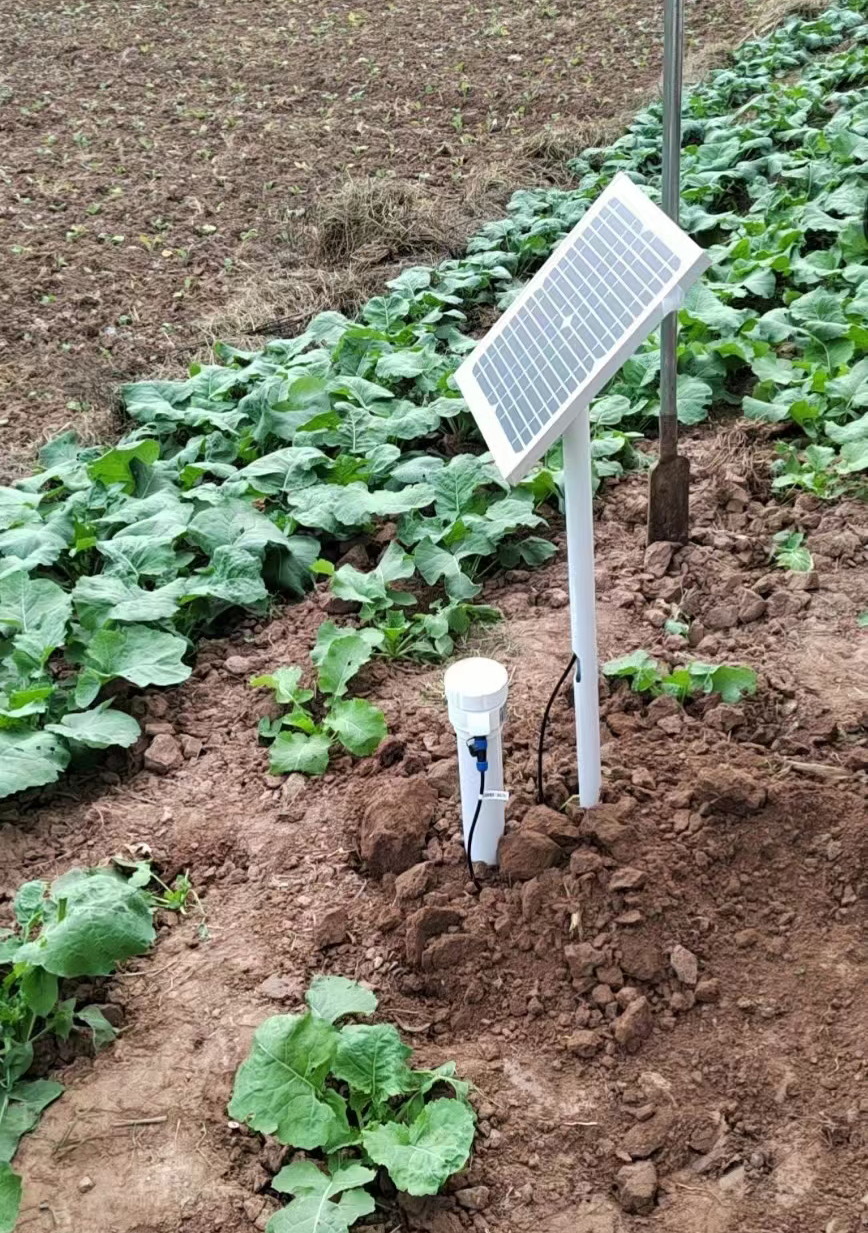
Insert the white vertical pole into the monitoring point using ground insertion. Use hoop clamps to fix the collector on the bracket. Pay attention to reserving length between collector interfaces and sensor leads to prevent cable damage from tension.
2. Sensor Burial (Key Step)
At the selected position, vertically excavate a pit with diameter >20cm. At the predetermined depth, horizontally insert the sensor steel needle into the pit wall. Then backfill and compact to ensure tight contact between electrodes and soil. If backfilling is not solid, air gaps will cause huge measurement errors.
3. Energy Deployment
Install the solar panel and adjust the angle to face due south for maximum light absorption. Finally, connect all sensor interfaces to the collector channels.
All data is instantly uploaded to the NiuBoL cloud monitoring platform via 4G module.
Map Positioning: The interface visually displays each monitoring point location, convenient for multi-site centralized management.
Threshold Warning: Customizable upper and lower limit parameters. For example, when soil humidity is below 15%, the platform automatically alarms.
Data Export: Supports one-click export to Excel files, convenient for researchers to conduct periodic data analysis.
Historical Traceability: Stores complete historical records, providing data support for regional climate and soil evolution.
Q1: Why is it necessary to measure layered data for soil moisture content?
A: Because soil moisture distribution in the vertical direction is uneven. Surface moisture is greatly affected by evaporation, while deep moisture is relatively stable. Layered monitoring can accurately determine whether moisture infiltrates from the surface or is recharged by groundwater, thus scientifically determining irrigation depth and amount.
Q2: How does salinity and conductivity monitoring help with nutrient management?
A: Soil electrical conductivity (EC value) is closely related to salt content. By monitoring EC value, one can determine whether soil salinization occurs and assist in evaluating the effective utilization rate of chemical fertilizers in soil, preventing root "burning" caused by excessive fertilization.
Q3: How long can solar power last during continuous rainy days?
A: The NiuBoL system adopts low-power design. When fully charged, the lithium battery pack can support the system to work continuously for more than 7-10 days without light.
Scientific soil monitoring is a key step to achieve precision agriculture. The NiuBoL soil moisture monitoring instrument transforms complex field monitoring into an efficient, timely, and sustainable digital process through layered point observation structure, high-precision sensing technology, and convenient cloud management.
Only by truly achieving high perception of soil can we upgrade management structures according to local conditions, laying a solid foundation for quality improvement and efficiency increase in modern agriculture.
Soil Temperature: Range -50~80℃ (±3℃)
Soil Moisture: Range 0~100% (±3%)
Soil Salinity: Range 0~5500mg/L (±10%)
Soil pH: Range 0~14 (±0.1)
Soil Conductivity: Range 0~10000us/cm (±10%)
Power Supply Specification: 60W solar panel / 30AH lithium battery
Communication Protocol: Modbus-RTU / 4G wireless
Do you need to customize your monitoring point depth layout scheme according to specific crop types? Welcome to contact the NiuBoL technical team—we will provide you with full-process technical guidance.
Prev:NiuBoL Automatic Soil Moisture Monitoring System: Full-Scenario Application Guide
Next:Smart Agriculture: How NiuBoL Soil Moisture Monitoring Station Achieves Long-Term Precise Monitoring
Related recommendations
Sensors & Weather Stations Catalog
 Agriculture Sensors and Weather Stations Catalog-NiuBoL.pdf
Weather Stations Catalog-NiuBoL.pdf
Agriculture Sensors Catalog-NiuBoL.pdf
Water Quality Sensor Catalog-NiuBoL.pdf
Related products
 Combined air temperature and relative humidity sensor
 TDR Soil Moisture & Temperature Sensor for irrigation| RS485 |4-20mA| NBL-S-THR
 Soil pH sensor RS485 soil Testing instrument soil ph meter for agriculture |NBL-S-PH
 Wind Speed sensor Output Modbus/RS485/Analog/0-5V/4-20mA
 Tipping bucket rain gauge for weather monitoring auto rainfall sensor RS485/Outdoor/stainless steel
 Pyranometer Solar Radiation Sensor 4-20mA/RS485

Screenshot, WhatsApp to identify the QR code
WhatsApp number:+8615367865107
(Click on WhatsApp to copy and add friends)

