





— Blogs —
—Products—
 Consumer hotline +8618073152920
 WhatsApp:+8615367865107
Address:Room 102, District D, Houhu Industrial Park, Yuelu District, Changsha City, Hunan Province, China
Product knowledge
Time:2025-12-23 13:52:53 Popularity:762
In modern agriculture's refined management, soil acidity and alkalinity (pH value) is often regarded as the “first threshold of soil fertility.” Although not directly a nutrient like nitrogen, phosphorus, and potassium, it acts like an invisible “switch” controlling the availability of almost all nutrients in soil.
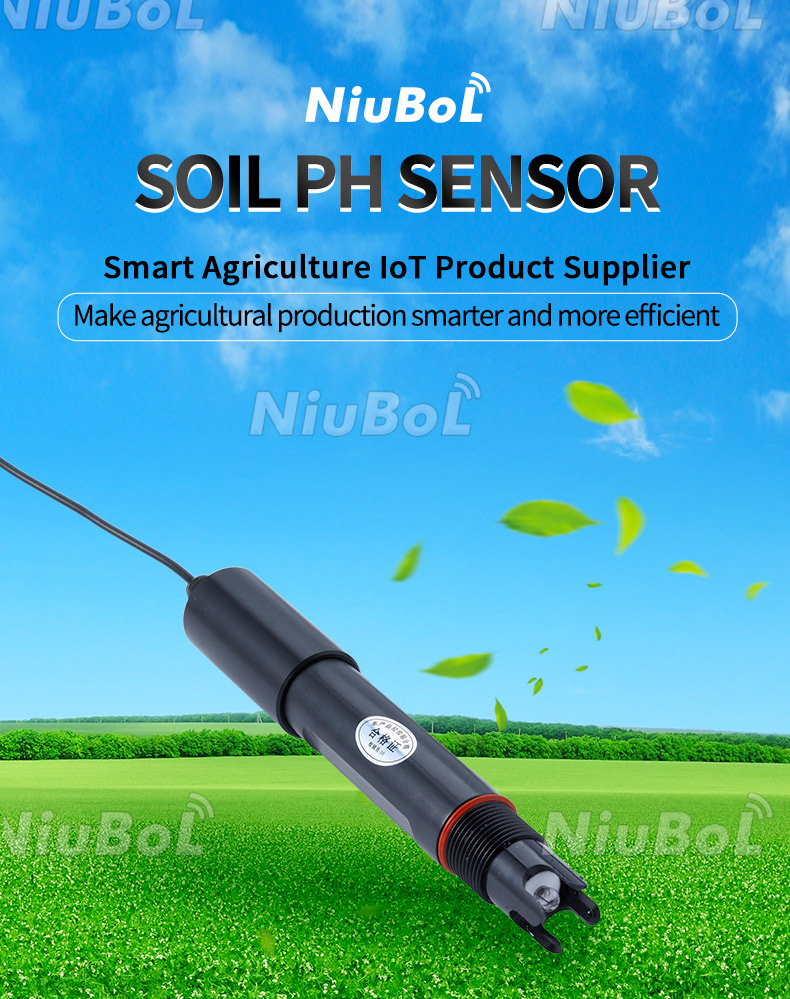
With smart agriculture moving from “concept” to “implementation,” traditional litmus paper and phenolphthalein methods, due to lag and low precision, can no longer meet high-yield and income-increasing needs. The intelligent soil pH sensor developed by NiuBoL, combined with wireless transmission technologies such as LoRaWAN/4G, is bringing monitoring of this key indicator into a new era of “real-time, precise, cloud-based.” High-precision soil pH sensors represented by NiuBoL are becoming the new standard in smart agriculture.
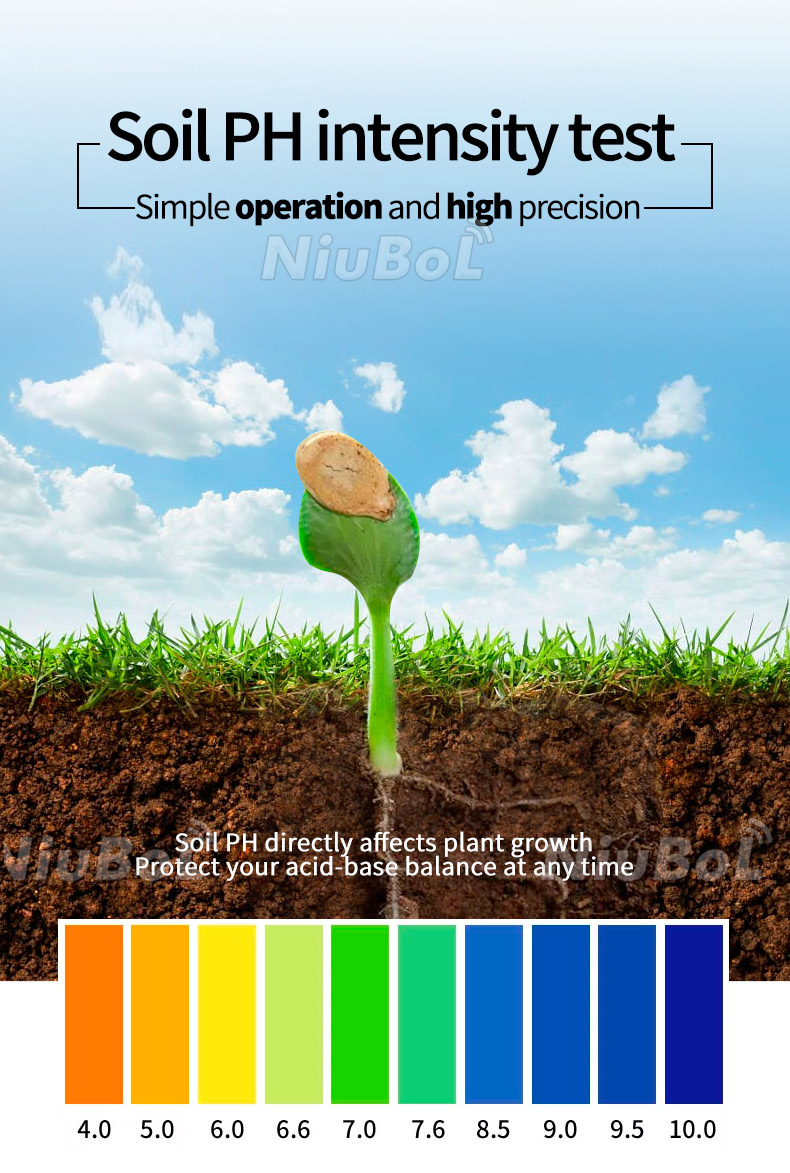
Soil pH value refers to the negative logarithm of hydrogen ion concentration in soil solution. Although the definition is simple, it hides extremely complex soil chemical balance.
Soil Acidity and Alkalinity Directly Determines Nutrient Forms
Soil pH value is the negative logarithm of hydrogen ion concentration in soil solution, core indicator measuring soil acidity and alkalinity. Its value range is usually between 0 and 14:
pH < 7: Soil is acidic; smaller value means stronger acidity.
pH = 7: Soil is neutral.
pH > 7: Soil is alkaline; larger value means stronger alkalinity.
Phosphorus Element: In strongly acidic soil (pH < 5.0), phosphorus easily combines with iron and aluminum to form insoluble iron/aluminum phosphate; in alkaline soil (pH > 7.5), it combines with calcium. Availability is highest only between pH 6.0-7.0.
Trace Elements: Iron, manganese, zinc, copper have better availability in acidic environments but easily fail in alkaline soil, causing crop deficiency yellowing.
Nitrogen Transformation: Nitrification is most suitable in neutral conditions. Too acidic or alkaline inhibits nitrogen-fixing bacteria activity in root nodules.
“Regulator” of Soil Physical Structure
Overly acidic soil easily causes aluminum and manganese toxicity, damaging root cells and making them short and thick; overly alkaline soil (especially high sodium ions) causes soil dispersion and compaction, with extremely poor aeration.
How Soil Acidity and Alkalinity Affects Plant Growth?
Soil acidity and alkalinity has decisive effects on plant physiological metabolism. First, it affects nutrient release. For example, in strongly acidic soil (pH < 5.0), phosphorus easily combines with aluminum and iron to form insoluble substances, causing crops to “see phosphorus but not absorb it”; in strongly alkaline soil, availability of trace elements like iron, manganese, zinc drops sharply.
Second, pH value determines microbial activity. Most beneficial nitrogen-fixing and saprophytic bacteria prefer neutral environments. If soil is too acidic or alkaline, microbial decomposition of organic matter slows, leading to soil compaction and fertility decline.
Mastering crops' “acid-base preferences” is prerequisite for scientific planting.
| Crop Category | Recommended pH Range | Key Management Logic |
|---|---|---|
| Acid-Loving Crops (Blueberries, Tea Trees, Gardenias) | 4.5 - 5.5 | Regularly monitor to prevent pH rise; apply sulfur powder if necessary. |
| Neutral Slightly Acidic Crops (Potatoes, Sweet Potatoes) | 5.5 - 6.5 | Moderate acidity helps reduce certain fungal diseases. |
| Neutral Crops (Rice, Corn, Wheat) | 6.0 - 7.5 | Maintaining in this range achieves highest comprehensive fertilizer utilization rate. |
| Alkali-Tolerant Crops (Spinach, Alfalfa, Rapeseed) | 7.0 - 8.5 | In early saline-alkali land improvement, these crops have stronger adaptability. |
Glass Electrode Method (Potentiometric Analysis)
Recognized as highest precision method. Calculates pH by measuring potential difference between glass electrode and reference electrode immersed in soil solution. NiuBoL sensor core is based on this principle's industrial integration.
Traditional Manual Methods (Litmus Paper and Colorimetry)
Limitations: Only measures instantaneous surface soil value; greatly affected by observer subjective color judgment; unable to form continuous curves.
NiuBoL Intelligent Sensing Technology
Real-Time: Millisecond-level sensing.
Digitalization: Directly outputs digital signals via 4G/LoRaWAN or RS485.
Penetration: With dedicated protective slot, achieves long-term deep soil pH monitoring.
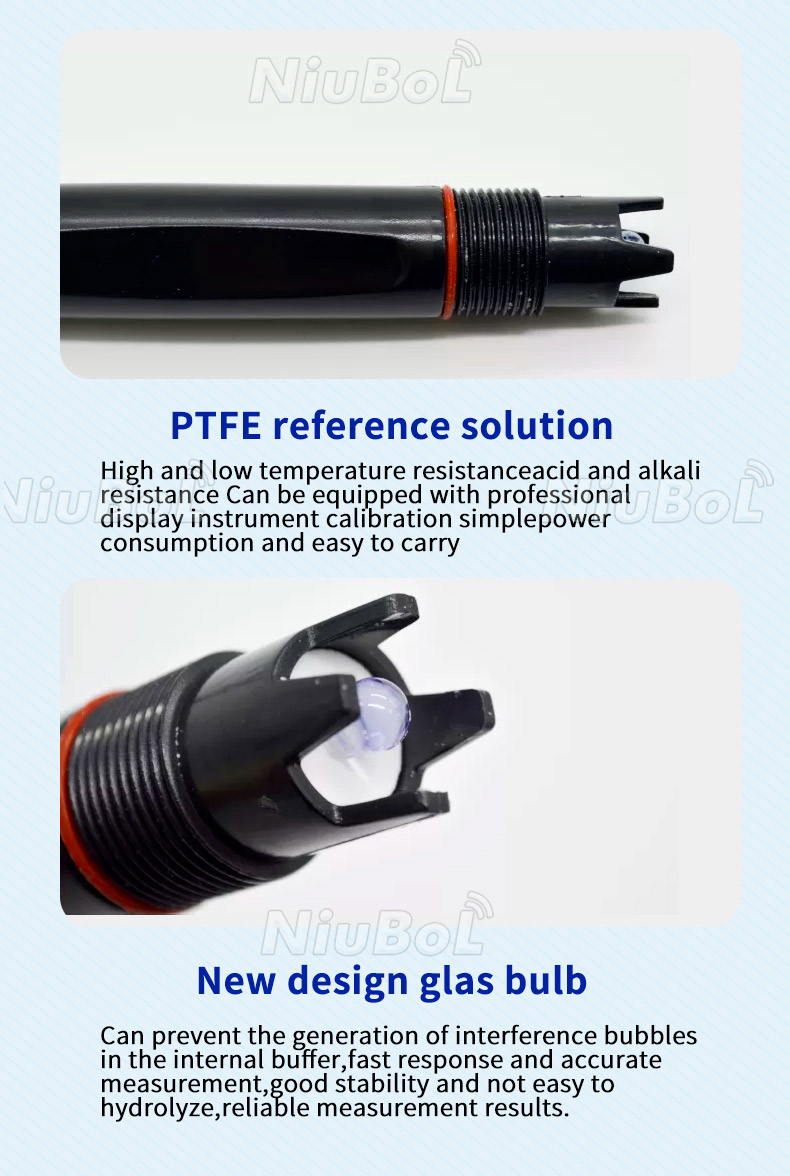
NiuBoL addresses pain points of traditional equipment such as difficult integration, high power consumption, and high price with the NBL-S-PH series sensor.
System Architecture and Structure Analysis
Sensor consists of pH sensing electrode (probe), external conversion module (transmitter), and protective filter slot.
Special Glass Electrode: Adopts high-sensitivity hydrogen ion selective electrode with extremely fast response speed.
Filtration System: Factory-equipped protective cover and filter net effectively block large soil particles from direct friction on probe, ensuring smooth ion exchange while extending lifespan.
Anti-Interference Housing: Uses waterproof plastic encapsulation, compact transmitter size, easily integrated into various monitoring brackets or automatic irrigation systems.
Core Technical Advantages of Soil pH Sensor
High-Precision Real-Time Monitoring: Provides ±0.1pH industrial-grade precision, data updated every second, truly achieving “real-time pulse taking.”
Maintenance-Free Design: No complex liquid addition operations, overcoming traditional instruments' bulkiness and poor portability disadvantages.
Anti-Interference Signal Output: Supports RS485 (Modbus RTU) protocol, maintaining signal integrity in long-distance transmission.
Extremely Low Power Consumption: Only 0.2W power consumption, very suitable for long-term operation in solar-powered field stations.
| Parameter Item | Technical Specification |
|---|---|
| Measurement Range | 0-14 pH |
| Accuracy | ±0.1 pH |
| Resolution | 0.01 pH |
| Response Time | < 10 seconds (in water response speed) |
| Power Supply Method | DC 12V-24V |
| Output Signal | RS485 (Modbus) / 0-5V / 4-20mA |
| Operating Environment | Temperature 0~80℃; Humidity 0~95%RH |
| Power Consumption | 0.2W |
| Housing Material | Industrial-Grade Waterproof Plastic |
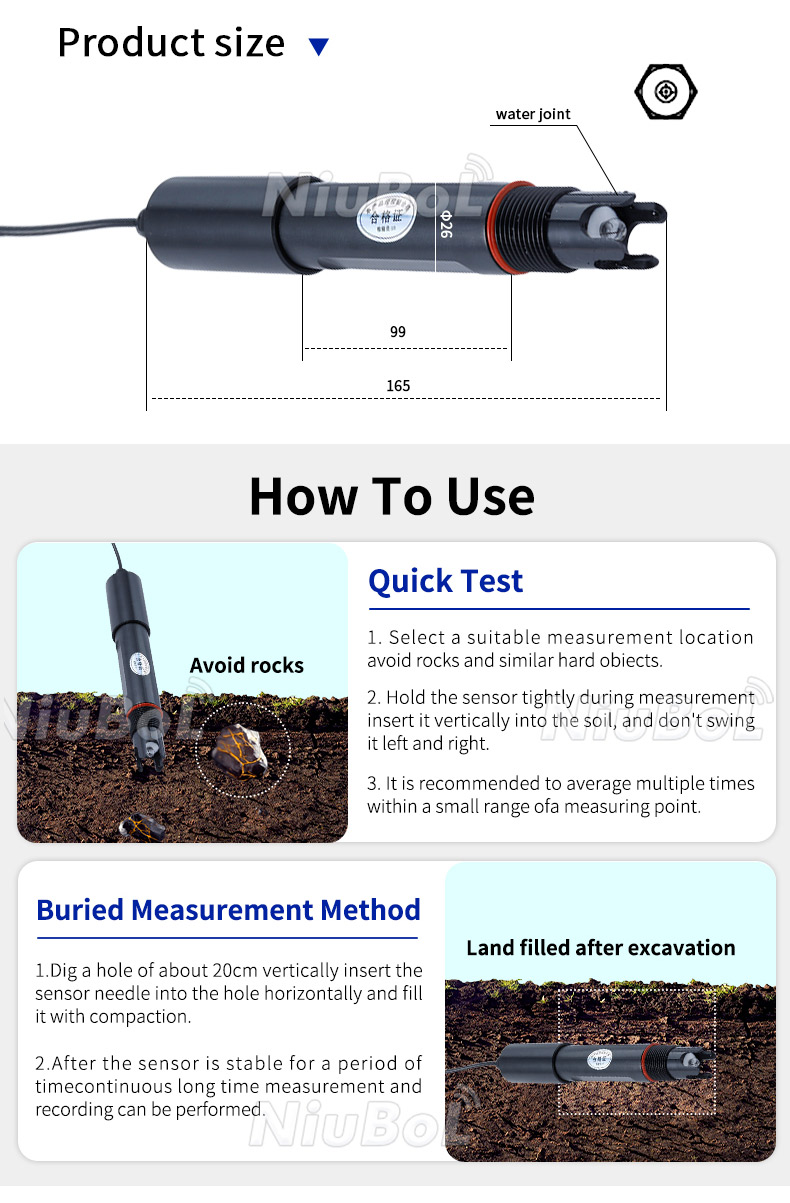
Although the sensor is excellent, improper installation greatly affects precision. Strictly follow the following “engineering four-step method”:
Probe Protection: Before removing transparent protective cover, confirm internal protective liquid complete. Install filter slot and cable ties; strictly prohibit direct hard insertion of bare probe into hard soil layer.
Vertical Insertion: Select representative sampling point, vertically insert into soil, depth must cover filter net part.
Environmental Wetting: After burial, pour appropriate water around test point and wait a few minutes. Moisture is medium for electrochemical measurement; extremely dry soil causes open circuit in measurement, data jumping or zeroing.
Performance Self-Check: Equipped with pH standard buffer solutions. Recommend regular calibration to ensure long-term monitoring zero drift minimized.
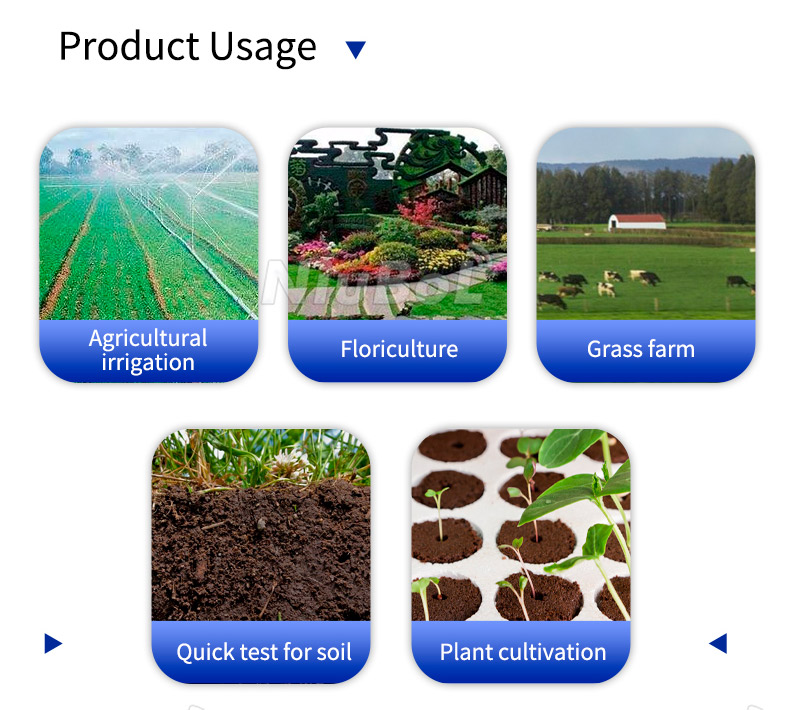
Precise Agricultural Irrigation: Automatically monitors soil acid-base response after water-fertilizer ratio, preventing nutrient antagonism.
Flower Horticulture: Provides refined environmental closed-loop control for expensive ornamental plants (such as azaleas, camellias).
Environmental Protection and Sewage Treatment: Real-time monitors industrial wastewater pH neutralization process to prevent environmental pollution.
Water Conservancy and Scientific Experiments: Provides high-frequency historical data curves in soil improvement research, supporting platform access.
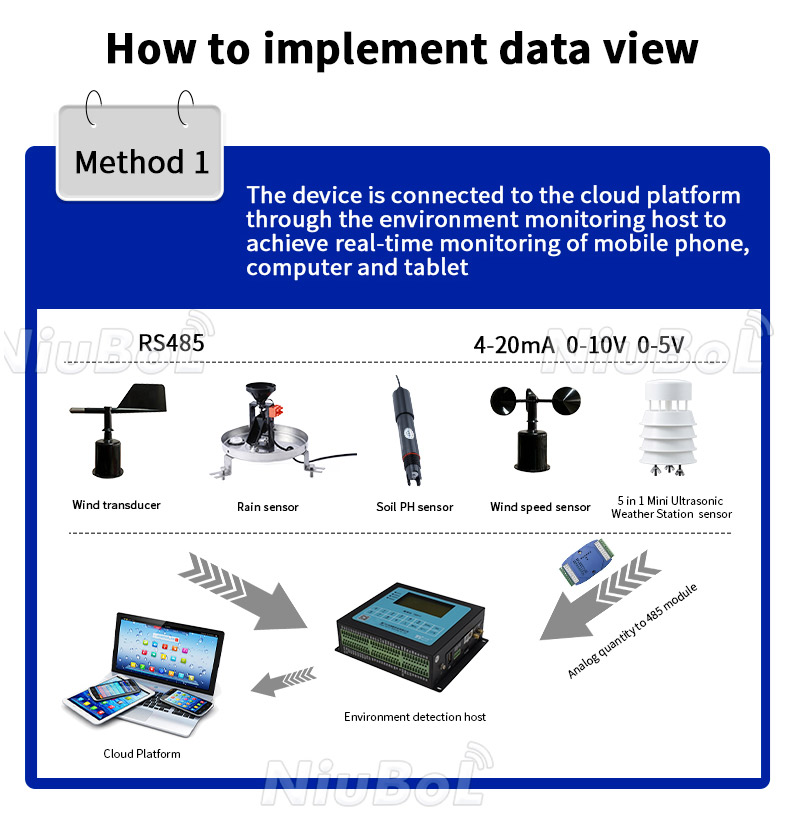
To ensure sensor outputs “valid data” rather than “error noise,” installation process must strictly execute:
Pre-Processing
Before installation, check if filter slot firmly fixed and filter net tightly wrapped. Remember not to remove filter net and directly contact probe with soil.
Depth and Site Selection
Vertically insert according to crop root distribution layer (usually 20-40cm below surface). Site selection should avoid recently fertilized points, choosing typical and flat areas.
Environmental Coupling
Most critical step: After burying probe, must pour appropriate water around. Sensor measures “soil solution” pH. Extremely dry soil causes unstable potential.
Regular Calibration
Although NiuBoL sensor extremely stable, recommend using equipped standard buffer solutions (pH 4.01 / 6.86 / 9.18) once per planting season to eliminate zero drift.
Q1: Why different points in same field give different data?
A: Soil has extremely strong spatial heterogeneity. Uneven fertilization, irrigation dead zones, and local organic matter decomposition cause slight pH differences. This is why we recommend multi-point LoRaWAN deployment in large-scale farms, taking average as decision basis.
Q2: Can pH sensor measure hydroponic fertilizer liquid?
A: Yes. NBL-S-PH sensor also suitable for nutrient solution monitoring in aquaculture, sewage treatment, and agricultural water-fertilizer integration, with faster response in liquids (< 10 seconds).
Q3: If probe glass bulb breaks, can it be repaired?
A: Glass electrode is core precision component; once physically broken, cannot be repaired. Strictly use filter slot during installation; prohibit violent insertion.
Q4: How to store when not used for long time?
A: If sensor needs removal for long-term storage, must insert into transparent cover with protective liquid (usually 3.0mol/L KCl solution) to prevent probe drying failure.
Q5: How to export data for scientific research analysis?
A: NiuBoL cloud platform supports one-click export of Excel format historical records. If connected to local PLC system, can poll sample once per minute via RS485 (Modbus RTU) protocol.
Soil pH value is not just a number; it is a physical examination indicator of land vitality. NiuBoL intelligent soil pH sensor, through high-frequency measurement, precise output, and seamless LoRaWAN networking, transforms previous “feeling-based” soil conditioning into “data-based” precise operations.
Only by real-time mastering land's acid-base pulse can we truly achieve fertilizer reduction, efficiency increase, quality improvement, and income growth, realizing true sustainable cultivation on this land.
Prev:Smart Cultivation:NiuBoL Greenhouse Intelligent Environmental Monitoring Solution
Next:Definition, Working Principle, and System Composition of Soil Moisture Monitoring Stations
Related recommendations
Sensors & Weather Stations Catalog
 Agriculture Sensors and Weather Stations Catalog-NiuBoL.pdf
Weather Stations Catalog-NiuBoL.pdf
Agriculture Sensors Catalog-NiuBoL.pdf
Water Quality Sensor Catalog-NiuBoL.pdf
Related products
 Combined air temperature and relative humidity sensor
 TDR Soil Moisture & Temperature Sensor for irrigation| RS485 |4-20mA| NBL-S-THR
 Soil pH sensor RS485 soil Testing instrument soil ph meter for agriculture |NBL-S-PH
 Wind Speed sensor Output Modbus/RS485/Analog/0-5V/4-20mA
 Tipping bucket rain gauge for weather monitoring auto rainfall sensor RS485/Outdoor/stainless steel
 Pyranometer Solar Radiation Sensor 4-20mA/RS485

Screenshot, WhatsApp to identify the QR code
WhatsApp number:+8615367865107
(Click on WhatsApp to copy and add friends)

