





— Blogs —
—Products—
 Consumer hotline +8618073152920
 WhatsApp:+8615367865107
Address:Room 102, District D, Houhu Industrial Park, Yuelu District, Changsha City, Hunan Province, China
Product knowledge
Time:2026-03-02 14:03:09 Popularity:628
Quick Answer: Solar-powered rain gauge station integration must preserve rainfall counting when communication or charging is interrupted. Select the gauge output and acquisition together, then size energy supply for the complete logger and modem arrangement. A passive rain-gauge contact, an RS485 transmitter and a remote rainfall station are different electrical systems.
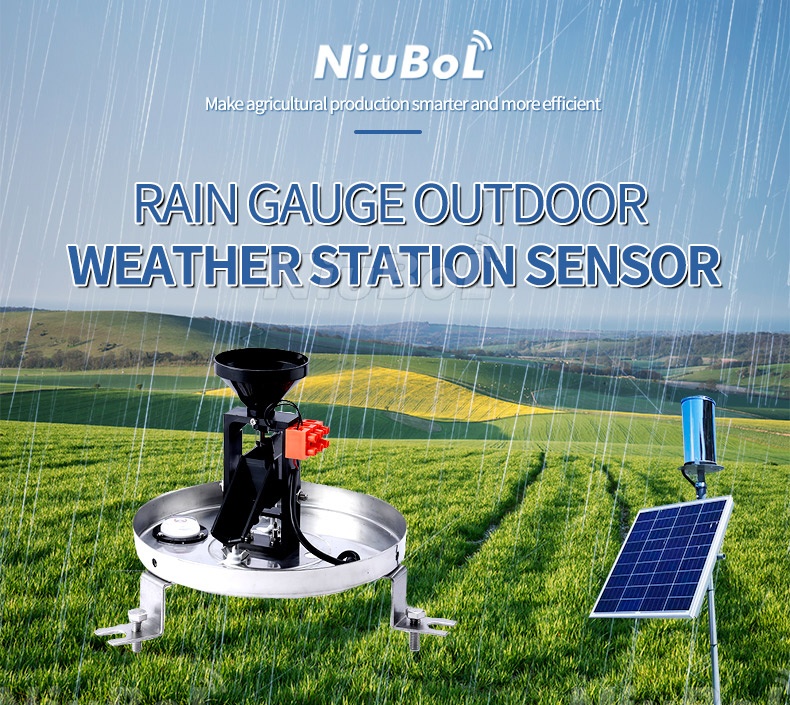
A tipping bucket converts collected liquid precipitation into discrete tips. A reed-switch version provides contact events that an appropriate counter reads. A transmitter version processes the signal and provides its ordered output. Neither arrangement automatically includes cellular upload, local storage or flood-warning logic.
For a remote catchment point, specify whether the acquisition stores individual tip times, interval totals or a running accumulation. These records support different analyses. A daily total cannot reconstruct a short intense event, while an instantaneous display does not establish that a complete historical series was stored.
Choose a counter input suitable for the actual contact behavior. Check input voltage, pulse handling and any debounce requirements. Excessive filtering can reject real tips; insufficient handling can count contact bounce more than once. Test the selected logger and gauge together rather than relying on a generic digital-input label.
For an illustrative 0.2 mm gauge, 42 valid tips correspond to 8.4 mm of collected rain. Fourteen tips over a defined two-minute interval correspond to a mean intensity of 1.4 mm/min for that interval. This is not the peak intensity within the interval or a flood-warning threshold.
The timestamp convention matters. Define whether the record marks the beginning or end of the interval, and what happens to a tip at the boundary. Two systems can disagree about an event without losing tips if they assign the same tip to adjacent reporting periods.
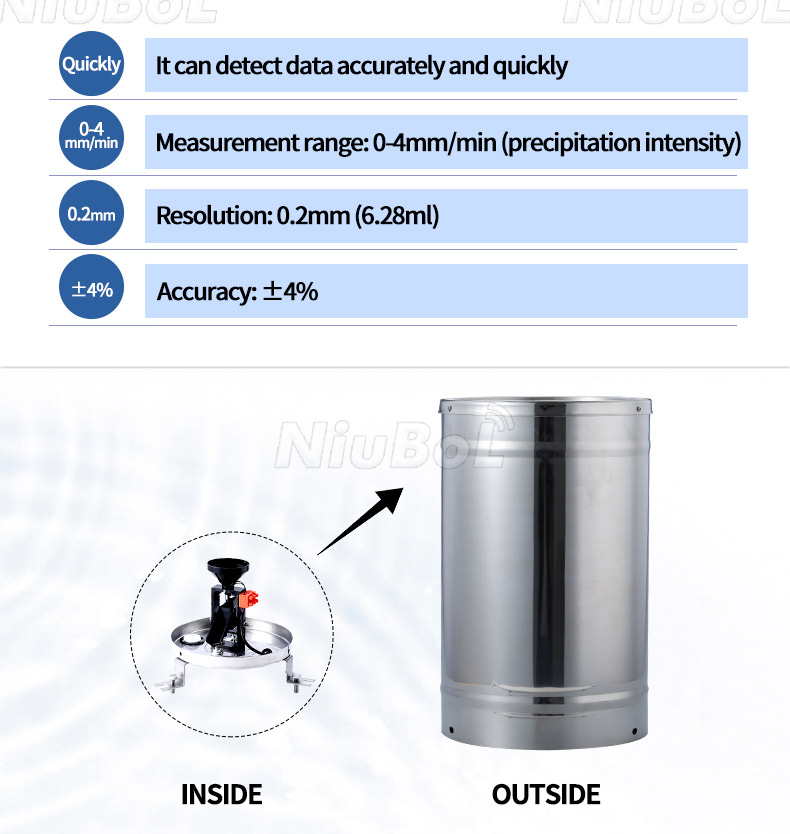
| NBL-W-RS 0.2 mm configuration | Characteristic | Integration implication |
|---|---|---|
| Collector and resolution | 200 +/-0.6 mm diameter; 0.2 mm per tip, approximately 6.28 mL | Use the actual bucket scale in the logger. |
| Intensity range | 0-4 mm/min | This is not an upper limit on stored accumulated rainfall. |
| Stated accuracy condition | +/-4% under the stated indoor static test at 2 mm/min | Do not generalize this to all field wind and rainfall conditions. |
| Output options | Reed-switch, voltage or RS485 version | Specify the chosen arrangement; digital acquisition needs the delivered data definition. |
| Powered versions | 5 V DC or 12-24 V DC option | Do not treat this as one unrestricted 5-24 V input range. |
| Environment | Operating 0-50 degrees C; storage -40 to +80 degrees C | An unheated gauge is not a complete freezing-precipitation solution. |
| Cable and field package | Standard cable 5 m; jacket, extensions, consumption and enclosure protection to be specified | Size and protect the complete acquisition point, not an assumed universal package. |
Do not use the consumption of a reed switch as the station energy requirement. The logger, transmitter if fitted, modem and controller may dominate the load. Nor should a lithium battery chemistry, seven-day autonomy or a one-watt station load be assumed without the actual configuration and design conditions.
A logger that sleeps between uploads may still count rainfall if its implemented input supports that behavior. A logger that stops counting while asleep can miss the event the project was installed to observe. Verify the actual low-power mode instead of equating a long battery life with complete rain records.
Clarify whether the running total resides in the gauge transmitter, logger or receiving platform. If two devices maintain totals, define which is authoritative and how their intervals are reconciled. A platform should not add repeated transmissions of the same cumulative value as if each were new rain.
When power is interrupted, check whether the counter and clock persist and whether pulses can be captured during the interruption. No acquisition system can reconstruct unobserved tips simply by reconnecting to a server. Identify such periods as missing coverage instead of automatically entering zero rainfall.
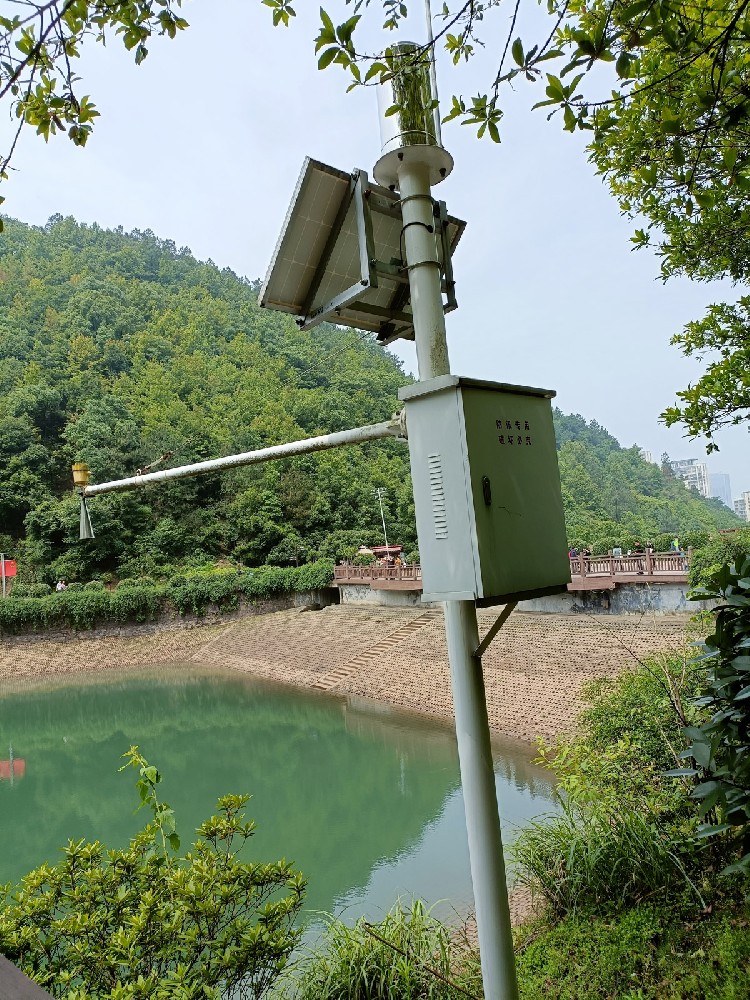
RS485 Modbus RTU can be useful for an ordered compatible gauge transmitter connected to a logger or RTU. Confirm supported requests, register definitions, units and reset behavior. A shared RS485 connection does not make every transmitter's total, intensity and alarm registers interchangeable.
The remote link is a separate function. A cellular modem, Ethernet connection or configured radio network needs appropriate equipment and coverage. MQTT reporting, if implemented, belongs to the logger or gateway configuration, not automatically to the rain-gauge body.
Test recovery using actual rainfall records. Interrupt the network under a controlled procedure while acquisition continues, then inspect the recovered timestamps and totals. Check gaps and duplicate messages. A connected line on a chart can hide an unavailable period and should not be accepted as proof of stored observations.
If several stations report to one system, retain each point's identity and event time. Do not aggregate neighboring gauges into a catchment rainfall value without a defined method. Spatial rainfall interpretation is a hydrological task, not a default consequence of adding more connected points.
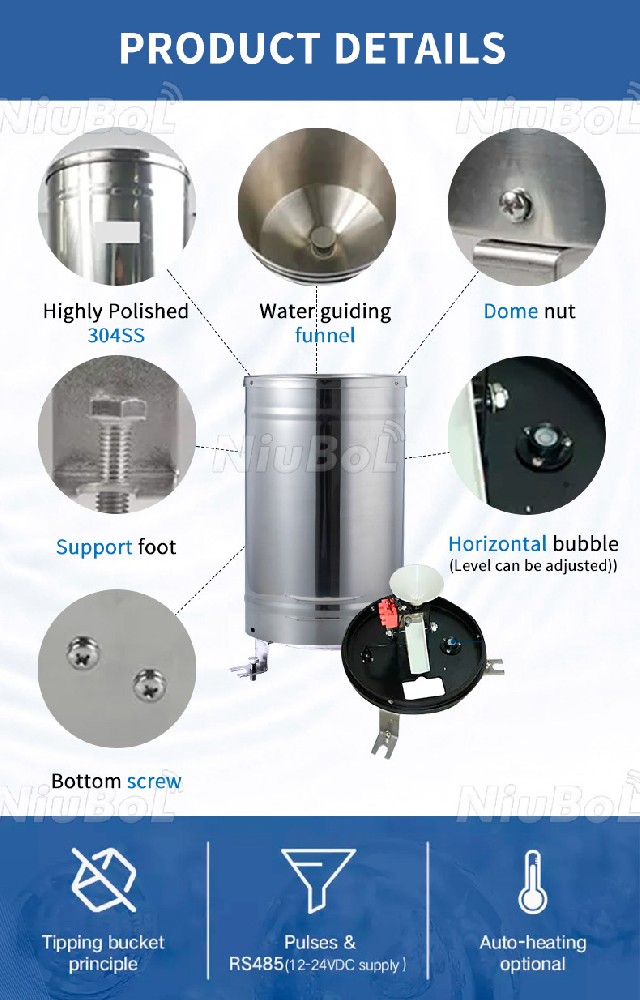
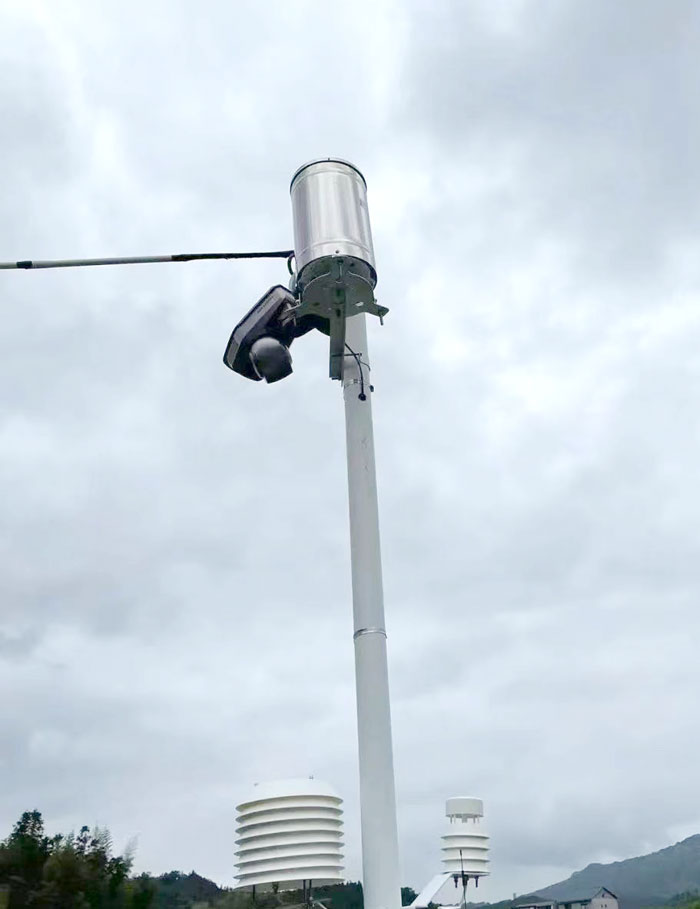
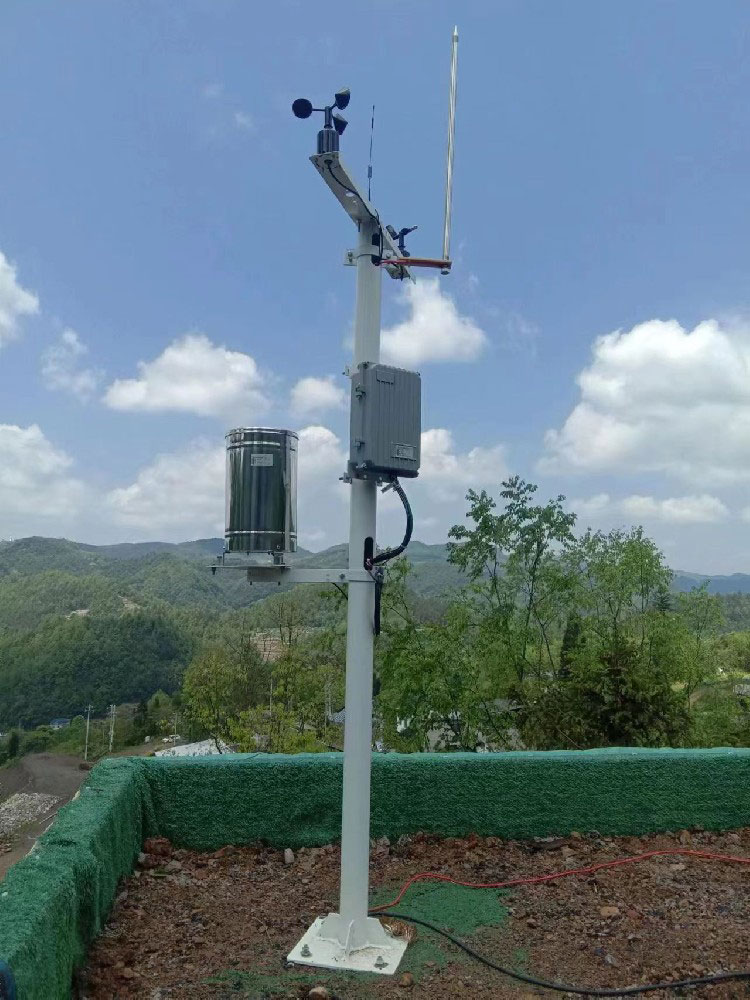
Keep the collector level on a stable support and choose a representative exposure with appropriate clearance from obstructions. Avoid splash, roof runoff and nearby irrigation. Assess wind disturbance and potential shading or interception from structures rather than applying one unsupported distance rule to every site.
The solar panel and enclosure should not obstruct the collector or compromise access. Route cables so water does not enter terminations and servicing does not pull on the gauge. Specify suitable field surge protection and earthing through the site's electrical design; no single grounding-resistance number establishes lightning protection for every installation.
The double-bucket assembly shown below is a different gauge construction. If a project selects it instead of the single-bucket option, obtain its own specification and acquisition definition. A common appearance or brand does not justify transferring one instrument's calibration conditions to another.
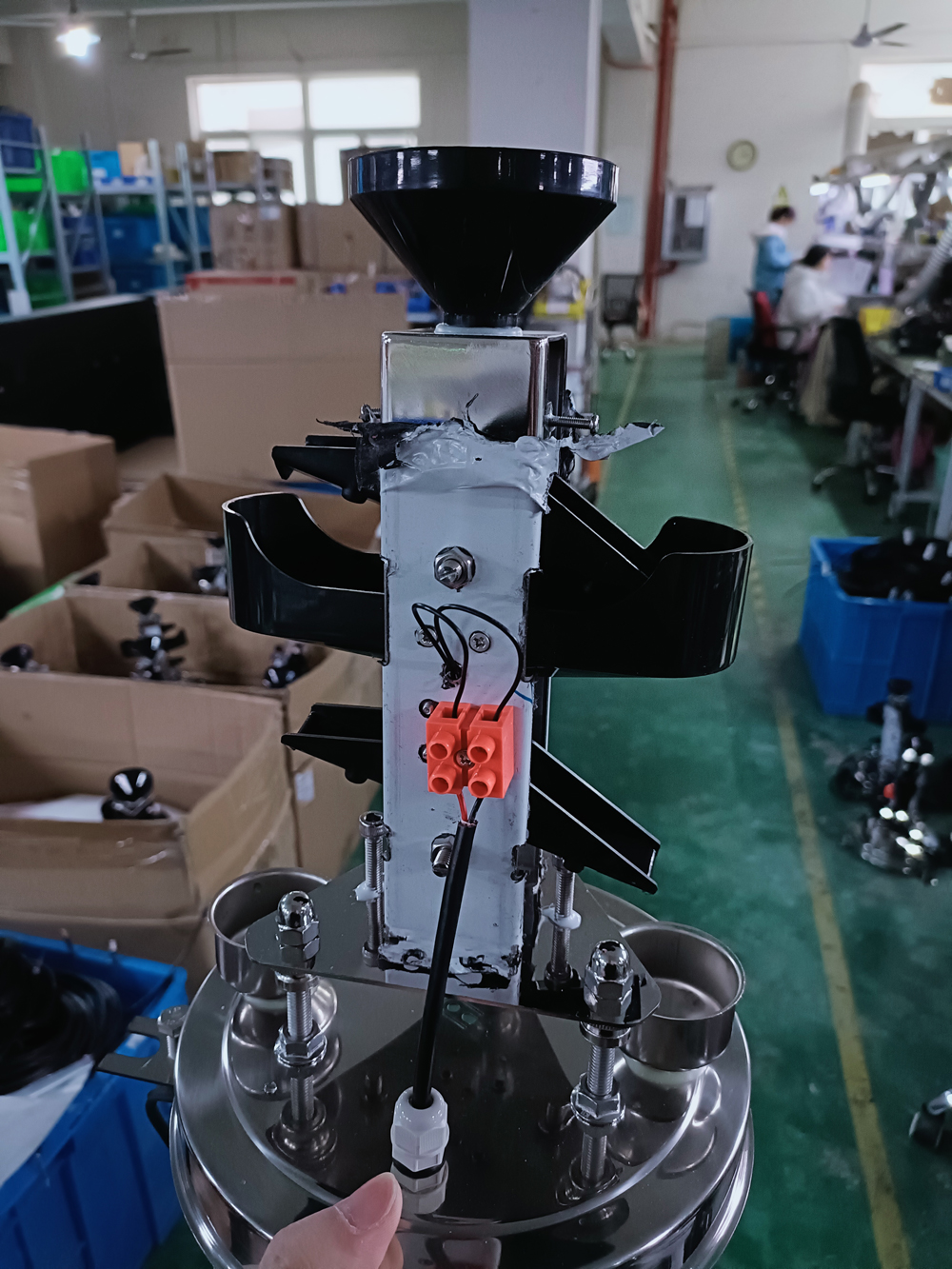
Inspect the funnel, filter, mechanism, drain and level before testing. Remove transport restraints where fitted. Use a suitable controlled-water procedure at the required rate; rapidly emptying an arbitrary container into the funnel is not a valid calibration method.
An input pulse simulation verifies counting and transmission downstream of the simulated point. It does not test collection losses or the bucket's mechanical volume. A controlled-water test includes the mechanism, but still needs the correct test conditions before its result can be interpreted.
Inspect start-up after an intentional power interruption. Record whether totals reset, the clock recovers and the receiving system recognizes the event. A decreasing cumulative value requires a defined reset treatment, not a negative-rainfall calculation or an unexplained correction to the earlier record.
Set maintenance from actual exposure and service history. Dust, leaves, insects and bird activity can obstruct collection before a fixed calendar interval arrives. A communications heartbeat proves a network function, not a clear funnel or freely moving bucket.
Rainfall can support catchment review when combined with water level, terrain and an appropriate runoff method. It is not itself a flood forecast or a universally valid alarm threshold. A site warning arrangement needs its own analysis, operational responsibility and treatment of missing data.
For agriculture, collected rain is not automatically effective root-zone water. For a reservoir, it is not the same as inflow. Define the intended use when asking NiuBoL for a station so the event record and any additional channels match the project's analysis.
Request a configuration identifying gauge, counter, logger, remote link, storage, power and mounting. Include destination, seasonal charging constraints, required event resolution and access limitations. Compare those items explicitly instead of assuming every solar-powered rainfall package supplies the same functionality.
It can if the actual acquisition remains powered and counts events correctly. Verify the logger's operating mode; a passive contact cannot retain a history by itself when no counter is observing it.
No. It is the field connection to compatible acquisition equipment. Remote delivery requires a configured logger or gateway, network access and a receiving interface.
No. Autonomy depends on complete load, battery, temperature, charging conditions and operating schedule. It must be established for the ordered package rather than inferred from the rain gauge model.
Not without interpreting the counter. A cumulative value already includes earlier tips. Calculate changes using the correct interval and reset treatment, and avoid counting a retransmitted value twice.
No. It checks the downstream input and data path. Mechanical verification requires a suitable water test and inspection of the actual collector and tipping mechanism.
Check the gauge scale and mechanical response, counting through the intended power mode, timestamp definition, outage recovery and installed exposure. Accept the complete rainfall record rather than only a successful server connection.
Integrate a solar-powered rainfall point around uninterrupted event counting and interpretable records. Match the gauge version to acquisition, treat energy and communication as separate engineering functions, and verify both the mechanism and data recovery. Do not replace those checks with an assumed autonomy or protocol label.
 NBL-W-ARS-Tipping-bucket-rain-gauge-instruction-manual.pdf
NBL-W-RS-Rain-sensors-instruction-manual-V4.0.pdf
NBL-W-DRS-Double-Tipping-Bucket-Rain-Sensor-Instruction-Manual.pdf
Prev:Compact Weather Station Maintenance: Sensor-Specific Service and Return Checks
Next:Solar-Powered Rain Gauge Station: Size Power Without Missing Rainfall
Related recommendations
Sensors & Weather Stations Catalog
Agriculture Sensors and Weather Stations Catalog-NiuBoL.pdf
Weather Stations Catalog-NiuBoL.pdf
Agriculture Sensors Catalog-NiuBoL.pdf
Water Quality Sensor Catalog-NiuBoL.pdf
Related products
 Combined air temperature and relative humidity sensor
 TDR Soil Moisture & Temperature Sensor for irrigation| RS485 |4-20mA| NBL-S-THR
 Soil pH sensor RS485 soil Testing instrument soil ph meter for agriculture |NBL-S-PH
 Wind Speed sensor Output Modbus/RS485/Analog/0-5V/4-20mA
 Tipping bucket rain gauge for weather monitoring auto rainfall sensor RS485/Outdoor/stainless steel
 Pyranometer Solar Radiation Sensor 4-20mA/RS485

Screenshot, WhatsApp to identify the QR code
WhatsApp number:+8615367865107
(Click on WhatsApp to copy and add friends)

