





— Blogs —
—Products—
 Consumer hotline +8618073152920
 WhatsApp:+8615367865107
Address:Room 102, District D, Houhu Industrial Park, Yuelu District, Changsha City, Hunan Province, China
Product knowledge
Time:2026-04-21 13:35:37 Popularity:399
Automatic monitoring of pollution sources from key pollution discharge units is an important means of current environmental management. For pollution discharge units with a certain scale of daily average wastewater discharge or located in sensitive areas, installing online monitoring equipment has become a mandatory requirement. Pollution discharge units that meet the screening conditions for key water environment and atmospheric environment pollution discharge units in the “Key Pollution Discharge Unit Directory Management Regulations (Trial)” or satisfy any of the ten specific situations must complete the installation, debugging, acceptance, and networking of automatic monitoring equipment with the ecological environment authorities platform within the specified time.
As a professional pollution source online monitoring equipment manufacturer, NiuBoL focuses on providing automatic monitoring system solutions that comply with national technical specifications for system integrators, IoT solution providers, project contractors, and engineering companies. Our equipment supports multi-parameter monitoring of TOC, COD, ammonia nitrogen, pH, flow, etc., helping pollution discharge units efficiently complete compliance construction while providing stable and reliable data collection and transmission support for engineering teams. This article systematically sorts out the installation requirements, monitoring items, system composition, and implementation points for online monitoring of key pollution discharge units, providing technical reference for project implementation.
According to relevant regulations, pollution discharge units listed as key pollution sources by the environmental protection administrative departments at or above the municipal (prefecture) level, or key pollution discharge units located in environmentally sensitive areas, shall install online monitoring equipment for main pollutants and auxiliary instruments. Specifically, it includes:
Pollution discharge units with a daily wastewater discharge of 100 tons (i.e., 100 m³/d) or more or a daily discharge of chemical oxygen demand of 30 kilograms or more shall install sewage flowmeters and pollution control facility operation recorders.
Key pollution discharge units shall install online monitoring instruments for main pollutants such as TOC, COD, and pH, as well as sewage flowmeters and pollution control facility operation recorders.
Ecological environment authorities at the municipal level determine the list of key pollution discharge units in their administrative regions before the end of March each year. The total pollution discharge of key pollution discharge units shall not be less than 80% of the total industrial pollution discharge in the administrative region. The list shall clearly specify the industry, main discharge outlets, monitoring indicators, implementation standards, and emission limits, and shall be made public to society.
Pollution discharge units shall complete the installation, debugging, acceptance, and networking of automatic monitoring equipment within 6 months after the list is made public. Failure to complete on time will face corresponding regulatory measures.
The “Regulations” clearly specify ten specific situations. Pollution discharge units meeting any one of them shall be included in the key pollution discharge unit list:
1. Those with a daily average wastewater discharge of 100 cubic meters (100 m³/d) or more;
2. Those that directly discharge wastewater into river and lake water functional zones such as water source protection zones and drinking water source zones;
3. Those located in sensitive areas such as quasi-protection zones of surface drinking water sources and nature reserves, where wastewater is directly discharged into the environment;
4. Coastal municipal direct sea-discharging industrial enterprises and urban sewage treatment plants;
5. Nitrogen-related key industry enterprises that directly discharge into the sea or into rivers flowing into the sea;
6. Those with exhaust stacks with a height of 45 meters or more or an equivalent inner diameter of 1 meter or more;
7. Coal-fired boilers of 20 tons or more, or industrial kilns or various incinerators with exhaust volume equivalent to 20 tons or more of coal-fired boilers;
8. Cupola furnaces, glass melting furnaces, brick and tile sintering kilns using coal and coal gangue as fuel, refractory material roasting kilns (except electric kilns), carbon roasting (calcining) furnaces (kilns), lime kilns, chromium salt roasting kilns, phosphorus chemical roasting kilns, ferroalloy submerged arc furnaces and refining furnaces, etc.;
9. Fixed emission sources with VOCs emission rate (including equivalent emission rate of equivalent exhaust stacks) greater than 0.5 kg/h or exhaust volume greater than 10,000 cubic meters/h;
10. Other situations that the ecological environment authorities consider should be included in the key pollution discharge unit list.
The above situations cover key areas such as high emission volume, sensitive areas, specific industries, and high VOCs emission sources. When designing projects, engineering companies need to assess in advance whether automatic monitoring is required by comparing these conditions.
Key pollution discharge units shall install automatic monitoring equipment at the following discharge outlets:
Main wastewater discharge outlets and organized waste gas discharge outlets screened according to industry pollutant discharge permit application and issuance technical specifications, self-monitoring technical guidelines, emission standards, and national and provincial key industry comprehensive treatment plans;
For units that have been issued pollutant discharge permits, the discharge outlets explicitly required to implement automatic monitoring in the permit;
If it is still difficult to determine after screening by the first two items, a “one plant, one policy” approach can be used. On the basis of expert argumentation, a technical scheme for automatic monitoring installation at discharge outlets shall be formulated. For the monitoring discharge outlets determined by this scheme, the annual pollutant discharge volume shall not be less than 80% of the total organized annual discharge volume of that pollutant.
For unorganized waste gas emissions, it is encouraged to change them to organized emissions through collection measures. Small dense exhaust stacks or processes should build a unified collection and treatment system, discharge through one exhaust stack, and install automatic monitoring equipment.
Some regions such as Shandong Province have also clarified situations exempt from installation: where pollutant discharge concentration is lower than the detection limit of existing automatic monitoring equipment, or where the discharge outlet does not meet the measurement point installation requirements specified in the technical specifications and cannot be rectified, after providing third-party monitoring reports, expert argumentation opinions, and other materials, and after review and confirmation by the municipal ecological environment authorities, self-monitoring can be carried out, and the local ecological environment authorities shall implement supervision and monitoring.
Key monitoring items for water environment pollution discharge units:
Mandatory items: chemical oxygen demand (COD), ammonia nitrogen (NH₃-N), wastewater flow, pH value;
Extended items: centralized sewage treatment facilities and key nitrogen and phosphorus emission industry enterprises also need to monitor total nitrogen (TN) and total phosphorus (TP).
Key monitoring items for atmospheric environment pollution discharge units:
Mandatory items: particulate matter (PM), sulfur dioxide (SO₂), nitrogen oxides (NOₓ), and flue gas oxygen content, flow velocity, flow, temperature, humidity;
Special industry supplements: domestic garbage and hazardous waste incinerators add carbon monoxide (CO) and hydrogen chloride (HCl); volatile organic compound emission key sources add VOCs (non-methane total hydrocarbons) monitoring.
Some industries can be appropriately exempted according to fuel type or process characteristics: those using natural gas as fuel can temporarily not monitor SO₂ and particulate matter; specific dust removal systems in the steel industry and grate coolers (kiln heads) in the cement industry can be exempted from monitoring SO₂ and NOₓ.
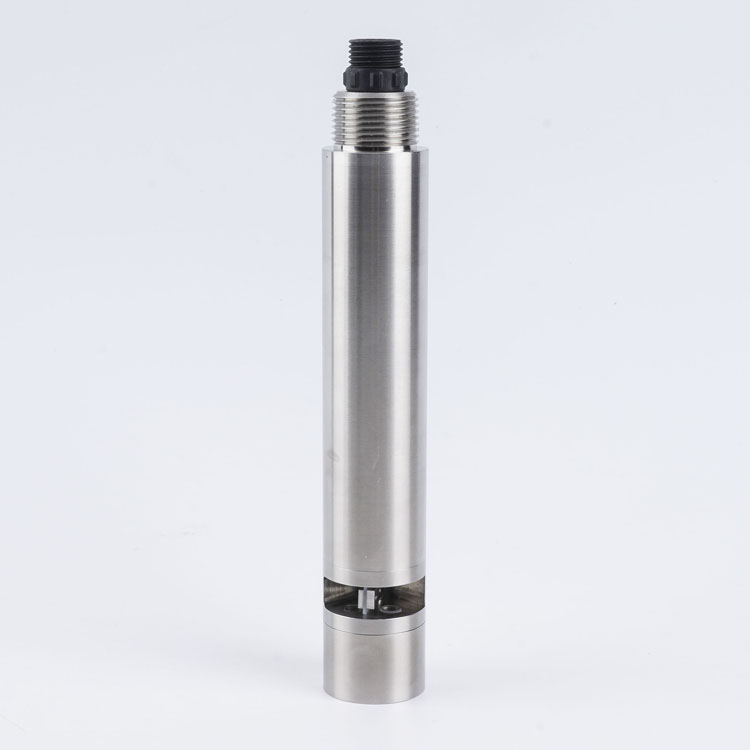
The water quality online monitoring system takes the provision of representative, timely, and reliable sample information as the core, using automatic control technology, computer technology, and professional software to build a complete system from sampling, pretreatment, analysis to data processing and storage.
Typical system composition includes:
Sampling system
Pretreatment system
Data acquisition and control system
Online monitoring analysis instrument
Data processing and transmission system
Remote data management center
Each subsystem is independent yet collaborates with each other to ensure continuous and reliable system operation. Automatic monitoring equipment must comply with relevant national environmental monitoring and metrological instrument manufacturing regulations. Operating status and working parameters must be uploaded to the pollution source automatic monitoring platform in real time. Video monitoring facilities should be installed in the station room and at the monitoring sampling port.
Installation and debugging must comply with the on-site end construction technical specifications for pollution source automatic monitoring equipment. Data acquisition and transmission shall implement the HJ 212 standard. After networking, automatic monitoring data shall be used as effective evidence for environmental law enforcement and management.
Pollution discharge units may carry out operation and maintenance by themselves or entrust a third-party operation and maintenance unit in accordance with technical specifications to ensure normal equipment operation and true and accurate data.
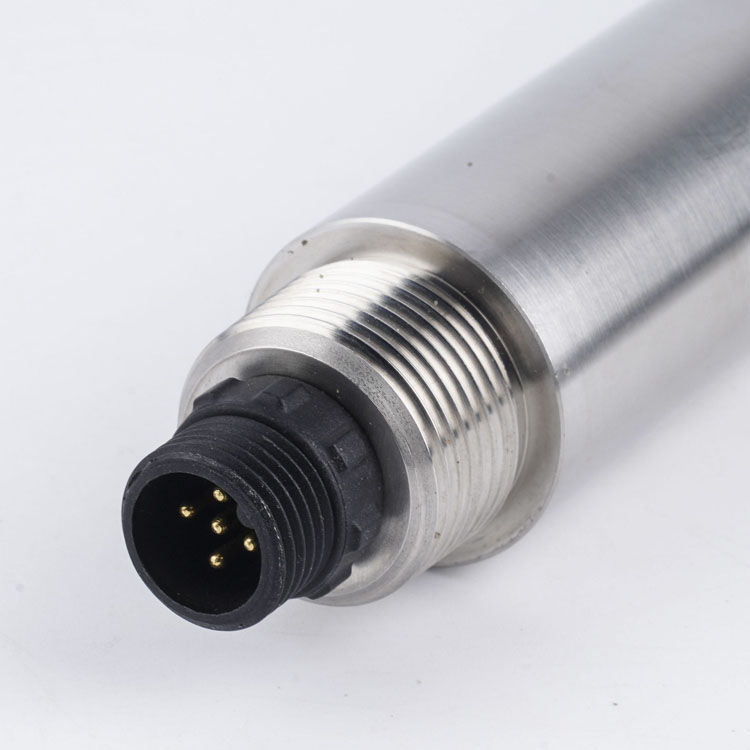
NiuBoL has developed modular automatic monitoring systems that comply with standards such as HJ/T 353 and HJ 212 for the needs of key pollution discharge units. The systems support simultaneous multi-parameter monitoring of water quality and atmosphere and are suitable for various industrial wastewater, urban sewage treatment, and organized atmospheric emission scenarios.
The following are the main technical parameters of typical NiuBoL water quality and atmospheric monitoring instruments:
| Parameter | Measurement Principle | Measurement Range | Communication Protocol | Applicable Scenario |
|---|---|---|---|---|
| COD | Potassium dichromate digestion colorimetric method | 0-2000 mg/L (expandable) | Modbus TCP / MQTT / HJ 212 | Main wastewater discharge outlet |
| Ammonia Nitrogen | Salicylic acid spectrophotometric method | 0-100 mg/L | RS485 / 4-20mA | Key water environment pollution discharge unit |
| Total Nitrogen / Total Phosphorus | Ultraviolet / colorimetric method | TN: 0.2-200 mg/L | OPC UA / Profibus | Key nitrogen and phosphorus industry |
| pH | Glass electrode method | 0-14 | 4-20mA / RS485 | Whole process monitoring |
| Flow | Electromagnetic/ultrasonic flowmeter | 0-5000 m³/h | Modbus TCP / Ethernet | Wastewater flow measurement |
| Particulate Matter (PM) | Laser scattering method | 0-1000 mg/m³ | HJ 212 / MQTT | Organized atmospheric emission outlet |
| SO₂ / NOₓ | Ultraviolet fluorescence / chemiluminescence method | SO₂: 0-5000 mg/m³ | RS485 / OPC UA | Coal-fired boilers, kilns |
| VOCs (Non-methane Total Hydrocarbons) | Gas chromatography / FID method | 0-1000 mg/m³ | Modbus TCP | VOCs key emission sources |
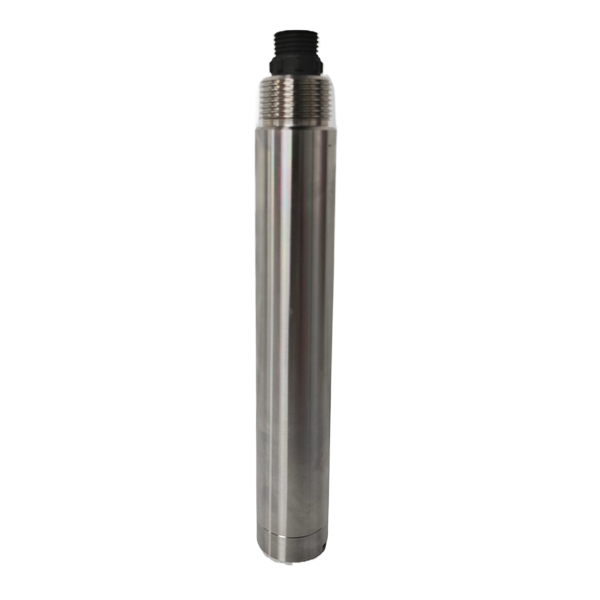
In project execution, engineering companies are recommended to promote according to the following steps:
Compare the ten situations and pollutant discharge permit requirements to determine the discharge outlets that need monitoring;
Select monitoring points that comply with technical specifications and complete station room construction;
After installation and debugging, perform self-acceptance and apply to the municipal ecological environment authorities for networking;
After successful networking, automatic monitoring data shall be used as the basis for law enforcement.
The NiuBoL system reserves a variety of industrial protocol interfaces, facilitating system integrators to quickly access existing DCS or SCADA platforms, while supporting standard docking with the ecological environment authorities platform.
Q1. Which pollution discharge units must install online monitoring equipment?
Pollution discharge units that meet any of the ten situations or are included in the key pollution discharge unit list must complete installation and networking within 6 months after the list is made public.
Q2. How many tons of daily wastewater discharge require the installation of a sewage flowmeter?
Pollution discharge units with a daily wastewater discharge of 100 m³ or more or a daily discharge of chemical oxygen demand of 30 kilograms or more shall install sewage flowmeters and pollution control facility operation recorders.
Q3. What items do key water environment pollution discharge units mainly monitor?
Mandatory monitoring of COD, ammonia nitrogen, pH, and wastewater flow; nitrogen and phosphorus key industries also need to add total nitrogen and total phosphorus monitoring.
Q4. What parameters do key atmospheric environment pollution discharge units need to monitor?
Mandatory monitoring of particulate matter, SO₂, NOₓ, and flue gas oxygen content, flow velocity, flow, temperature, and humidity; VOCs key sources add non-methane total hydrocarbons monitoring.
Q5. How does automatic monitoring data become effective after equipment installation?
After self-acceptance and networking with the ecological environment authorities platform, automatic monitoring data becomes valid data and can be used as the basis for environmental law enforcement.
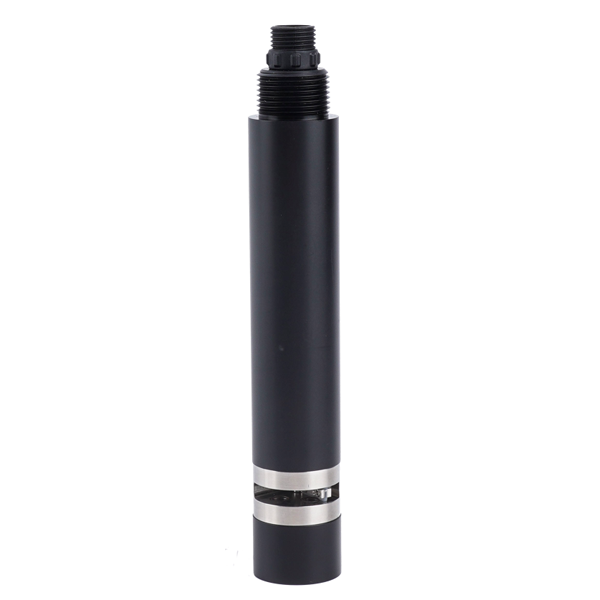
Pollution discharge units meeting any of the ten situations must install online monitoring equipment. This is an important institutional arrangement for current environmental supervision. Accurately understanding the installation scope, discharge outlet screening principles, monitoring items, and system composition is of great significance for system integrators, IoT solution providers, project contractors, and engineering companies to smoothly advance projects. NiuBoL provides professional and reliable pollution source automatic monitoring systems and supporting solutions to help pollution discharge units efficiently complete compliance construction and networking work, while providing stable and reliable technical support for engineering teams.
If you need monitoring scheme design, equipment selection, or networking technical support for specific pollution discharge unit situations, please contact the NiuBoL technical team. We will provide practical and feasible engineering solutions according to actual project needs.
 NBL-NHN-302 Online Ammonia Nitrogen Sensor.pdf
NBL-RDO-206 Online Fluorescence Dissolved Oxygen Sensor.pdf
NBL-COD-208 Online COD Water Quality Sensor.pdf
NBL-CL-206 Water Quality Sensor Online Residual Chlorine Sensor.pdf
Next:Industrial Online pH Sensor: A System Integrator's Guide to Selection, Integration, and Maintenance
Related recommendations
Sensors & Weather Stations Catalog
Agriculture Sensors and Weather Stations Catalog-NiuBoL.pdf
Weather Stations Catalog-NiuBoL.pdf
Agriculture Sensors Catalog-NiuBoL.pdf
Water Quality Sensor Catalog-NiuBoL.pdf
Related products
 Combined air temperature and relative humidity sensor
 Soil Moisture Temperature sensor for irrigation|NBL-S-THR
 Soil pH sensor RS485 soil Testing instrument soil ph meter for agriculture |NBL-S-PH
 Wind Speed sensor Output Modbus/RS485/Analog/0-5V/4-20mA
 Tipping bucket rain gauge for weather monitoring auto rainfall sensor RS485/Outdoor/stainless steel
 Pyranometer Solar Radiation Sensor 4-20mA/RS485

Screenshot, WhatsApp to identify the QR code
WhatsApp number:+8615367865107
(Click on WhatsApp to copy and add friends)

