





— Blogs —
—Products—
 Consumer hotline +8618073152920
 WhatsApp:+8615367865107
Address:Room 102, District D, Houhu Industrial Park, Yuelu District, Changsha City, Hunan Province, China
Product knowledge
Time:2026-04-21 13:31:53 Popularity:454
In water treatment engineering, municipal water supply, and the pharmaceutical industry, turbidity is a key physical indicator for evaluating water clarity and suspended solids content. For system integrators, engineering contractors, and water quality testing institutions, a portable turbidity meter with a precision optical system, high stability, and data management capabilities is the core tool to ensure that on-site test data remains consistent with laboratory standards.
As a global professional sensor manufacturer, NiuBoL is committed to providing partners with precision analysis instruments that meet international standards. This article provides an in-depth analysis of the functional characteristics and industrial integration advantages of portable turbidity meters from a professional perspective.
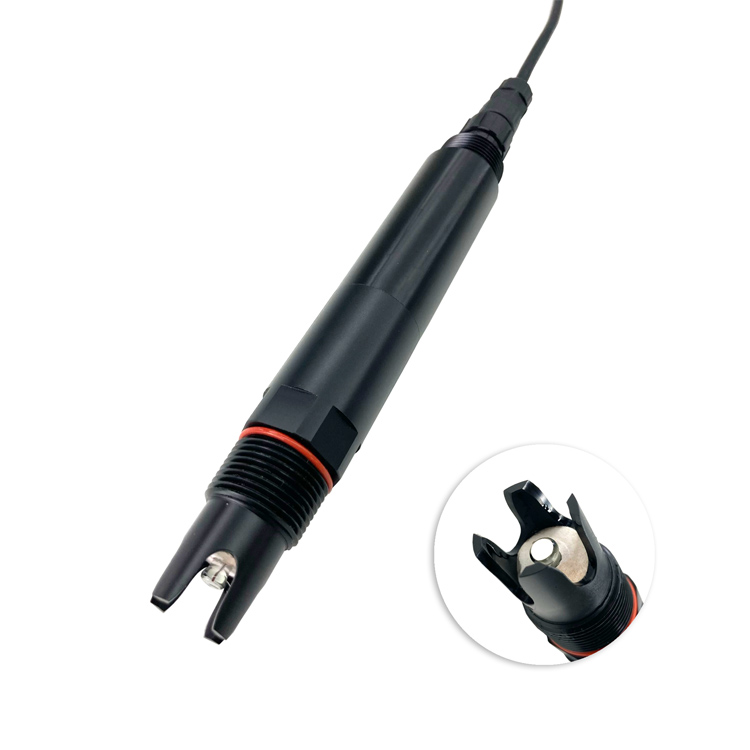
The high-precision performance of the portable turbidity meter stems from its advanced optical architecture. NiuBoL series devices strictly follow the ISO7027 standard and use an 880nm infrared light source.
The portable turbidity meter emits a parallel infrared beam through an optical lens to penetrate the sample liquid. When the beam encounters tiny suspended particles in the water, scattering occurs. The device sets a detector in the direction 90° to the incident light.
Linear correlation: Within a certain range, the intensity of scattered light received by the detector is directly proportional to the number of particles in the water.
Dual-detector ratio calculation: The system consists of a tungsten lamp (or infrared light source), a 90° detector, and a transmitted light detector. The microprocessor calculates the signal ratio of the two detectors, effectively compensating for light intensity fluctuations and interference caused by sample background color, ensuring long-term calibration stability.
Because the optical system design considers the elimination of stray light, accurate readings can still be obtained even in complex field environments or when the sample contains light-absorbing substances such as activated carbon.
The NiuBoL portable turbidity meter is not just a simple reading tool, but a small analysis station integrating data processing and process control.
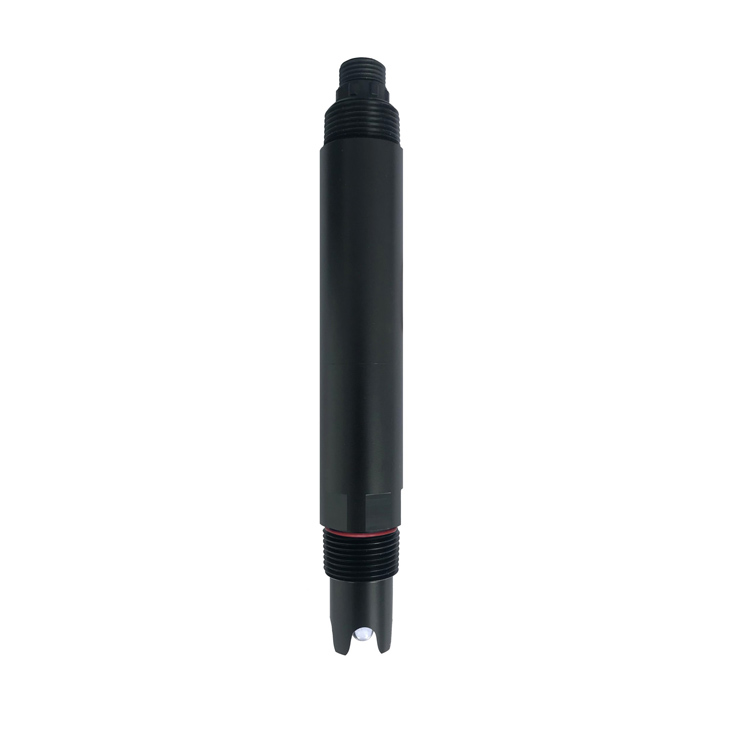
Through the dual-detector compensation system, the device can provide measurement accuracy comparable to laboratory benchtop equipment in harsh industrial sites (such as sewage treatment stations and mine outlets). For measurement tasks susceptible to ambient light interference, the built-in light shield and optical alignment design ensure repeatability.
When dealing with industrial wastewater containing large particles of suspended solids, the rapid settling of particles often causes reading jumps. The portable turbidity meter has a built-in special calculation rule that automatically performs a series of rapid samplings and extracts the average value without manual estimation by the operator, greatly improving the objectivity of the test.
Large-scale storage: Up to 500 groups of measurement values can be automatically stored.
Complete metadata: Stored information includes not only turbidity values but also date, time, operator ID, reading mode, sample number, and calibration status, fully complying with GLP (Good Laboratory Practice) requirements.
With the optional USB + power module, users can download data to a PC without installing complex drivers. This plug-and-play design provides great convenience for engineering contractors to compile later data summary reports.
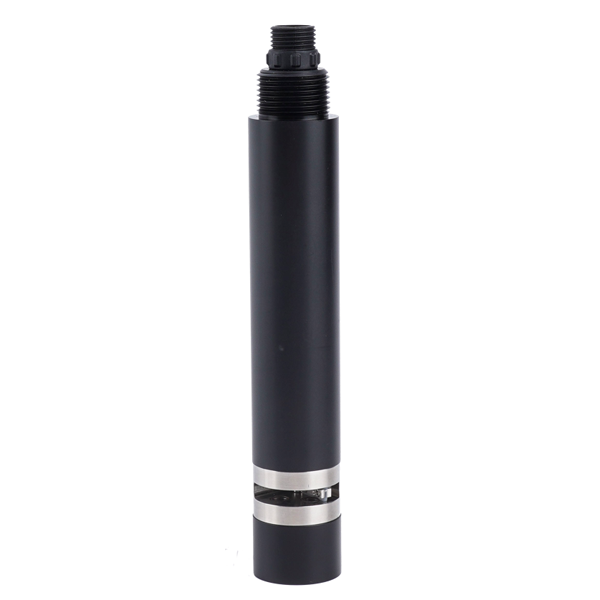
For the convenience of engineering units in equipment selection, the table below lists the core technical indicators of the standard model:
| Parameter Item | Technical Specification | Remarks |
|---|---|---|
| Measurement Principle | ISO7027 standard 90° scattering method | 880nm infrared light source |
| Measurement Range | 0 - 1000 NTU (automatic range switching) | Expandable to 4000 NTU |
| Accuracy | ±2% of reading or ±0.01 NTU | Take the larger value |
| Repeatability | ±1% of reading | Ensure consistency of multiple measurements |
| Resolution | 0.01 NTU (low range) | Suitable for ultra-pure water measurement |
| Data Storage | 500 groups of data | No loss on power failure |
| Output Signal | 4 - 20mA isolated signal | Supports remote control integration |
| Protection Level | IP67 | Industrial-grade waterproof and dustproof design |
| Communication Interface | USB / RS485 | Optional module support |
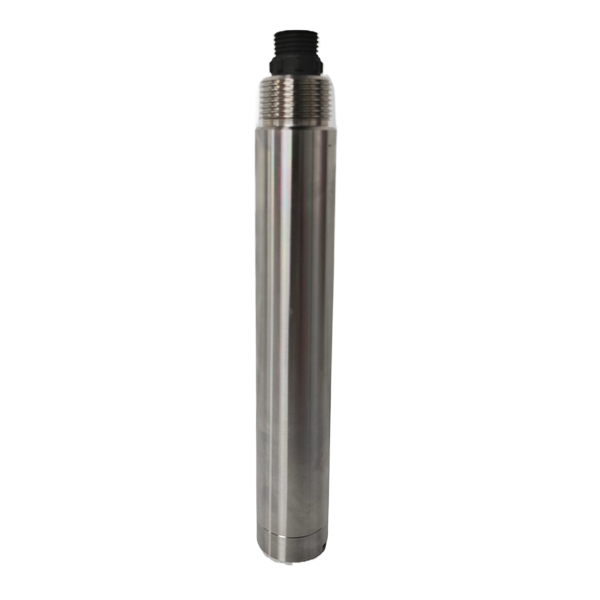
Due to their high flexibility and accuracy, portable turbidity meters have become the standard for water quality monitoring in multiple industries:
Municipal water supply and water plants: Monitor filter effluent turbidity to ensure drinking water meets safety standards.
Sewage treatment industry: Evaluate the suspended solids status of effluent after biochemical treatment.
Pharmaceutical and food industries: Quality control (QA/QC) of process water.
Health disease control and environmental monitoring: Rapid on-site screening for sudden water pollution incidents.
Government and university research: On-site data collection in environmental science research.
Q1. Does the portable turbidity meter need frequent calibration?
It is recommended to calibrate according to usage frequency and industry standards (such as monthly or quarterly). The ratio calculation technology adopted by NiuBoL can effectively compensate for light source aging and has excellent calibration stability.
Q2. What are the advantages of an infrared light source (880nm) compared to a tungsten filament light source?
The infrared light source complies with ISO7027 standards, can effectively reduce interference caused by sample color (such as colored industrial wastewater), has low heat generation, and has a longer service life.
Q3. How does the device handle samples with bubbles?
Bubbles cause light scattering and lead to high readings. It is recommended to let the sample stand for degassing before measurement or use a special defoaming technique.
Q4. Can the stored data be directly exported to Excel?
Yes. Through the USB + power module, data can be transmitted to the computer in CSV format and opened directly in Excel for editing and report generation.
Q5. What is the function of the 4-20mA isolated signal output?
This allows the portable device to act as a temporary online monitor in specific scenarios, connecting the signal to the factory’s PLC or SCADA system to achieve remote data recording.
Q6. What is the difference between the measurement units NTU and FNU?
NTU usually refers to turbidity measured using white light (tungsten filament lamp), while FNU refers to turbidity measured using infrared light in accordance with ISO standards. The numerical values of the two are consistent in most cases.
Q7. Can this instrument measure corrosive liquids?
Measurement is performed in a sample bottle (cuvette). As long as the liquid does not corrode the glass bottle or is wiped clean, it will not directly contact the instrument’s optical system.
The portable turbidity meter is an indispensable tool in smart water affairs and environmental monitoring systems. It not only fills the gap between laboratory offline analysis and fixed online monitoring, but also provides system integrators with reliable on-site verification means with its powerful ratio calculation algorithm, data management capabilities, and industrial-grade protection.
NiuBoL is committed to providing industrial partners with monitoring instruments that reach international levels from the underlying algorithm to the shell process. Choosing NiuBoL means choosing precise, stable, and efficient data support.
 NBL-NHN-302 Online Ammonia Nitrogen Sensor.pdf
NBL-RDO-206 Online Fluorescence Dissolved Oxygen Sensor.pdf
NBL-COD-208 Online COD Water Quality Sensor.pdf
Prev:Kitchen Waste Wastewater Treatment Process Selection and Engineering Application Guide
Next:Pollution Discharge Units Meeting Any of Ten Situations Must Install Online Monitoring Equipment
Related recommendations
Sensors & Weather Stations Catalog
Agriculture Sensors and Weather Stations Catalog-NiuBoL.pdf
Weather Stations Catalog-NiuBoL.pdf
Agriculture Sensors Catalog-NiuBoL.pdf
Water Quality Sensor Catalog-NiuBoL.pdf
Related products
 Combined air temperature and relative humidity sensor
 Soil Moisture Temperature sensor for irrigation|NBL-S-THR
 Soil pH sensor RS485 soil Testing instrument soil ph meter for agriculture |NBL-S-PH
 Wind Speed sensor Output Modbus/RS485/Analog/0-5V/4-20mA
 Tipping bucket rain gauge for weather monitoring auto rainfall sensor RS485/Outdoor/stainless steel
 Pyranometer Solar Radiation Sensor 4-20mA/RS485

Screenshot, WhatsApp to identify the QR code
WhatsApp number:+8615367865107
(Click on WhatsApp to copy and add friends)

