





— Blogs —
—Products—
 Consumer hotline +8618073152920
WhatsApp:+8615367865107
Address:Room 102, District D, Houhu Industrial Park, Yuelu District, Changsha City, Hunan Province, China
Product knowledge
Time:2026-08-08 13:42:24 Popularity:350
Quick Answer: A TDS measurement device can support rinse-water reuse when ionic carryover is a reliable indicator of the site's reuse limit. Most online TDS readings are calculated from conductivity; they do not identify every contaminant. Validate the relationship to the actual rinse process, retain conductivity and temperature, and prevent invalid readings from authorizing reuse.
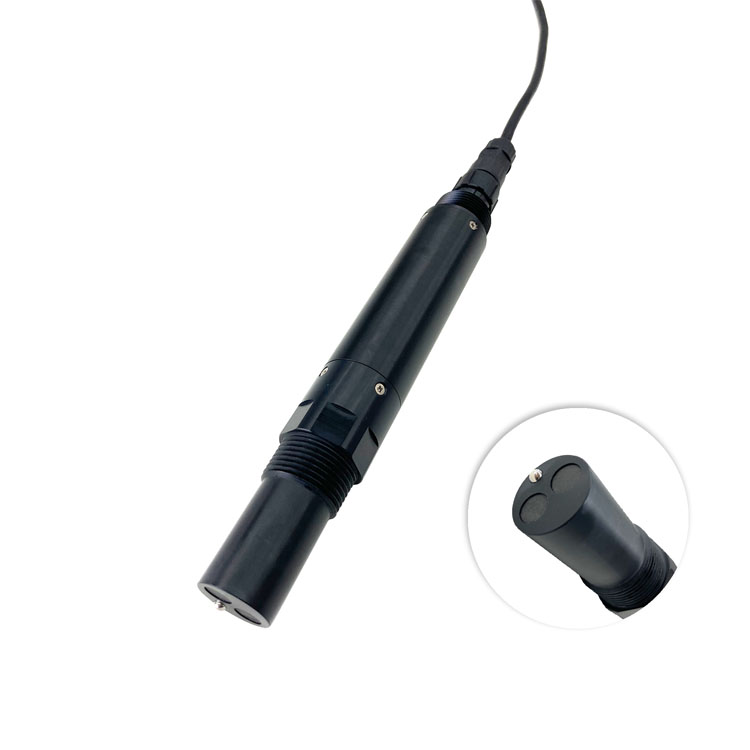
During a rinse, water may change from a concentrated carryover stream to a dilute stream that can serve another process. Conductivity can track ionic residue in many such applications. The decision must still be tied to the receiving process: a stream suitable for an initial wash may be unsuitable for a final product-contact rinse.
Do not define reuse quality by a convenient TDS number alone. Identify the chemicals carried over, the receiving operation and any additional quality requirements. Nonionic organics, microorganisms or specific trace contaminants may not produce a useful conductivity warning. Where these determine suitability, add an appropriate independent check rather than treating low TDS as permission to reuse.
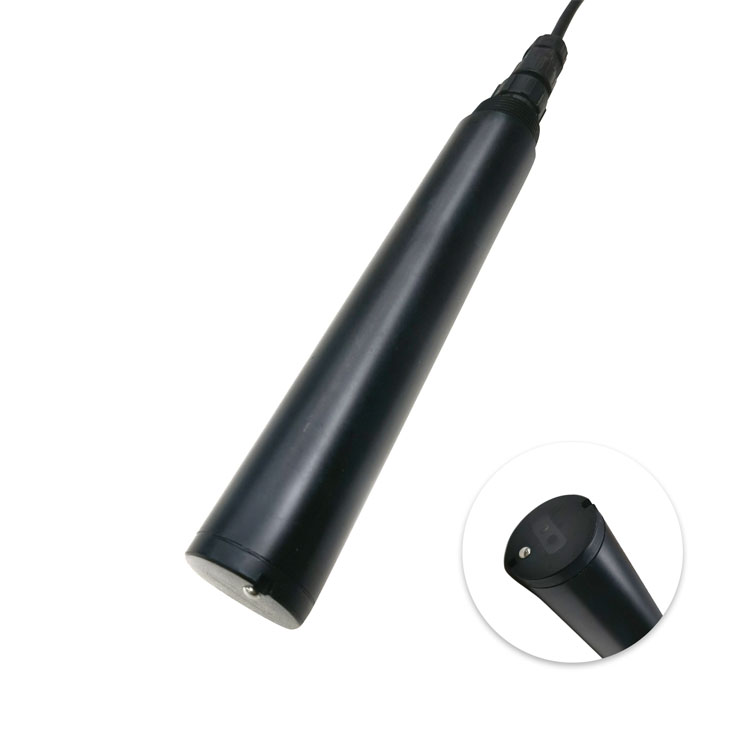
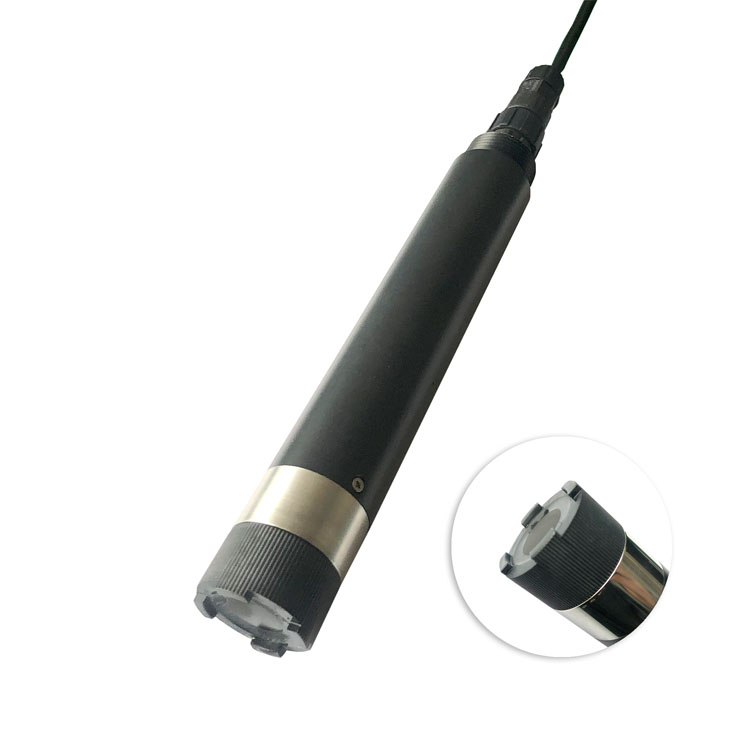
The NiuBoL NBL-WQ-EC offers several configured conductivity spans. Choose the range for both the decision region and the highest credible exposure. The concentrated start of a rinse may exceed a probe selected only for the final dilute water. A high-range version may cover startup but provide insufficient absolute accuracy around a tight reuse boundary.
| NBL-WQ-EC configuration | Conductivity span | TDS configuration |
|---|---|---|
| EC-0.01 | 0-20.00 uS/cm | 0-10 mg/L |
| EC-0.1 | 0-200.0 uS/cm | 0-100 mg/L |
| EC-1.0 | 0-5000 uS/cm | 0-3000 mg/L |
| EC-SI | 0-200.0 mS/cm | Confirm TDS support and span for the project |
The stated conductivity accuracy is +/-1% of full scale. That is not +/-1% of each rinse reading. If the required separation between acceptable and unacceptable water is small, compare it with the selected span's absolute error and the site's variability. Do not compensate for an unsuitable range merely by showing more decimal places.
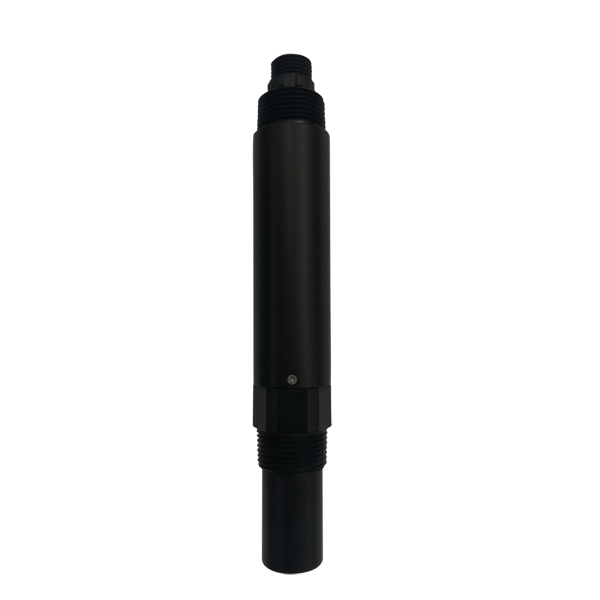
The separate EC-4A has a 0-5000 uS/cm span and +/-1.5% full-scale accuracy. It is not automatically equivalent to every NBL-WQ-EC range. Confirm the actual outputs and calculation settings before comparing a replacement probe with earlier TDS records.
For conductivity-derived TDS, the conversion coefficient changes the displayed mass concentration without changing the measured water. In an illustrative calculation, 1000 uS/cm multiplied by 0.64 gives 640 mg/L, while a factor of 0.50 gives 500 mg/L. These are calculations, not two laboratory analyses or universal factors for every rinse chemistry.
The NBL-WQ-EC has a configurable coefficient, with a stated default of 0.64. Validate the coefficient for the water and intended use. Record the temperature-compensation basis as well. A change in configuration must not appear in the historian as a sudden improvement in rinse quality.
For acidic or alkaline carryover, pH may provide another useful check alongside EC. However, pH is not a universal concentration measurement, and neutral pH does not establish absence of residue. The PH-4S pH probe is a separate instrument; use its own installation, calibration and material requirements.
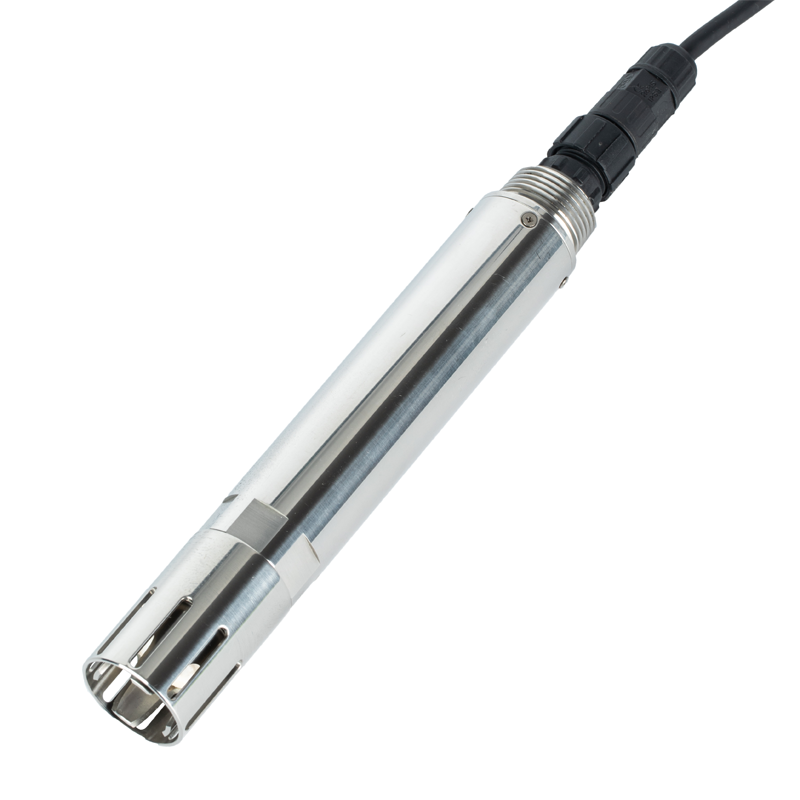
Position the measurements before the diversion point with enough time for the controller and valve to respond. Determine sample transport delay if water travels to a cabinet. A clear reading from a slowly flushed sample line can arrive after the corresponding water has already entered the reuse tank.
A possible arrangement uses conductivity, temperature and process state as inputs to a PLC or RTU. Reuse is permitted only when valid measurements satisfy the approved criteria for an appropriate sustained period. The required delay, thresholds and valve action must be established for that process; they are not sensor factory settings.
Check startup, batch change, sensor cleaning, missing replies and power restoration. A retained last-good value must not authorize reuse indefinitely. Confirm the intended safe diversion state and whether valve-position feedback is needed. When the consequence matters, the complete control and failure arrangement requires review beyond choosing a water quality probe.
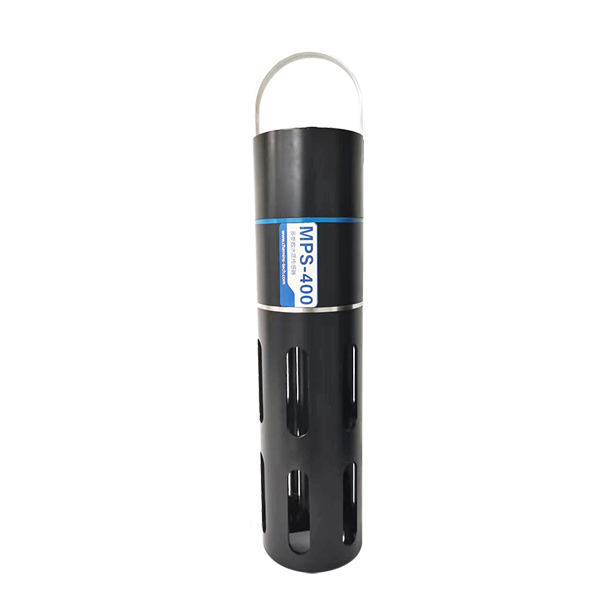
A multiparameter head can suit a continuously submerged reuse tank when several measurements belong at that location. It does not necessarily suit a small flowing rinse line or a sample that becomes dry between batches. Select the arrangement for the water presented to the sensing surfaces, not simply for the number of channels.
| NBL-WQ-EC installation item | Specification or condition | Reuse-project implication |
|---|---|---|
| Supply and consumption | 12-24 VDC +/-10%; 0.2 W at 12 V | Size the controller, valve and other loads separately |
| Working water conditions | 0-50 C; pressure below 0.6 MPa | Evaluate hot rinse and pressurized cleaning stages, not only normal operation |
| Signal | RS485 Modbus RTU; TDS support depends on range | Read the correct EC, temperature and TDS scaling for the ordered version |
| Construction and mounting | Configured ABS, SUS316L or PVC; IP68; immersion or 3/4 NPT | Check cleaning chemistry, wetting and safe service access |
| Cable | Standard 5 m; other lengths available | Confirm jacket, connectors and protection of external joints |
Use turbidity when particles are also relevant to reuse suitability. A turbidity probe does not measure dissolved ionic residue, just as an EC probe does not establish particle removal. Avoid adding channels without deciding what each one can reject or authorize in the actual rinse process.
No. It can support a validated endpoint for a process where ionic carryover tracks the required cleanliness. Establish the relationship across expected products, chemicals and operating conditions. Retain other tests where conductivity cannot establish suitability.
Either can be used if the requirement is defined and validated, but retain the underlying EC and temperature. A TDS threshold also depends on the conversion coefficient. Lock down that setting so changing a display factor cannot silently change the reuse decision.
Identify that condition as invalid for the intended decision and prevent it from being treated as a low valid reading. Consider a different span, separate measuring points or an approved startup sequence. Confirm the selected instrument's actual over-range reporting.
Follow complete rinse cycles and compare online records with appropriately timed samples and the required quality tests. Include transport delay and valve response. Challenge invalid data and restart behavior before allowing unattended diversion.
No. TDS does not establish microbiological condition or the absence of every chemical. The receiving process defines the necessary quality checks. Dissolved oxygen is another separate measurement and is not a substitute for those requirements.
Provide rinse chemistry, normal and startup EC, temperature, pressure, intended reuse duty, target decision region and a sampling/diversion sketch. Include the PLC interface and cable length. This allows the probe range and installation to be evaluated together rather than quoting an unspecified TDS device.
A TDS measurement device is useful for rinse-water reuse when its conductivity response supports a defined quality decision. Select the range for the full operating sequence, control conversion settings and test the diversion logic with representative water. NiuBoL can review the sensor configuration against the proposed rinse and reuse conditions.
Prev:Turbidity Meters for Online Monitoring: Retrofit a 4-20 mA Input
Next:TDS and pH Meter: Diagnose Nutrient Tank Changes After Refill
Related recommendations
Sensors & Weather Stations Catalog
 Agriculture Sensors and Weather Stations Catalog-NiuBoL.pdf
Weather Stations Catalog-NiuBoL.pdf
Agriculture Sensors Catalog-NiuBoL.pdf
Water Quality Sensor Catalog-NiuBoL.pdf
Related products
 Combined air temperature and relative humidity sensor
 TDR Soil Moisture & Temperature Sensor for irrigation| RS485 |4-20mA| NBL-S-THR
 Soil pH sensor RS485 soil Testing instrument soil ph meter for agriculture |NBL-S-PH
 Wind Speed sensor Output Modbus/RS485/Analog/0-5V/4-20mA
 Tipping bucket rain gauge for weather monitoring auto rainfall sensor RS485/Outdoor/stainless steel
 Pyranometer Solar Radiation Sensor 4-20mA/RS485


Screenshot, WhatsApp to identify the QR code
WhatsApp number:+8615367865107
(Click on WhatsApp to copy and add friends)

