





— Blogs —
—Products—
 Consumer hotline +8618073152920
 WhatsApp:+8615367865107
Address:Room 102, District D, Houhu Industrial Park, Yuelu District, Changsha City, Hunan Province, China
Product knowledge
Time:2024-10-02 20:49:45 Popularity:3440
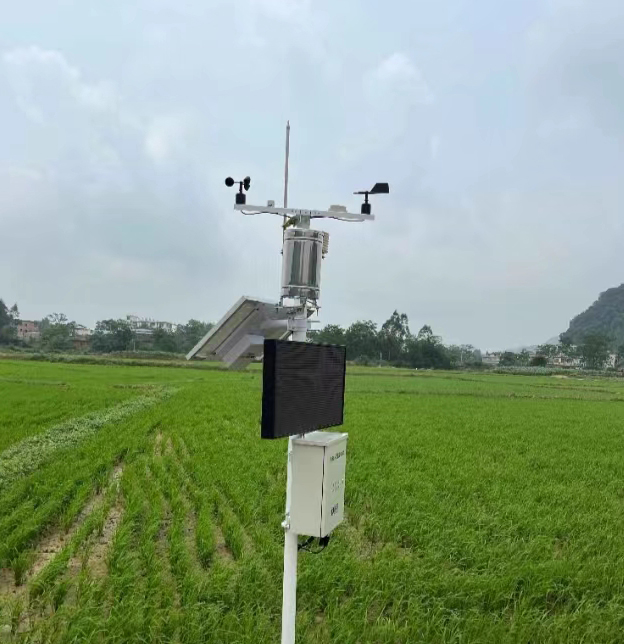
The price of an automatic weather station (AWS) depends mainly on the number and type of sensors, measurement accuracy, data logger, communication method, power supply and installation accessories.
A basic weather station measuring temperature and humidity is very different from a professional agricultural weather station that includes wind speed, wind direction, rainfall, atmospheric pressure, solar radiation, 4G communication, a solar power system and a 3 m mounting pole.
For B2B projects, it is therefore more useful to compare complete configurations rather than asking only for the price of “a weather station.”
| Cost Factor | How It Affects Price |
|---|---|
| Number of Sensors | More measurement parameters increase sensor and installation cost |
| Sensor Accuracy | Higher-performance sensors generally cost more |
| Data Logger | Required for automatic acquisition, storage and communication |
| Communication | RS485-only systems cost less than systems with 4G, Ethernet or LoRaWAN |
| Power Supply | Solar panels, batteries and controllers add project cost |
| Mounting Structure | Pole height, brackets and foundation depend on site requirements |
| Cloud / Server | Private-server integration and custom protocols may require additional configuration |
| Quantity | Larger projects normally have lower unit cost than one sample station |
Instead of using one universal price range, professional weather stations can be divided into several practical configuration levels.
| Configuration | Typical Components | Relative Cost |
|---|---|---|
| Basic Monitoring | Temperature + humidity + local display/logger | Low |
| Compact Weather Station | Integrated wind + temperature + humidity + pressure | Low to Medium |
| Standard Automatic Weather Station | Wind, T/RH, pressure, rainfall, logger and pole | Medium |
| Agricultural Weather Station | Standard AWS + solar radiation + soil / leaf sensors | Medium to High |
| Remote IoT Weather Station | AWS + 4G / LoRaWAN + solar + battery + enclosure | Medium to High |
| Research / Specialized Station | Higher-grade sensors, specialized parameters and custom integration | High / Project Based |
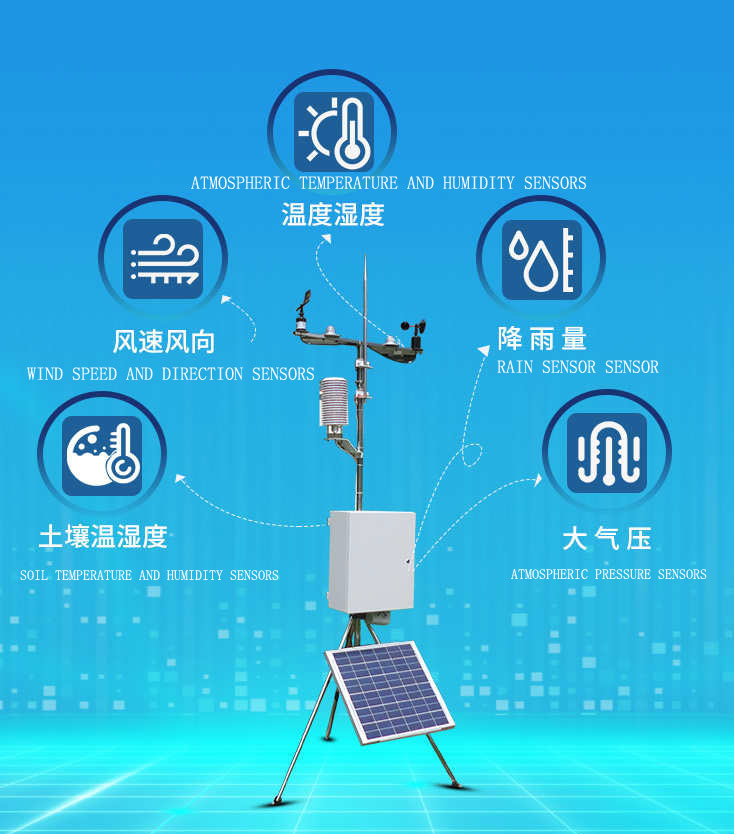
Sensors are one of the largest components of weather station cost. A station may include only two parameters or more than ten depending on the project.
Common weather-station parameters include:
Air temperature
Relative humidity
Atmospheric pressure
Wind speed
Wind direction
Rainfall
Solar radiation
PAR
UV
Visibility
PM2.5 / PM10
CO2
Soil moisture and temperature
Leaf wetness
A customer should therefore define the parameters actually required instead of automatically selecting the station with the largest number of sensors.
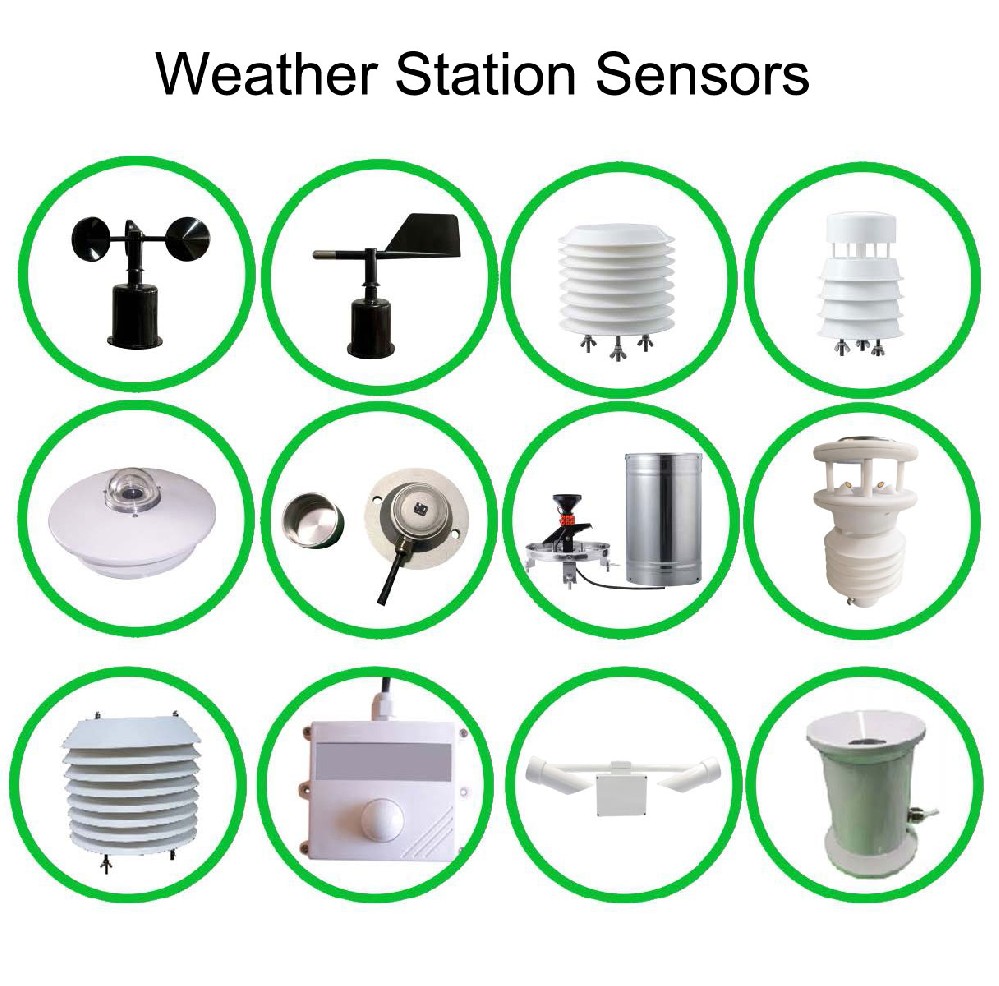
Traditional weather stations often use separate wind speed, wind direction, temperature, humidity and pressure sensors.
Compact ultrasonic stations integrate several measurements into one housing. This can reduce wiring, mounting brackets and mechanical maintenance, although the integrated sensor itself may cost more than one individual sensor.
| Comparison | Separate Sensors | Integrated Ultrasonic |
|---|---|---|
| Initial Sensor Cost | Can be lower | Usually higher per device |
| Installation | More brackets and cables | Compact |
| Moving Wind Parts | Usually yes | No conventional cups / vane |
| Individual Sensor Replacement | Easy to replace one sensor | Depends on integrated design |
| Best For | Flexible professional systems | Compact low-maintenance systems |
An automatic weather station requires a device to collect, store and transmit sensor data. The data logger may support RS485 Modbus, analog input, pulse input or SDI-12 depending on the station design.
Data logger price depends on:
Number of sensor channels
Supported signal types
Local memory capacity
4G / Ethernet / Wi-Fi support
MQTT / HTTP / TCP protocols
Local display
Cloud-platform functions
Remote configuration and firmware functions
Communication requirements have a direct impact on weather station price.
| Communication | Best For | Additional Requirement |
|---|---|---|
| RS485 Only | Local PLC / logger | No remote network required |
| Ethernet | Sites with wired internet | LAN connection |
| 4G | Remote independent stations | SIM card and cellular coverage |
| LoRaWAN | Multiple distributed stations / sensors | LoRaWAN gateway and network server |
If data must go to the customer's own server, also confirm MQTT, HTTP or TCP requirements before quotation.
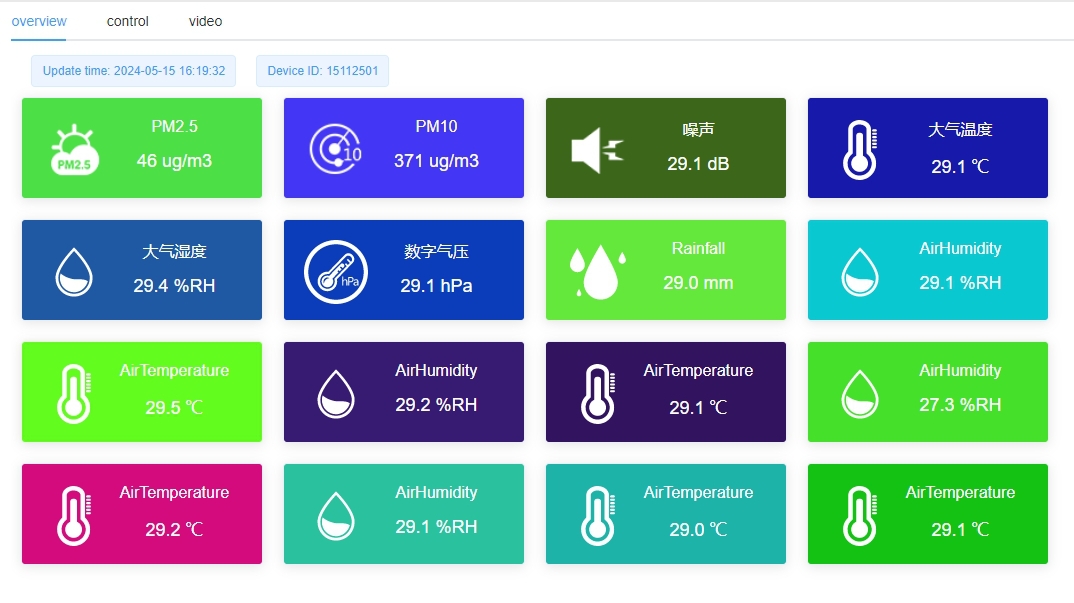
Remote weather stations often require a solar panel, battery and charge controller.
The correct solar configuration should be calculated from:
Total sensor power consumption
Data logger consumption
4G / LoRaWAN gateway consumption
Upload frequency
Required battery autonomy
Local solar radiation
System losses
A fixed 20 W, 40 W or 60 W solar panel should not automatically be used for every project. The battery and panel should match the actual load.
Professional weather-station quotations often include more than sensors and electronics.
Common accessories include:
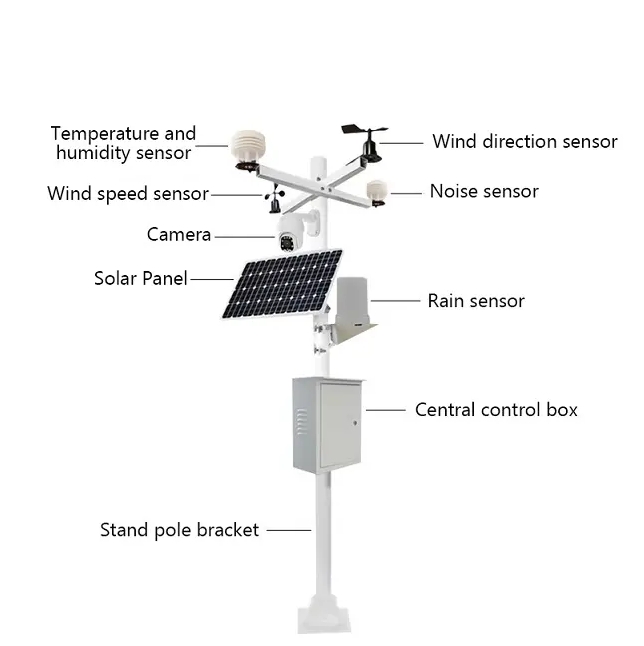
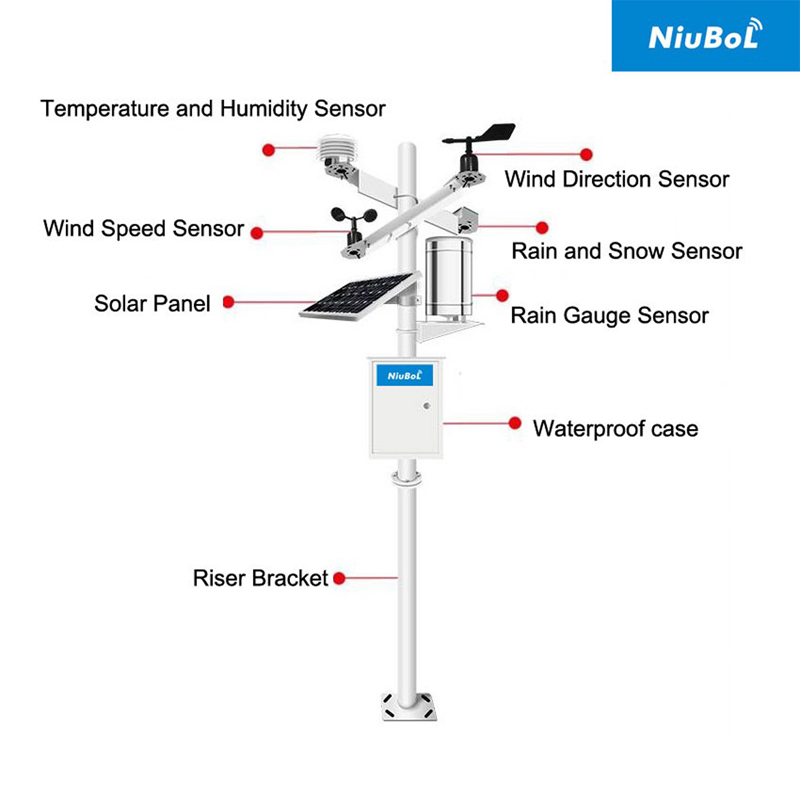
2 m or 3 m mounting pole
Tripod or fixed base
Sensor cross-arm
Solar-panel bracket
Waterproof control enclosure
Foundation bolts
Surge protection
Grounding components
Sensor cables
Yes. Higher-performance sensors normally require better sensing elements, calibration, environmental compensation and manufacturing control.
However, higher stated accuracy is only useful when installation and maintenance are also appropriate. For example, even a good temperature sensor can give poor data if it is installed in direct sunlight without a suitable radiation shield.
Choose accuracy according to the project specification rather than automatically selecting the most expensive sensor.
Agricultural stations commonly measure:
Air temperature
Relative humidity
Wind speed
Wind direction
Rainfall
Atmospheric pressure
Solar radiation
Optional agricultural measurements may include:
Soil moisture and temperature
Soil EC
PAR
Leaf wetness
UV
Adding root-zone and crop sensors increases the project price but can provide more useful information for irrigation and crop management.
A weather station can use a manufacturer's monitoring platform or send data to the customer's own server.
Private-server projects may require additional confirmation of:
MQTT broker
HTTP API
TCP server
JSON payload format
Device ID structure
Authentication
Upload interval
TLS / SSL
These requirements should be confirmed before ordering because gateway firmware or data formatting may need to be configured for the project.
A sample weather station normally has a higher unit cost than a project with dozens or hundreds of stations.
OEM requirements such as custom labels, logos, enclosures, packaging, communication firmware or special mounting structures may also affect the quotation.
| Project | Typical Configuration |
|---|---|
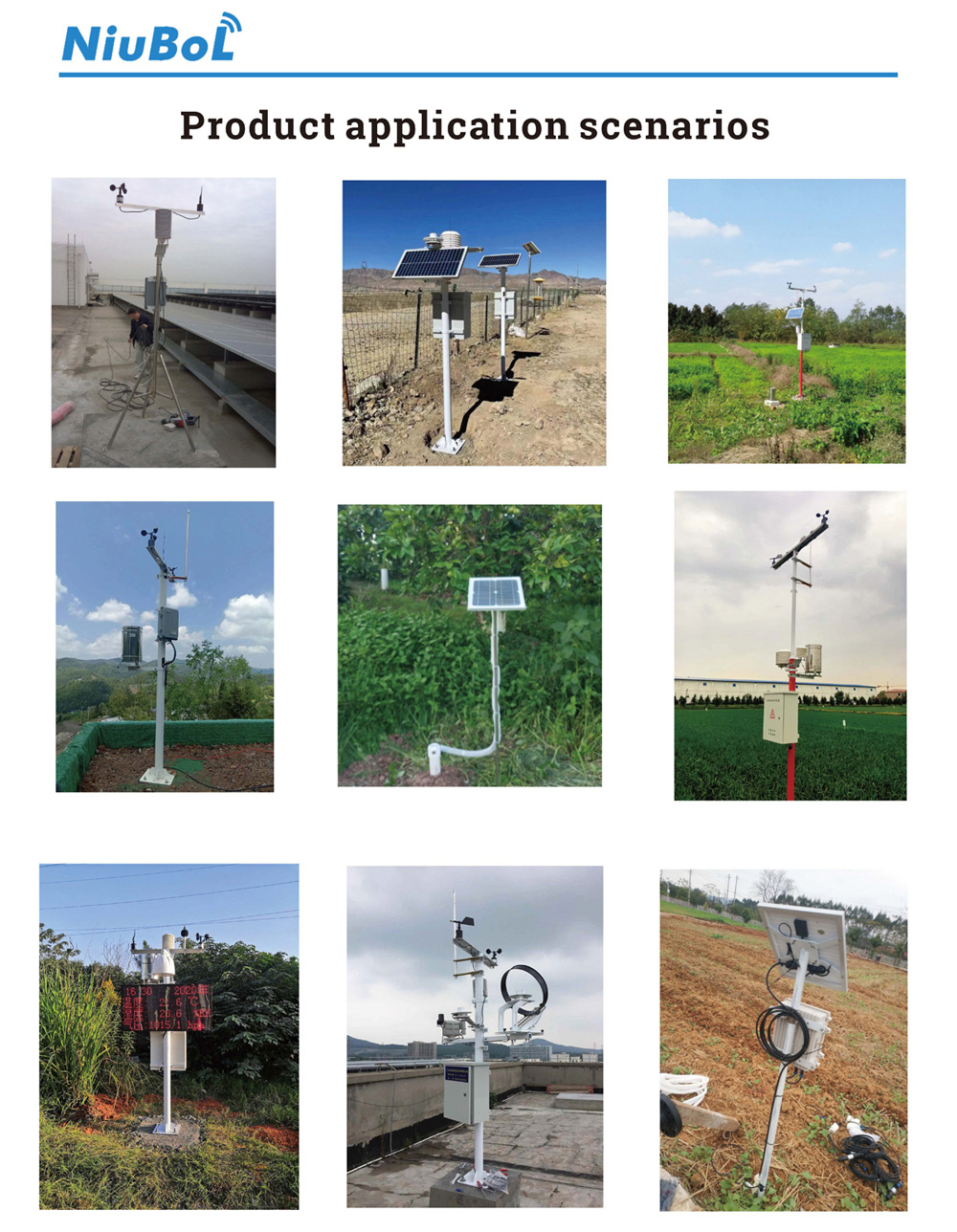
| Small Farm | T/RH + rainfall + wind + local logger |
| Commercial Agriculture | Wind + T/RH + pressure + rain + solar radiation + 4G + solar |
| Greenhouse | Outdoor AWS + indoor T/RH + CO2 + PAR + soil / substrate sensors |
| Hydrology | Rainfall + weather parameters + water level + 4G + solar |
| Solar Plant | Solar irradiance + module temperature + air temperature + wind |
| Research | Project-specific sensors + high data resolution + advanced logger |
Two weather-station quotations should not be compared only by total price. Check whether they include the same equipment.
| Check | What to Confirm |
|---|---|
| Sensors | Same parameters, ranges and accuracy? |
| Data Logger | Included or extra? |
| Communication | RS485, 4G, Ethernet or LoRaWAN? |
| Solar System | Panel, battery and controller included? |
| Pole | Height, material and brackets included? |
| Cable | Standard and required lengths? |
| Server | Cloud included or private-server integration? |
| Shipping | EXW, DAP, DDP or other Incoterm? |
| Warranty | Warranty period and support scope? |
To receive an accurate quotation, provide:
Installation country and site
Required weather parameters
Required accuracy
Number of stations
Power available at site
Solar-panel and battery requirement
RS485, 4G, Ethernet or LoRaWAN communication
Cloud platform or private server
MQTT / HTTP / TCP requirements
Measurement and upload interval
Required pole height
Required cable lengths
Special environmental conditions
Shipping destination and preferred Incoterm
A1. The price depends on the sensor configuration, accuracy, logger, communication, solar system, pole and accessories. A basic station and a full professional IoT weather station can have very different costs.
A2. Sensor configuration is one of the largest factors, followed by data communication, solar power, mounting structure and project-specific integration requirements.
A3. The integrated sensor itself may cost more than one conventional sensor, but it can combine several measurements in one compact unit and reduce brackets, wiring and mechanical maintenance.
A4. Yes. A 4G system requires a compatible data logger or gateway and usually a SIM card and mobile-data service.
A5. A LoRaWAN system normally requires wireless nodes and a gateway, so equipment cost can be higher. It may reduce long field-cable requirements across distributed sites.
A6. Not always. Solar panels, batteries and charge controllers should be listed separately unless the quotation explicitly includes them.
A7. Yes. Compatible data loggers can transmit data using MQTT, HTTP or TCP depending on the required server architecture.
A8. Yes, when compatible LoRaWAN devices are selected. The regional frequency, payload format, decoder and network-server configuration should be confirmed before ordering.
A9. A complete station may include weather sensors, data logger, communication gateway, enclosure, mounting pole, brackets, cables and optional solar power. Always check the quotation line by line.
A10. Send the required weather parameters, quantity, communication method, power supply, pole height, server requirement and shipping destination. NiuBoL can then configure the station and provide a project-specific quotation.
NiuBoL provides automatic weather stations for agriculture, meteorology, environmental monitoring, hydrology, solar energy, research and industrial applications.
Systems can be configured with RS485 Modbus, 4G, Ethernet or LoRaWAN, together with solar power, mounting poles, data loggers and private-server integration.
Related recommendations
Sensors & Weather Stations Catalog
 Agriculture Sensors and Weather Stations Catalog-NiuBoL.pdf
Weather Stations Catalog-NiuBoL.pdf
Agriculture Sensors Catalog-NiuBoL.pdf
Water Quality Sensor Catalog-NiuBoL.pdf
Related products
 Combined air temperature and relative humidity sensor
 TDR Soil Moisture & Temperature Sensor for irrigation| RS485 |4-20mA| NBL-S-THR
 Soil pH sensor RS485 soil Testing instrument soil ph meter for agriculture |NBL-S-PH
 Wind Speed sensor Output Modbus/RS485/Analog/0-5V/4-20mA
 Tipping bucket rain gauge for weather monitoring auto rainfall sensor RS485/Outdoor/stainless steel
 Pyranometer Solar Radiation Sensor 4-20mA/RS485

Screenshot, WhatsApp to identify the QR code
WhatsApp number:+8615367865107
(Click on WhatsApp to copy and add friends)

