





— Blogs —
—Products—
 Consumer hotline +8618073152920
 WhatsApp:+8615367865107
Address:Room 102, District D, Houhu Industrial Park, Yuelu District, Changsha City, Hunan Province, China
Product knowledge
Time:2026-04-14 17:49:06 Popularity:410
BOD (Biochemical Oxygen Demand) is a key biological indicator in industrial wastewater treatment, sewage treatment engineering, and environmental water quality monitoring. It indirectly reflects the content of biodegradable organic pollutants in water bodies through the amount of dissolved oxygen consumed by microbial metabolism. The higher the BOD value, the greater the organic load in the water body, which has a significant impact on biochemical treatment process design, operation optimization, and discharge compliance.
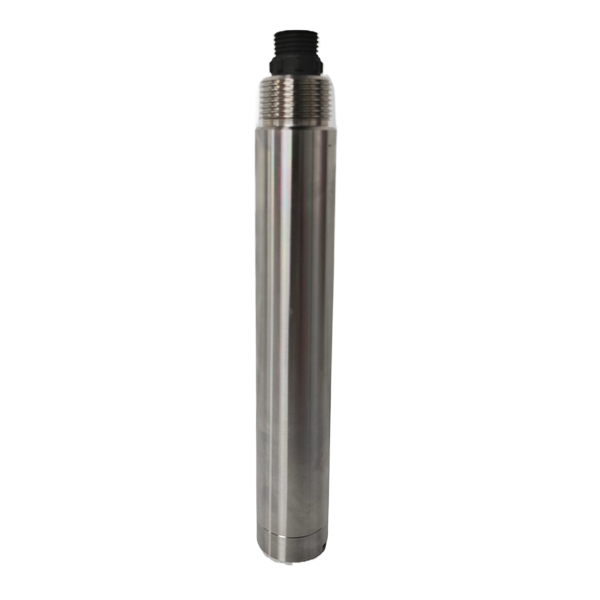
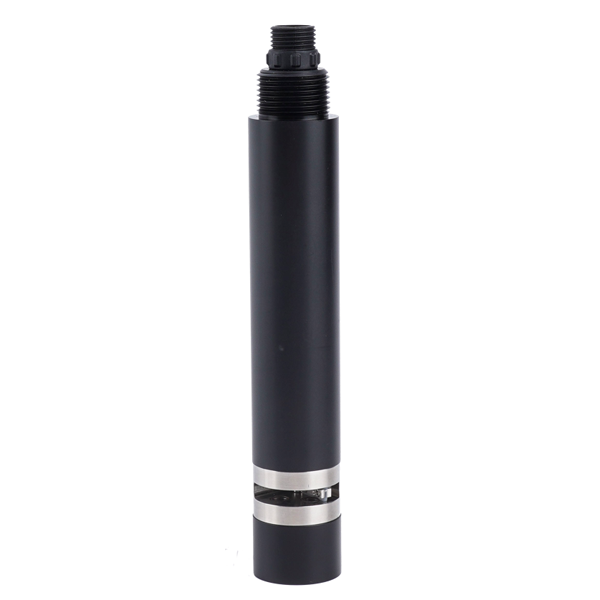
The NiuBoL NBL-BOD-406 online BOD sensor adopts the dual-wavelength fluorescence method and can simultaneously measure BOD, turbidity, and temperature parameters. It supports the RS-485 Modbus/RTU protocol and is suitable for municipal sewage treatment, industrial wastewater discharge outlets, and environmental automatic monitoring stations. This article focuses on water quality sensor procurement needs, systematically explains BOD definition, main engineering factors affecting monitoring, fluorescence online monitoring technology, and system integration points, providing reliable selection and application references for engineering technical teams.
Biochemical oxygen demand (BOD) is defined as the amount of dissolved oxygen consumed by aerobic microorganisms oxidizing and decomposing organic matter in a water sample at a specified temperature (usually 20°C) and time. It is often expressed as BOD₅ (5-day biochemical oxygen demand) in mg/L. It is a core parameter for assessing the degree of organic pollution in water bodies, the inlet/outlet load of sewage treatment plants, and the efficiency of biological treatment.
In industrial engineering practice, BOD is used in conjunction with COD (chemical oxygen demand) to determine the biodegradability of wastewater (BOD/COD ratio). When the ratio is greater than 0.3, biological treatment processes are suitable; below this value, pretreatment is required to improve biodegradability. Real-time or online BOD monitoring can help optimize aeration volume, sludge return ratio, and nutrient dosing, reduce energy consumption and operating costs, and ensure effluent compliance with standards such as the “Pollutant Discharge Standards for Urban Sewage Treatment Plants.”
The traditional dilution inoculation method for BOD₅ determination has a long cycle (5 days) and is difficult to meet process control needs. The NiuBoL NBL-BOD-406 online sensor is based on the dual-wavelength fluorescence method to achieve continuous monitoring, significantly improving response speed and data timeliness.
BOD monitoring results are significantly affected by the physicochemical properties of water samples, operating conditions, and environmental factors. Engineering design and on-site implementation need to strictly control the following key factors to ensure data reliability and repeatability.
The basis of BOD determination is the consumption of dissolved oxygen by microorganisms decomposing organic matter under aerobic conditions. Standard determination requires the water sample to reach dissolved oxygen saturation at 20°C. In winter sampling, natural temperature is low and dissolved oxygen easily reaches saturation; in summer sampling, aeration and stirring at 20°C constant temperature are required to make DO reach the saturation point. Insufficient aeration will lead to insufficient initial DO and low determination results.
In online monitoring, the sensor needs to combine temperature compensation algorithms to correct the impact of DO saturation on fluorescence signals in real time.
Microbial activity is highly sensitive to pH. The pH of the test water sample should be adjusted to the range of 6.7–7.5. When outside this range, acidic or alkaline conditions will inhibit microbial metabolism, resulting in BOD readings lower than actual values. For industrial wastewater containing large amounts of acids, alkalis, or oxidants, appropriate concentrations of NaOH or H₂SO₄ should be used for neutralization.
For high-dilution samples, it is recommended to use pH 7.2 phosphate buffer as dilution water to maintain buffering capacity and reduce interference from pH fluctuations on determination results. Online sensors compensate for pH effects within a certain range through algorithms, but extreme pH still requires front-end pretreatment.
Temperature directly affects microbial metabolic rate and oxygen solubility. Standard BOD₅ determination is performed under 20°C constant temperature conditions. When installing BOD monitoring equipment in industrial sites, it is recommended to configure air conditioning or constant temperature systems in the monitoring room to ensure that the ambient temperature and relative humidity meet the instrument working conditions (0–45°C). Temperature deviations will change reaction kinetics and lead to result deviations.
The NiuBoL NBL-BOD-406 has built-in synchronous temperature parameter measurement and reduces the impact of temperature fluctuations on fluorescence measurement through compensation algorithms.
When the estimated BOD value of the water sample exceeds the instrument range (for example, greater than 1000 mg/L), it needs to be diluted with 20°C saturated aerated dilution water. The dilution ratio is calculated as the ratio of the original water sample to the diluted volume, and the result needs to be multiplied by the corresponding multiple.
In the dilution operation, sufficient dilution water should be prepared to ensure consistency of multiple parallel samples. Industrial wastewater often contains inhibitory substances (such as heavy metals and toxic organic matter), requiring selection of appropriate inoculation liquid or pretreatment. Turbidity, color, and suspended solids will also interfere with optical measurement and need to be compensated by reference light paths and self-cleaning mechanisms.
Other influencing factors include inoculated microbial activity, nutrient salt ratio, and toxic substance concentration. In engineering, it is recommended to conduct method verification in combination with on-site water quality characteristics.
The NiuBoL NBL-BOD-406 adopts the dual-wavelength fluorescence method: organic dissolved components absorb ultraviolet excitation light and produce fluorescence. The BOD content is indirectly characterized by measuring the fluorescence intensity at specific excitation-emission wavelengths. At the same time, a reference light path is used to monitor water turbidity, and special algorithms compensate for optical path attenuation and particulate suspension interference to achieve stable and reliable measurement.
This method requires no chemical reagents, avoids secondary pollution, and meets green environmental protection engineering requirements. Compared with the traditional 5-day culture method, it has a faster response and is suitable for continuous online monitoring.
Main product features of the NBL-BOD-406 online BOD sensor:
No reagents, no pollution, economical and environmentally friendly
Compact size, easy submerged installation, supports online continuous monitoring
Simultaneous measurement of BOD, turbidity, and temperature parameters
Automatic compensation for turbidity interference
Equipped with self-cleaning brush to prevent biofilm attachment
Small drift, fast response, accurate measurement
Excellent long-term monitoring stability
Maintenance-free or low-maintenance, long lifecycle, low usage cost
Digital sensor, RS-485 interface, Modbus/RTU protocol
Low-power electronic design, strong anti-interference ability
| Parameter | Specification Value |
|---|---|
| Model | NBL-BOD-406 |
| Measurement Principle | Dual-wavelength fluorescence method |
| BOD Range | 0~150 mg/L |
| BOD Accuracy | ±5% F.S. |
| BOD Resolution | 0.1 mg/L |
| Turbidity Range | 0~100 NTU |
| Turbidity Accuracy | ±5% F.S. |
| Turbidity Resolution | 0.1 NTU |
| Calibration Method | Two-point calibration |
| Signal Output | RS-485 (Modbus/RTU) |
| Power Supply Voltage | 12~24V DC |
| Power Consumption | 0.2W @12V |
| Working Conditions | 0~45℃, <0.1 MPa |
| Storage Temperature | -5~65℃ |
| Protection Level | IP68 |
| Installation Method | Submerged installation |
| Cable Length | 5 meters (customizable) |
| Housing Material | POM + 316L stainless steel |
The NiuBoL NBL-BOD-406 is widely applicable to the following industrial and municipal scenarios:
Municipal sewage treatment plant inlet/outlet monitoring to evaluate biological treatment unit efficiency and effluent compliance.
Continuous monitoring at chemical, pharmaceutical, food processing, papermaking and other industrial wastewater discharge outlets to optimize pretreatment and biochemical process parameters.
Environmental water quality automatic monitoring stations for early warning of organic pollution in rivers, lakes, and surface water.
Process control of centralized sewage treatment facilities in high-organic-load industrial parks.
Integration considerations:
Installation location should be selected in representative water flow areas to avoid dead corners, air bubbles, or strong turbulence interference. The sensor measurement window must be completely submerged underwater >2 cm.
Communication integration: RS-485 Modbus/RTU protocol can be directly connected to PLC, DCS, or SCADA systems to achieve data collection, trend analysis, over-limit alarms, and linkage control (such as aeration fan adjustment).
Power supply and protection: Use stable 12~24V DC power supply, shield and ground field wiring to prevent electromagnetic interference.
Environmental control: Monitoring points are recommended to be equipped with shading and constant temperature measures to avoid direct sunlight affecting optical components.
Self-cleaning system: Regularly check the cleaning brush operation status and maintain or replace dynamic sealing devices every 18 months according to actual working conditions.
Calibration process: First perform temperature calibration, then turbidity zero point and slope calibration, and finally BOD two-point calibration (using 5 mg/L and 100 mg/L standard solutions). Ensure no air bubbles in the optical path during calibration.
Maintenance suggestions: Regularly clean the outer surface with tap water, check cable tightness and measurement window cleanliness. Avoid mechanical impact or direct hand contact with optical surfaces.
Through the above integration, a closed-loop water quality monitoring system can be built to improve process stability and compliance.
Q1. What is the main difference between BOD and COD?
BOD reflects the content of biodegradable organic matter and requires microbial action; COD reflects total reducing substances (including refractory organic matter) and uses chemical oxidation. The two are used together to assess wastewater biodegradability.
Q2. What are the engineering limitations of traditional BOD₅ determination?
Long culture cycle (5 days), complex operation, and great influence by temperature and pH make it difficult to achieve real-time process control. The online fluorescence method can significantly shorten response time.
Q3. How does the dual-wavelength fluorescence method compensate for turbidity interference?
By using the reference light path to monitor turbidity changes and combining special algorithms to compensate for optical path attenuation and particulate interference, measurement stability is improved.
Q4. How to handle when wastewater pH is outside 6.7-7.5?
Use NaOH or H₂SO₄ for neutralization and adjustment to the appropriate range at the front end, or use phosphate buffer dilution water. High-salt or highly toxic wastewater requires special inoculation or pretreatment.
Q5. What water quality range is the NBL-BOD-406 sensor suitable for?
BOD range 0~150 mg/L, suitable for municipal sewage and some industrial effluent with medium to low organic load. High-concentration wastewater is recommended to be diluted at the front end or a higher-range model selected.
Q6. How to perform sensor calibration?
Use two-point calibration: first temperature, then turbidity zero point and slope (100 NTU standard solution), and finally BOD zero point (5 mg/L) and slope (100 mg/L). Ensure no air bubbles during calibration.
Q7. What is the maintenance cycle of the self-cleaning brush?
It is recommended to check and maintain the cleaning brush every 18 months. The actual frequency should be adjusted according to the biological attachment situation of the water quality. After continuous use for 18 months, it is recommended to return to the factory for replacement of dynamic sealing devices.
Q8. Is the result of the online BOD sensor consistent with the traditional laboratory method?
The fluorescence method is an indirect measurement and has a certain correlation with BOD₅. In engineering, it is recommended to establish a calibration curve through on-site comparison tests to ensure data is used for process control and compliance reporting.
BOD, as a core indicator for assessing water body organic pollution and biological treatment efficiency, its monitoring accuracy directly affects the operational economy and environmental compliance of sewage treatment engineering. Dissolved oxygen, pH, temperature, and dilution are the main engineering variables affecting monitoring results and need to be systematically controlled in system design.
The NiuBoL NBL-BOD-406 online BOD sensor takes the dual-wavelength fluorescence method as the core, providing a reagent-free, maintenance-free, and low-cost continuous monitoring solution. It supports the Modbus/RTU protocol for easy industrial automation integration. For municipal and industrial wastewater treatment projects, it can effectively improve process control levels and optimize energy and chemical consumption.
In the project planning stage, it is recommended to conduct method verification and equipment testing in combination with on-site water sample characteristics. If you need technical solutions, parameter customization, or system integration support for specific working conditions, please contact the NiuBoL professional engineer team to jointly build an efficient and stable online water quality monitoring system.
 NBL-BOD-406-S Online BOD Sensor.pdf
Related recommendations
Sensors & Weather Stations Catalog
Agriculture Sensors and Weather Stations Catalog-NiuBoL.pdf
Weather Stations Catalog-NiuBoL.pdf
Agriculture Sensors Catalog-NiuBoL.pdf
Water Quality Sensor Catalog-NiuBoL.pdf
Related products
 Combined air temperature and relative humidity sensor
 Soil Moisture Temperature sensor for irrigation|NBL-S-THR
 Soil pH sensor RS485 soil Testing instrument soil ph meter for agriculture |NBL-S-PH
 Wind Speed sensor Output Modbus/RS485/Analog/0-5V/4-20mA
 Tipping bucket rain gauge for weather monitoring auto rainfall sensor RS485/Outdoor/stainless steel
 Pyranometer Solar Radiation Sensor 4-20mA/RS485

Screenshot, WhatsApp to identify the QR code
WhatsApp number:+8615367865107
(Click on WhatsApp to copy and add friends)

