





— Blogs —
—Products—
 Consumer hotline +8618073152920
 WhatsApp:+8615367865107
Address:Room 102, District D, Houhu Industrial Park, Yuelu District, Changsha City, Hunan Province, China
Product knowledge
Time:2026-05-28 16:00:28 Popularity:490
Quick Answer: An aquaculture water quality monitor should be configured around the farm's actual risks and water circulation. DO and temperature usually provide immediate oxygen-management information; pH and ammonia measurements help interpret nitrogen risk; conductivity or salinity is useful where the water source or mixing changes. The number and position of monitoring points can matter more than adding another parameter to one probe.
A farm may have a reassuring reading beside an aerator while fish or shrimp experience different conditions elsewhere. Another installation may provide six parameters at the inlet but no measurement in the tanks holding the greatest biomass. Neither problem is solved by increasing the dashboard's refresh rate.
For an integrator, the first design task is to map water movement, stocking, feeding and oxygen supply. Identify which measurements require continuous response and which can be checked through scheduled tests. There is no single DO target or ammonia alarm suitable for every species, life stage, salinity and stocking density.
| Production setting | Useful starting measurements | Placement decision |
|---|---|---|
| Outdoor freshwater pond | DO and temperature; pH where daily variation matters | Check pre-dawn conditions and compare locations or depths before fixing the permanent point |
| Brackish-water shrimp pond | DO, temperature, pH and conductivity or salinity; nitrogen checks appropriate to the water | Represent the occupied water layer and freshwater/saline mixing zones without mounting in sediment |
| Recirculating aquaculture system, RAS | DO, temperature and pH, with ammonia monitoring or testing appropriate to the treatment process | Distinguish culture-tank conditions from biofilter inlet/outlet and make-up water |
| Hatchery or nursery tanks | Water-supply and tank measurements selected for species and life stage | Assess whether separate tanks need separate probes or a properly managed sampling arrangement |
These are starting arrangements, not fixed equipment packages. Nitrite, alkalinity and other analyses may remain important even when they are not available on the chosen online probe. A multi-parameter instrument must not be described as monitoring uninstalled or unsupported channels.
A DO probe directly in a bubble plume may reflect local oxygen enrichment and unstable bubble effects rather than the conditions in the stocked water. Position the probe after observing circulation, then compare it with portable readings elsewhere. Keep the sensing surface submerged and serviceable, without trapping it in a stagnant enclosure.
In ponds, daytime photosynthesis can raise DO while night-time respiration draws it down. A single afternoon check cannot establish that the next pre-dawn period will be adequate. FAO pond-management guidance discusses this daily oxygen cycle and the value of measurements before sunrise. Alarm settings should still follow the actual species and operating plan rather than a universal number copied from a general table.
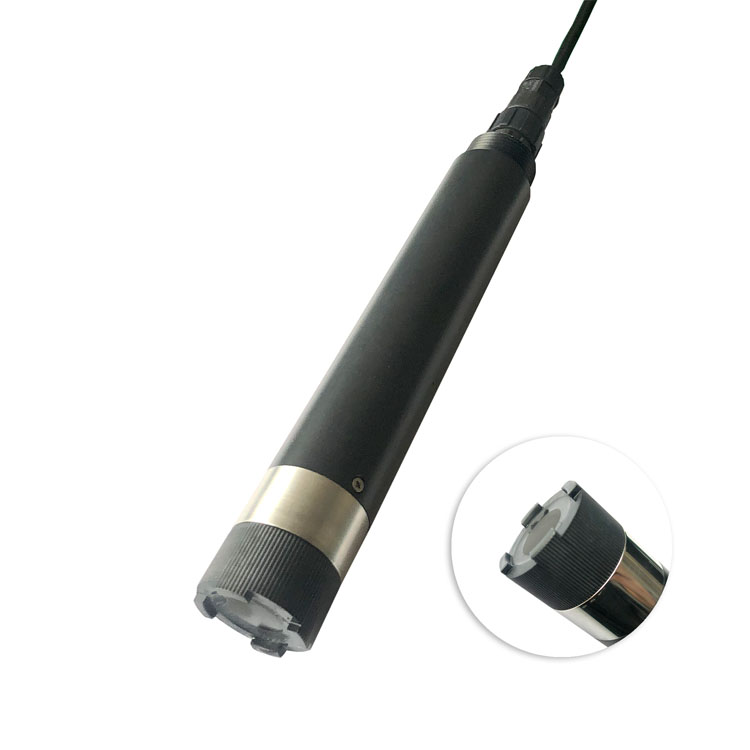
The NiuBoL NBL-WQ-DO uses an optical fluorescence method. Its 0-20 mg/L concentration range and +/-2% full-scale accuracy correspond to an accuracy specification of +/-0.4 mg/L over that span. A display resolution of 0.01 mg/L does not mean the complete measurement has that accuracy.
If two proposed alarm levels are separated by only a small fraction of a milligram per liter, evaluate the total measurement uncertainty and field variation before using them as distinct control stages. Fouling, placement and a delayed sample can matter in addition to the probe specification.
| Device or channel | Relevant technical data | Selection consequence |
|---|---|---|
| NBL-WQ-DO | 0-20 mg/L; +/-2% FS; resolution 0.01 mg/L; working temperature 0-45 degrees C | Check concentration accuracy and the applicable temperature/salinity compensation settings |
| NBL-WQ-NHN | Ammonium ion-selective electrode; range options 0-10, 0-100 or 0-1000 mg/L; working temperature 0-40 degrees C | Select the actual range and establish the output's chemical and mass-reporting basis before assigning a toxicity limit |
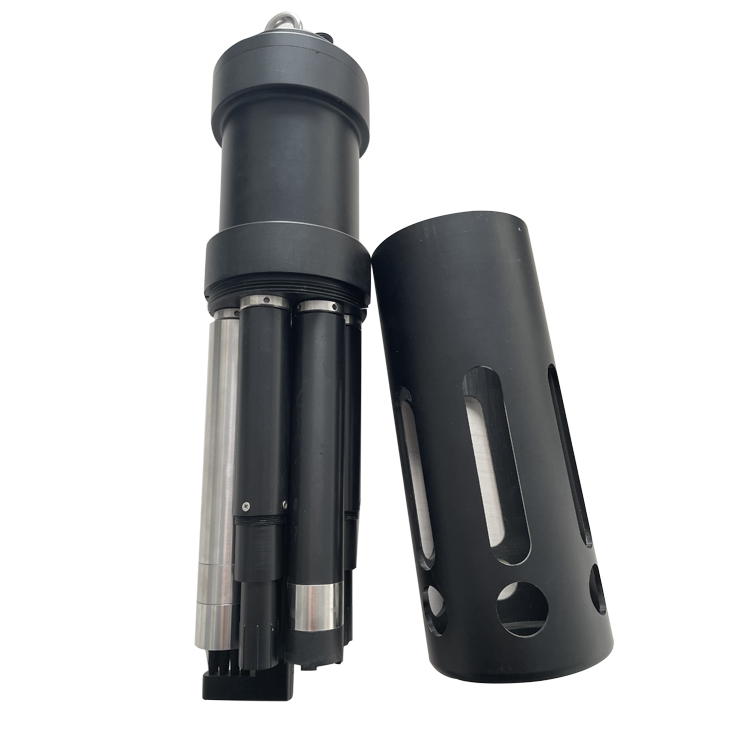
| NBL-WQ-MPS-5B | Optional DO, pH, ORP, conductivity/salinity and turbidity modules with temperature; built-in cleaning brush | Specify the installed combination; a separate ammonia channel is not automatically included |
| Digital integration | RS485 Modbus RTU for these product configurations | Read the correct registers and scale each channel separately in the PLC, RTU or data logger |
| Power arrangement | MPS-5B: 12 V DC, 2 W at 12 V; separate DO and NHN probes: 12-24 V DC | Do not assume all probes can share an unregulated 24 V feed |
| Immersion protection | IP68 for these configurations, subject to each model's operating limits | Keep connectors, cable joints and cabinet entries appropriately protected; the rating does not permit arbitrary depth |
The nitrogen reading needs particular care. Total ammonia nitrogen, TAN, includes ammonia and ammonium expressed on a nitrogen basis. The un-ionized ammonia fraction increases with pH and temperature under the relevant equilibrium conditions. An ammonium-electrode result is not automatically a direct measurement of toxic un-ionized ammonia.
Before using an online ammonia value in a farm alarm, establish whether it represents NH4+, NH4-N, TAN as N or a calculated value. Ask what compensation is included and which assumptions are used. A gateway that merely collects registers does not perform a validated ammonia-toxicity calculation unless that function has actually been implemented and checked.
The standard NBL-WQ-NHN is an ammonium ion-selective instrument. Ionic interference is relevant, especially where salt composition changes. A freshwater calibration does not establish performance in a brackish shrimp pond. Review salinity, potassium and other matrix effects against representative samples; temperature compensation alone does not eliminate them.
For applications requiring additional compensation, the NBL-WQ-NHN-407C is a separate configuration with pH and potassium compensation. That does not make it interference-free or automatically suitable for every saline sample. Specify the version and validate its result in the farm water before relying on a narrow alarm band.
An aquaculture water quality monitor supplies measurements. The controller determines how alarms and equipment responses work. Use a local control path where the operating plan requires it; a remote cloud notification should not be the only response to a time-sensitive oxygen event.
During commissioning, test the actual chain: sensor value, PLC or RTU scaling, alarm threshold, local output, aerator command and operator notification. Then test loss of communication, power interruption and a disconnected or maintained probe. A frozen last value must not remain displayed as a fresh measurement. The appropriate equipment response should be agreed with the farm's responsible operator.
Do not assume the same gateway can operate every aerator or dosing device. Confirm whether the required output is a relay command, an analog interface or communication to a separate controller. Motor protection and electrical installation remain separate from the sensor's measuring function.
An integrated self-cleaning probe reduces the number of separate mounting points and provides related measurements at one location. Separate probes can be easier to exchange one channel at a time, and they permit different positions. Compare these arrangements against access and replacement needs rather than choosing solely by the number of parameters per housing.
A cleaning brush does not calibrate a pH electrode, verify an oxygen cap or remove all deposits. Establish a field inspection interval from actual fouling and reference checks. Leave enough access to lift a probe safely, keep a portable comparison instrument available and label maintenance periods so they are not interpreted as genuine pond events.
When a reading shifts after cleaning, retain the before-and-after values. Check a reference before changing calibration. A recurring offset may indicate a fouling problem or unsuitable location; adjusting the calibration repeatedly can hide the cause.
For a NiuBoL configuration review, send a pond or RAS sketch showing culture areas, aerators and water flow, plus species, water source and existing test records. Indicate which values will trigger action. This information helps determine the number of monitoring points, required probes and controller interfaces before an itemized quotation is prepared.
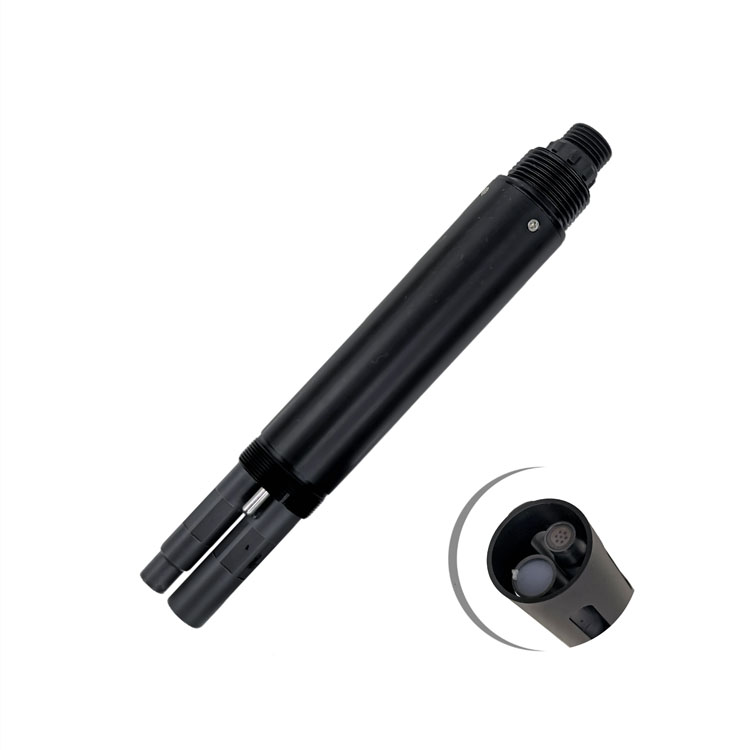
If the immediate problem is spatially different oxygen conditions, additional representative DO points may be more useful than several new parameters at one point. If several related measurements are needed at the same location, an integrated probe may simplify mounting. Establish the monitoring locations before choosing the package.
No. It observes selected conditions at selected points and supports an operating response. Unmeasured hazards, disease, equipment faults and conditions elsewhere remain possible. Avoid treating a normal dashboard as a guarantee of stock health.
No. Requirements depend on species, life stage, temperature, salinity, stocking and the farm's management plan. Set the operating and warning levels using those conditions and consider measurement uncertainty. A general range should not become an automatic universal control rule.
Do not assume so. The MPS-5B configuration discussed here uses selected DO, pH, ORP, conductivity/salinity, turbidity and temperature channels. Other analytes require a suitable separate measurement or sampling method, with compatibility checked individually.
Suitability must be evaluated against the actual ionic matrix and target concentration. Check interference, compensation and agreement with an appropriate reference method in representative water. Neither an IP68 enclosure nor a broad measurement range establishes low-level accuracy in saline water.
Include the required mounting and access arrangements, power conversion, controller or gateway interfaces and the selected service items. Identify which alarm and aerator-control functions are supplied and which remain with the installer. The quotation should distinguish a measuring probe from a complete installed control system.
Check representative placement, comparison readings, correct units and channel labels, the actual alarm path and loss-of-data behavior. Demonstrate probe removal and maintenance without confusing the operator's live values. Record the installed configuration and the conditions under which each check was performed.
A useful aquaculture water quality monitor follows the farm's water movement and decisions. Specify representative oxygen points, interpret nitrogen measurements with their chemical basis and relevant water conditions, and test the complete warning path. NiuBoL single-parameter and multi-parameter sensors can form that measurement layer when the selected models, positions and interfaces match the project.
 NBL-WQ-CL Water Quality Sensor Online Residual Chlorine Sensor.pdf
NBL-WQ-DO Online Fluorescence Dissolved Oxygen Sensor.pdf
NBL-WQ-NHN Ammonia Nitrogen Water Quality Sensor.pdf
NBL-WQ-COD Online Water Quality COD Sensor.pdf
NBL-WQ-PH Online pH Water Quality Sensor.pdf
NBL-WQ-EC water quality conductivity sensor.pdf
Prev:Residual Chlorine, Total Chlorine and Available Chlorine: Key Differences
Next:Water Quality Analyzer Types: Portable, Laboratory and Online Compared
Related recommendations
Sensors & Weather Stations Catalog
Agriculture Sensors and Weather Stations Catalog-NiuBoL.pdf
Weather Stations Catalog-NiuBoL.pdf
Agriculture Sensors Catalog-NiuBoL.pdf
Water Quality Sensor Catalog-NiuBoL.pdf
Related products
 Combined air temperature and relative humidity sensor
 TDR Soil Moisture & Temperature Sensor for irrigation| RS485 |4-20mA| NBL-S-THR
 Soil pH sensor RS485 soil Testing instrument soil ph meter for agriculture |NBL-S-PH
 Wind Speed sensor Output Modbus/RS485/Analog/0-5V/4-20mA
 Tipping bucket rain gauge for weather monitoring auto rainfall sensor RS485/Outdoor/stainless steel
 Pyranometer Solar Radiation Sensor 4-20mA/RS485

Screenshot, WhatsApp to identify the QR code
WhatsApp number:+8615367865107
(Click on WhatsApp to copy and add friends)

