





— Blogs —
—Products—
 Consumer hotline +8618073152920
 WhatsApp:+8615367865107
Address:Room 102, District D, Houhu Industrial Park, Yuelu District, Changsha City, Hunan Province, China
Product knowledge
Time:2026-05-28 16:00:42 Popularity:440
Quick Answer: Water quality analyzer types are described along different axes: portable, laboratory or online describes deployment; single-parameter or multi-parameter describes channel configuration; electrochemical, optical or reagent-based describes the measurement method. One instrument can belong to several of these categories. Choose the required result and sampling arrangement before comparing instrument packages.
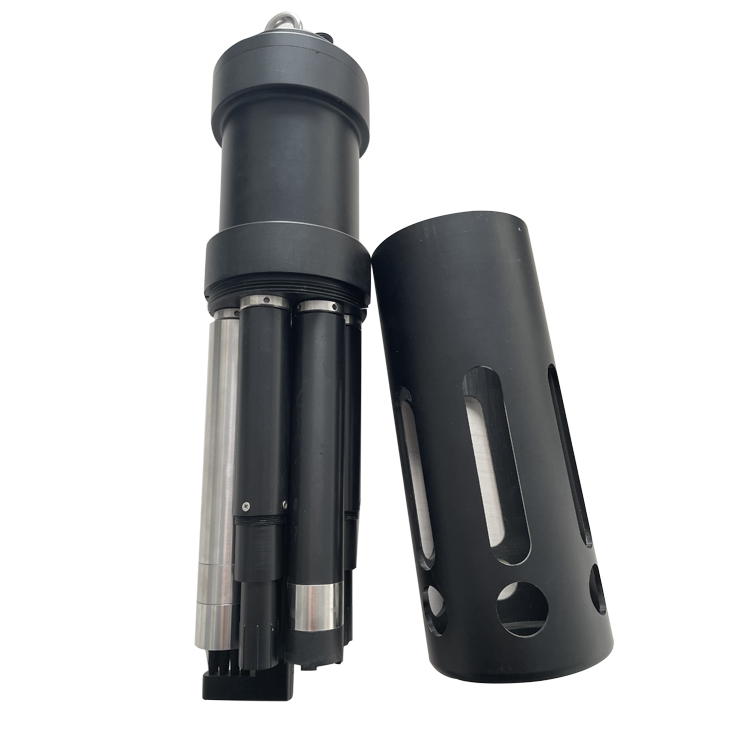
A portable multi-parameter meter and an online single-parameter analyzer are not opposite ends of one product scale. The portable meter may measure several field conditions during a visit. The online analyzer may perform one particular analysis repeatedly at a fixed location. Both can be appropriate in the same project.
Descriptions such as "economical" or "intelligent" do not establish an analytical method, accuracy or installation format. A procurement comparison needs the actual measured quantity, operating conditions and data output. A longer feature list is not evidence that the instrument can replace a required laboratory method.
| Format | Useful role | Limitation to account for |
|---|---|---|
| Portable field instrument | Measurements at several sites, commissioning comparisons and investigation of a fixed monitoring point | Usually requires an operator visit; intermittent observations may miss short events |
| Laboratory instrument | Defined analyses on collected samples, including methods requiring preparation, incubation or controlled conditions | Sample handling and reporting time can limit its use for immediate process response |
| Online immersed probe | Repeated in-situ measurements without a separate sampling line | Probe location, fouling and access influence data quality; not every analyte can be measured this way |
| Online flow-through instrument | Repeated measurements in a controlled sample path | Requires representative sample delivery, suitable pressure and flow, and a managed outlet |
| Automated analytical system | Repeated analyses that may include dosing reagents, digestion, conditioning or other method steps | Cycle time, consumables, waste and maintenance must be included in the operating scope |
Portable does not mean inaccurate, and laboratory does not automatically mean more accurate for every parameter. Performance depends on the method, instrument, operator and sample. For temperature or DO, for example, bringing a sample back to a laboratory can change the property before measurement. A field method may be necessary to represent the original water condition.
A multi-parameter probe places several sensing channels in one assembly. It can simplify mounting and collect related observations at one point. A single-parameter instrument may be preferable when one channel requires a different location, sample condition or service interval.
The NiuBoL NBL-WQ-MPS-5B has optional DO, pH, ORP, conductivity/salinity and turbidity modules with temperature. Specify the installed combination. That description does not imply that TN, TP, bacteria, ammonia and every COD or BOD method are built into the same probe.
Separate instruments can share a data logger without sharing an analytical method. The monitoring cabinet may therefore contain a multi-parameter probe interface, a dedicated analyzer and a sampler. The correct architecture follows the required measurements rather than a preference for one housing.
| Measurement approach | Examples of its role | Question that distinguishes quotations |
|---|---|---|
| Electrochemical sensing | pH, ORP, selected ion or chlorine measurements | Which species is measured, and what sample chemistry or flow affects the response? |
| Optical sensing | Optical DO, turbidity and selected organic-matter measurements | Is the result direct for the intended quantity, or an estimate requiring a site-specific relationship? |
| Reagent-based analysis | Selected nutrient or oxygen-demand analyses using defined reactions | What preparation, reagent use, cycle time and waste handling are required? |
| Biological incubation or response | BOD methods using specified biological conditions | Does the project require the reference incubation result or a faster method with a different reporting basis? |
An optical organic-load estimate should not be relabeled as the result of a chemical digestion simply because both are displayed in mg/L. Similarly, an ammonium electrode does not measure total nitrogen. Require the method and output basis beside the parameter name in the comparison sheet.
Technical parameters belong to a particular model and configuration. A generic "water quality analyzer" specification cannot safely combine the widest range from one probe, the temperature rating of another and the output options of a controller.
| NiuBoL example | Selected model-specific data | What this changes in the design |
|---|---|---|
| NBL-WQ-DO immersed optical probe | 0-20 mg/L; +/-2% FS; working temperature 0-45 degrees C; RS485 Modbus RTU | Check low-oxygen decision thresholds against the accuracy basis and choose representative immersion |
| NBL-WQ-EC conductivity probe | Separate range configurations; +/-1% FS; 12-24 V DC; RS485 Modbus RTU | Select the actual range and temperature-reporting mode, not a generic maximum range |
| NBL-WQ-CL flow-cell chlorine probe | 0-2.000 mg/L HOCl range; sample flow 30-60 L/h; 12-24 V DC; RS485 Modbus RTU | Include sample-flow control and confirm the chlorine reporting basis |
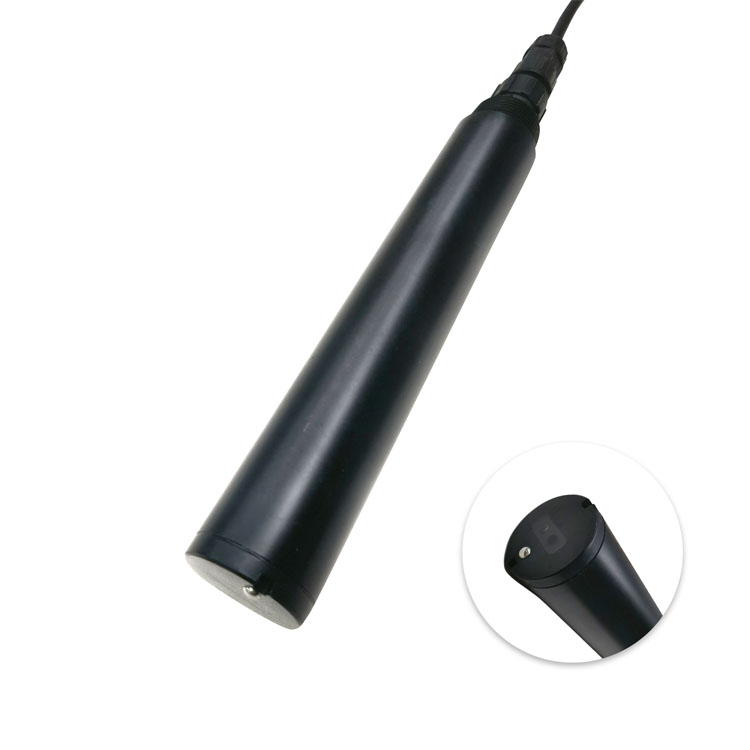
An immersed sensor may update frequently, while an automated analyzer may report one result after each analytical cycle. Both can be sold as online equipment. A short communication polling interval does not make a slow analytical cycle faster.
For illustration, an analyzer completing one cycle every 15 minutes produces at most 96 cycles in 24 hours before allowing for cleaning, calibration or faults. That arithmetic is not a NiuBoL model specification. It shows why the required event duration matters: a short discharge might occur between samples even though the gateway polls every few seconds.
Ask for the time from a change at the sampling point to a valid reported result. Include sample-line travel, conditioning, analysis, filtering and communication. Where several sample streams share an analyzer, establish the switching sequence and carryover controls as well as the result interval for each stream.
A portable instrument is useful when the operator must investigate several points or verify an online installation. Check battery duty, electrode protection, calibration access and how records are associated with the correct site. A portable meter left unattended is not automatically an online station.
Use online instrumentation where changes must be observed between visits. Choose immersion or a sample path according to the method and water conditions. Keep the process response separate from the measurement: a digital probe does not necessarily include a dosing relay, aerator control or alarm notification.
Establish the required method before selecting the instrument. Online trends can help operators and trigger samples while a separate analysis supplies the reportable result. Do not assume a correlation sensor is accepted for that purpose without the applicable method and project requirements being checked.
A probe-only quotation and a complete analyzer package are different scopes. For an immersed system, identify the mount, cleaning access and replacement arrangement. For a flow-through system, identify the sample take-off, pressure control, flow indication and discharge. For an analytical system, identify reagents, standards, replacement parts and waste handling required by the method.
RS485 Modbus RTU can connect a suitable NiuBoL probe to a PLC, RTU or data logger. Confirm the actual model's registers and outputs. RS485 is not an internet connection, and a gateway is not automatically an analyzer controller. Specify data acquisition, local display, alarms and control outputs as separate functions where required.
When asking NiuBoL to compare options, send the required result, how often it is needed, the water conditions and the available sampling arrangement. State whether the priority is field inspection, continuous operational observation or a defined reporting method. This avoids quoting a convenient instrument format that cannot perform the assignment.
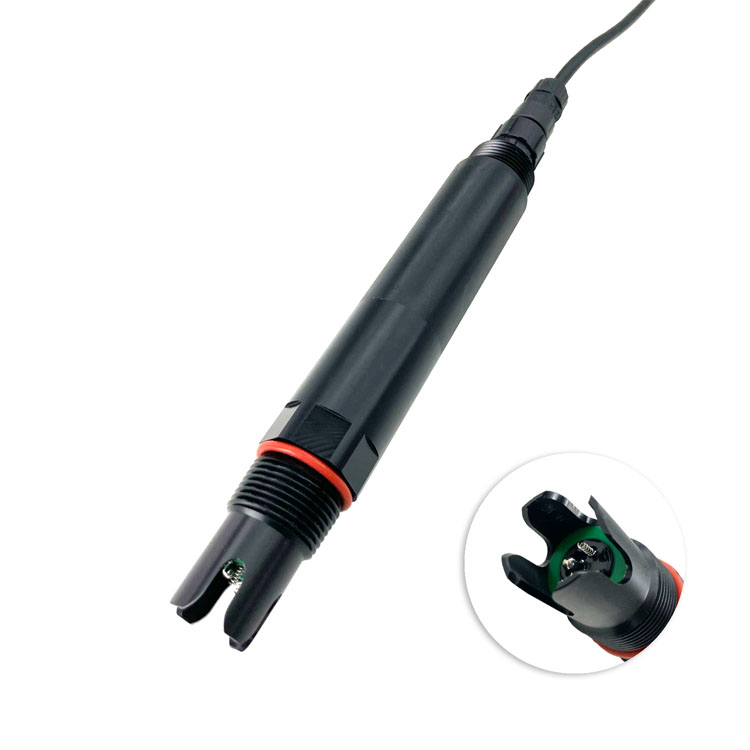
No. It can reduce mounting points when the required channels belong at the same location. Separate probes may be preferable if service intervals, replacement needs or sample conditions differ. Compare the installed and maintained arrangement for the required channels.
Only if that particular instrument provides a compatible interface and suitable data access. Its laboratory or portable classification does not establish communication capability. Confirm the interface, protocol, data availability and permitted operating mode.
No. Online equipment measures its installed channels by its own methods. Reference checks, unmeasured analytes and reporting requirements may still require laboratory work. Define those remaining tests before reducing the sampling program.
They may use different analytical methods or report a correlated estimate rather than the same reference quantity. Review method, sample preparation and reporting basis before comparing the numbers or assuming that one instrument is defective.
Use representative samples and operating conditions to demonstrate the required range, comparison performance, result interval and maintainability. For an online package, test sampling and data transfer as well as the measurement. A successful bench standard alone does not validate the entire installation.
The method, installed channels, sampling equipment, controller functions and necessary service items must match. Ask bidders to separate included equipment from required site work. An apparent price difference may simply reflect an omitted sample system or a different analytical method.
Compare water quality analyzer types by deployment, channel configuration and measurement method separately. Then check sampling, result timing and the required reporting basis. NiuBoL online probes can supply selected measurement channels within that architecture, while portable instruments and laboratory methods retain their own roles.
 NBL-WQ-CL Water Quality Sensor Online Residual Chlorine Sensor.pdf
NBL-WQ-DO Online Fluorescence Dissolved Oxygen Sensor.pdf
NBL-WQ-NHN Ammonia Nitrogen Water Quality Sensor.pdf
NBL-WQ-COD Online Water Quality COD Sensor.pdf
NBL-WQ-PH Online pH Water Quality Sensor.pdf
NBL-WQ-EC water quality conductivity sensor.pdf
Prev:Aquaculture Water Quality Monitor: Pond and RAS Configuration
Next:Water Turbidity Detection Methods: Optical Design and Sensor Selection
Related recommendations
Sensors & Weather Stations Catalog
Agriculture Sensors and Weather Stations Catalog-NiuBoL.pdf
Weather Stations Catalog-NiuBoL.pdf
Agriculture Sensors Catalog-NiuBoL.pdf
Water Quality Sensor Catalog-NiuBoL.pdf
Related products
 Combined air temperature and relative humidity sensor
 TDR Soil Moisture & Temperature Sensor for irrigation| RS485 |4-20mA| NBL-S-THR
 Soil pH sensor RS485 soil Testing instrument soil ph meter for agriculture |NBL-S-PH
 Wind Speed sensor Output Modbus/RS485/Analog/0-5V/4-20mA
 Tipping bucket rain gauge for weather monitoring auto rainfall sensor RS485/Outdoor/stainless steel
 Pyranometer Solar Radiation Sensor 4-20mA/RS485

Screenshot, WhatsApp to identify the QR code
WhatsApp number:+8615367865107
(Click on WhatsApp to copy and add friends)

