





— Blogs —
—Products—
 Consumer hotline +8618073152920
 WhatsApp:+8615367865107
Address:Room 102, District D, Houhu Industrial Park, Yuelu District, Changsha City, Hunan Province, China
Product knowledge
Time:2026-05-28 16:00:04 Popularity:330
The supplied material explains that ammonia nitrogen, nitrite nitrogen, nitrate nitrogen and total nitrogen are often used to judge water self-purification, pollution history and decomposition trend. For system integrators, nitrogen monitoring is not just a nutrient number; it is a process indicator for wastewater treatment, aquaculture, surface water and environmental supervision.
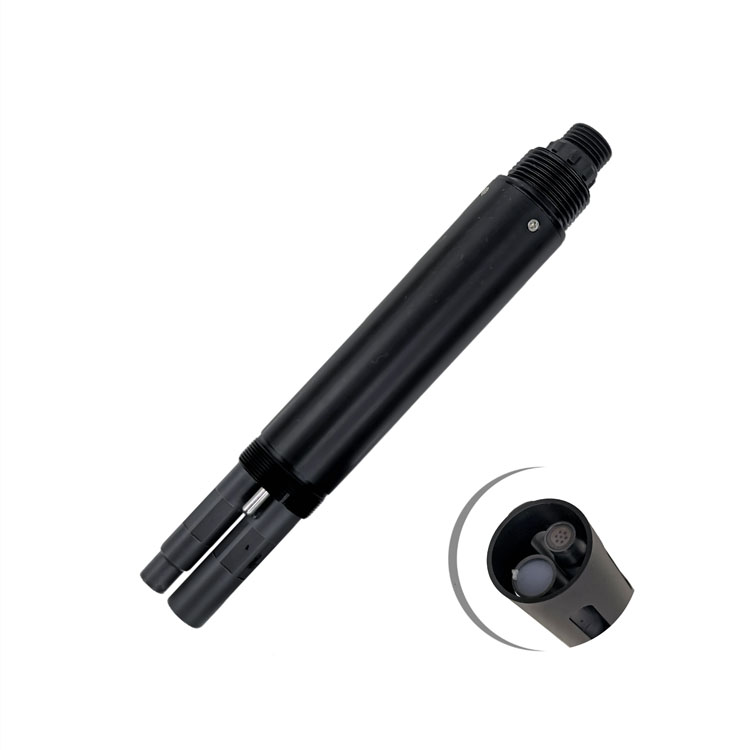
NiuBoL ammonia nitrogen and nitrite sensors use ion-selective electrode technology and output RS485 Modbus RTU data. They are field-layer devices that can be installed by immersion, pipe or tank mounting with 3/4 NPT thread and IP68 protection.
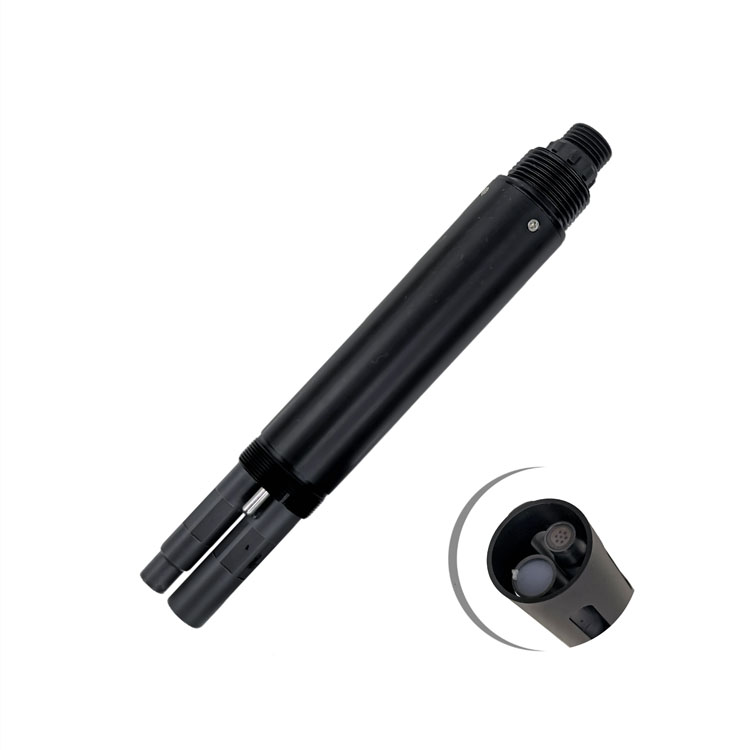
RS485 Modbus RTU allows ammonia or nitrite data to enter PLC, DCS, industrial computers, controllers, paperless recorders or touch screens. The integrator should map units, temperature compensation and alarm thresholds clearly.
| Parameter | Engineering specification |
|---|---|
| Nitrogen forms | Organic nitrogen, ammonia nitrogen, nitrite nitrogen, nitrate nitrogen and total nitrogen |
| Ammonia nitrogen | Free ammonia NH3 and ammonium ion NH4+ |
| Nitrite nitrogen | Intermediate and unstable oxidation product in nitrogen conversion |
| Nitrate nitrogen | Final oxidation product, generally lower toxicity than nitrite but excessive concentration is still a risk |
| Total nitrogen | Sum of inorganic and organic nitrogen forms |
| Sensor principle | PVC membrane ion-selective electrode for ammonium or nitrite ions |
| Output | RS485 Modbus RTU |
| Installation | 3/4 NPT immersion or pipe/tank mounting, IP68 |
| Nitrogen form | Engineering interpretation |
|---|---|
| Organic nitrogen | Protein, amino acid, amide, urea and other carbon-bound nitrogen. |
| Ammonia nitrogen | Free ammonia NH3 and ammonium ion NH4+, often produced from organic decomposition. |
| Nitrite nitrogen | Unstable intermediate during oxidation from ammonia to nitrate. |
| Nitrate nitrogen | Final oxidation product; lower toxicity than nitrite but excessive concentration is still a risk. |
| Total nitrogen | All inorganic and organic nitrogen forms combined. |
| Ammonification | Organic nitrogen converts into ammonia nitrogen. |
| Nitrification | Ammonia nitrogen oxidizes to nitrite and nitrate under aerobic microbial action. |
| Denitrification | Nitrate or nitrite is reduced to nitrogen gas with organic carbon source under microbial action. |
Site environment challenge: ammonia removal depends on aerobic microbial condition.
System integration scheme: monitor ammonia nitrogen with DO, pH and temperature.
User value delivered: operators can detect nitrification failure earlier.
Site environment challenge: ammonia and nitrite stress fish and shrimp.
System integration scheme: connect nitrogen sensors to alarms and management platform.
User value delivered: farmers respond before toxic accumulation causes losses.
Site environment challenge: nitrogen forms indicate pollution age and self-purification trend.
System integration scheme: combine ammonia, nitrite, nitrate and TN evaluation.
User value delivered: monitoring teams interpret pollution evolution.
Site environment challenge: nitrogen load changes with production process.
System integration scheme: use ammonia nitrogen sensors at influent and effluent points.
User value delivered: plants improve dosing and treatment adjustment.
Accuracy selection: Choose the range and precision according to the control purpose, not only the nominal parameter name.
Communication selection: Use RS485 Modbus RTU when data must enter PLC, DCS, SCADA, RTU or industrial IoT platforms.
Installation environment selection: Confirm representative flow, fouling risk, maintenance access, cable route and immersion condition before ordering.
Power supply selection: Standardize cabinet supply voltage and reserve surge, grounding and waterproof protection for outdoor or wet sites.
The source material distinguishes organic nitrogen, inorganic nitrogen, ammonia nitrogen, nitrite nitrogen, nitrate nitrogen and total nitrogen. It also explains ammonification, nitrification and denitrification as the main conversion paths.
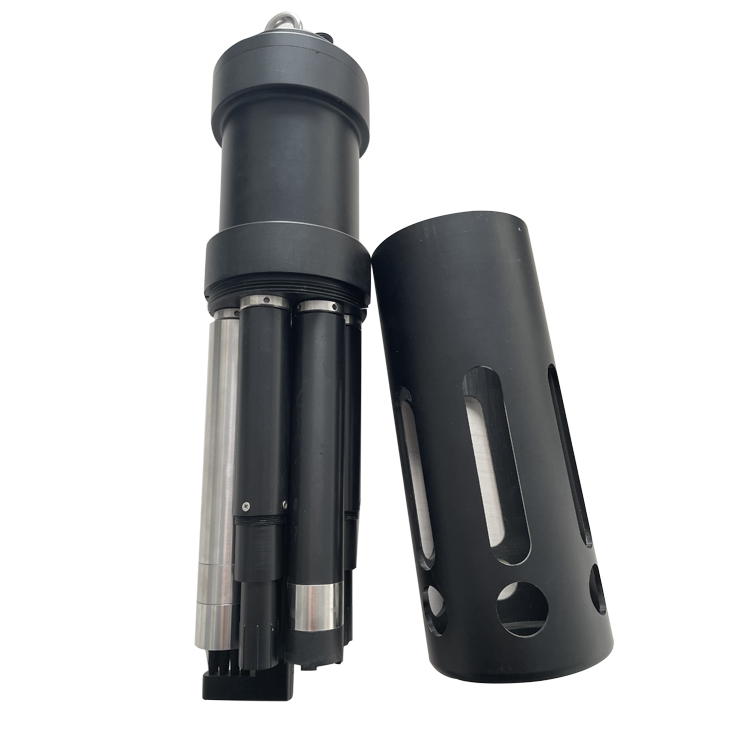
Q1: What is ammonia nitrogen?
It is nitrogen existing as free ammonia NH3 and ammonium ion NH4+.
Q2: Why is nitrite important?
It is an unstable intermediate and indicates transformation condition.
Q3: What does nitrate indicate?
It is the final oxidation product of nitrogen transformation.
Q4: What is total nitrogen?
The sum of inorganic and organic nitrogen forms.
Q5: How does nitrogen show pollution history?
Relative ammonia, nitrite and nitrate levels reflect decomposition and oxidation stage.
Q6: Can ammonia sensors connect to PLC?
Yes, RS485 Modbus RTU supports industrial integration.
Q7: What installation is common?
3/4 NPT immersion, pipe or tank mounting.
Q8: What companion parameters are useful?
DO, pH, temperature, COD and ORP.
Nitrogen monitoring should be designed around process interpretation. A single value is less useful than the relationship among ammonia, nitrite, nitrate, DO and pH.
For aquaculture system providers, wastewater nitrification contractors, environmental IoT companies, laboratory distributors and industrial water buyers, the real value is not only understanding a water quality parameter. The value is knowing how to turn that parameter into a reliable product selection, a stable project quotation and a monitoring system that customers can maintain after installation.
The common site problem is that ammonia, nitrite, nitrate and total nitrogen represent different treatment stages and risks, so using only one value can lead to wrong operation decisions. This is why buyers increasingly prefer online sensors, standard communication protocols and supplier support that can connect instrument data with control cabinets, telemetry gateways and cloud platforms.
NiuBoL can support this application with NBL-WQ-NHN ammonia nitrogen sensor and nitrogen-related water quality monitoring solution. The product value is that it helps customers build nitrogen monitoring logic for aquaculture safety, wastewater treatment process control and environmental discharge assessment. For distributors, this creates a clear product story; for system integrators, it provides a practical sensor layer; for end users, it improves monitoring continuity and response speed.
| Buyer question | Practical answer for project selection |
|---|---|
| Who should consider this solution? | aquaculture system providers, wastewater nitrification contractors, environmental IoT companies, laboratory distributors and industrial water buyers |
| Main operational pain point | ammonia, nitrite, nitrate and total nitrogen represent different treatment stages and risks, so using only one value can lead to wrong operation decisions |
| Recommended product direction | NBL-WQ-NHN ammonia nitrogen sensor and nitrogen-related water quality monitoring solution |
| System value | helps customers build nitrogen monitoring logic for aquaculture safety, wastewater treatment process control and environmental discharge assessment |
| When to quote this product | Recommend it when the customer needs ammonia nitrogen monitoring, pond risk control, nitrogen removal process data or a multi-parameter station including nitrogen indicators. |
1. Engineering project and contractor quotation: Aquaculture farms can monitor ammonia nitrogen together with pH, temperature and DO to judge toxicity risk and aeration/feed management.
2. Industrial or aquaculture operation upgrade: Wastewater projects can track nitrogen conversion trends to evaluate nitrification, denitrification and process stability.
3. IoT and remote monitoring solution: IoT monitoring platforms can present nitrogen indicators with alarms, trend charts and maintenance records for technical service contracts.
A professional inquiry should include measuring parameter, expected range, water type, installation method, cable length, power supply, output signal, communication protocol, controller or gateway requirement, and whether the site needs local display, cloud platform, alarm relay or data export.
For RS485 projects, confirm Modbus RTU address planning, baud rate, register mapping, cabinet grounding and surge protection. For 4-20 mA projects, confirm analog input range, cable distance, PLC scaling and field calibration method. For outdoor or pond stations, also confirm waterproof housing, solar power, anti-fouling maintenance and sensor cleaning interval.
| Information needed | Why it matters |
|---|---|
| Application site | Aquaculture pond, wastewater plant, industrial process water, drinking water, river station or OEM equipment. |
| Target parameters | Helps select single-parameter sensors or a multi-parameter monitoring package. |
| Water condition | Temperature, salinity, turbidity, fouling, chemicals and installation depth affect sensor selection. |
| Integration method | RS485 Modbus RTU, 4-20 mA, controller, RTU, PLC, SCADA or cloud platform. |
| Quantity and business role | Dealer stock, project bidding, OEM matching and end-user replacement require different quotation support. |
NiuBoL focuses on practical online monitoring instruments for water quality and environmental sensing. We can support sensor selection, parameter matching, communication integration and project-oriented documentation for distributors, IoT solution companies and engineering contractors.
If you are preparing a quotation, designing a monitoring station or replacing an unstable sensor, send us your water type, required parameter, output signal and installation photos. Our team can help recommend a suitable model and provide product information for your project proposal.
 NBL-WQ-CL Water Quality Sensor Online Residual Chlorine Sensor.pdf
NBL-WQ-DO Online Fluorescence Dissolved Oxygen Sensor.pdf
NBL-WQ-NHN Ammonia Nitrogen Water Quality Sensor.pdf
NBL-WQ-COD Online Water Quality COD Sensor.pdf
NBL-WQ-PH Online pH Water Quality Sensor.pdf
NBL-WQ-EC water quality conductivity sensor.pdf
Prev:Conventional Water Pollution Analysis Indicators for Engineering Monitoring Systems
Next:Residual Chlorine, Total Chlorine and Available Chlorine Difference for Water Treatment Monitoring
Related recommendations
Sensors & Weather Stations Catalog
Agriculture Sensors and Weather Stations Catalog-NiuBoL.pdf
Weather Stations Catalog-NiuBoL.pdf
Agriculture Sensors Catalog-NiuBoL.pdf
Water Quality Sensor Catalog-NiuBoL.pdf
Related products
 Combined air temperature and relative humidity sensor
 Soil Moisture Temperature sensor for irrigation|NBL-S-THR
 Soil pH sensor RS485 soil Testing instrument soil ph meter for agriculture |NBL-S-PH
 Wind Speed sensor Output Modbus/RS485/Analog/0-5V/4-20mA
 Tipping bucket rain gauge for weather monitoring auto rainfall sensor RS485/Outdoor/stainless steel
 Pyranometer Solar Radiation Sensor 4-20mA/RS485

Screenshot, WhatsApp to identify the QR code
WhatsApp number:+8615367865107
(Click on WhatsApp to copy and add friends)

