





— Blogs —
—Products—
 Consumer hotline +8618073152920
WhatsApp:+8615367865107
Address:Room 102, District D, Houhu Industrial Park, Yuelu District, Changsha City, Hunan Province, China
Product knowledge
Time:2024-10-24 14:50:35 Popularity:2004
A portable weather station may be a handheld instrument for attended observations or a transportable station installed on a tripod for a monitoring period. These are different purchases. Choose by whether the project needs spot readings or a continuous record, then check the actual sensors, support, power and data-retrieval method. Portability alone does not establish rainfall measurement, wireless transmission or unattended outdoor operation.
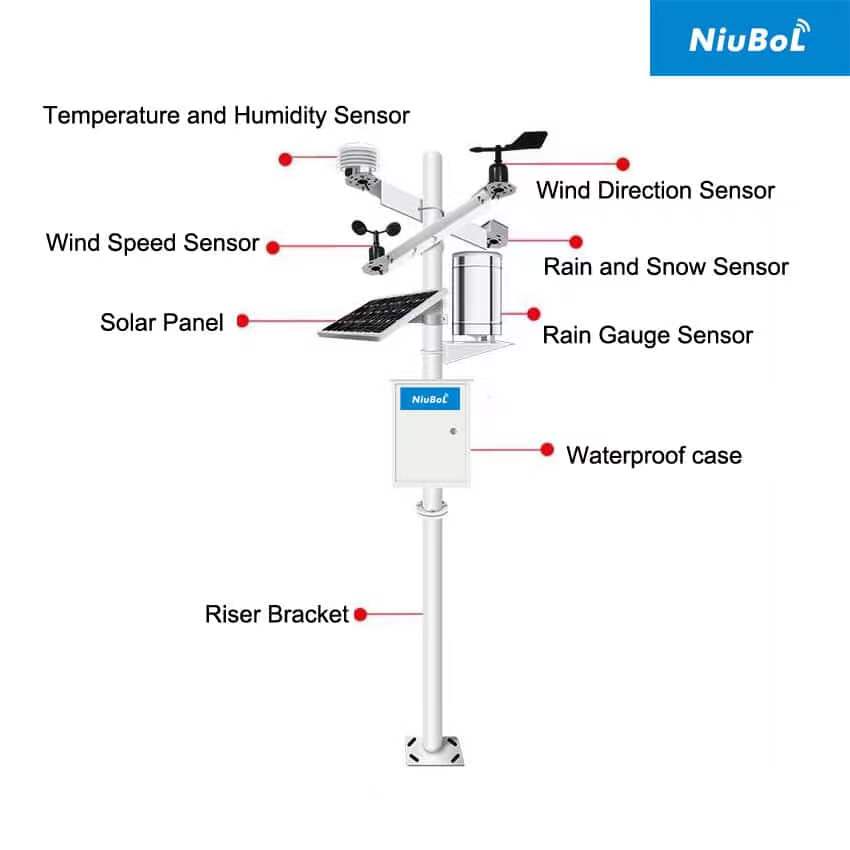
A survey team checking conditions at several locations may prefer a handheld instrument. It can be carried to the observation point and retrieved immediately after the measurement. The resulting record describes the times and positions actually observed; gaps between visits remain unobserved, even if software later joins the points with a line.
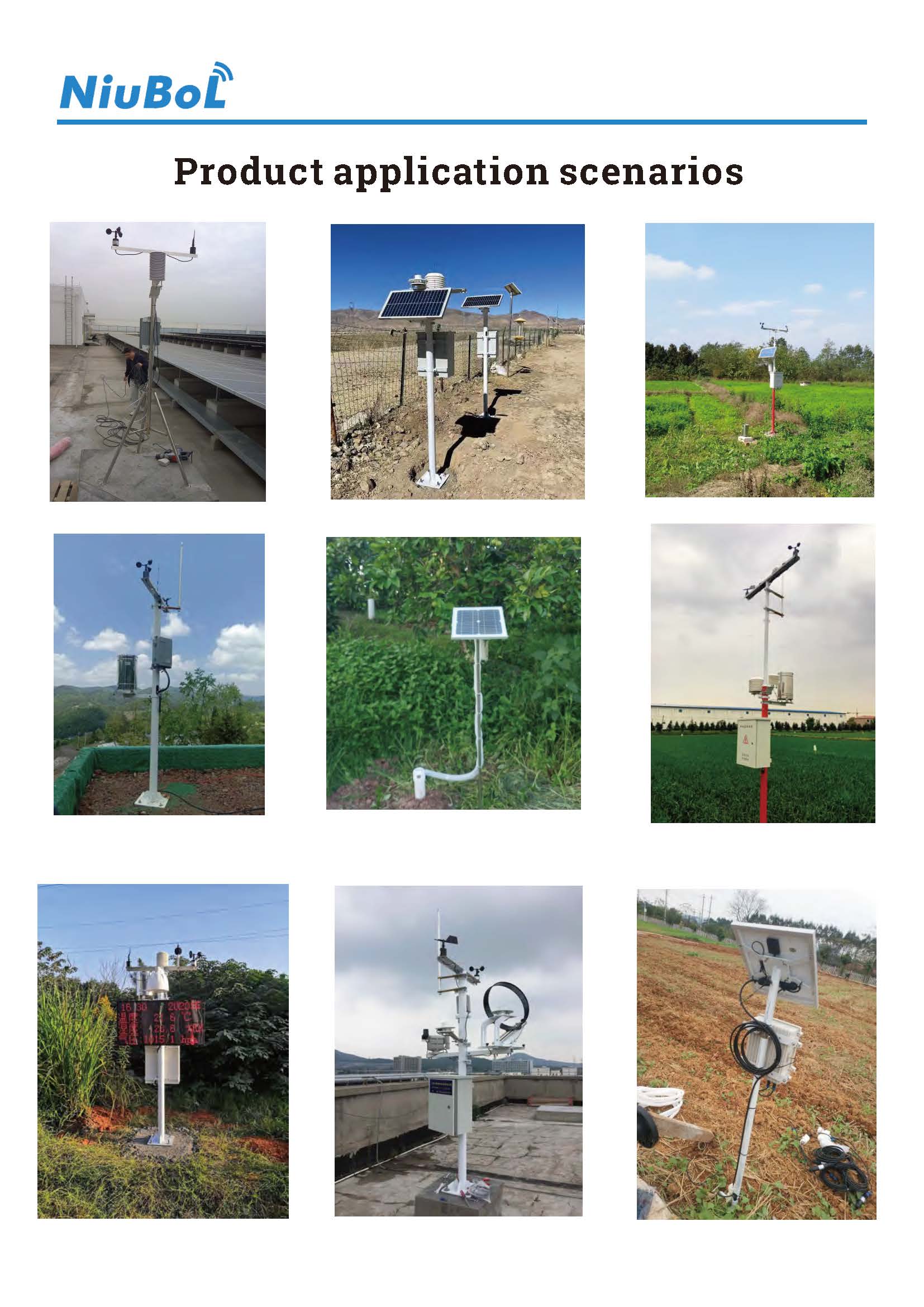
A tripod installation is more appropriate when the task requires observations throughout a trial, work shift or temporary monitoring campaign. Sensors remain at a defined position while a collector records them. This adds mounting, power, cable protection and site-security requirements that do not disappear when the equipment is described as portable.
For a transportable installation, check the packed components: instruments, mounting parts, collector, power supply, cables and the means of retrieving data. Include the items needed to secure the assembly at the intended site. A photograph of a complete mast does not establish which of those items are included in an offer.
The NiuBoL portable tripod support has a listed 2.8 m total height, with customization available. That is a support dimension, not a universal sensor measurement height or a guarantee of stability under every fitted load. Check the selected configuration and anchoring arrangement for the location.
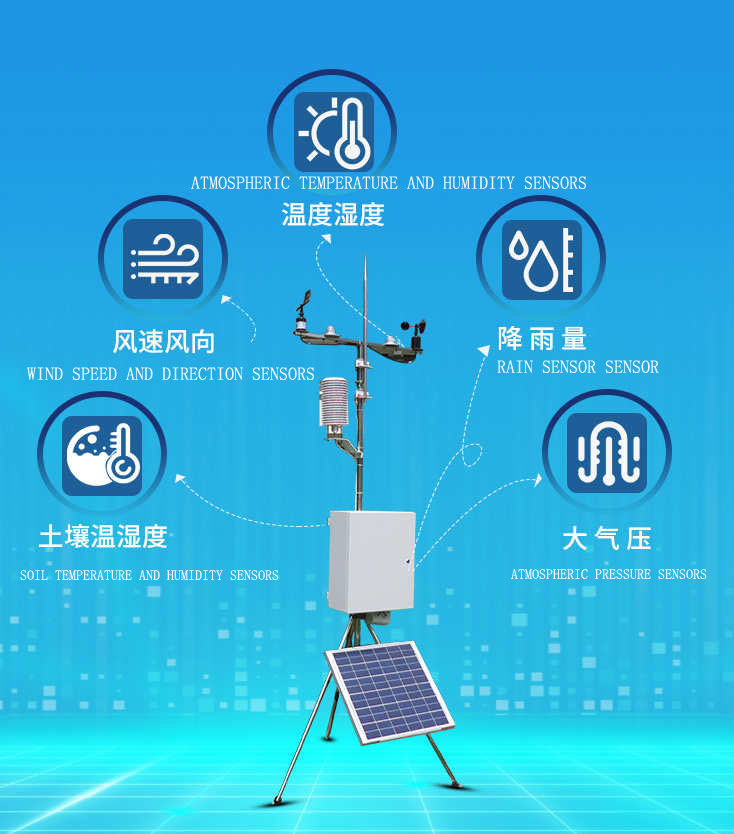
The NBL-HWS is a handheld option for wind, air temperature, humidity and pressure observations. It uses replaceable AAA batteries and USB data download. Do not specify it as a remotely connected rain station: rainfall, cellular reporting and RS485 Modbus RTU integration are separate requirements, not functions established by its handheld format.
| NBL-HWS item | Specified characteristic | Project implication |
|---|---|---|
| Wind speed | 0-45 m/s; stated accuracy +/-0.3 m/s | Check the intended observation range |
| Wind direction | 16 direction sectors | Do not treat the indication as a one-degree digital vane |
| Air temperature | Measurement span -50 to 80 C | Distinguish the channel span from the complete-instrument operating limits |
| Complete-instrument environment | -20 to 80 C; 5-95% RH | Review expected deployment conditions separately |
| Power and retrieval | Three AAA batteries; USB | Plan battery replacement and computer retrieval, not assumed cellular upload |
Confirm the ordered version and the required export workflow before a field assignment. A useful acceptance check is to record an identified observation and retrieve it on the intended computer. Viewing a value locally and successfully exporting the associated record are separate checks.
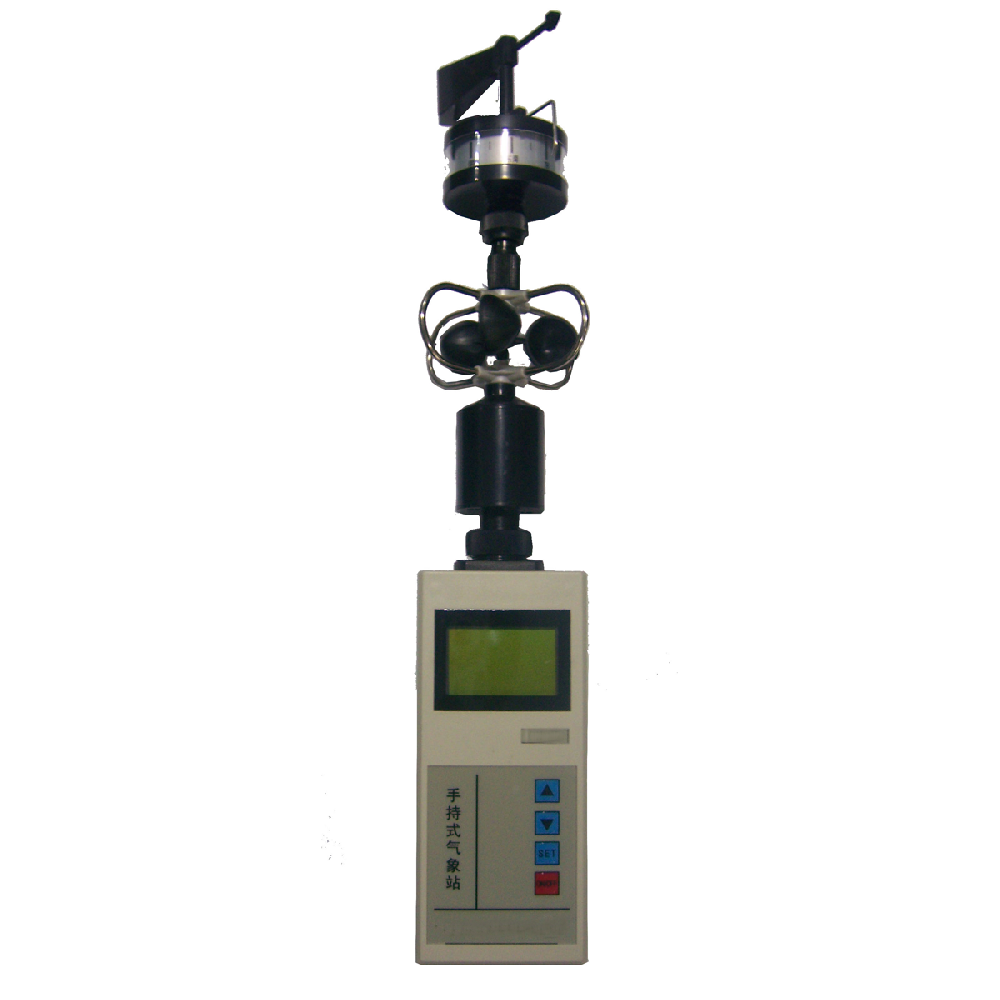
For handheld work, keep the operator from unnecessarily blocking the wind path or warming the air sensor through handling. Use a repeatable position and allow the selected instrument to respond appropriately before saving the observation. A quick reading next to a vehicle exhaust describes that disturbed position, not necessarily the surrounding field.
For tripod work, establish stable support and record orientation and actual sensor heights. Level a collecting rain gauge where one is fitted. Do not treat a short setup time as evidence that every channel has suitable exposure. If the campaign will move between locations, use the relocation comparability guide to preserve the distinction between a site change and a weather change.
A transportable station can use a selected data logger and communication arrangement. The TG462 / TG462S supports configurable sensor acquisition and network functions; it is not part of every portable kit by default. Identify the fitted hardware, recording configuration and data destination in the offer.
For RS485 Modbus RTU sensors, verify the chosen output, register definitions and power requirements. That local sensor connection is different from the link carrying records to a server. A handheld USB download, an on-site display and cellular reporting offer different workflows, so they should not be listed as interchangeable transmission options without an actual configuration.

A short survey can use an attended retrieval plan. An overnight or multi-day installation needs a supply and recording arrangement suited to that period. Include the selected sensor loads, collector and communications when assessing power; a small sensing head does not establish a complete station's battery endurance.
Solar charging must be evaluated for the location and operating schedule. A panel on a photograph is not an autonomy specification. Similarly, weather-resistant sensors do not make an exposed computer, unsealed connector or temporary battery connection suitable for unattended rain exposure.
Send NiuBoL the required observations, whether attendance is continuous, the monitoring duration and the method of collecting the records. State whether the team needs a handheld unit, a tripod package or both. Include transport and site-access constraints, together with any packed-size, weight or setup-time limit that the field procedure must meet.
No. A handheld instrument supports attended observations, while a suitably configured tripod station can record at a fixed position for a monitoring period. Select the workflow as well as the measured quantities.
The described configuration provides wind, temperature, humidity and pressure observations. Specify a suitable precipitation instrument and acquisition arrangement when rainfall is required.
No. Connectivity depends on the actual instrument and collector. The NBL-HWS uses USB retrieval; other configurations need explicitly selected communication hardware and software.
No. Support dimensions and sensor measurement heights are different. Select the physical arrangement for the observation method, exposure and stability requirements.
No. The instrument did not observe those intervals. Any interpolation must remain identifiable as an estimate rather than being presented as a continuous measured record.
Select a portable weather station by how the field team must observe and retrieve data. Handheld surveys and tripod campaigns have different requirements for attendance, mounting, power and records. Matching that workflow first prevents a convenient instrument from being purchased for a monitoring duty it cannot fulfil.
Prev:Rain Sensor in IoT: Map Rainfall Fields Before Integration
Next:Agricultural Crop Sensors: Environmental vs Plant Measurements
Related recommendations
Sensors & Weather Stations Catalog
 Agriculture Sensors and Weather Stations Catalog-NiuBoL.pdf
Weather Stations Catalog-NiuBoL.pdf
Agriculture Sensors Catalog-NiuBoL.pdf
Water Quality Sensor Catalog-NiuBoL.pdf
Related products
 Combined air temperature and relative humidity sensor
 TDR Soil Moisture & Temperature Sensor for irrigation| RS485 |4-20mA| NBL-S-THR
 Soil pH sensor RS485 soil Testing instrument soil ph meter for agriculture |NBL-S-PH
 Wind Speed sensor Output Modbus/RS485/Analog/0-5V/4-20mA
 Tipping bucket rain gauge for weather monitoring auto rainfall sensor RS485/Outdoor/stainless steel
 Pyranometer Solar Radiation Sensor 4-20mA/RS485


Screenshot, WhatsApp to identify the QR code
WhatsApp number:+8615367865107
(Click on WhatsApp to copy and add friends)

