





— Blogs —
—Products—
 Consumer hotline +8618073152920
WhatsApp:+8615367865107
Address:Room 102, District D, Houhu Industrial Park, Yuelu District, Changsha City, Hunan Province, China
Product knowledge
Time:2025-12-02 22:48:55 Popularity:1095
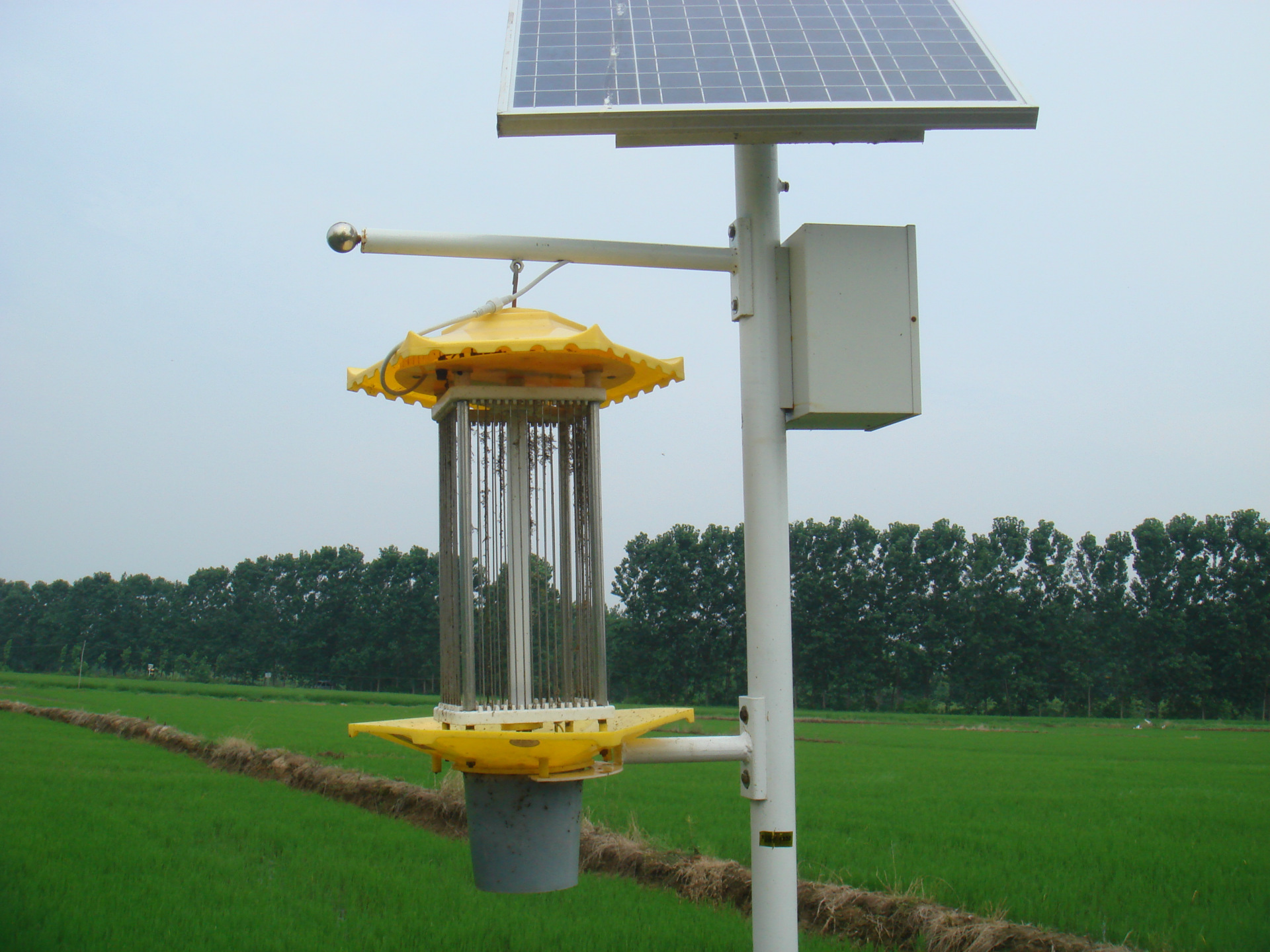
A wind-suction solar insect trap that shuts down early may have reached a programmed stop, entered an environmental protection mode or lost usable battery supply. Identify which event occurred before replacing the battery or extending the timer. Light-source power, fan power and total operating time must be considered together. NiuBoL's wind-suction equipment has different loads and service checks from a grid-type insecticidal lamp, even where the pole and solar panel look similar.
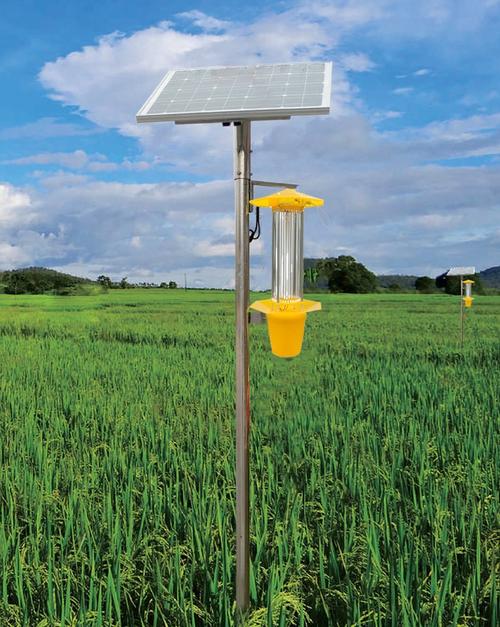
Does the device stop at the same clock time each night, after a similar number of operating hours or only after cloudy days? A repeatable scheduled stop points to different checks from a stop that changes with charging conditions. Record the active mode, actual start and stop times, weather conditions and any available controller status. Resetting immediately can erase the clue needed to distinguish them.
Also note which functions stopped. A lit lamp with a stopped fan, a dark lamp with an active controller and a complete loss of operation are different symptoms. Catch volume alone is not a diagnostic signal: insect activity and collection conditions can change even when the electrical system is operating normally.
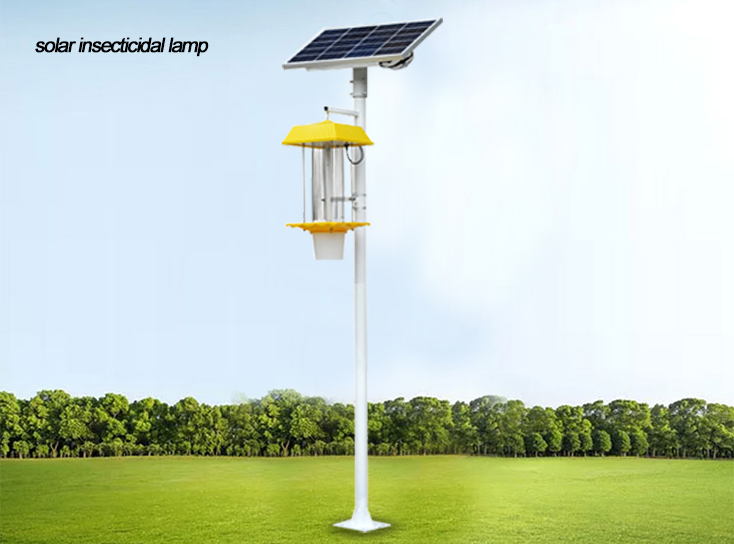
A wind-suction solar insect trap uses airflow to move attracted insects into its collection arrangement. A frequency-vibration solar insect trap uses a high-voltage grid. Their fault paths are different. Do not use the grid voltage, fan rating or battery assumptions of one design to diagnose another.
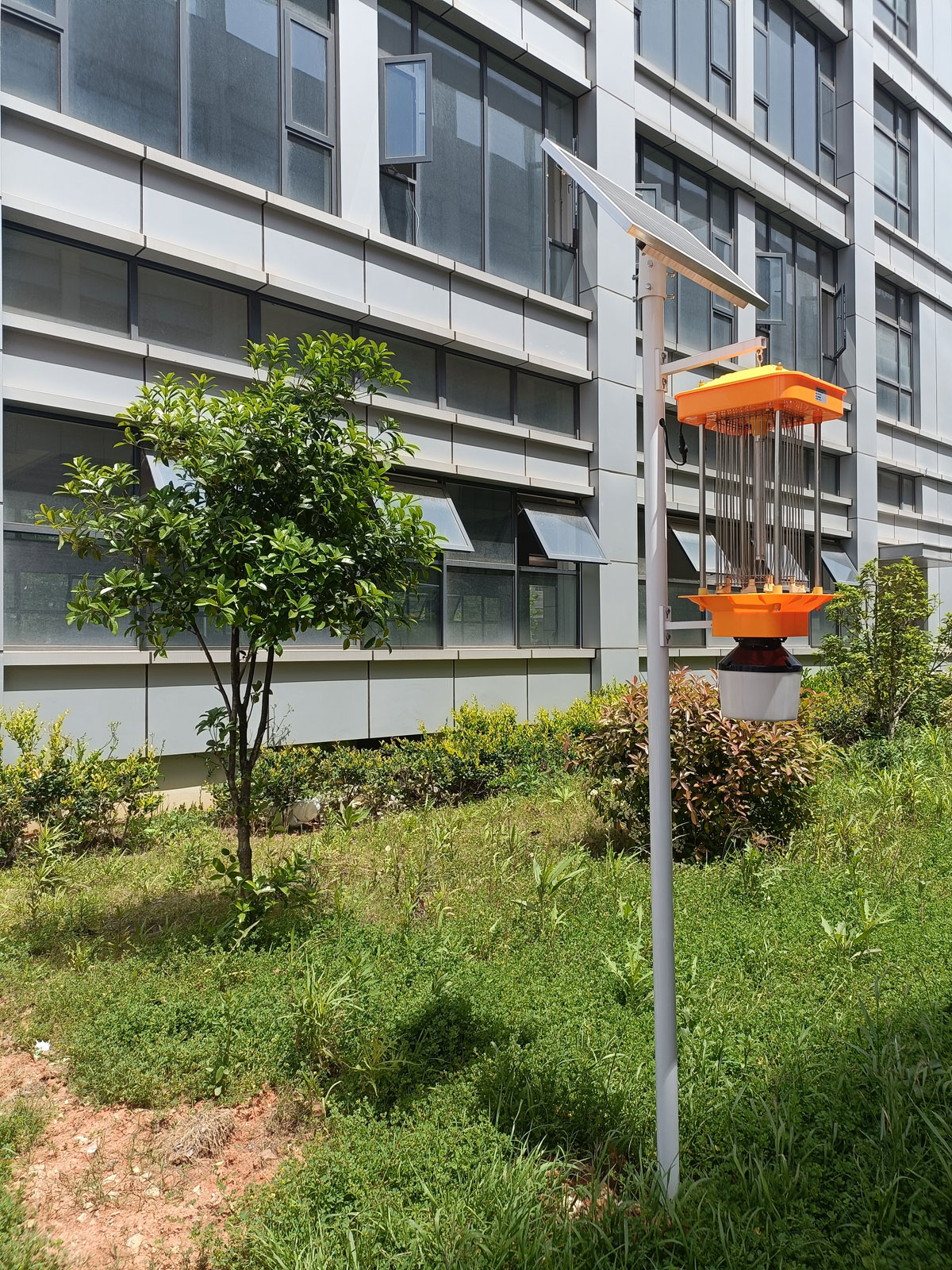
For the suction design, inspect the fan and collector after safe isolation if airflow is absent or restricted. Do not bypass a guard or touch the fan while powered. Grid-type equipment requires its own electrical isolation procedure and qualified servicing. A solar supply does not remove electrical or moving-part hazards.
| Component | Wind-suction lamp specification | Relevance to early stopping |
|---|---|---|
| Battery | 12 Ah at DC 12.8 V; charge/discharge and short-circuit protection | Nominal stored energy is not the usable energy at every condition |
| Solar panel | Monocrystalline; at least 40 Wp | Rated panel power is not constant charging power |
| Fan | 20 W / 12 V; 2200 rpm | Include fan duty in the operating load |
| Light source | 365 nm and 395 nm; at least 3 W | Lighting adds to fan and controller demand |
| Total consumption | At most 30 W, depending on model | Use the actual duty cycle, not a constant maximum load |
| Protection | IP65 | Still inspect cable entries, connections and damage |
Confirm the delivered assembly before using these figures. A replacement lamp head or different controller can change the duty cycle. Retain its identification and settings with the service notes, particularly if the same site contains both suction-type and grid-type lamps.
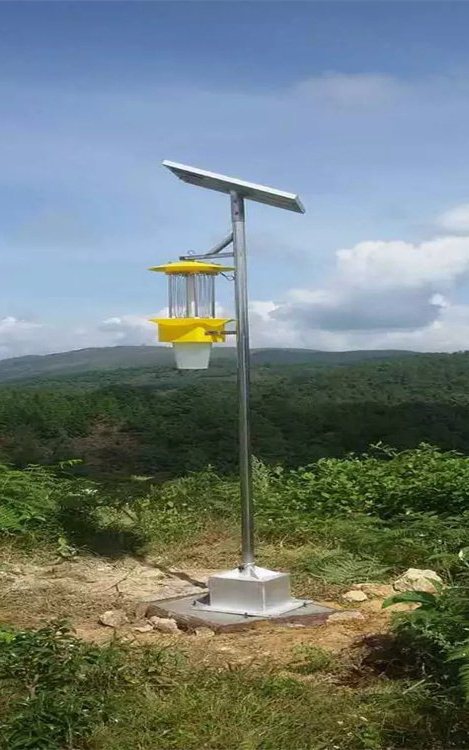
The listed battery's nominal energy is 12.8 V x 12 Ah = 153.6 Wh. As an illustrative calculation, a system drawing a continuous 30 W for six hours would need 180 Wh. That exceeds the nominal battery energy before allowing for losses or protected reserve. The calculation does not prove the actual device draws 30 W continuously, but it shows why six hours and several cloudy nights cannot be promised from the nameplate alone.
A 20 W fan running continuously for six hours would use 120 Wh by itself. Add the actual lighting, controller and other loads, then account for the permitted usable battery capacity and charging conditions. If the operating program cycles the fan, measure that duty rather than assuming continuous operation. Do not bypass battery protection to force a longer run.
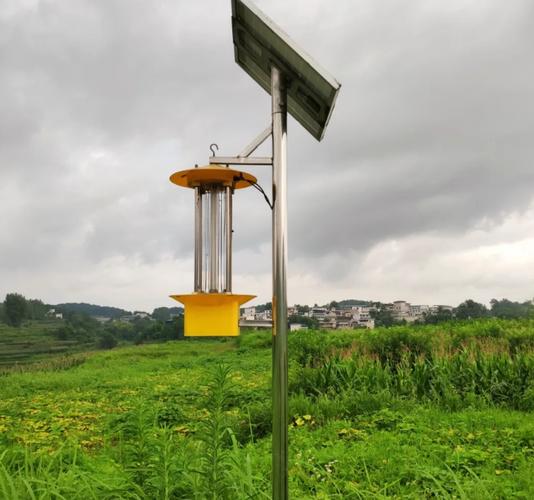
Inspect the panel for shading, deposits and physical damage. A clear panel at noon can still be shaded for a substantial part of the charging day. Review its orientation and seasonal sun exposure, and have a qualified technician check charging behavior using the supplied procedure. A panel rating in Wp cannot establish how much energy reached the battery on a particular day.
Check the selected light, time, wet-weather and temperature control modes. A protection stop should not be mistaken for a flat battery, and a low-voltage stop should not be hidden by changing a schedule. Record which condition initiated the stop and what is required for normal recovery. The applicable settings belong to the selected controller, not every solar insect lamp.
| Observed pattern | Next check | Action boundary |
|---|---|---|
| Stops at the configured time | Operating mode and required operating period | Change the schedule only after checking the energy requirement |
| Stops earlier after poor charging days | Panel exposure, charging and usable battery condition | Do not infer battery failure from one night's runtime |
| Light remains on but airflow stops | Fan path, protection and electrical supply | Isolate before inspection; do not force the fan to run |
| Stops with an environmental protection indication | Controller condition and configured recovery behavior | Keep protection active while investigating |
Where remote status is required, demonstrate which values the ordered controller actually exposes. An RS485 Modbus RTU interface, if specified, needs its own register map and test. Remote battery readings, on/off commands, catch counts or images should not be assumed to exist on a basic control lamp.
For NiuBoL support, provide the model, controller settings, battery identification, panel exposure, stopping pattern and available electrical measurements. Request a revised power package only after establishing the required operating period. If insect identification or sample images are the objective, specify monitoring equipment rather than treating longer lamp runtime as a substitute for that function.
No. Actual charging depends on irradiance, shading, orientation, temperature and system losses. Assess energy delivered over the charging period, not only rated panel power.
No. Check scheduling, protection status, charging and the load first. Battery condition should be evaluated with the appropriate service test.
Only after assessing the target operating period, energy balance and collection objective. A longer command cannot create additional battery energy or guarantee improved crop protection.
No. Review the catch for the local target and non-target insects. A timed stop does not guarantee that beneficial insects are unaffected.
List the delivered lamp design, actual loads and operating schedule, site charging conditions, battery configuration and required status outputs. Keep any runtime commitment tied to those conditions.
Instructions for the two lamp designs
Frequency-vibration solar insect trap instructions (PDF).
 Frequency-vibration-solar-insecticidal-lamp-User-Manual.pdf
Wind-suction solar insect trap instructions (PDF).
Wind-suction-Solar-Insect-Trap-Light-User-Manual.pdfA wind-suction solar insect trap early shutdown needs a cause-based check of scheduling, protection, charging and load. Use the actual assembly and energy requirement, keep safety protections active and distinguish control lamps from monitoring terminals. These records give NiuBoL a practical basis for service advice or a correctly sized replacement.
Prev:Ultrasonic vs Laser Snow Depth Sensor Guide
Next:Fertigation Machine Not Drawing Fertilizer: Trace the Suction Path
Related recommendations
Sensors & Weather Stations Catalog
Agriculture Sensors and Weather Stations Catalog-NiuBoL.pdf
Weather Stations Catalog-NiuBoL.pdf
Agriculture Sensors Catalog-NiuBoL.pdf
Water Quality Sensor Catalog-NiuBoL.pdf
Related products
 Combined air temperature and relative humidity sensor
 TDR Soil Moisture & Temperature Sensor for irrigation| RS485 |4-20mA| NBL-S-THR
 Soil pH sensor RS485 soil Testing instrument soil ph meter for agriculture |NBL-S-PH
 Wind Speed sensor Output Modbus/RS485/Analog/0-5V/4-20mA
 Tipping bucket rain gauge for weather monitoring auto rainfall sensor RS485/Outdoor/stainless steel
 Pyranometer Solar Radiation Sensor 4-20mA/RS485


Screenshot, WhatsApp to identify the QR code
WhatsApp number:+8615367865107
(Click on WhatsApp to copy and add friends)

