





— Blogs —
—Products—
 Consumer hotline +8618073152920
WhatsApp:+8615367865107
Address:Room 102, District D, Houhu Industrial Park, Yuelu District, Changsha City, Hunan Province, China
Product knowledge
Time:2026-07-13 09:42:25 Popularity:403
Quick Answer: Agricultural IoT pest monitoring should be ready before the target observation season, not merely connected on installation day. Confirm the sampling task, complete a collection cycle, establish who reviews uncertain specimens and test the route from a finding to field scouting. A connected device without an active review process can miss the period the project was purchased to observe.
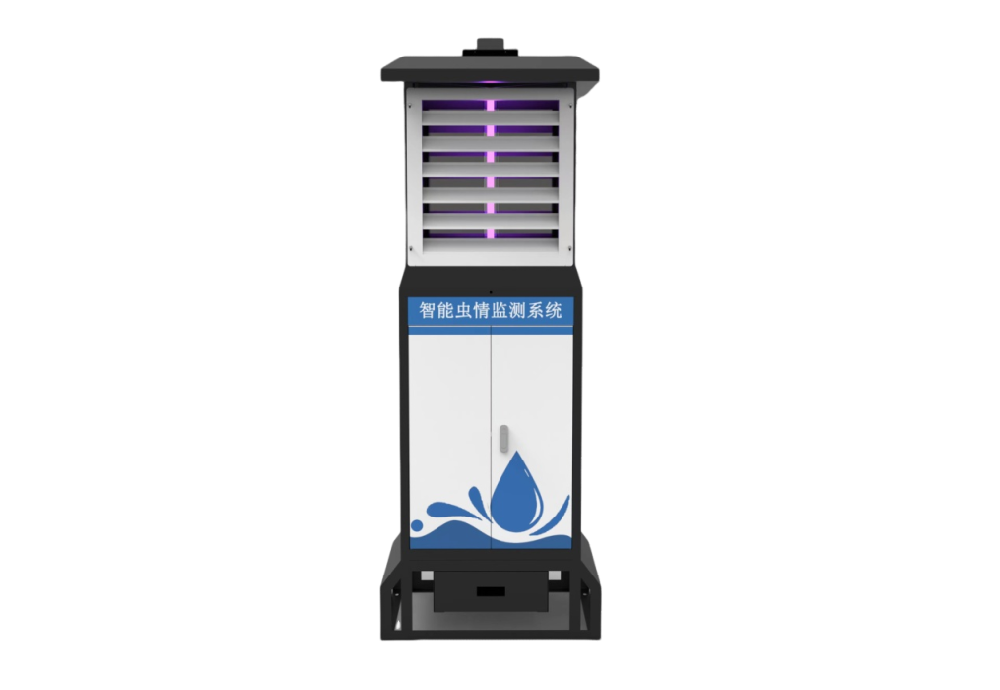
Ask the responsible crop or forestry specialist which target and life stage the station is intended to observe, and when the observation effort should begin. There is no universal calendar date for all crops and countries. Equipment delivered after the relevant flight period cannot recover observations that were never collected.
Allow time before normal use for installation, safe access, network activation and checking representative samples. Retain field scouting and any required alternative sampling method during preparation. A light-attraction station does not observe every pest or directly measure damage inside the crop.
| Before routine observation | What must be resolved | Failure to avoid |
|---|---|---|
| Target definition | Relevant insects, identification level and observation period | A useful-looking total that does not answer the crop team's question |
| Site preparation | Approved support, power, network and collection access | A connected but inaccessible station during the busy season |
| Collection demonstration | Actual operating modes and specimen path | Accepting an empty camera image as proof of a complete sampling cycle |
| Review arrangement | Named reviewer and a route for uncertain identifications | Images accumulate without anyone checking the important targets |
| Field response | Who scouts and records the follow-up observation | A notification is mistaken for an agronomic decision |
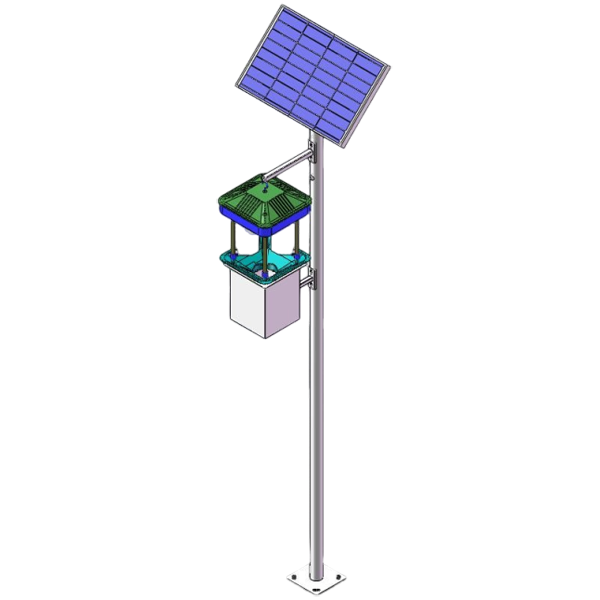
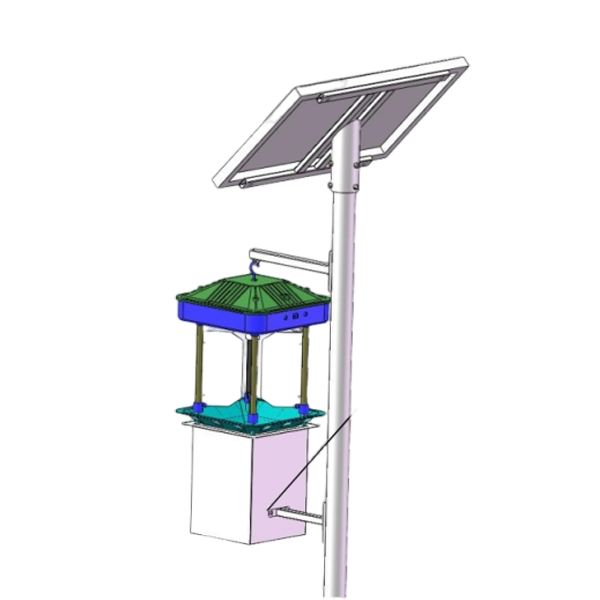
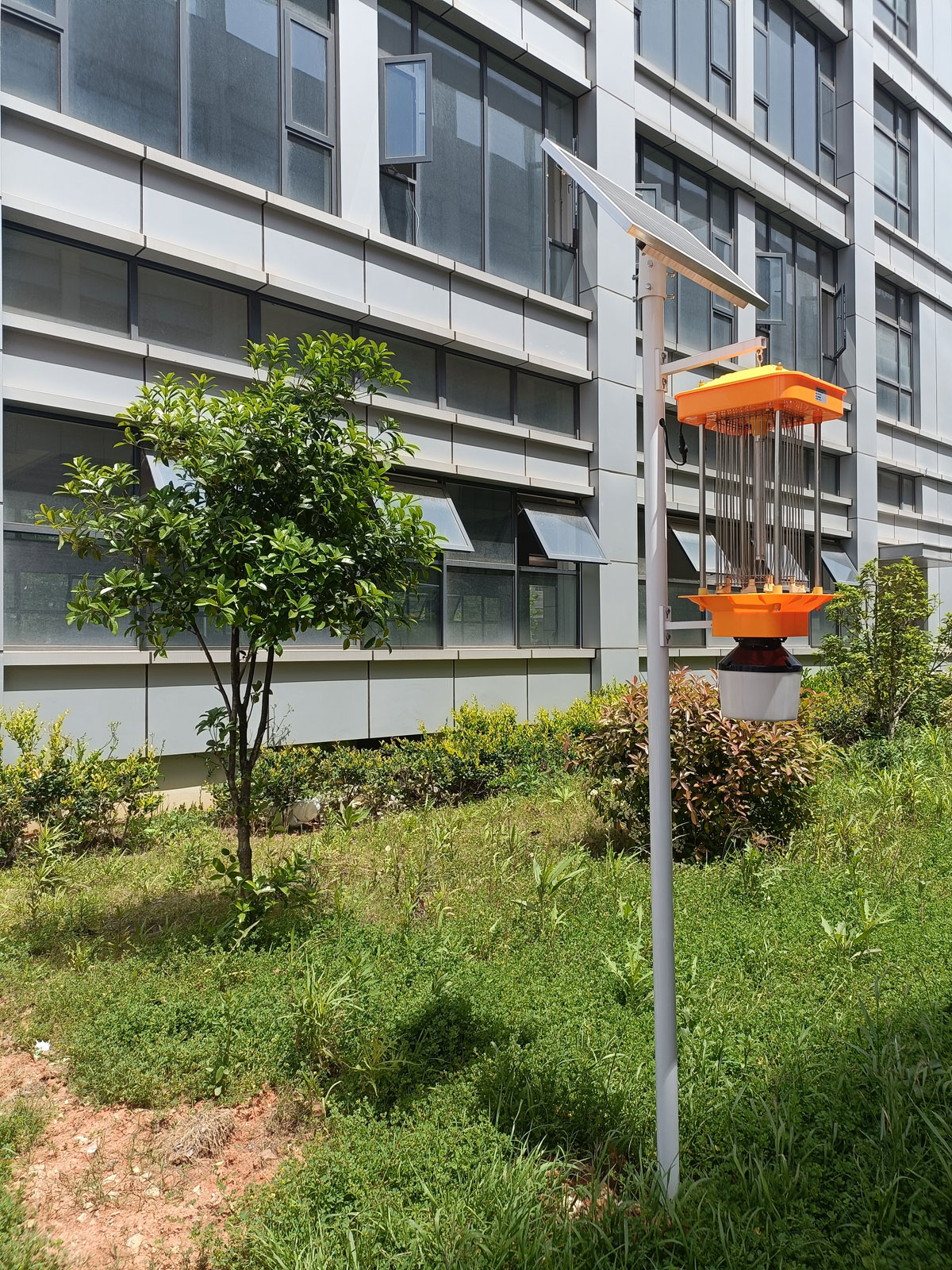
The wind-suction solar insect trap pictured above has a fan-assisted capture path. It does not acquire the monitoring cabinet's camera and reporting functions merely because both appear in the same farm proposal. Commission each ordered device for its actual task.
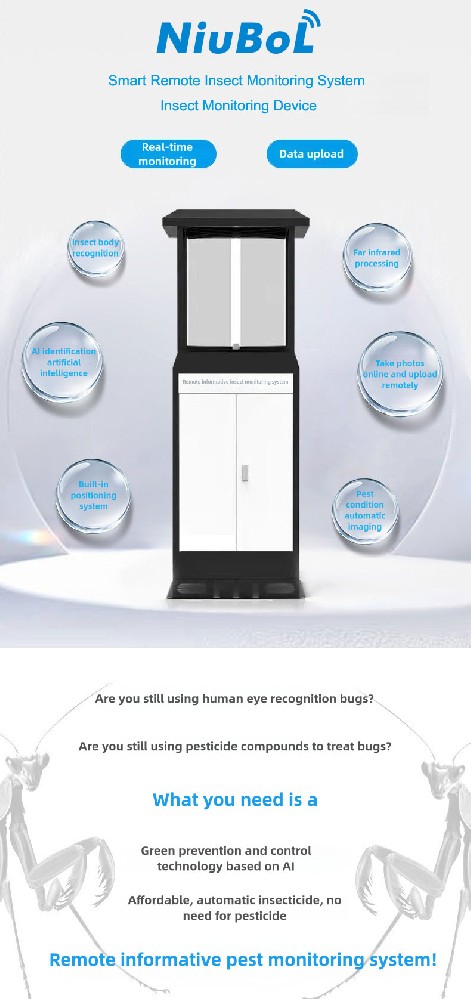
The NiuBoL NBL-IoT-SRPMS combines attraction, specimen processing and image acquisition. Before the season, confirm the supplied configuration and identify which functions can be demonstrated locally and remotely.
| Monitoring component | Configuration detail | Preparation task |
|---|---|---|
| Attraction source | 18 W LED tube, 365-395 nm | Confirm the target sampling method and intended operating periods. |
| Specimen processing | Far-infrared heating, 80-90 C | Review actual specimen condition for the intended identification. |
| Camera | 12-megapixel industrial camera | Check usable images through the collection path. |
| Local control | 10-inch Android industrial touch display | Train the service operator to identify and restore the intended mode. |
| Data connection | 4G / Ethernet; reserved RS485 / RS232 expansion | Confirm the implemented image and status access for the ordered version. |
| Power options | AC 220 V or 400 W solar configuration; optional 200 Ah battery | Check the complete duty and supply design, not a lamp-only energy estimate. |
A reserved port does not establish that every function is exposed. If a PLC, RTU or gateway needs RS485 Modbus RTU status values, obtain the exact supported mode and register definition. Photographs and review results may need a different receiving interface.
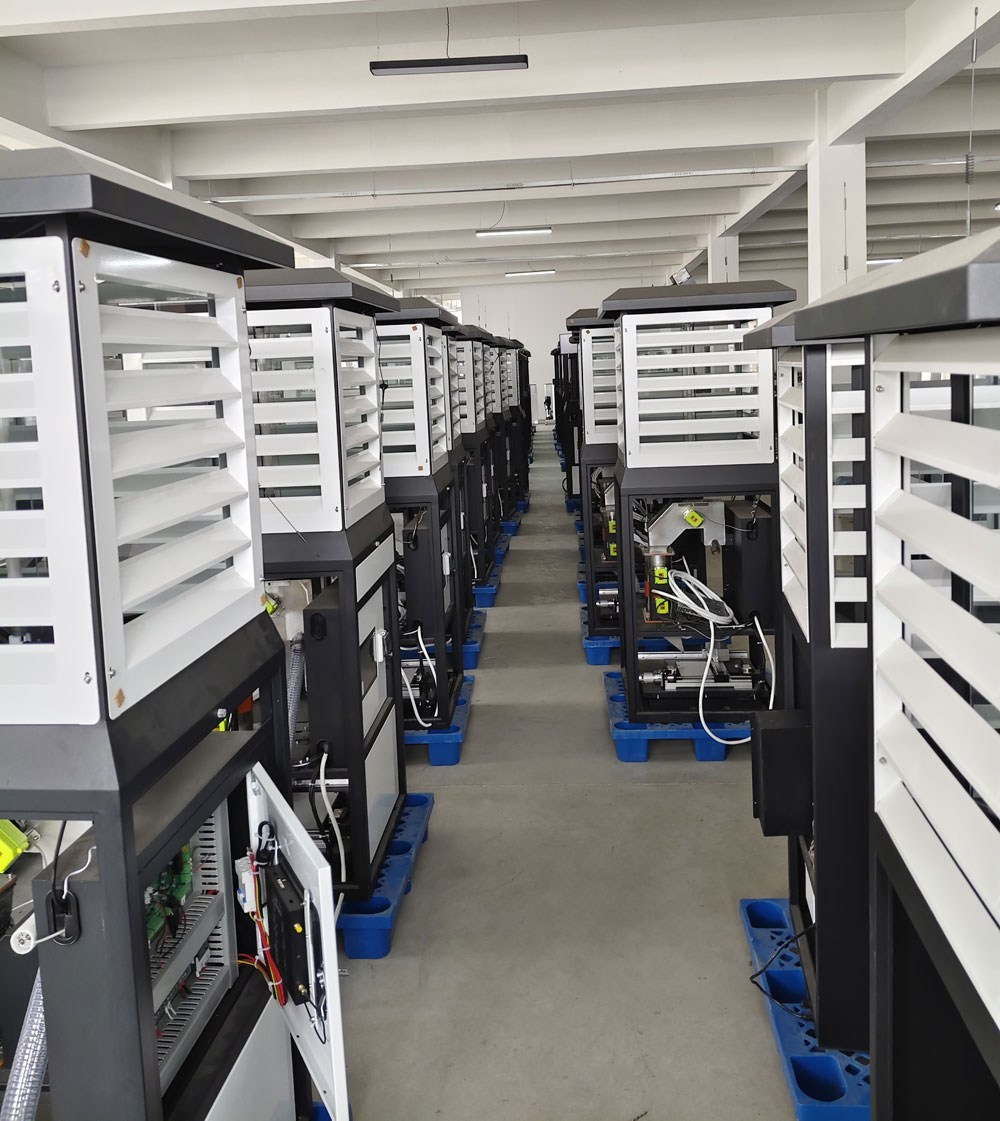
Using the approved procedure, inspect attraction, transfer, processing, spreading, photography and clearing. A camera test alone cannot reveal an obstructed transfer path. Check whether a sample from one period remains on the plate and appears again in the next image.
Confirm normal behavior during rain protection and the return to the intended operating mode. An inactive collection period is not a valid zero catch. Establish how service staff mark tests and cleaning so those periods are not interpreted as natural changes in insect activity.
A separately ordered grid-type solar trap needs its own safe operating check. Its collection can support a different physical-capture task, but it should not be merged with the imaging station's count without defining how the two sampling methods are interpreted.
An image alert should identify the station, collection period and crop block, not just provide a thumbnail. The reviewer needs to know which target matters and whether the sample is complete. If identification is uncertain, retain that state and request specialist review rather than converting it into a confident species label.
Choose a review schedule suited to the observation task and staff availability. Review frequency depends on the target season and the urgency of the field decision. Arrange cover when the normal reviewer is absent. A camera can continue uploading while the decision process has effectively stopped.
When a relevant finding prompts scouting, record the location visited, crop stage and field observation. The trap count is not a treatment instruction. The scout may find no corresponding damage, another pest or a condition needing a different sampling method. Preserve that result instead of rewriting the original catch to fit the expected conclusion.
Walk through a missing image, an uncertain identification and a service interruption with the actual operators. Confirm who notices each exception and what they do. A fault message sent to an unused account is not an effective service arrangement.
Check export and retrieval using the farm's intended access, not only the installer's account. Keep collection time separate from late upload time. If outage buffering is included, demonstrate it; do not assume every missed image is retained. Begin the seasonal record with known equipment and data conditions.
Review whether the station produced relevant, usable observations and whether the team could service and review it. A short trial with no target activity cannot establish target-specific recognition performance or justify a universal station density. Identify what remains untested before extending the same configuration across different crops.
For an agricultural IoT pest monitoring inquiry, give NiuBoL the target observation period, crop blocks, sampling purpose and existing review arrangements. Add power and network conditions, required interfaces and access for service. That makes the deployment schedule part of a usable monitoring project rather than a delivery deadline alone.
Before the observation period defined by the responsible crop or forestry team, with enough time to check installation, collection and review. There is no universal number of days; site readiness and the target season determine the schedule.
It confirms an image was produced, not that attraction and transfer worked throughout a collection period. Inspect the physical cycle and operating state before treating an empty sample as valid.
A person qualified for the required identification task should resolve them, or the result should remain uncertain. Define that route before normal operation so automated labels are not accepted by default during staff absences.
Not as a universal rule. Use the relevant crop-protection program, target identity and field observations. A count can prompt scouting; it does not independently establish damage or an appropriate intervention.
Only if the required task changes accordingly. A capture lamp does not automatically provide specimen images, identification review or the monitoring cabinet's data functions. Keep the two configurations explicit.
Assess usable sampling, target relevance, service access and the review-to-scouting process. Check whether the trial covered relevant conditions. A connected pilot alone does not establish the appropriate network density or recognition performance.
Agricultural IoT pest monitoring works as an observation process only when the collection cycle, reviewer and field follow-up are ready for the target season. Prepare those functions before expansion, retain exceptions and distinguish monitoring cabinets from capture lamps. Hardware delivery is the beginning of that process, not its completion.
Prev:Construction Dust and Noise Monitoring: Acceptance vs Report Suitability
Next:Agricultural Insect Trap vs Mosquito Lamp: Match the Target
Related recommendations
Sensors & Weather Stations Catalog
 Agriculture Sensors and Weather Stations Catalog-NiuBoL.pdf
Weather Stations Catalog-NiuBoL.pdf
Agriculture Sensors Catalog-NiuBoL.pdf
Water Quality Sensor Catalog-NiuBoL.pdf
Related products
 Combined air temperature and relative humidity sensor
 TDR Soil Moisture & Temperature Sensor for irrigation| RS485 |4-20mA| NBL-S-THR
 Soil pH sensor RS485 soil Testing instrument soil ph meter for agriculture |NBL-S-PH
 Wind Speed sensor Output Modbus/RS485/Analog/0-5V/4-20mA
 0.2mm Tipping Bucket Rain Gauge for Weather & Hydrology | NiuBoL
 Pyranometer Solar Radiation Sensor 4-20mA/RS485


Screenshot, WhatsApp to identify the QR code
WhatsApp number:+8615367865107
(Click on WhatsApp to copy and add friends)

