





— Blogs —
—Products—
 Consumer hotline +8618073152920
WhatsApp:+8615367865107
Address:Room 102, District D, Houhu Industrial Park, Yuelu District, Changsha City, Hunan Province, China
Product knowledge
Time:2026-09-14 10:00:00 Popularity:262
Boiler water quality online monitoring must distinguish makeup water, feedwater, boiler water and returned condensate. The NiuBoL NBL-WQ-EC can support suitable conditioned-water conductivity measurements within 0–50 °C and below 0.6 MPa. It is not a direct hot-boiler insertion probe, and conductivity alone does not establish hardness, silica concentration or trace dissolved oxygen.
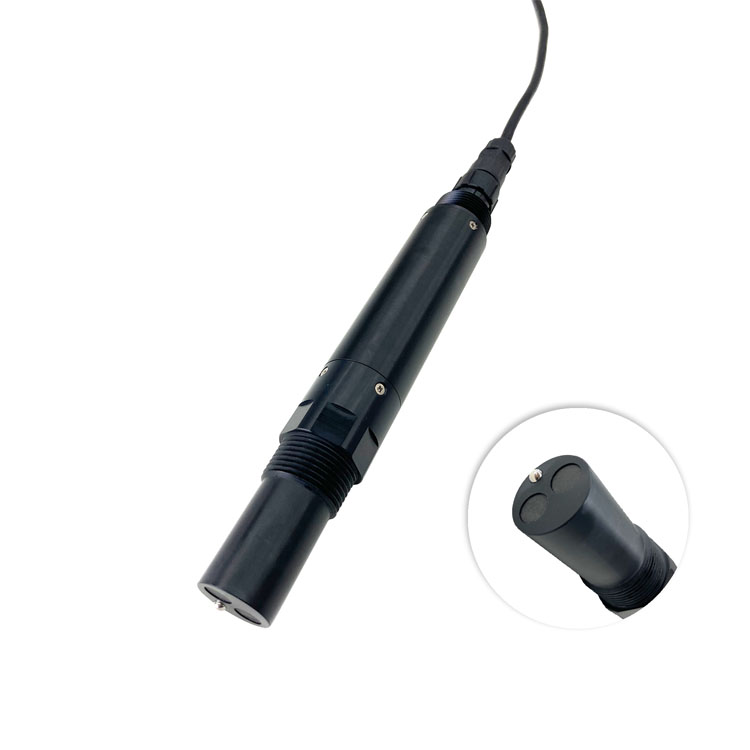
An incoming makeup-water measurement helps follow the water entering the treatment train. A point after treatment checks a different condition. Boiler-water chemistry describes the concentrated circulating water, while condensate monitoring can investigate changes in the return. Keep those identities in the drawings and data tags instead of labelling every point boiler water.
Oxygen requirements also differ. The general NBL-WQ-DO has a 0–20 mg/L span and ±2% full-scale accuracy, equivalent to ±0.4 mg/L. It must not be presented as a validated trace-oxygen analyzer for high-purity feedwater. A fine display increment does not establish performance at microgram-per-litre concentrations.
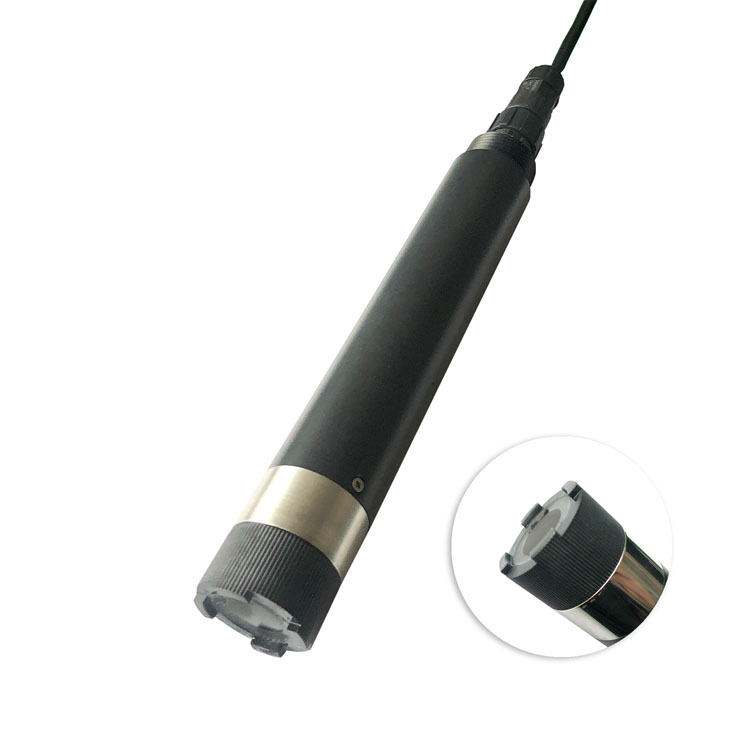
Conductivity responds to dissolved ions. It can indicate a change in treated water or the concentration of dissolved material, but cannot identify the ions causing it. A low conductivity value does not prove that hardness, silica or every contamination risk is acceptable.
The U.S. Department of Energy discussion of boiler blowdown describes dissolved-solids accumulation and the use of conductivity and other chemistry indicators. It does not provide one universal setpoint for all boilers. Use the boiler manufacturer's requirements and the site's water-treatment programme when defining operating limits.
Turbidity is a separate optical measurement. An immersion turbidity probe may investigate particles in a suitable auxiliary stream, but its NTU reading is not hardness or dissolved-solids concentration. Do not add it to a boiler package as a substitute for the actual required chemistry test.
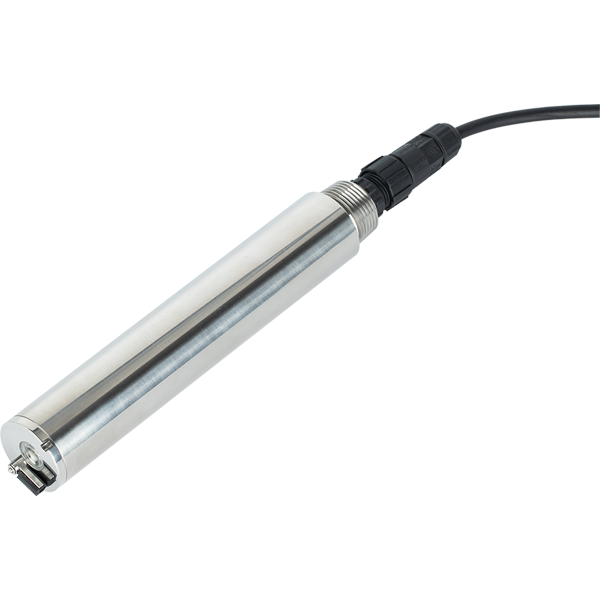
| Item | Specification | Selection consequence |
|---|---|---|
| Conductivity ranges | 0–20.00 µS/cm; 0–200.0 µS/cm; 0–5000 µS/cm; 0–200.0 mS/cm | Select for the named water stream and its expected excursions. |
| Conductivity accuracy | ±1% FS | Full-scale error depends on the ordered range, not only the displayed value. |
| Working temperature and pressure | 0–50 °C; <0.6 MPa | Condition the sample within these limits; do not use the sensor directly in a hotter boiler process. |
| Compensation | Automatic temperature compensation with Pt1000 | Verify the reference temperature and compensation configuration used for comparisons. |
| Supply and power | 12–24 VDC ±10%; 0.2 W at 12 V | Include the actual logger and sampling-panel equipment separately. |
| Output | RS485 Modbus RTU | Confirm the PLC or data logger's unit and decimal handling. |
| Construction | ABS, SUS316L or PVC according to version; 3/4 NPT; IP68 | Approve wetted materials and fittings against the actual sample. |
| Cable | 5 m standard, customizable | Specify extensions, jacket and routing outside hot equipment areas. |
On the 0–20 µS/cm range, ±1% FS corresponds to ±0.2 µS/cm; on the 0–200 µS/cm range it corresponds to ±2 µS/cm. These are span-based specification calculations, not observed plant errors. Check whether the resulting performance is sufficient for the intended decision, especially in high-purity applications.
The NBL-WQ-EC has a configurable TDS conversion coefficient. Treat TDS as a derived estimate and retain the coefficient with the configuration. Do not compare it with an unrelated laboratory result or use one coefficient for every changing water composition without evaluation.
Hot, pressurised sample handling requires a properly designed sampling system and qualified personnel. Establish cooling, pressure control, isolation, drainage and the condition at the measuring cell. A room-temperature laboratory sample does not establish that the permanent sample panel will stay within limits during operation or an upset.
Record sample temperature, pressure and flow with the conductivity trend where they affect validity. For gas-sensitive measurements, avoid assuming an open cooled container preserves the original process oxygen condition. Sample conditioning must suit the analyte rather than simply making the water convenient to handle.
A MPS-5B multiparameter assembly is a different immersion device with its own range and pressure limits. More channels do not make it a steam-cycle sampling system or establish high-purity performance.

An ammonium ion-selective electrode measures a particular response in water. It is not automatically a complete measurement of volatile treatment chemicals, total nitrogen or the chemistry of a steam-condensate cycle. Establish the required species and concentration before proposing an ammonium sensor for an auxiliary water investigation.
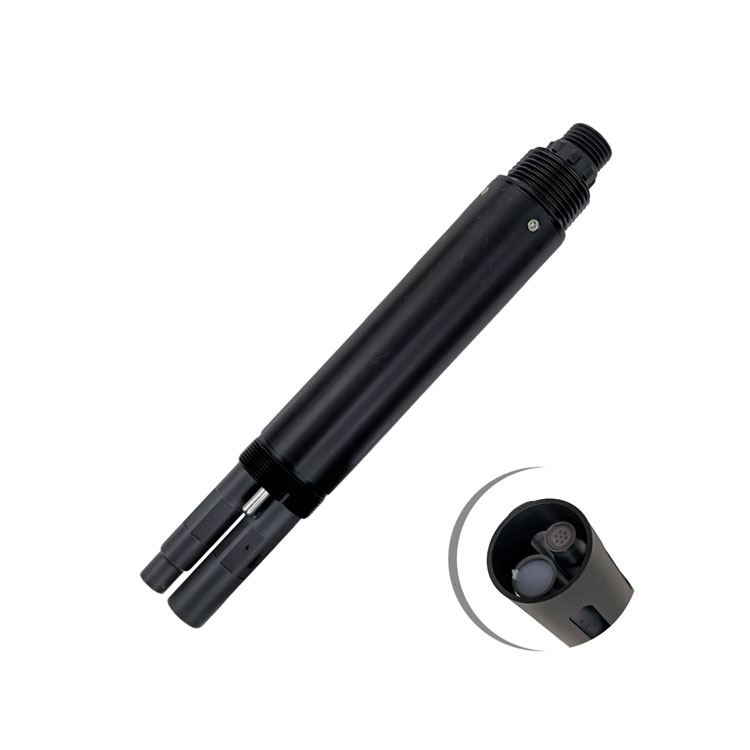
A UV COD probe likewise provides a calibrated optical estimate in suitable water. It does not identify every organic contaminant or prove that returned condensate is suitable for reuse. Where an organic contamination investigation is needed, verify the method, range and reference comparison for that stream.
For integration, retain stream identity, conductivity units and temperature-compensation settings in the PLC or historian. Keep invalid sample conditions distinct from a genuine low conductivity result. Any automatic blowdown or treatment action needs its own validated control design; the sensor alone is not that system.
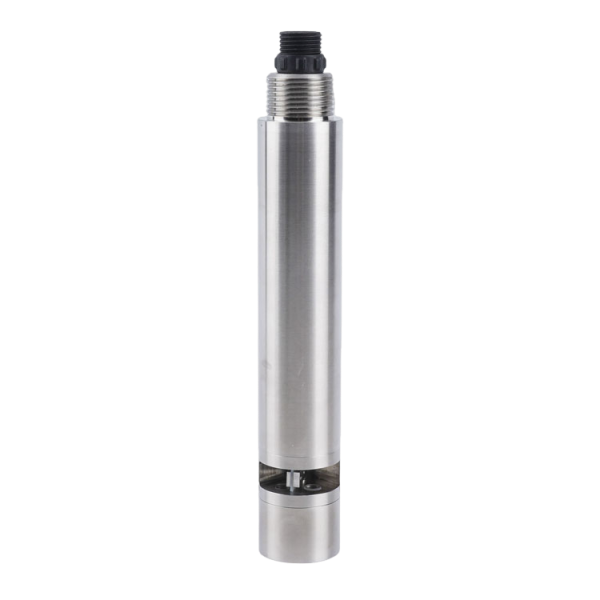
No. Its stated working limits are 0–50 °C and below 0.6 MPa. Assess a properly conditioned sample or choose a purpose-rated instrument for the actual process; a matching thread does not override these limits.
No. Conductivity does not identify calcium and magnesium separately. Retain the appropriate hardness test or analyzer where that result is required.
Not necessarily. It may cover excursions but give unsuitable low-end performance. Evaluate normal values and required decision resolution together with the full-scale accuracy.
Do not assume so. Its mg/L range, resolution and accuracy do not establish a validated trace-level measurement. Specify the actual required concentration performance and sampling method.
Use limits approved for the named stream, boiler design and treatment programme. Do not copy a generic conductivity threshold between makeup water, boiler water and condensate.
Provide the stream name, expected conductivity, required accuracy, sample temperature and pressure at the instrument, chemistry, receiving system and whether the sample-conditioning equipment already exists.
Boiler water quality online monitoring begins with identifying the water stream and preserving a suitable sample. Use conductivity for its defined ionic-water role, verify the selected range and keep the instrument within its limits. Supplementary probes should answer a specific chemistry question rather than enlarge an undefined package.
Prev:Fixed Water Quality Testing Instrument: Immersion or Bypass Installation?
Next:Drinking Water Quality Testing Instruments: Selection for Utilities and Contractors
Related recommendations
Sensors & Weather Stations Catalog
 Agriculture Sensors and Weather Stations Catalog-NiuBoL.pdf
Weather Stations Catalog-NiuBoL.pdf
Agriculture Sensors Catalog-NiuBoL.pdf
Water Quality Sensor Catalog-NiuBoL.pdf
Related products
 Combined air temperature and relative humidity sensor
 TDR Soil Moisture & Temperature Sensor for irrigation| RS485 |4-20mA| NBL-S-THR
 Soil pH sensor RS485 soil Testing instrument soil ph meter for agriculture |NBL-S-PH
 Wind Speed sensor Output Modbus/RS485/Analog/0-5V/4-20mA
 Tipping bucket rain gauge for weather monitoring auto rainfall sensor RS485/Outdoor/stainless steel
 Pyranometer Solar Radiation Sensor 4-20mA/RS485


Screenshot, WhatsApp to identify the QR code
WhatsApp number:+8615367865107
(Click on WhatsApp to copy and add friends)

