





— Blogs —
—Products—
 Consumer hotline +8618073152920
 WhatsApp:+8615367865107
Address:Room 102, District D, Houhu Industrial Park, Yuelu District, Changsha City, Hunan Province, China
Product knowledge
Time:2026-07-23 16:04:55 Popularity:282
A combination pH electrode is often treated as a simple probe, but the decision is usually about system logic first and sensor model later. In wastewater and process-water lines, every wrong assumption in wiring, mounting depth, temperature correction or calibration sequence appears as expensive rework.
This article explains how project teams use the same pH probe for different process profiles: chemical dosing, effluent quality alarms, and long-term trend reporting. Focus is on what protects the RFQ scope from ambiguity after handover.
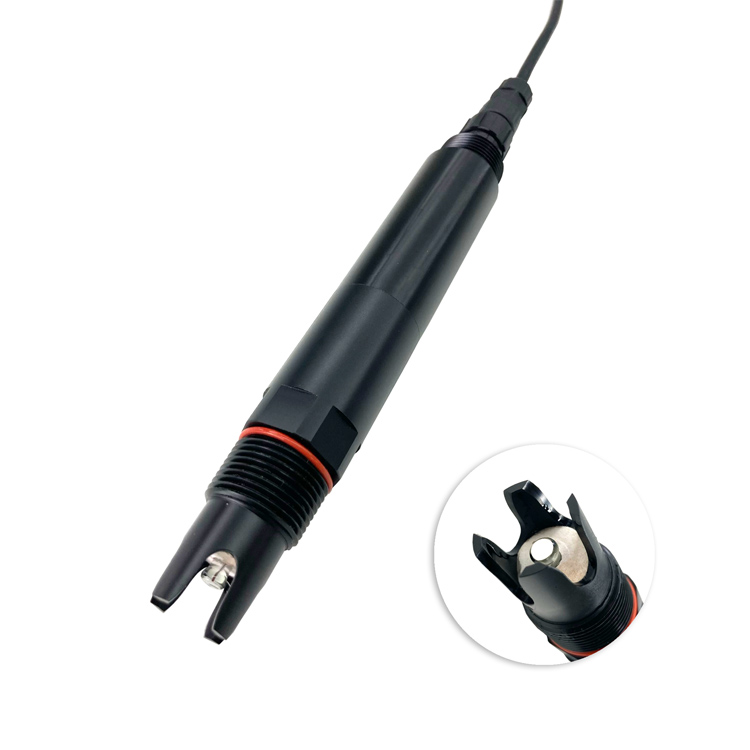
In tank lines with variable flow, the pH channel can fluctuate rapidly during valve switching. If the project only validates at stable points, the first months still show unresolved drift and unstable dosing.
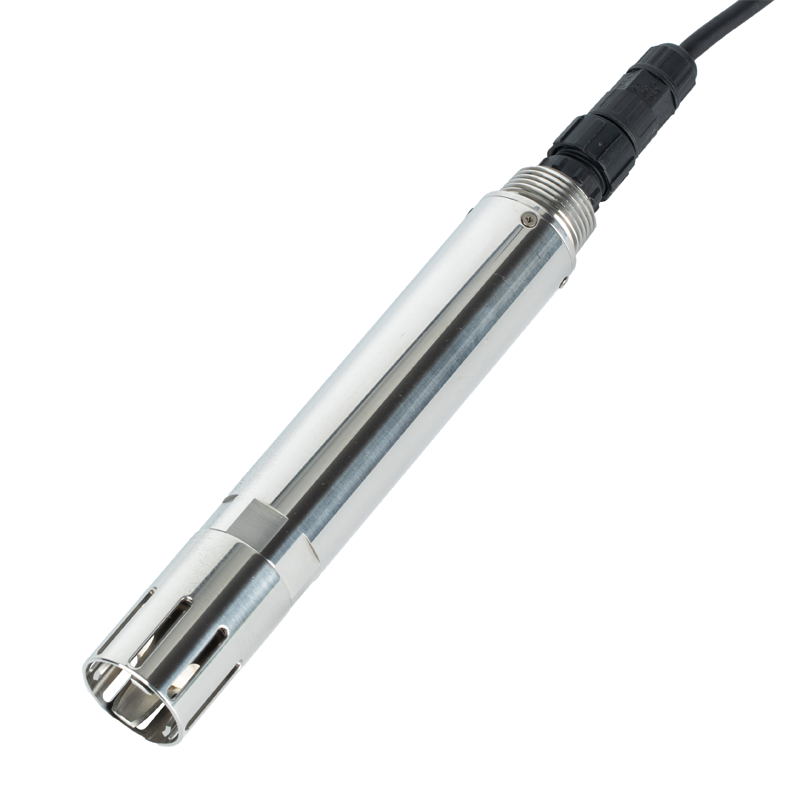
For many plants, the hidden failure is not wrong hardware but missing operational assumptions: who changes standards, where alarms are handled, and whether the downstream PLC reads scaled engineering value or raw register value from the sensor.
The probe is still submersible hardware, but procurement decisions should include one bus design rule: RS485 address, polling period and register retention policy. That makes replacement easier because signal diagnostics and calibration flags remain consistent across all channels.
If a system includes legacy analog cards, a mixed strategy works, but only when channel owners define who owns each protocol conversion. This prevents duplicated conversion and confusing alarm definitions.
The common field issues are cable routing near power noise, probe fouling, weak connector waterproofing, and missing flow representativeness. Any one of these leads to a wrong trend but not always to a clear alarm.
Another frequent risk is underestimating cleaning and replacement time. pH probes are stable when maintained; unstable when maintenance windows are skipped.
Include spare probe units by risk. If replacement can shut down treatment capacity, keep at least one full probe stack and one cable assembly as contract scope.
Request calibration records format and unit consistency in advance. Keep both temperature-corrected and uncorrected sample trace in test logs so disputes are solved by history instead of argument.
| Specification | Value | Project meaning |
|---|---|---|
| Measurement range | 0 to 14 pH | Covers most industrial and wastewater process water |
| Resolution | 0.01 pH | Fine enough for control tuning and trend comparability |
| Accuracy | +/-0.1 pH; +/-0.3 degC temperature compensation | Useful for process dosing and reporting consistency |
| Output | RS485 Modbus RTU | Supports multi-point polling and central historian integration |
| Working environment | 0 to 65 degC, pressure <0.2 MPa | Typical for water and wastewater process cells |
| Power | 12 to 24 VDC | Easy to integrate into standard control power blocks |
| Cable length | 5 m standard, custom lengths available | Plan pull distance before installation to avoid signal loss |
| Mounting | Immersion with 3/4 NPT thread | Standard mechanical style for replacement without redesign |
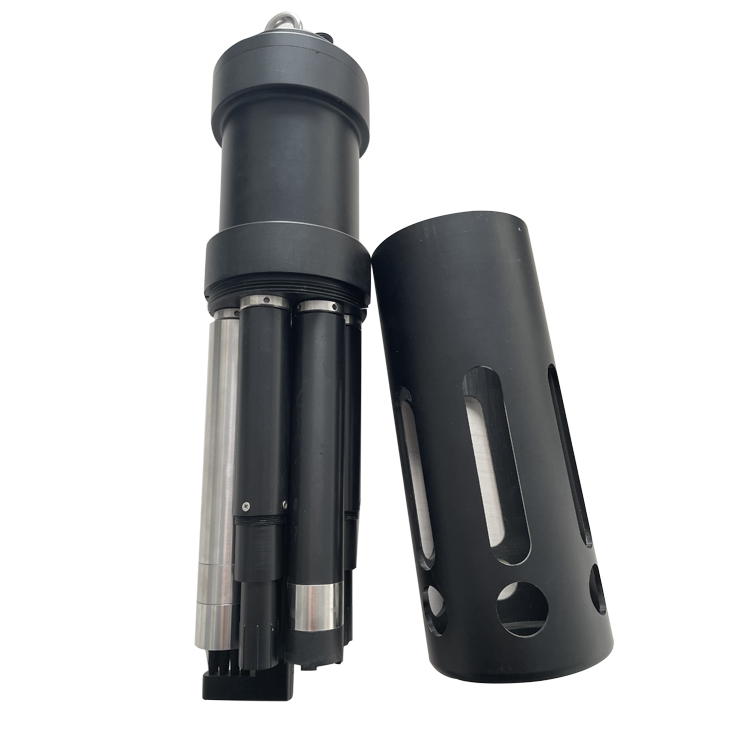
Field environment challenge: Rapid pH jump at dosing and unstable signal when turbulence changes.
System integration plan: Select sensor with RS485, keep probe below level where full immersion and avoid local dead zones, and lock a channel-level deadband in control logic.
User value: You avoid false correction cycles and keep chemical dosing response predictable during start-up.
Field environment challenge: High solids and cleaning fluid can impact reference potential over shifts.
System integration plan: Use the combination pH electrode with maintenance plan that includes rinse and re-calibration window in the same shift cycle as sludge transport shutdown.
User value: Better repeatability at discharge check points and clearer batch-by-batch evidence for compliance.
Field environment challenge: Temperature and salinity variation amplifies electrode drift.
System integration plan: Keep temperature compensation enabled and do not mix analog and digital channels without a conversion layer test.
User value: Better long-term comparability between campaign logs and less false quality alarms.
For pH control in treatment lines, integration risk is usually in point reuse across dosing and alarm modules, so treat register naming as part of scope.
Resolve bus conflict, cable heat exposure and maintenance conflict together; they usually produce the same failure mode when ignored at start.
At handover, keep one register dictionary and one wiring map per pH loop so calibration owners can trace each intervention quickly.
| Decision point | Practical recommendation |
|---|---|
| Project type | Choose probe class based on exposure and flow stability |
| RS485 requirement | Use RS485 first when point count is above two and data historian is planned |
| Budget planning | Separate sensor unit, spare consumables, and service visits into explicit line items |
| Commissioning sequence | Fix Modbus map and alarm ownership before enclosure mounting |
| Maintenance contract | Define cleaning and two-point calibration cycle by fouling risk |
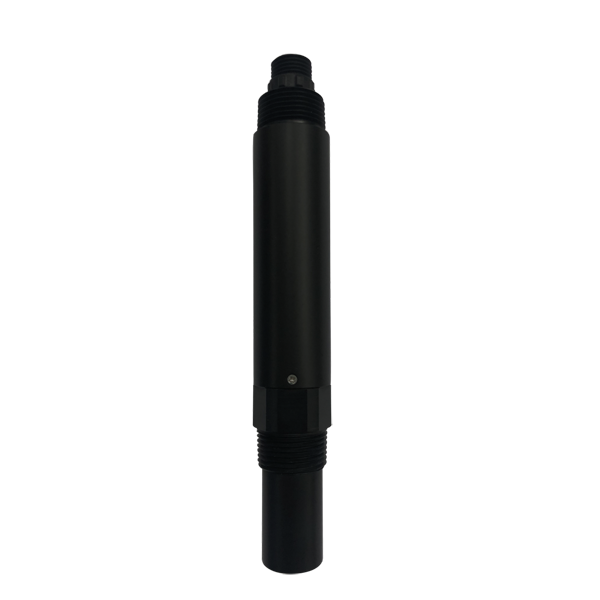
Before RFQ approval, define pH points by process effect (not just number of points). If two points share one physical loop but different correction logic, quote them as separate tasks.
Specify who performs cleaning, calibration and electrode replacement every month/quarter in the contract. If neither engineer nor operations owns this, the saved equipment cost will convert to outage cost.
Require register map, calibration logs, probe serial traceability, and one week of stable trend data in the same file format used by your platform before final handover.
Before order, define one acceptance scope and one maintenance scope. The acceptance scope should include sample point, calibration method, protocol, and evidence frequency. The maintenance scope should define who replaces electrode, how fast, and who tracks calibration drift.
For process-control lines, compare models with one engineering rule: which model keeps output stable while chemistry changes. This is often more important than the raw specification table.
If a project includes parallel legacy devices, add a mixed-architecture branch in the statement of work. The branch should define which point stays in Modbus mapping and which point uses fallback signals during commissioning.
| Risk item | What to check before award | Expected project effect |
|---|---|---|
| Signal path | RS485 address, register, unit and scaling are fixed | Avoids post-award rework |
| Mounting | Probe position and depth are consistent with turbulence pattern | Higher initial measurement trust |
| Cleaning | Cleaning interval and consumables in quote | Predictable operation cost |
| Acceptance | Three-pass test including reference value | Clear handover benchmark |
When the site has unstable process changes, lock a trial window by channel. If one channel cannot hold one week of stable trend, the project should add local sampling improvements before expanding channel count.
Include spare electrode and accessories as part of standard scope. It is a common reason for project delay when spare path is delayed by one external procurement cycle.
For pH process control, clarify how this affects implementation scope before award. In the first 30 days, teams often lose time on retests. For combination pH projects, verify calibration lineage and sample-point definitions before supplier comparison..
Define a pre-award acceptance protocol now: define acceptance scope, sample-point review owner, calibration sign-off, and bus continuity verification before order confirmation.
In pH projects, align ownership with process, instrument, and network roles early so configuration changes do not travel by email chain.
| Check item | Owner |
|---|---|
| Reference method | Project quality lead |
| RS485 mapping | Integrator |
| Installation constraints | Site contractor |
| Data handover | Purchasing or PM |
Now evaluate pH process control by risk and recurrence rather than headline model price. Track three outcomes together: field acceptance, communication quality, and recurring maintenance effort..
Use a scorecard that evaluates compliance, deployment effort, and maintenance predictability.. A lower quote without clear replacement planning should be treated as a higher procurement risk..
Keep a written decision log for the pH stack. It should show why a selected topology won the trade-off between accuracy, maintenance burden, and spare support windows.
| Decision line | What to reject | What to accept |
|---|---|---|
| Protocol certainty | No Modbus/RS485 examples | Working map in annex |
| Maintenance clarity | No cleaning cycle | Explicit intervals |
| Acceptance | Only sample value | Acceptance and report method |
| Support | No service boundary | Defined scope and scope-out items |
A: Compare by full scope, not headline model names. Ask for operating range, output mode, cleaning method and register map for each quote line, then normalize by total installed cost.
A: RS485 is not mandatory for every pilot point. Use it for points that need data continuity and remote maintenance. For one-off analog-only channels, analog remains acceptable if the signal path is fixed.
A: Yes, but only if the RFQ sets expected drift limit and sample condition. Continuous in-pipe operation must include a drift review point before acceptance; otherwise calibration becomes purely maintenance activity.
A: Cleaning frequency depends on loading. In high-foul waters, plan shorter cycles and include cleaning consumables and labor hours; this usually saves long shutdown cost later.
A: A 0.05 pH practical target is common for process control, but stable operation decisions may tolerate wider ranges. Match required precision to control actions, not catalog spec.
A: For pH first-stage spares, stock electrodes and junction solution consumables first. Calibration-only kits without electrode consumables often delay restoration on site.
A: No, but mixed network mode is possible when signal conversion and grounding are included in the design document. Validate that controllers share a single scaling logic.
A: Use trend charts for a full operating cycle and keep drift, calibration, and maintenance records. These records should be attached to acceptance and only signed after review.
Ask the supplier to provide register map examples before shipment. The integrator should match each output register to an application tag and keep this map in the project annex.
Most delays come from unclear maintenance responsibility. If the quote omits cleaning path and adjustment trigger, include a correction clause before signing.
A procurement decision for combination pH electrodes succeeds when chemistry, maintenance access and calibration strategy are defined before model comparison starts.
Use this frame: define pH operating range, cleaning expectation, and alarm consequence for each site. If any one point is missing, the chosen model often looks cheap in proposal but expensive in commissioning.
For implementation, include one maintenance owner, one calibration owner, and a protocol owner in the RFQ scope. That structure protects both water quality control and spare-part planning during annual restarts.
Prev:Multi Parameter Water Quality Meter vs Single-Parameter Sensors
Next:How Many Dissolved Oxygen Sensors Does a Pond Need for Stable Production?
Related recommendations
Sensors & Weather Stations Catalog
 Agriculture Sensors and Weather Stations Catalog-NiuBoL.pdf
Weather Stations Catalog-NiuBoL.pdf
Agriculture Sensors Catalog-NiuBoL.pdf
Water Quality Sensor Catalog-NiuBoL.pdf
Related products
 Combined air temperature and relative humidity sensor
 TDR Soil Moisture & Temperature Sensor for irrigation| RS485 |4-20mA| NBL-S-THR
 Soil pH sensor RS485 soil Testing instrument soil ph meter for agriculture |NBL-S-PH
 Wind Speed sensor Output Modbus/RS485/Analog/0-5V/4-20mA
 Tipping bucket rain gauge for weather monitoring auto rainfall sensor RS485/Outdoor/stainless steel
 Pyranometer Solar Radiation Sensor 4-20mA/RS485

Screenshot, WhatsApp to identify the QR code
WhatsApp number:+8615367865107
(Click on WhatsApp to copy and add friends)

