





— Blogs —
—Products—
 Consumer hotline +8618073152920
 WhatsApp:+8615367865107
Address:Room 102, District D, Houhu Industrial Park, Yuelu District, Changsha City, Hunan Province, China
Product knowledge
Time:2026-07-23 16:04:55 Popularity:292
For ponds, oxygen is not a single-line signal. Vertical and horizontal gradients create different values within one water body. A single DO sensor can still support operations, but only if sampling logic is designed for representative zones.
When the budget is tight, teams often start with one point. This is often correct at first, but procurement should still define where to add second and third points before problems appear during warm nights or dense stocking periods.
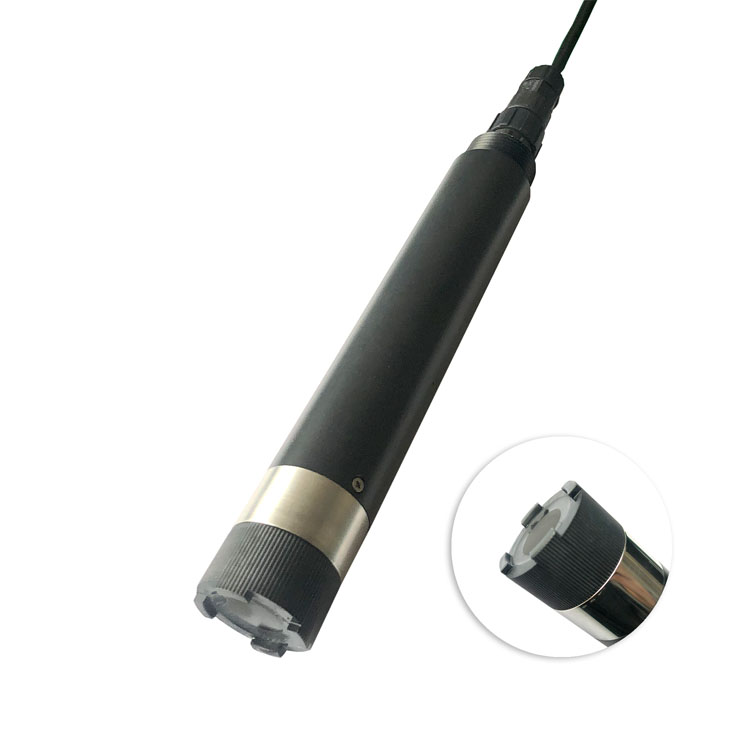
Channel count is driven by depth profile, stocking density and aeration strategy. When depth differences create stratification, one channel cannot represent the production risk.
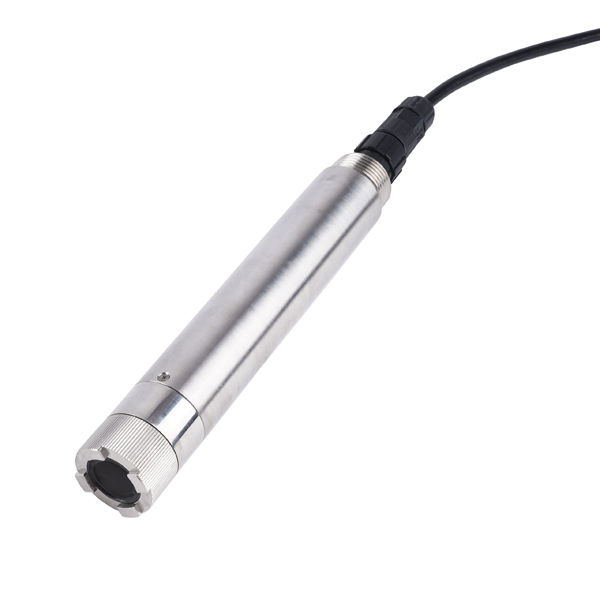
If aeration is modular, one low-cost solution is to place one DO channel per aeration zone and combine readings with feed and mortality logic in SCADA or controller.
In pond systems the measurement reliability depends on flow around the probe, not only on sensor precision. Low flow points produce stagnant layers and falsely stable DO.
Optical method reduces chemistry drift compared with electrochemical methods, but installation and cleaning still determine long-term quality.
A practical layout is field probe -> RS485 collector -> controller. Keep controller logic independent from data acquisition so aeration commands and alarms remain transparent.
For remote farms, prioritize stable communication intervals and local alarm cache; cloud packets may be delayed during power changeovers.
Some DO proposals quote sensor price only. The missing part is maintenance scope: cleaning path, probe replacement, and spare sensors.
Ask for an explicit startup protocol: when baseline is established, how long you wait before auto alarm, and how to avoid false triggers during manual stirring.
| Specification | Value | Project meaning |
|---|---|---|
| Measurement range | 0 to 20 mg/L (0 to 200% saturation at 25 degC) | Covers low oxygen and high oxygen control ranges |
| Resolution | 0.01 mg/L | Enables trend-based aeration control |
| Accuracy | +/-2% FS and +/-0.3 degC | Useful for control alarm setting and reporting |
| Output | RS485 Modbus RTU | better for multi-point farms and centralized monitoring |
| Power | 12 to 24 VDC, <0.3W | Low load on field power budget |
| Maintenance | Fluorescent cap replacement as designed | Plan replace cost in procurement to avoid hidden O&M burden |
| Cable | 5 m standard, custom length available | Use length matching to avoid unnecessary signal extension |
| Installation | Immersion mounting, 3/4 NPT compatible environment | Standardized installation reduces installation rework |
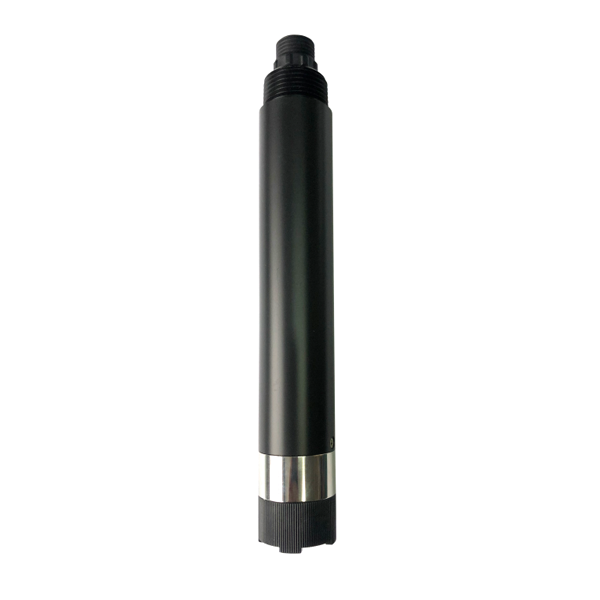
Field environment challenge: DO drops fast after night drops and cannot be represented by one probe.
System integration plan: Use at least two RS485 DO points in different circulation zones and aggregate alert thresholds by conservative priority.
User value: Operators get earlier warning and can optimize aeration before mortality risk grows.
Field environment challenge: Pumps and biofilter flow create short-term local spikes and dips.
System integration plan: Place one DO channel at each return line and keep one channel tied to central control loop for failover comparison.
User value: Reduced pump-related false alarm and better response to biofilter imbalance.
Field environment challenge: Temporary data gaps create unstable trend interpretation.
System integration plan: Use DO points with local buffering and periodic upload windows; confirm RS485 data retention period in firmware spec.
User value: Maintenance workload becomes predictable and alarm confidence is higher after blackout recovery.
In pond systems, integration problems usually originate at power return and pump control points, so bus behavior should be tested with aeration transitions.
Check register conflicts and maintenance timing together; if cleaning cycles are not modeled in protocol design, field data integrity drops quickly.
At handover, keep one register dictionary and one wiring map for each DO channel owner, plus monthly cleaning sign-off records.
| Decision point | Practical recommendation |
|---|---|
| Need for redundancy | Add parallel channels on separate zones rather than adding only one higher-cost probe |
| Protocol integration | Use RS485 Modbus RTU where controller and PLC are already installed |
| Alarm model | Set warning and critical thresholds by species growth phase |
| Maintenance strategy | Set cleaning and cap replacement by biofilm cycle, not by month |
| Contract language | Quote spare cable joints and connector seals with part numbers |

Start from circulation pattern and stocking density. Place the first channels where DO gradient is highest; only then add monitoring points by measured variance.
If power quality is unstable, include RS485 isolation and local buffering. Without this, multi-point DO data often appears unavailable during incidents.
Assign weekly, monthly, and seasonal checks by task owner. A full deployment only works when routine maintenance follows a fixed rotation.
Set a minimum deployment plan first. Start with one base channel for safety, then add channels where flow, depth, or aeration changes create gradients. This avoids over-buying and keeps first-stage cost controllable.
Treat DO sensing as a two-level planning system: control channels that drive alarms and trend channels that support tuning. A site can start with one control channel per high-risk area and add trend channels after one operation cycle.
For ponds with unstable power or staffing, include local buffering and upload window rules in the protocol. That detail is often omitted but critical for continuity.
| Pond type | First deployment recommendation | Decision checkpoint |
|---|---|---|
| Warm-weather dense pond | 2+ channels with separate flow representatives | Compare night-time stress behavior |
| RAC or loop pond | One control + one reserve channel | Validate aeration response |
| Remote farm | Power-safe channel with fallback upload | Validate missing-data handling |
The procurement package should include replacement plan for probe and cable routing. If replacement is not in the package, your first operational month often becomes a support incident queue.
Set alarm escalation matrix early: who acknowledges, who confirms, and who changes the action plan. This is more useful than adding more sensors too early.
For dissolved oxygen monitoring, clarify how this affects implementation scope before award. In the first 30 days, teams often lose time on retests. For pond DO planning, verify sample depth and flow assumptions before final tender decision..
Define a pre-award acceptance protocol now: who validates DO sampling depth, who signs off calibration interval, who verifies pump and probe communication, and who accepts field commissioning results.
For pond monitoring, assign ownership by stage: civil install, loop wiring, and calibration, instead of letting departments arbitrate by message threads.
| Check item | Owner |
|---|---|
| Reference method | Project quality lead |
| RS485 mapping | Integrator |
| Installation constraints | Site contractor |
| Data handover | Purchasing or PM |
Now evaluate dissolved oxygen monitoring by risk and recurrence rather than headline model price. Track three project checks: depth sampling consistency, oxygen trend reliability, and maintenance response speed..
Keep a scoring sheet for depth coverage, drift stability, and maintenance responsiveness.. Reject cheap pond-monitoring options that do not explicitly cover probe replacement and spare logic..
Keep a written decision log. It will be the fastest way to defend depth sensor count, redundancy policy, and oxygen drift treatment during acceptance disputes.
| Decision line | What to reject | What to accept |
|---|---|---|
| Protocol certainty | No Modbus/RS485 examples | Working map in annex |
| Maintenance clarity | No cleaning cycle | Explicit intervals |
| Acceptance | Only sample value | Acceptance and report method |
| Support | No service boundary | Defined scope and scope-out items |
For dissolved oxygen monitoring, finalize a commissioning playbook that maps action by timeline, not only by deliverable list. Keep a phased timeline: setup day, one-week operation check, and thirty-day calibration review..
Use this plan to test whether depth and oxygen targets can be measured in field conditions.. If one key result cannot be measured at a practical monitoring window, this topology should be reduced or removed before PO sign-off..
At the close of this stage, add a 30-day deployment review and a 90-day stability review with probe drift thresholds and replacement readiness evidence.
This stage should also lock expansion assumptions and replacement triggers so future depth additions do not become a silent scope extension.
| Review interval | Main output |
|---|---|
| Commissioning | Baseline acceptance and threshold verification |
| 30-day | Cleaning/drift trend and false alarm rate |
| 90-day | Operational stability and spare utilization |
| Handover | Final close decision and optimization list |
A: Yes, if communication and power are stable and all points are represented by hydraulic flow and fish density differences. Otherwise, one sensor only is often misleading.
A: Use 4-20 mA if existing PLCs rely on analog and there is no multi-parameter expansion plan. RS485 is better when you need remote monitoring and future scale.
A: Data center sharing is possible only with consistent timing and point naming. Define mapping first, then connect points in batches.
A: Maintenance should be tied to feed cycles and weather pattern. More turbulent operations need shorter checks and scheduled probe verification.
A: Most failures come from counting points by budget only. Count by hydraulic variance and feeding pattern first, then convert to channel count.
A: One sensor represents only the zone it is truly sampling. In large ponds, divide by oxygen risk zones and stocking density.
A: Group ponds by risk profile and maintenance access. Rotational deployment keeps labor predictable and avoids simultaneous outages. Classify ponds by hydraulic turnover and feed load, then define a deployment sequence for each class to avoid extra labor in operation.
A: Use short-term parallel reads between zones for 7?14 days and compare with manual checks. Acceptance should be based on this cross-zone validation.
Use two channels for high-risk ponds and one for a reference pond only if water behavior is proven stable in three cycles. Move to phase two after trend comparison is stable.
Yes for integrated control projects. If the farm is display-only, a mixed channel strategy can be considered, but RS485 is still recommended for scalability.
For pond DO systems, channel count decisions should follow hydraulic flow and depth variation, not the lowest unit price.
Evaluate whether one sensor can represent one representative zone, then define correction rules for dead zones and high-circulation periods before purchase.
Procurement should include mount method, anti-biofouling expectation and replacement lead time as mandatory deliverables so monitoring logic remains stable through seasonal shifts.
Prev:How a Combination pH Electrode Affects Cost, Accuracy and Maintenance in Water Projects
Next:Chlorine Analyzer Price: Procurement Checklist for Reliable Total Cost
Related recommendations
Sensors & Weather Stations Catalog
 Agriculture Sensors and Weather Stations Catalog-NiuBoL.pdf
Weather Stations Catalog-NiuBoL.pdf
Agriculture Sensors Catalog-NiuBoL.pdf
Water Quality Sensor Catalog-NiuBoL.pdf
Related products
 Combined air temperature and relative humidity sensor
 TDR Soil Moisture & Temperature Sensor for irrigation| RS485 |4-20mA| NBL-S-THR
 Soil pH sensor RS485 soil Testing instrument soil ph meter for agriculture |NBL-S-PH
 Wind Speed sensor Output Modbus/RS485/Analog/0-5V/4-20mA
 Tipping bucket rain gauge for weather monitoring auto rainfall sensor RS485/Outdoor/stainless steel
 Pyranometer Solar Radiation Sensor 4-20mA/RS485

Screenshot, WhatsApp to identify the QR code
WhatsApp number:+8615367865107
(Click on WhatsApp to copy and add friends)

