





— Blogs —
—Products—
 Consumer hotline +8618073152920
WhatsApp:+8615367865107
Address:Room 102, District D, Houhu Industrial Park, Yuelu District, Changsha City, Hunan Province, China
Product knowledge
Time:2026-08-24 09:09:00 Popularity:353
Quick Answer: A digital weather station is useful on a farm when its measurements inform a defined operation: reviewing irrigation demand, checking a spraying window or investigating frost exposure. It does not measure root-zone water availability, diagnose crop disease or decide valve run time by itself. Select the weather channels, field location and data handling around the operation the farm actually needs to manage.
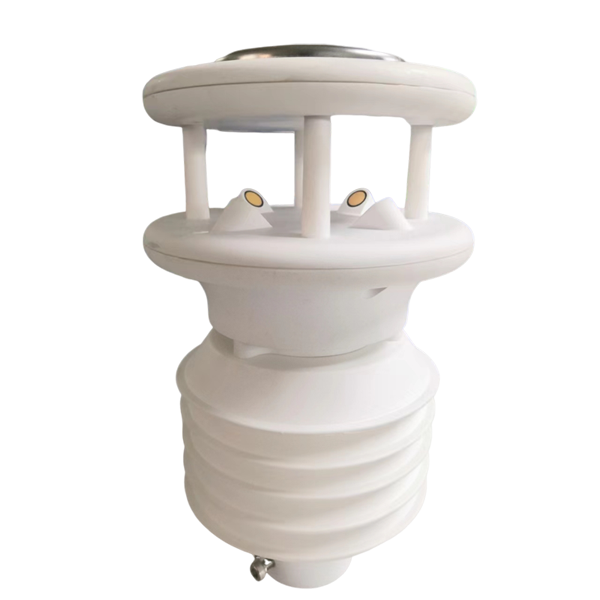
An agricultural weather station should help growers schedule irrigation, spraying and frost response. The useful purchase question is which measurements change a field decision. A display containing many parameters can still leave the operator without the rainfall history, representative wind measurement or crop information needed for the next task.
For a system integrator, the first meeting should therefore include the person who makes that decision. Ask what they check now, which uncertainty causes delay and how quickly new data would matter. A daily irrigation review and a time-sensitive spraying check need different summaries. Neither is adequately specified by asking for a live weather screen.
| Farm operation | Useful station information | Information needed elsewhere |
|---|---|---|
| Irrigation review | Rainfall, temperature, humidity, wind and suitable radiation data | Crop stage, soil water, rooting depth and irrigation performance |
| Spraying assessment | Representative wind speed and direction, temperature and humidity | Product instructions, operating restrictions and field observations |
| Frost surveillance | Temperature trends at identified measurement positions | Crop sensitivity, canopy conditions and the farm response procedure |
| Disease-risk modelling | The weather variables required by the chosen model | Crop and pathogen identification, model validation and any leaf-wetness input |
This division prevents a common purchasing error: treating a meteorological input as the complete agricultural answer. It also shows where an existing soil monitoring or farm management system can be retained rather than replaced. The weather station adds a defined observation point, not an interchangeable substitute for every field instrument.
A rainfall total measures precipitation at the gauge, not the amount retained in the crop root zone. Runoff, interception, soil infiltration and differences between field blocks can change the contribution to usable water. Rain detected at the station is a reason to review an irrigation plan, not proof that every block received sufficient water.
Reference evapotranspiration, ETo, describes atmospheric evaporative demand for a defined reference surface. It is not a direct measurement of a crop's irrigation requirement. In the crop-coefficient approach, ETc = Kc x ETo represents crop evapotranspiration under standard conditions. The distinction and coefficient approach are described in FAO Irrigation and Drainage Paper 56, Chapter 5.
For implementation, identify which calculation runs in the logger, farm software or another service. Check the required inputs, units, time interval, wind measurement height and treatment of missing records. A sensor providing solar irradiance does not necessarily output accumulated solar energy; the receiving system must perform the appropriate time integration if its calculation requires that quantity.
Consider a hypothetical unit check: a net water depth of 5 mm across 20 hectares corresponds to 1,000 m3. That is area multiplied by depth, not a recommendation to irrigate. Pump delivery, application efficiency, field scheduling and soil conditions still determine the gross volume and operating time. A weather-station quotation should not imply that a rain or radiation channel alone supplies those answers.
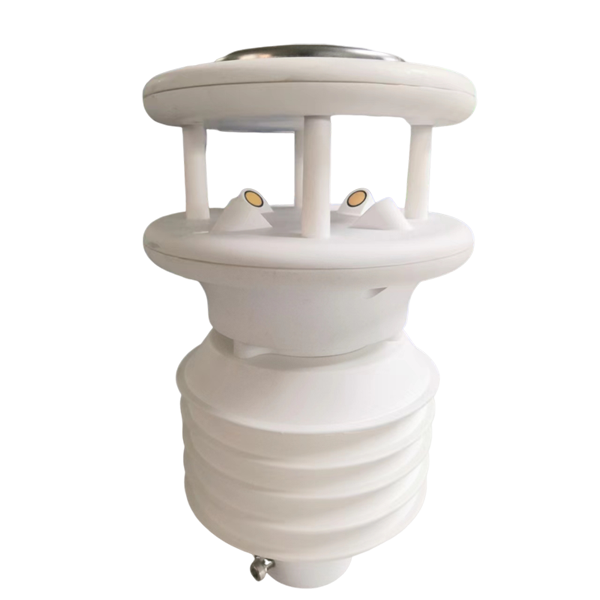
The wind reading should represent the operation being assessed. Airflow beside a building, behind a shelterbelt or above a roof may differ from the treated block. Record the measurement position and height so operators know what the displayed value represents. Where exposure changes substantially across the farm, compare conditions in the relevant block before acting.
Specify whether the application needs an instantaneous reading, an average, a gust statistic or a combination. A five-minute stored average can conceal a short excursion, while a single instantaneous sample cannot describe conditions throughout that interval. The sampling and aggregation rules must produce the statistic used by the farm's operating procedure.
Wind direction also requires attention. Directions just either side of north cannot be averaged as ordinary numbers: 359 and 1 degrees are close together, not opposite south. Use a suitable directional aggregation method in the software. A cup anemometer measuring speed alone does not supply direction; an ultrasonic two-axis assembly or a separate direction sensor is needed.
No single wind threshold can authorize all spraying work. Applicable product instructions, local requirements, equipment and conditions govern the operating limit. The station can provide a traceable local input and show that it is current. It cannot establish the absence of drift risk or replace a field assessment.
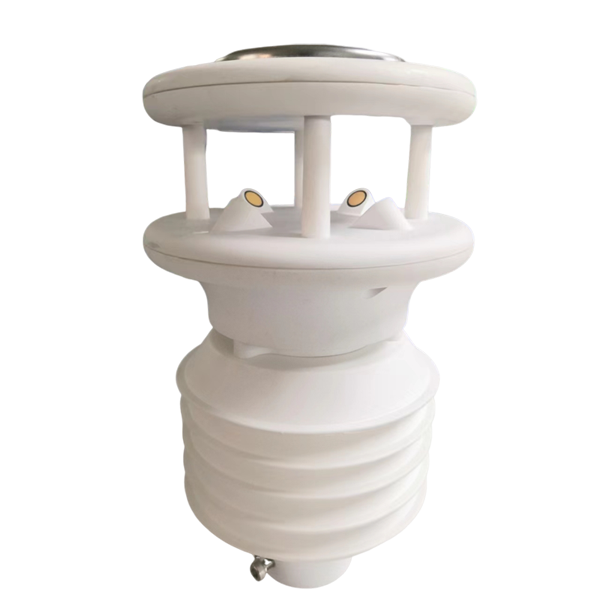
The NiuBoL NBL-W-71GUWS combines wind speed, wind direction, air temperature, relative humidity, pressure and piezoelectric rainfall with a selected light-measurement option. For agricultural calculations requiring solar irradiance, specify the radiation configuration. An illuminance channel in Lux is not a direct replacement for irradiance in W/m2 or a PAR/PPFD channel.
| NBL-W-71GUWS item | Specified value or configuration | Farm integration consequence |
|---|---|---|
| Wind speed | 0-60 m/s; accuracy +/- (0.3 m/s + 3% FS) | Choose the logging statistic as well as the measuring range |
| Wind direction | 0-359 degrees; accuracy +/-3 degrees | Align the north reference and preserve direction units |
| Temperature and humidity | -40 to 80 degrees C, +/-0.5 degrees C; 0-100% RH, +/-5% RH | These are measurement specifications, not crop-damage thresholds |
| Atmospheric pressure | 10-1100 hPa; accuracy +/-1.5 hPa | Store the measured pressure with an unambiguous field name |
| Rainfall | Piezoelectric method; 0-8 mm/min; accuracy +/-10% | Separate rainfall rate from accumulated rainfall |
| Radiation option | 0-1500 W/m2; accuracy +/-10% | Order this option when the calculation needs irradiance, rather than illuminance |
| Sensor communication | RS485 Modbus RTU, 9600 bps | Requires a compatible acquisition device, not just a wireless receiver |
| Power and exposure | DC 9-24 V for the specified version; average 0.4 W without dust sensing; IP65 | Check the supplied version and size power for the complete station |
The rainfall accuracy is stated as a percentage without adding an assumed full-scale interpretation. Selection should consider the required rainfall use and method, not resolution alone. A project requiring a dedicated rain gauge at a separate position can instead use a modular arrangement with a compatible logger.
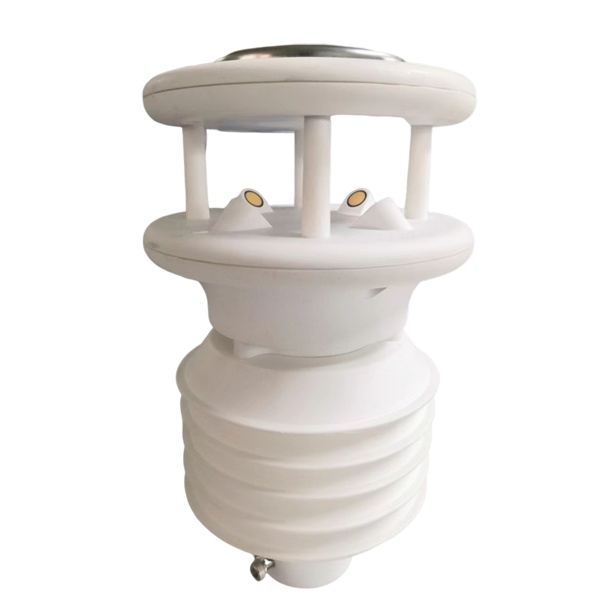
The higher-parameter weather assembly pictured below represents another configuration, not a reason to order unused channels. Have the offer identify each enabled measurement. Added parameters only justify their cost when the farm or receiving system has a use for them.
A farm's public information display and its operational monitoring point need not be the same installation. A station beside the visitor building may be convenient for a screen but unrepresentative of field temperature or wind. Keep sensors away from roof heat, exhausts, irrigation spray and obstructions that compromise the intended observation.
An integrated head shares a mounting position among several channels. That saves separate supports but limits independent placement. For frost-sensitive crops, add suitable canopy-level temperature measurements where needed rather than assuming an elevated ambient reading identifies the coldest crop surface. For protected cultivation, distinguish outdoor weather from the greenhouse environment.
Farm blocks separated by slopes, shelter or distance may need more than one observation point. Start by mapping the differences that could change a decision, then compare observations where uncertainty remains. Do not choose a station count from farm area alone or claim that one point represents every field because it has cellular communication.
A typical architecture is weather sensors to an RS485 data logger or RTU, then a selected network connection to farm software. A PLC may receive selected values if control integration is required. The sensor connection, network transport and agricultural calculation are separate functions, even when one enclosure contains several of them.
Map units, scaling, signed temperature values and sensor addresses before comparing the display with the remote record. Keep measurement time separate from receipt time so a delayed upload is not mistaken for current weather. Missing communication should produce a stale or invalid indication; it should not silently become zero rain, zero wind or normal temperature.
Test the records the farm will actually use: a rainfall event across a day boundary, a logger restart, a communications interruption and a sensor disconnection. Check the treatment of cumulative rain resets and duplicated uploads. These checks reveal problems that a successful live-value demonstration can miss.
Q1. Can this station operate irrigation valves directly?
Not by virtue of measuring weather. Valve operation requires a suitable controller, power circuits and application logic using the required soil, crop and irrigation information. Specify safe behaviour for unavailable inputs separately from the weather-data acquisition task.
Q2. Is rainfall enough for an irrigation decision?
No. Gauge rainfall must be considered with effective rainfall, soil water and crop demand. A station can document the event at its location; it cannot determine root-zone replenishment across every block without additional information.
Q3. Can humidity replace a leaf-wetness sensor?
Not automatically. Relative humidity describes air moisture, while leaf wetness concerns water on a surface. Follow the input requirements of the chosen disease-risk model and validate its use for the crop and location before relying on its output.
Q4. What should be requested for ETo calculations?
Name the calculation method and processing system, then verify its required weather variables, exposure, averaging and missing-data rules. Select solar irradiance rather than an unspecified light channel when the method needs radiation input. Ask for an example export that the receiving calculation can actually read.
Q5. Does a digital interface make all sensors interchangeable?
No. RS485 and Modbus RTU compatibility still requires matching power, serial settings, register definitions and interpretation. Replacing a sensor can also change rainfall method or measurement exposure even when the new data frame is decoded correctly.
Q6. What information helps NiuBoL prepare an appropriate offer?
Provide the crop and operating task, field layout, required channels, existing logger or PLC, network availability and desired record format. Identify any separate soil, canopy or leaf-wetness measurements so their installation and acquisition are considered alongside the weather point.

A digital weather station earns its place in farm operations by answering a specific weather question with representative, current measurements. Keep rainfall separate from effective water supply, weather demand separate from irrigation commands and ambient observations separate from crop diagnosis. NiuBoL can help match weather sensors and acquisition hardware to those defined tasks without adding channels the project cannot use.
Prev:Inline Dissolved Oxygen Sensor: Optical, Membrane and Pipe Limits
Next:Aquaculture Water Quality Measurement Instruments: Plan for a Power Outage
Related recommendations
Sensors & Weather Stations Catalog
 Agriculture Sensors and Weather Stations Catalog-NiuBoL.pdf
Weather Stations Catalog-NiuBoL.pdf
Agriculture Sensors Catalog-NiuBoL.pdf
Water Quality Sensor Catalog-NiuBoL.pdf
Related products
 Combined air temperature and relative humidity sensor
 TDR Soil Moisture & Temperature Sensor for irrigation| RS485 |4-20mA| NBL-S-THR
 Soil pH sensor RS485 soil Testing instrument soil ph meter for agriculture |NBL-S-PH Wind Speed sensor Output Modbus/RS485/Analog/0-5V/4-20mA
 Tipping bucket rain gauge for weather monitoring auto rainfall sensor RS485/Outdoor/stainless steel
 Pyranometer Solar Radiation Sensor 4-20mA/RS485


Screenshot, WhatsApp to identify the QR code
WhatsApp number:+8615367865107
(Click on WhatsApp to copy and add friends)

