





— Blogs —
—Products—
 Consumer hotline +8618073152920
WhatsApp:+8615367865107
Address:Room 102, District D, Houhu Industrial Park, Yuelu District, Changsha City, Hunan Province, China
Product knowledge
Time:2026-06-06 09:36:46 Popularity:393
Quick Answer: Dissolved oxygen in aquaculture management is most useful when a falling reading triggers a defined response. Measure where stock experience oxygen stress, distinguish an aerator command from actual aerator operation, and verify recovery after an incident. A remote DO display alone cannot protect a pond during a power failure or replace a farm's species-specific operating limits.
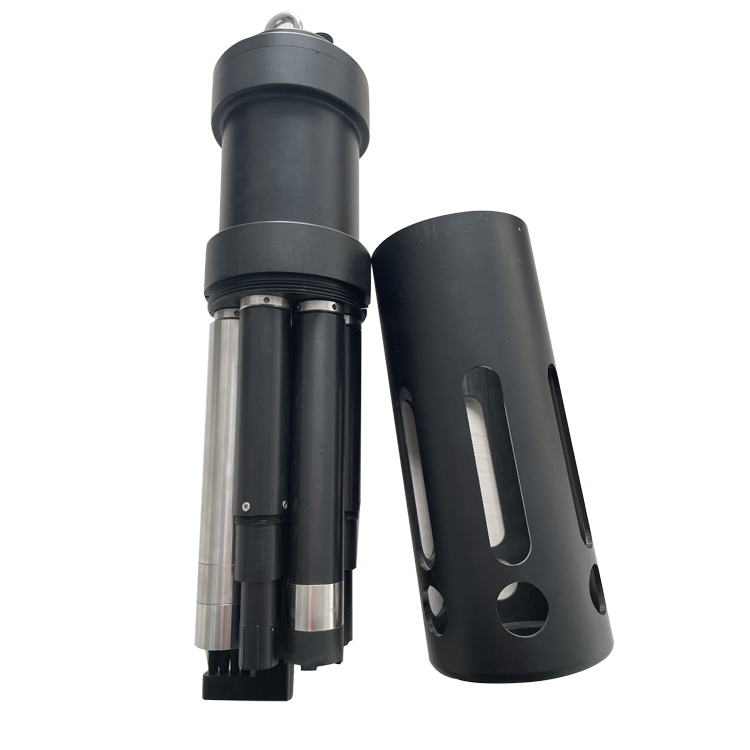
A farm can have reliable telemetry and still have an ineffective oxygen alarm. The dashboard may update correctly while the aerator has tripped, the duty operator is unavailable or the probe sits in an unusually well-aerated corner. The useful project question is therefore: which person or local control function will act, and what evidence will show that the action worked?
Keep the distinction between oxygen supply and oxygen demand visible. Aeration and water exchange can increase supply; fish, shrimp, microorganisms and decomposing organic matter consume oxygen. A favorable daytime reading does not establish overnight reserve. Review the daily minimum, its time and duration, and conditions around previous low-oxygen events rather than relying on a daily average.
For a new installation, begin with supervised monitoring before enabling automatic switching. Compare the fixed probe with representative checks and observe the pond through normal operations. This establishes whether the chosen point detects the conditions that the control system is intended to manage.
The NiuBoL NBL-WQ-DO-4A fluorescence DO sensor provides a digital measurement for a PLC, RTU or data logger. Its optical principle does not consume oxygen during measurement, but stagnant water around the sensing cap can still differ from the water occupied by stock. The sensor is not an aerator controller or a cellular transmitter.
| DO-4A characteristic | Specification | Management implication |
|---|---|---|
| Range and resolution | 0-20.00 mg/L; 0-200% saturation; 0.01 mg/L resolution | Retain the unit with every stored value; percentage saturation and mg/L are different quantities. |
| Accuracy | +/-2% of reading; temperature +/-0.3 degrees C | Assess uncertainty near the farm's action threshold, not just at the upper range. |
| Response | T90 <30 s; minimum detection limit 0.08 mg/L | The complete alarm path also includes polling, filtering, communications and operator delay. |
| Compensation | Automatic Pt1000 temperature compensation; salinity compensation | Confirm how salinity is entered and updated. This is not an independent salinity measurement. |
| Operating envelope | 0-50 degrees C; pressure <=0.2 MPa | Check actual water conditions and mounting loads separately. |
| Supply and output | 12-24 V DC; 0.2 W at 12 V; RS485 Modbus RTU; optional 4-20 mA | Specify the output supplied and size backup power for the whole station. |
| Construction | POM and ABS/PC alloy; IP68; 3/4 NPT immersion mounting; standard 5 m cable | Confirm wetted-part and cable-jacket compatibility for the actual pond water. |
Do not apply these values to every NiuBoL DO probe. The basic DO model and the enhanced DO-4S have different specifications. In particular, a reading-based accuracy statement must not be replaced with a full-scale statement, and display resolution must not be described as accuracy.
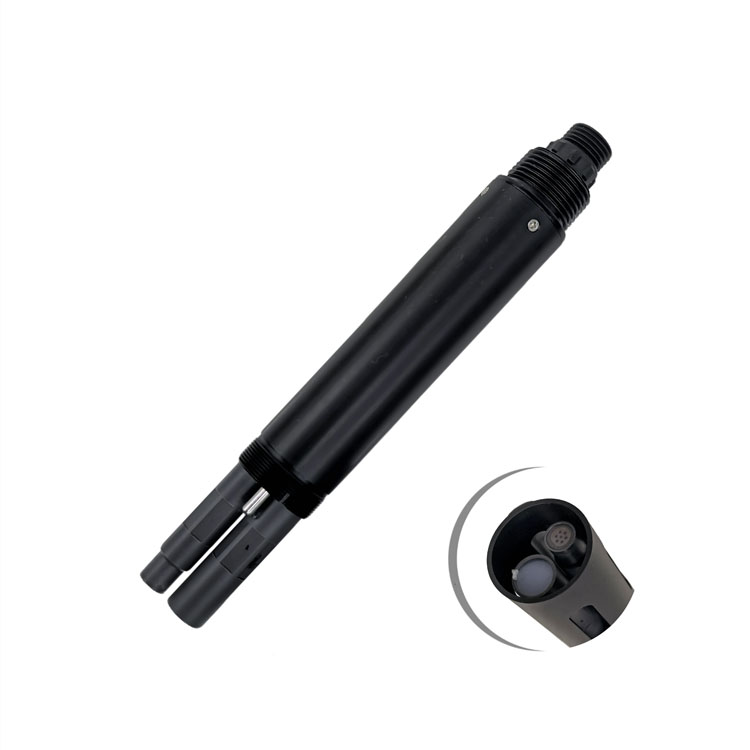
In a fish pond with paddlewheel aerators, a probe immediately beside the aerator may report favorable oxygen while another area remains poorly mixed. In a shrimp pond, the relevant water layer may differ from a convenient surface mounting point. In a recirculating system, inlet oxygen and the condition after stock respiration answer different questions. Choose the location from the intended decision, then verify it by checking other relevant positions and depths.
Avoid direct bubble impact, sediment burial and a mounting that moves with floating debris. Provide a retrieval method that returns the probe to the same depth after cleaning. Record location and depth with the channel name; otherwise a maintenance visit can unintentionally change the meaning of the trend.
If one pond has persistent spatial differences, adding another measurement point may be more useful than increasing the polling frequency of a single probe. Conversely, several probes at essentially the same favorable location do not resolve a coverage gap.
For automatic operation, agree switching hysteresis, minimum run and rest times, manual override and behavior after a restart with the equipment supplier. Do not let intermittent network connectivity repeatedly start and stop machinery. Local protection must remain appropriate when the cloud connection is unavailable.
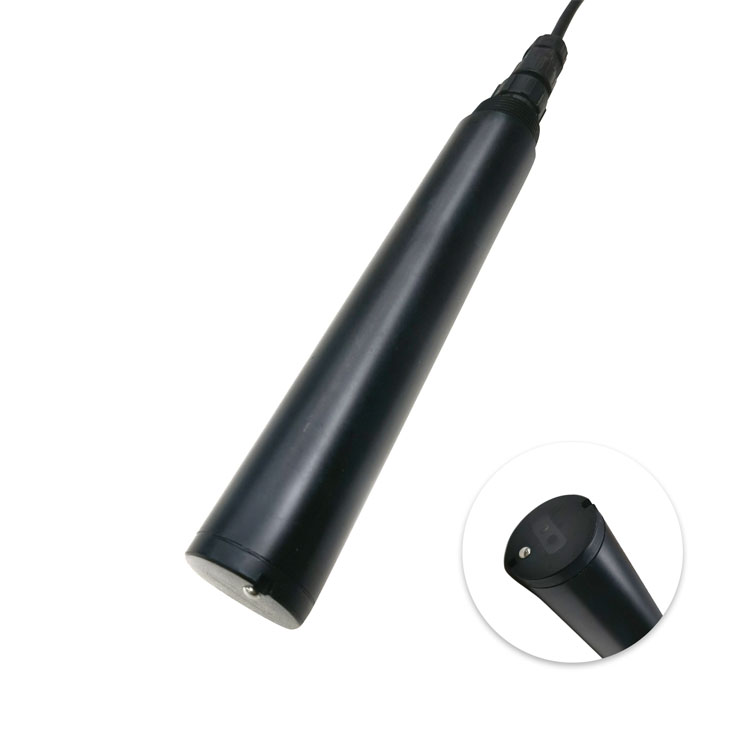
When stock may be at risk, follow the farm's emergency procedure while checking the measurement in parallel. First inspect actual aerator operation and supply power. Compare a suitable independent DO measurement at the same location, depth and time; a surface grab sample measured later is not an equivalent check. Inspect the optical cap for fouling, damage or trapped debris before changing calibration.
A low reading at several representative points supports a pond-wide concern. A single suspect reading with normal comparison values directs attention to that probe or location, but should not automatically suppress every alarm. Preserve the original trend and log the intervention so the next review can distinguish oxygen recovery from a sensor being cleaned.
Other water channels have separate roles. A multiparameter assembly can add context; an ammonium or other electrode does not provide redundant DO confirmation. For routine service records, see the aquaculture DO sensor maintenance log.
Only if a site assessment shows its location represents the area affected by that control decision. Where oxygen differs across depths or circulation zones, use additional checks or measurement points before treating one value as a pond-wide condition.
No. A battery can maintain the probe, logger and communications without powering the aerator. Review these electrical loads separately and define the farm's response to loss of aeration power.
It can provide context, but it is not interchangeable with mg/L. Keep the farm's action limit and receiving-system unit consistent, and confirm the temperature and salinity settings used in the result.
Test the acquisition, alarm and equipment-command paths using a controlled commissioning method with outputs safely managed. Separately verify real probe readings. An injected signal tests logic, not the probe's measurement accuracy or the pond's response.
Provide the water type, operating temperature and salinity, intended depth, decision threshold, cable route and controller interface. Identify whether the scope includes mounting, local alarms, aerator feedback, communications and backup power, rather than assuming these are inside the probe price.
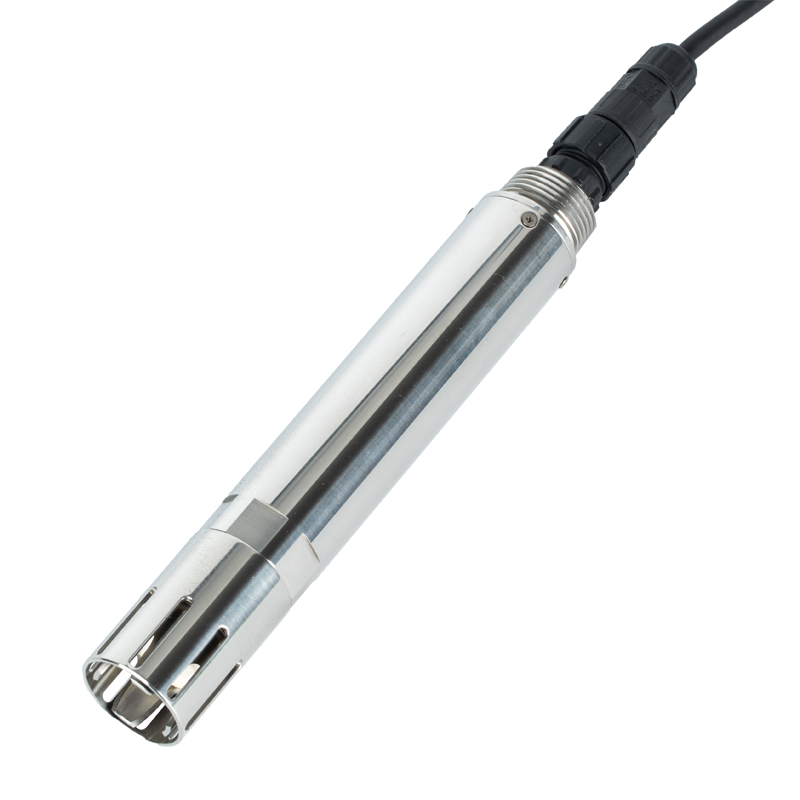
Dissolved oxygen in aquaculture management requires a complete response path: a representative measurement, a recognizable alarm, effective equipment operation and verified recovery. NiuBoL DO-4A selection should therefore be tied to the pond's operating decisions and controller design, with other water-quality instruments specified for their own measurements.
Prev:SS and Turbidity Difference in Water Quality Monitoring: TSS and NTU Sensor Selection
Next:Electrode Residual Chlorine Sensor for Disinfection Monitoring and Dosing Control
Related recommendations
Sensors & Weather Stations Catalog
 Agriculture Sensors and Weather Stations Catalog-NiuBoL.pdf
Weather Stations Catalog-NiuBoL.pdf
Agriculture Sensors Catalog-NiuBoL.pdf
Water Quality Sensor Catalog-NiuBoL.pdf
Related products
 Combined air temperature and relative humidity sensor
 TDR Soil Moisture & Temperature Sensor for irrigation| RS485 |4-20mA| NBL-S-THR
 Soil pH sensor RS485 soil Testing instrument soil ph meter for agriculture |NBL-S-PH
 Wind Speed sensor Output Modbus/RS485/Analog/0-5V/4-20mA
 Tipping bucket rain gauge for weather monitoring auto rainfall sensor RS485/Outdoor/stainless steel
 Pyranometer Solar Radiation Sensor 4-20mA/RS485


Screenshot, WhatsApp to identify the QR code
WhatsApp number:+8615367865107
(Click on WhatsApp to copy and add friends)

