





— Blogs —
—Products—
 Consumer hotline +8618073152920
WhatsApp:+8615367865107
Address:Room 102, District D, Houhu Industrial Park, Yuelu District, Changsha City, Hunan Province, China
Product knowledge
Time:2026-08-24 09:04:00 Popularity:318
A duct temperature and humidity sensor can return a plausible value after condensation without having recovered its required measurement performance. Specify wetting exposure and recovery separately from the numerical RH range. A 0-100% RH scale does not establish that the sensing element, filter and electronics tolerate persistent liquid water.
Identify when liquid can reach the probe: humidifier carryover, cooling-coil operation, shutdown cooling, washdown or condensate running along the insertion assembly. These are different exposures. A probe suitable for humid air may still be unsuitable for direct spray or a filter that remains saturated.
Record the normal air conditions, the event duration and what happens during restart. Include the electronics location as well as the sensing tip. Moving the display housing outside the duct can protect it from hot or wet air, but does not establish that the inserted element will recover after wetting.
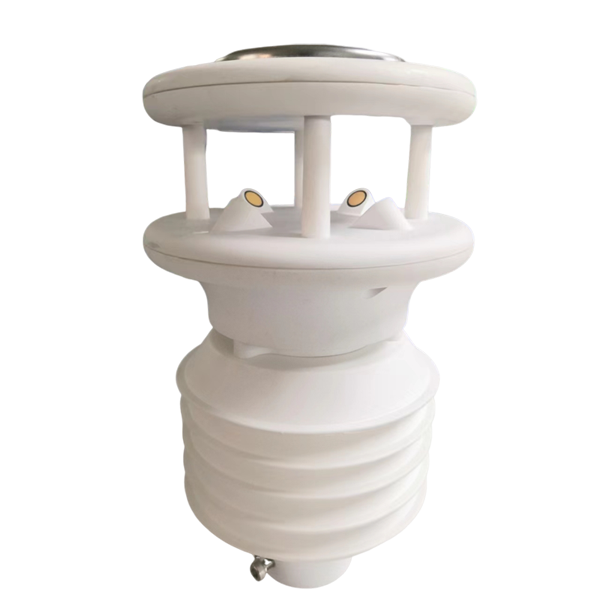
The outdoor weather assembly above illustrates an atmospheric instrument, not a verified insertion probe. Likewise, an NBL-W-SS cup anemometer measures ambient wind speed. Its outdoor construction and IP65 rating do not qualify it as a duct humidity sensor or an HVAC air-velocity replacement.

| Selection item | What the project should define |
|---|---|
| Air measurement range | Normal and exceptional temperature/RH conditions, including shutdown and restart. |
| Liquid exposure | Condensation, droplets, spray, contaminants and whether that exposure is permitted for the selected design. |
| Recovery criterion | Allowed deviation after exposure, comparison conditions and the time within which the channel must again meet its duty. |
| Output validity | How the BMS or PLC distinguishes an available number from a qualified measurement during recovery. |
| Mechanical arrangement | Insertion length, mounting seal, drainage path, electronics environment and service access. |
| Supply and interface | Actual transmitter voltage, RS485 Modbus RTU or selected analog signal, and receiving-channel scaling. |
Recovery time depends on the sensor configuration and wetting conditions. Ask for the selected configuration's permitted exposure and supporting test conditions. A dry-air response specification does not automatically describe a wet filter, a contaminated element or recovery after hours of condensation.
Where wetting is outside the instrument's qualified use, first correct the installation or choose an appropriate design. A software delay cannot turn an unsuitable sensing element into a condensation-tolerant one. Similarly, enclosing an open humidity element in a sealed waterproof cover prevents the required air exchange.
Record the direct transmitter value and the BMS or logger value through the event. If they differ, investigate the register, unit, analog span and processing. If they agree, that proves consistent transmission, not that the wet probe has regained accuracy.
Keep the last qualified timestamp when a reading is held or inhibited. Repeatedly publishing the held number with a new timestamp can make a recovering channel appear healthy. Define what the controller does while the measurement is unqualified, and test that behavior without deliberately creating harmful building or process conditions.
A suitable comparison uses the same stable air conditions and allows both the reference and test probe to equilibrate. A reference introduced from a warm room into a cold duct can have its own temperature transient. Diagnose that difference before applying an offset to the installed instrument.
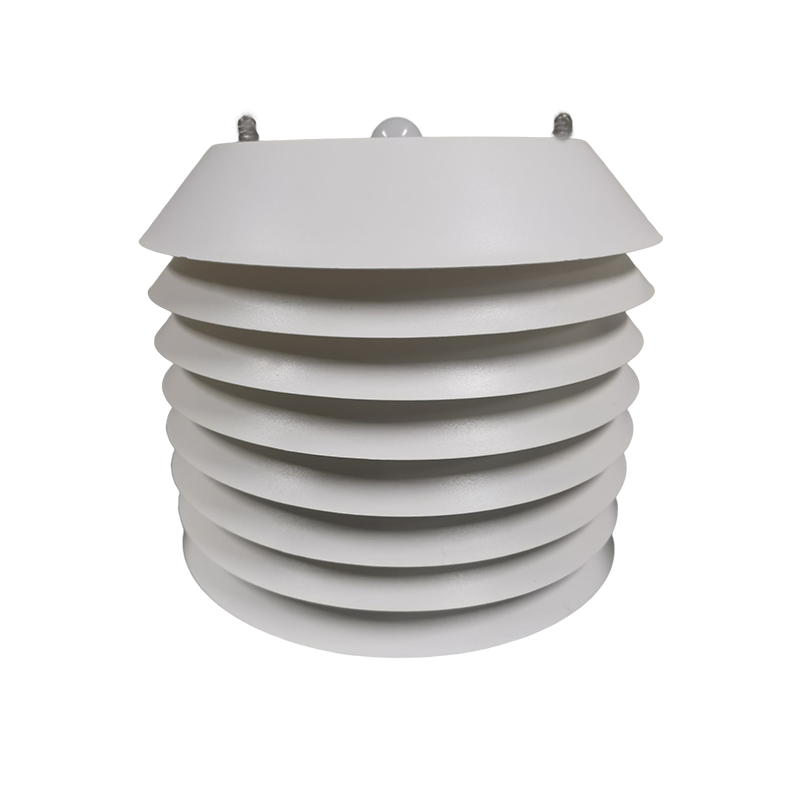
The NiuBoL NBL-W-THPLC is an environmental head for temperature, humidity, pressure, light and CO2. Its values below are an atmospheric comparison, not a specification for a condensation-qualified duct probe.
| Item | NBL-W-THPLC atmospheric example | Duct selection implication |
|---|---|---|
| Temperature measurement | -50 to 100 C; +/-0.5 C | Do not confuse measurement span with the limits of the entire assembly. |
| RH measurement | 0-100% RH; +/-5% RH | Range and stated accuracy do not establish recovery after liquid exposure. |
| Operating temperature | -50 to 80 C | The operating limit is different from the upper temperature measurement span. |
| Supply and output | 12 V or 24 V DC by option; RS485 | Verify the delivered interface and register map against the receiving system. |
| Insertion assembly | Not a duct insertion specification | Obtain the actual probe length, filter, seal, cable and enclosure details for the proposed duct instrument. |
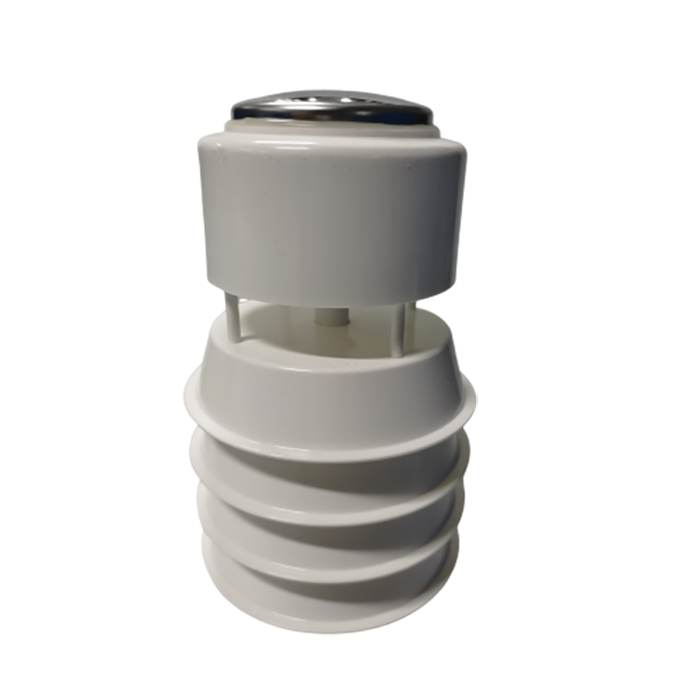
Other illustrated heads, including the NBL-W-51MUWS, serve environmental measurement duties. Do not infer insertion-pressure limits, washdown compatibility or humidity recovery from a familiar outdoor housing.
Agree on a safe test with the supplier and site team. Establish the initial reference result, document an exposure permitted for the selected sensor, and return it to the agreed comparison conditions. Record temperature, RH, output status and recovery time until the acceptance criterion is met or the test is stopped.
Repeat the inspection after a real operating event where appropriate. Look for retained water, deposits, damaged seals or a filter that remains obstructed. Cleaning and drying must follow the selected instrument's procedure; do not apply unapproved heat, solvents or compressed air to accelerate a result.
No. It indicates a saturated or near-saturated reading under the instrument's conditions. Surface condensation depends on the relevant surface temperature and local air dew point. Inspect the actual wetting mechanism and sensor condition.
The housing rating does not by itself qualify the exposed sensing element for liquid water. Review the probe, filter, cable entry and permitted operating conditions separately.
No. First establish whether the sensor has dried, stabilized and passed the appropriate reference check. Recalibrating during a transient can conceal the problem rather than correct it.
Send a duct sketch, insertion length, air conditions, condensation and cleaning exposure, current output span and required recovery performance. Include cable length and electronics location so the offer addresses both sensing and installation.
Only after suitability for the actual duty is established. An RS485 connection or a similar temperature/RH range is not evidence of equivalent insertion mechanics, exposure limits or recovery performance.
The six-parameter weather assembly remains an outdoor monitoring option, not an automatic answer to a wet-duct replacement request. Review NiuBoL's temperature and humidity sensor range against the specific installation conditions.
Specify a duct temperature and humidity sensor around the condensation exposure it may encounter and the performance it must regain afterward. Separate probe recovery from data transmission and enclosure protection. Where the proposed configuration lacks a demonstrated recovery condition, resolve that gap before approving it for control or unattended records.
Prev:Smart Irrigation System Using NodeMCU: Reject Old Commands After Reconnection
Next:Online TSS Meter: Install for Repeatable Readings After Cleaning
Related recommendations
Sensors & Weather Stations Catalog
 Agriculture Sensors and Weather Stations Catalog-NiuBoL.pdf
Weather Stations Catalog-NiuBoL.pdf
Agriculture Sensors Catalog-NiuBoL.pdf
Water Quality Sensor Catalog-NiuBoL.pdf
Related products
 Combined air temperature and relative humidity sensor
 TDR Soil Moisture & Temperature Sensor for irrigation| RS485 |4-20mA| NBL-S-THR
 Soil pH sensor RS485 soil Testing instrument soil ph meter for agriculture |NBL-S-PH Wind Speed sensor Output Modbus/RS485/Analog/0-5V/4-20mA
 Tipping bucket rain gauge for weather monitoring auto rainfall sensor RS485/Outdoor/stainless steel
 Pyranometer Solar Radiation Sensor 4-20mA/RS485


Screenshot, WhatsApp to identify the QR code
WhatsApp number:+8615367865107
(Click on WhatsApp to copy and add friends)

