





— Blogs —
—Products—
 Consumer hotline +8618073152920
WhatsApp:+8615367865107
Address:Room 102, District D, Houhu Industrial Park, Yuelu District, Changsha City, Hunan Province, China
Product knowledge
Time:2026-08-25 09:03:00 Popularity:275
A PV soiling sensor replacement is not established by finding another device with an RS485 port. The replacement must report an understood measurement, fit the approved mounting arrangement and work with the plant's acquisition program. For a NiuBoL NBL-W-PSS retrofit, assess those differences before reusing existing cleanliness tags, cleaning alarms or historical comparisons.
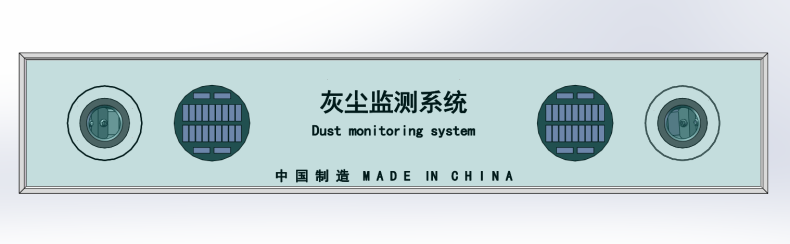
A plant database may label a channel simply as "dust" while the installed instrument actually reports cleanliness, optical attenuation, particulate concentration or an electrical soiling ratio. These are different quantities. Obtain the existing channel definition, unit, sign convention and calculation before choosing a new sensor. If that information is missing, inspect the instrument identity and acquisition program rather than inferring it from a dashboard label.
The NBL-W-PSS provides two optical cleanliness readings associated with its sensing surfaces. An air-quality instrument's PM2.5 or PM10 concentration is not a replacement for those readings. Nor does a wind sensor become a deposited-dust instrument because dust transport depends partly on wind. Weather channels support interpretation; they do not substitute for the measurement being replaced.

| Decision | Information required | Possible retrofit work |
|---|---|---|
| Measurement compatibility | Quantity, units, cleanliness direction and calculation basis | New tag definitions and separately reviewed alarm settings |
| Electrical compatibility | Supply, polarity, cable condition and interface | Power conversion, rewiring or suitable interface protection |
| Software compatibility | Serial settings, register addresses, data types, scale and validity rules | Logger driver and database mapping changes |
| Mechanical compatibility | Dimensions, clamp arrangement, array geometry and permitted frame attachments | Approved brackets, cable routing and a new installation position |
Call the replacement "like-for-like" only if each relevant requirement has actually been matched. Similar enclosure appearance, an identical cable count or a successful reply to one register read does not establish interchangeability. The retrofit budget should distinguish the sensor itself from mounting, software work and field verification.
The NBL-W-PSS soiling instrument uses blue-light optical measurement. Its cleanliness channels help track local contamination, but their relationship to electrical generation loss needs site validation. Do not insert a different sensor's conversion factor or acceptance limits simply because both outputs use a percent sign.
| Parameter | NBL-W-PSS information | Retrofit implication |
|---|---|---|
| Power | DC 12 V; average 1 W | Check field voltage and the total load |
| Interface | RS485, Modbus; RTU communication frames | Obtain the device-specific register map |
| Serial rate | 9600 bps | Check compatibility with every device on a shared bus |
| Cleanliness readings | Two sensor values, 50-100% | Map both channels explicitly; do not assume their average is electrical loss |
| Stated optical accuracy bands | +/-1% at 90-100%; +/-3% at 80-90%; +/-5% at 50-80% | Agree the error interpretation and test conditions for the ordered version |
| Optional temperature | -50 to +100 C; +/-0.5 C at 25 C | Confirm the option; this is not the instrument's ambient operating rating |
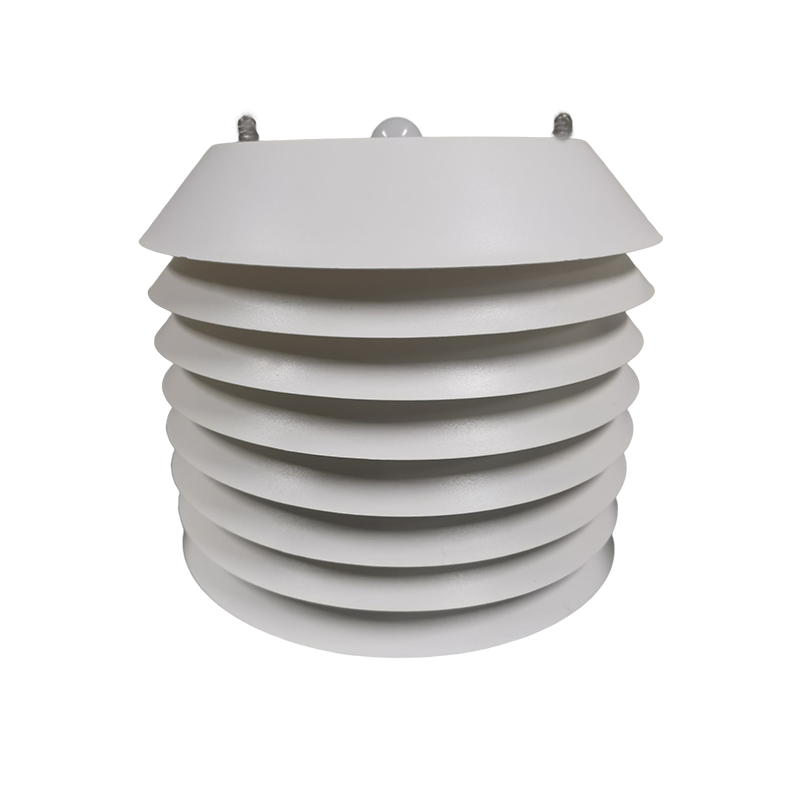
Protection grade, ambient limits, cable jacket suitability and any required certification belong in the quotation review where they are not established by the listed values. Do not infer them from outdoor product photographs. The average instrument load also excludes the logger, modem and power conversion losses.
RS485 describes the electrical interface, not a universal application map. Match address, baud rate and the supplied serial format, then check register number, supported function, signedness, word order and scaling. An apparently reasonable value can still come from the wrong channel. Use a temporary test tag until both cleanliness readings and any ordered temperature channel are identified.
The NBL-W-PSS communication instructions require more than 1000 ms between communications. Account for that interval when adding it to a bus already serving irradiance, wind and other instruments. Do not increase polling frequency merely to match a fast dashboard refresh; the acquisition schedule must respect the field device.
Keep the original and replacement tag names distinct during the transition. If the old database stored a loss estimate and the new instrument supplies cleanliness, overwriting the same column can create an artificial trend reversal. Retain the original history and record a changeover date. Update calculations only after the measurement basis has been reviewed.
Inspect the proposed location for shading, unusual runoff, splash and cleaning access. A convenient position beside a walkway may collect different contamination from the monitored module rows. Confirm the required relation between sensing surface and module plane, and obtain structural approval for any attachment to a module frame. Do not copy a drilling detail into an installation that prohibits frame modification.
If the old instrument can remain temporarily, compare both under documented conditions through relevant contamination and cleaning events. Agreement at a single clean reading is insufficient to establish agreement when dirty. If the old sensor is already unserviceable, do not invent a retrospective offset: begin a clearly identified new series and use independent site observations to evaluate its behavior.
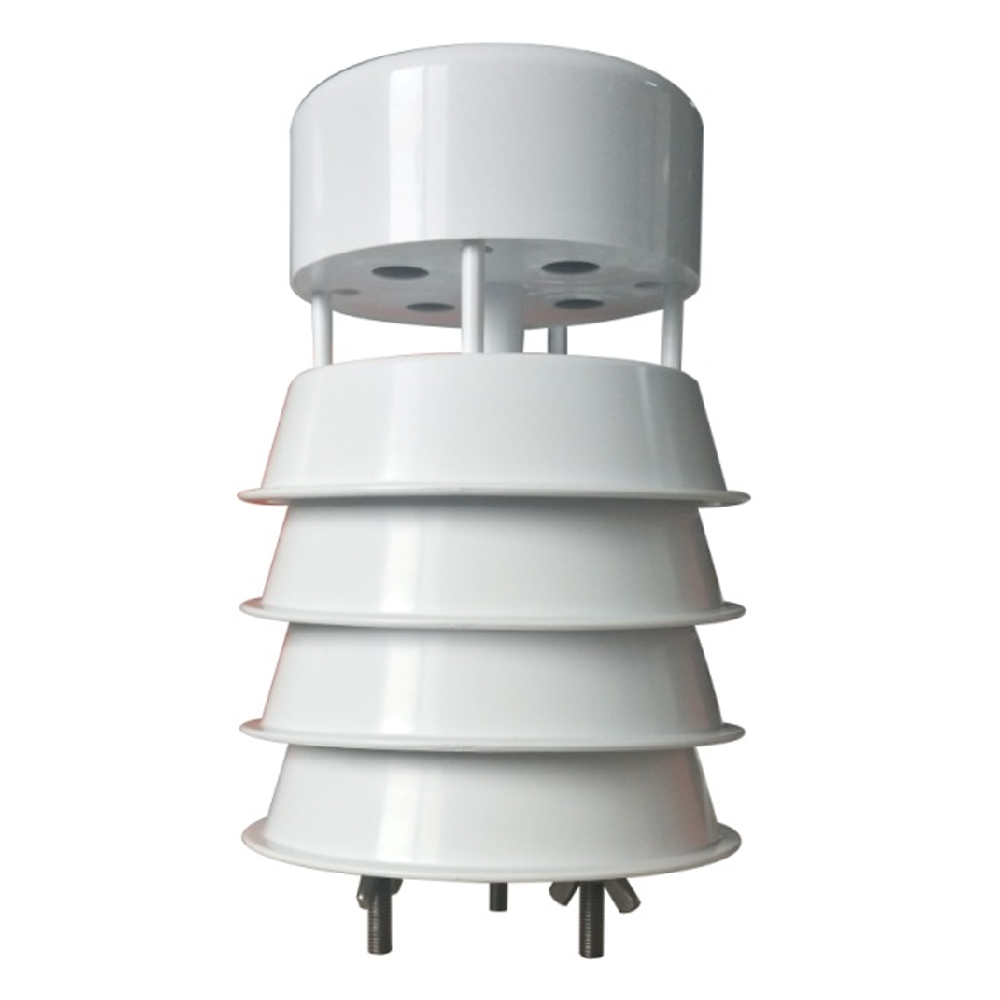
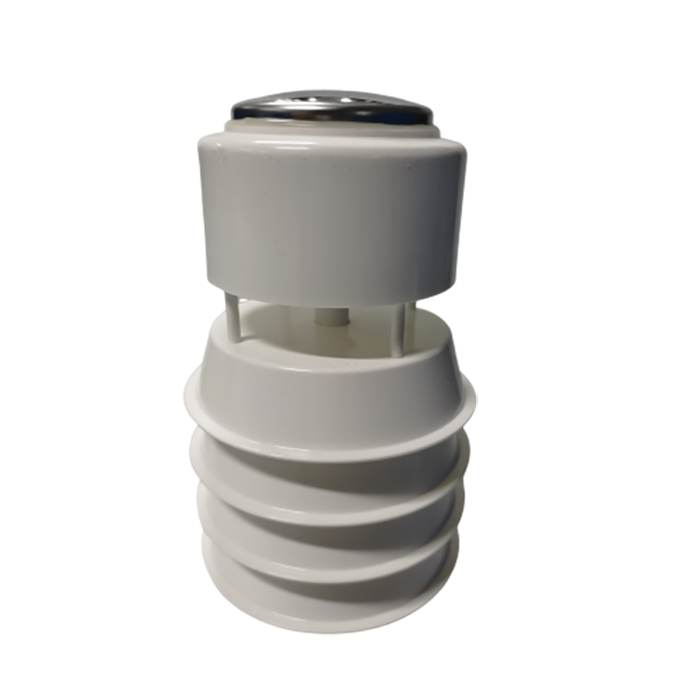
Existing weather heads can supply context when their actual channels are known. A cup anemometer provides wind speed; the THPLC head supplies temperature, humidity, pressure, illuminance and CO2, not module soiling. Illuminance is not a substitute for plane-of-array solar irradiance. Keep these roles separate in the plant data model and use them only where they help interpret the replacement test.
Send NiuBoL the existing instrument identification, required measurement, field supply, logger details, register requirements and photographs of the available mounting space. Include cable length and whether a shared bus is already occupied. Request separate scope for instrument, bracket, cable, data mapping and commissioning where these are needed.
For multiple stations, qualify the changed configuration at one representative location before committing to a wider rollout. The purpose is to identify engineering changes, not to claim a universal payback. No fixed replacement price is meaningful until the electrical, mechanical and software boundaries are known.
Only if the required protocol behavior, register map, encoding, scaling and timing match. The interface alone does not establish this. Load a reviewed driver or mapping and verify fresh values before connecting the new data to operating alarms.
Not without comparing the measurement basis and direction. A threshold developed for electrical loss is not automatically a threshold for optical cleanliness. Reassess it using the new readings and local cleaning observations before enabling automatic notifications.
Store them separately during qualification so their behavior remains visible. Any derived average or single operating indicator needs an explicit rule. Retaining individual channels helps investigate uneven contamination, cleaning differences and mapping errors.
Only after confirming that the supplied channel and its installation represent the required module temperature point. A temperature range alone does not establish the location or thermal coupling needed for a performance calculation.
No, it may be impossible. Record that no valid overlap exists, establish the new channel independently and avoid stitching the histories into a falsely continuous series. Do not use an invalid old reading as a calibration reference.
Not automatically. Check whether the existing station already provides valid irradiance, module temperature and relevant weather observations. Add channels only when they answer a defined operating question; additional environmental data cannot repair an incorrectly interpreted soiling channel.
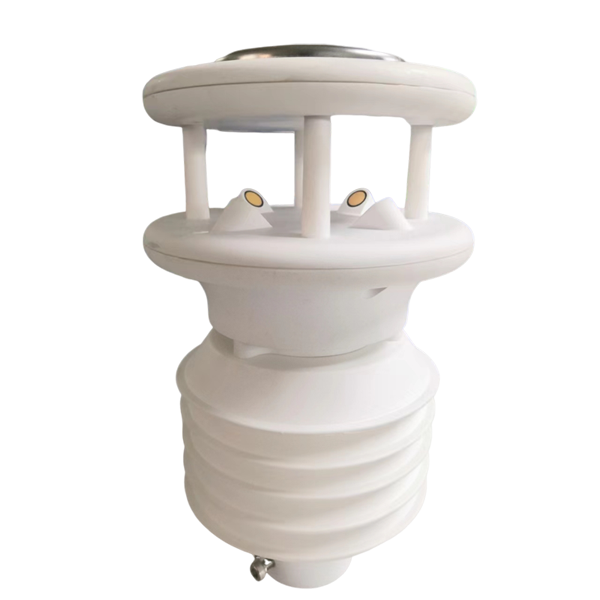
Approve a PV soiling sensor replacement by matching measurement meaning, field connections, software and mounting. For NBL-W-PSS integration, qualify both optical cleanliness channels and preserve the changeover history. This provides a defensible retrofit scope without promising interchangeability or transferring unsupported cleaning-loss calculations.
Prev:Soil Irrigation System Using Arduino: Test Sensor-to-Valve Zone Mapping
Next:Turbidity Meter for Water Analysis: Handle Over-Range Results
Related recommendations
Sensors & Weather Stations Catalog
 Agriculture Sensors and Weather Stations Catalog-NiuBoL.pdf
Weather Stations Catalog-NiuBoL.pdf
Agriculture Sensors Catalog-NiuBoL.pdf
Water Quality Sensor Catalog-NiuBoL.pdf
Related products
 Combined air temperature and relative humidity sensor
 TDR Soil Moisture & Temperature Sensor for irrigation| RS485 |4-20mA| NBL-S-THR
 Soil pH sensor RS485 soil Testing instrument soil ph meter for agriculture |NBL-S-PH Wind Speed sensor Output Modbus/RS485/Analog/0-5V/4-20mA
 0.2mm Tipping Bucket Rain Gauge for Weather & Hydrology | NiuBoL
 Pyranometer Solar Radiation Sensor 4-20mA/RS485


Screenshot, WhatsApp to identify the QR code
WhatsApp number:+8615367865107
(Click on WhatsApp to copy and add friends)

