





— Blogs —
—Products—
 Consumer hotline +8618073152920
 WhatsApp:+8615367865107
Address:Room 102, District D, Houhu Industrial Park, Yuelu District, Changsha City, Hunan Province, China
Product knowledge
Time:2026-08-10 08:05:43 Popularity:147
Field Pest Monitoring and Forecasting System for Pest Control: Procurement Guide is written for buyers who need a working monitoring point, not a catalog comparison. The useful question is not only whether the device can measure Field pest monitoring and forecasting system for pest control; it is whether the selected package can survive the site, connect to the existing controller and produce data that the project team trusts after commissioning.
For NiuBoL projects, the normal selection path starts with the application environment, required output, installation method, maintenance access and data platform. Model choice comes after those conditions are clear. This approach prevents common procurement mistakes: buying a range that is too narrow, choosing a consumer interface for an industrial cabinet, or ignoring cable and mounting details until installation day.
A field pest monitoring and forecasting system for pest control is purchased to reduce blind field inspection and support earlier warning. The buyer should not treat it as a simple lamp or trap. The real value comes from repeatable field records, image or count data, communication stability and a layout that represents pest pressure across the crop area.
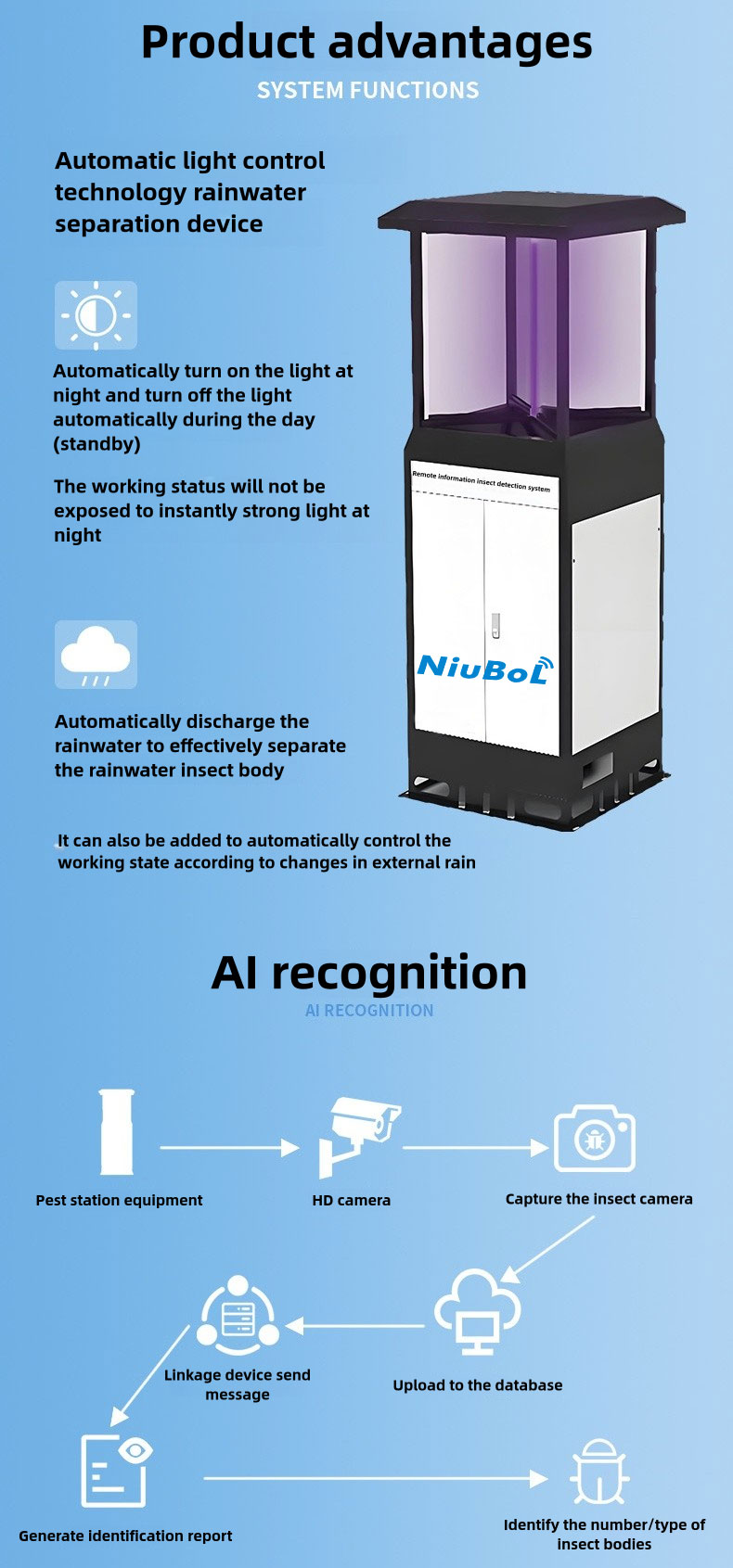
NiuBoL pest monitoring systems are used as field terminals in agricultural monitoring projects. Depending on configuration, the device can support pest attraction, collection, imaging, data upload and platform review. The system helps plant protection teams understand trend changes before peak outbreak periods.
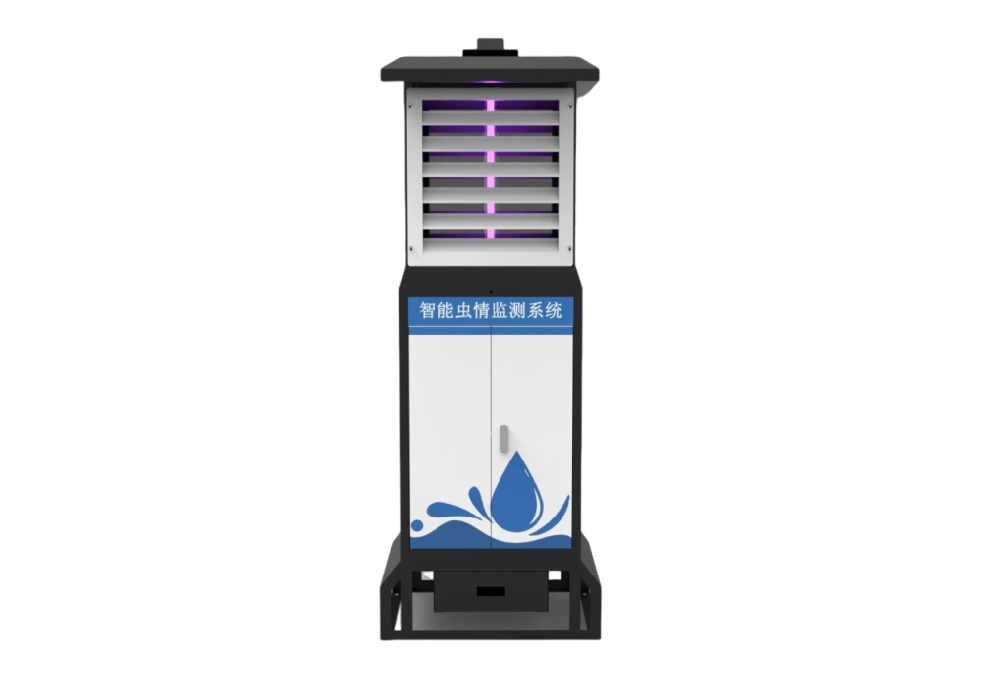
In a plant protection project, a pest monitoring system is a field evidence terminal. It supplies occurrence records and images to the platform, while agronomists or project operators decide warning levels and treatment timing.
The practical value is highest when the sensor is specified together with power supply, cable length, mounting method, cleaning access, controller protocol and data acceptance rules. A technically correct sensor can still fail in a project if it is installed where the sample is not representative or if the data system cannot read the output reliably.
For industrial projects, RS485 Modbus RTU remains the preferred interface because it supports multi-drop wiring, long cable distance, stable register polling and direct connection to PLC, RTU, data logger or IoT gateway hardware. The buyer should confirm baud rate, parity, Modbus address, register map, unit definition and update interval before ordering.
Integration should also consider grounding, surge protection, waterproof junction boxes and separation from high-current pump or motor cables. Many field faults are not caused by the measuring element itself but by weak wiring practice, shared noisy power supplies or unprotected outdoor terminals.
| Monitoring objects | Target insects captured, imaged or counted according to device configuration | Defines whether the system supports trend monitoring or expert identification workflow |
|---|---|---|
| Power supply | AC mains or solar power package according to site | Power design decides whether a remote field station can run unattended |
| Data transmission | 4G or network upload by configured terminal | Important for county-level monitoring platforms and remote farm management |
| Camera and lighting | Imaging module with controlled light conditions | Image consistency affects manual review and pest trend comparison |
| Protection | Outdoor enclosure, rain protection and field mounting frame | Controls stability in farmland, orchard and station deployments |
| Maintenance | Regular cleaning, trap inspection and communication checks | Reduces false counts and missing data during peak pest season |
Pest monitoring accuracy depends strongly on installation position, target pest behavior, light conditions, cleaning and review rules. Hardware selection should be paired with an operating procedure.
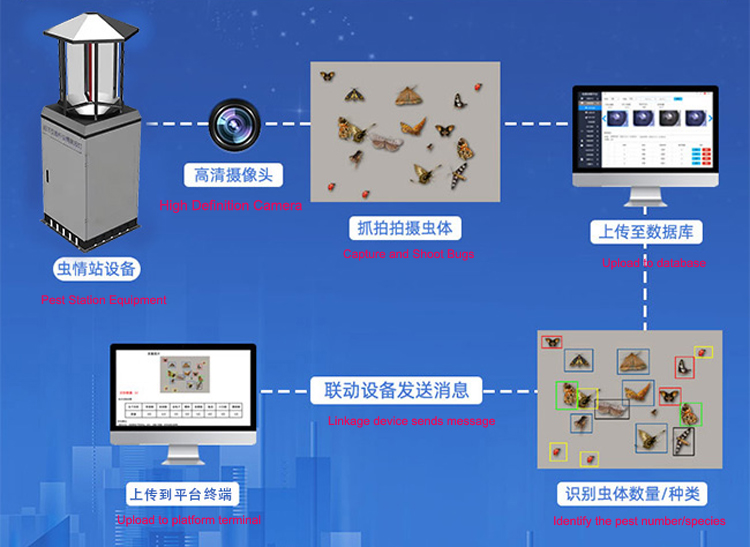
Field challenge: Data must cover multiple fields and be reviewed remotely.
Integration plan: Deploy monitoring terminals with solar or mains power and platform upload.
User value: Teams can compare occurrence timing by location and issue earlier warnings.
Field challenge: Pest pressure may appear first in field edges or specific microclimates.
Integration plan: Place devices in representative activity zones and maintain them during peak season.
User value: Farm managers reduce blind scouting and focus manual checks where data changes.
Field challenge: The owner needs visual evidence for pest trend reporting.
Integration plan: Use image-capable terminals and a defined reporting routine.
User value: The system provides explainable field records for service reports.
Choose a simpler monitoring terminal when the project only needs local occurrence records. Choose an image-capable and networked system when regional managers need remote review, warning reports and historical comparison.
Do not specify pest monitoring by station count alone. Confirm crop type, target insects, field layout, power mode, network coverage, maintenance route and reporting format.
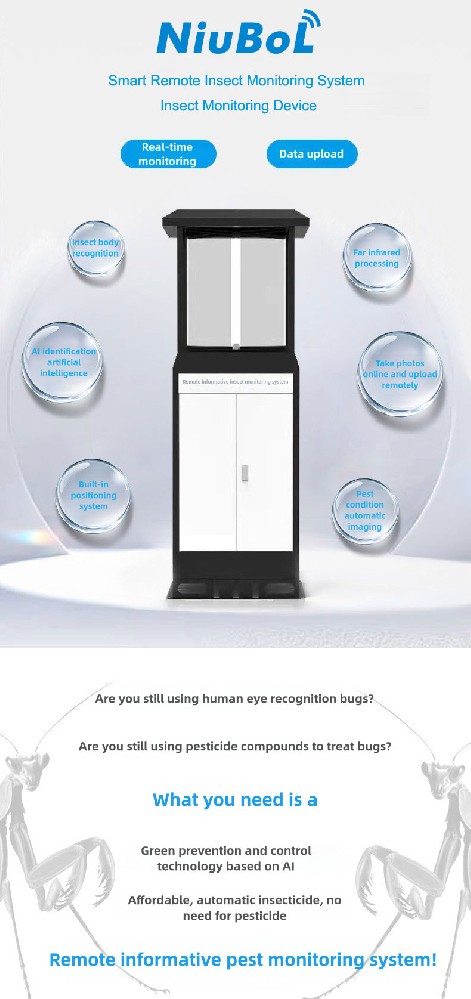
This system is not the same as an insect killer lamp and should not be bought mainly for killing capacity. It is also not useful where no one will review the data or maintain the field terminal.
For quotation, provide target crop, target pest group, field area, expected number of stations, power supply, communication condition, platform requirement, mounting environment and whether solar power is required.
Project delivery should include device labels, installation map, platform account setup, data format, maintenance checklist and a short training session for field operators.
A system integrator can use the article to define signals, Modbus communication, mounting and commissioning checks. A distributor can use it to qualify customer requirements before asking for a price. A project owner can use it to compare complete packages rather than isolated devices. A purchasing team can use the RFQ checklist to reduce revisions and avoid missing accessories.
Pest monitoring data becomes useful when it can be compared by time, location and crop stage. A single station that is never cleaned or reviewed may produce images, but it does not create a forecasting workflow. The buyer should decide who checks the data, how often reports are generated and which field action follows a warning.
For regional projects, station density should be based on crop distribution, pest migration pattern and access for maintenance. Placing all devices near roads may reduce service cost but weaken representativeness. In orchards, field edges and microclimate zones may be more important than geometric spacing. In demonstration farms, visibility and report quality may matter more than wide coverage.
The specification should also separate monitoring from control. Monitoring systems provide evidence and warning. Control measures still depend on threshold rules, field scouting and local agronomy practice. This distinction makes the article more useful to serious buyers because it avoids promising that a device alone solves pest pressure.
Before ordering, the buyer should draw a simple layout that shows crop blocks, station positions, power source, network condition and maintenance route. This drawing does not need to be complex, but it prevents a common problem: buying equipment first and then discovering that the selected position has no signal, unsafe access or weak pest representativeness.
Reporting should also be defined. Some projects need daily image review during peak season. Others need weekly trend summaries for farm managers or regional plant protection teams. If the platform output must be connected to an existing management system, confirm data format, account permissions and export method before shipment.
Acceptance should not be limited to powering on the device. The buyer should confirm that the station uploads data at the required interval, that images or records can be reviewed by the responsible team, that the installation point matches the agreed layout and that maintenance staff can reach the device safely. A short operating record from the first test period is more useful than a simple delivery photo.
The final project document should also define how seasonal shutdown is handled. Pest monitoring equipment may stay outdoors after the main crop period, so the buyer should decide whether devices are stored, cleaned, covered or kept online for background data. This affects battery life, enclosure condition and readiness for the next season.
Q1: What is a field pest monitoring and forecasting system used for?
A: It is used to collect field pest occurrence data, image or count target insects and support warning decisions before outbreak levels rise. It is most useful for regional monitoring stations, farms, orchards and plant protection service teams.
Q2: Is it the same as an insect killer lamp?
A: No. A monitoring and forecasting system is built for observation, data collection and decision support. A killing lamp is mainly a control tool. Mixing the two requirements often leads to the wrong product selection.
Q3: What should buyers confirm before quotation?
A: Confirm target pests, crop area, installation density, power supply, network coverage, image or counting requirement, platform access, maintenance staff and whether solar power is needed.
Q4: Can pest monitoring data be used directly for pesticide application?
A: It should support decisions, but final control action should also consider crop stage, field scouting, local threshold rules and agronomist judgment. The system reduces blind spraying but does not replace field verification.
Q5: Where should monitoring devices be installed?
A: Install them in representative field edges or pest activity zones, away from strong competing light, blocked airflow, flooding risk and locations that cannot be serviced during peak season.
Q6: What affects system price?
A: Price is affected by trap structure, imaging module, solar power, communication terminal, software platform, number of stations, installation accessories and requested reporting functions.
Q7: How is maintenance handled?
A: Maintenance normally includes cleaning, checking collection parts, confirming power and network status, reviewing images and replacing consumables before peak pest periods.
Q8: What makes a project specification clear?
A: A clear specification names the crop, target insects, monitoring purpose, station quantity, installation layout, power mode, communication mode, platform requirement and acceptance data format.

A field pest monitoring and forecasting system should be specified as a data and warning tool, not a generic pest-control device. Good procurement defines target pests, installation layout, communication, power and data review workflow.
If the model is not obvious, send NiuBoL the site water or soil condition, expected measuring range, controller interface, power supply, installation method, cable length, quantity and project schedule. With those details, the quotation can match the engineering requirement instead of only naming a product.
Prev:Dissolved Oxygen Measurement for Aquaculture and Wastewater Monitoring Projects
Next:TOC Sensor Selection for Online Organic Pollution Monitoring Projects
Related recommendations
Sensors & Weather Stations Catalog
 Agriculture Sensors and Weather Stations Catalog-NiuBoL.pdf
Weather Stations Catalog-NiuBoL.pdf
Agriculture Sensors Catalog-NiuBoL.pdf
Water Quality Sensor Catalog-NiuBoL.pdf
Related products
 Combined air temperature and relative humidity sensor
 TDR Soil Moisture & Temperature Sensor for irrigation| RS485 |4-20mA| NBL-S-THR
 Soil pH sensor RS485 soil Testing instrument soil ph meter for agriculture |NBL-S-PH
 Wind Speed sensor Output Modbus/RS485/Analog/0-5V/4-20mA
 Tipping bucket rain gauge for weather monitoring auto rainfall sensor RS485/Outdoor/stainless steel
 Pyranometer Solar Radiation Sensor 4-20mA/RS485

Screenshot, WhatsApp to identify the QR code
WhatsApp number:+8615367865107
(Click on WhatsApp to copy and add friends)

