





— Blogs —
—Products—
 Consumer hotline +8618073152920
 WhatsApp:+8615367865107
Address:Room 102, District D, Houhu Industrial Park, Yuelu District, Changsha City, Hunan Province, China
Product knowledge
Time:2026-06-24 11:45:11 Popularity:274
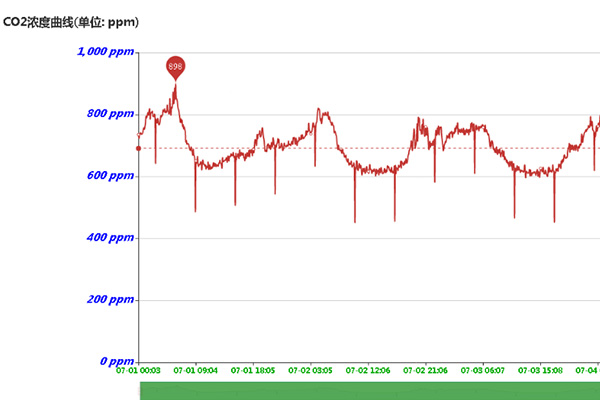
Carbon dioxide is a production parameter in protected cultivation, not only an air quality value. In a greenhouse, the crop canopy consumes CO2 during photosynthesis while ventilation, temperature control and worker activity continuously change the indoor concentration. A greenhouse CO2 sensor gives the control system a measurable reference for enrichment, exhaust and crop environment decisions.
For greenhouse contractors, equipment distributors and system integrators, the purchasing question is usually broader than one sensor model. The project needs a device that can be installed at crop height, connected to a controller or gateway, and maintained without disturbing daily production. RS485 greenhouse CO2 sensor integration is therefore a common requirement in modern greenhouse climate control projects.
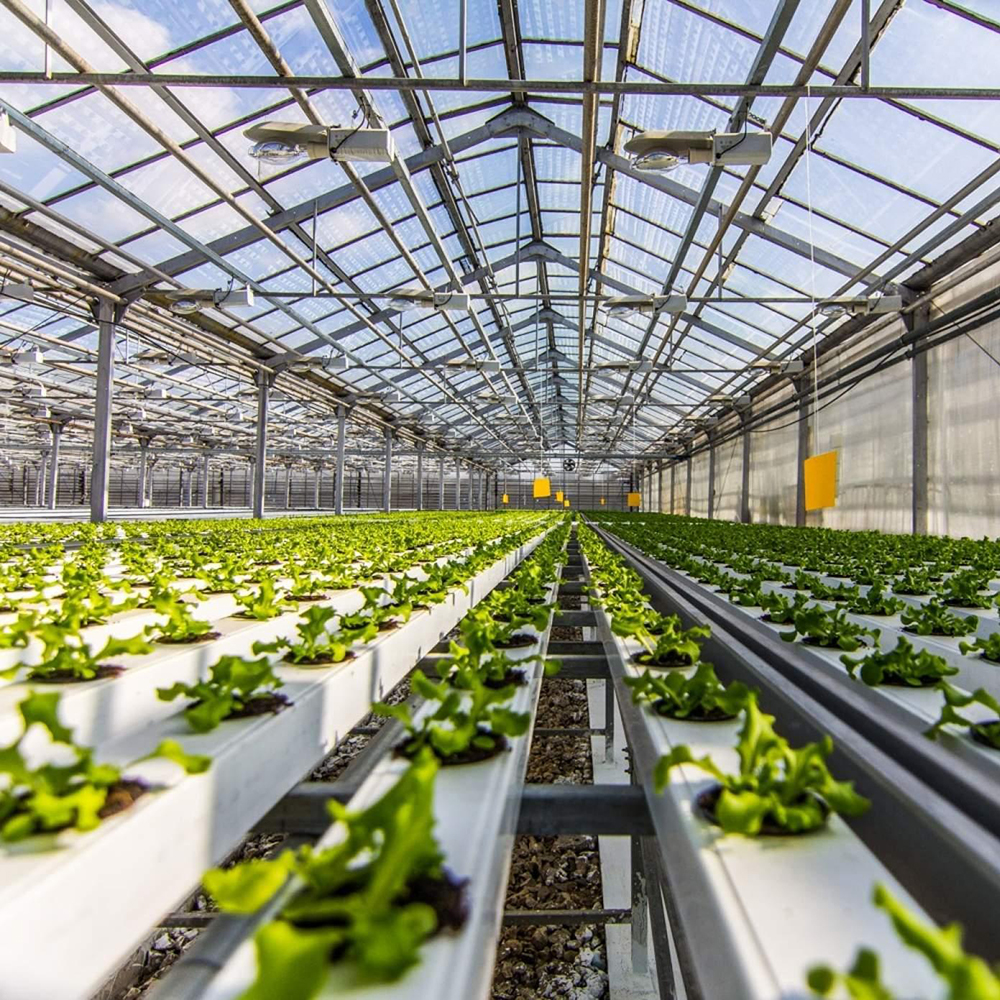
Greenhouse cultivation reduces dependence on open-field weather, but it also creates a controlled space where carbon dioxide may become uneven. Dense planting, closed curtains, limited ventilation and active heating can all affect CO2 distribution. If a project only controls temperature and humidity, the crop may still lose photosynthetic efficiency during periods of high light and low CO2 availability.
A practical greenhouse CO2 monitoring project starts from the crop and the control objective. Leafy vegetables, fruiting vegetables and nursery plants have different canopy heights and different sensitivity to ventilation strategy. System integrators need to decide whether the sensor will be used only for display and alarm, or whether it will also trigger enrichment equipment, exhaust fans or greenhouse environmental control logic.
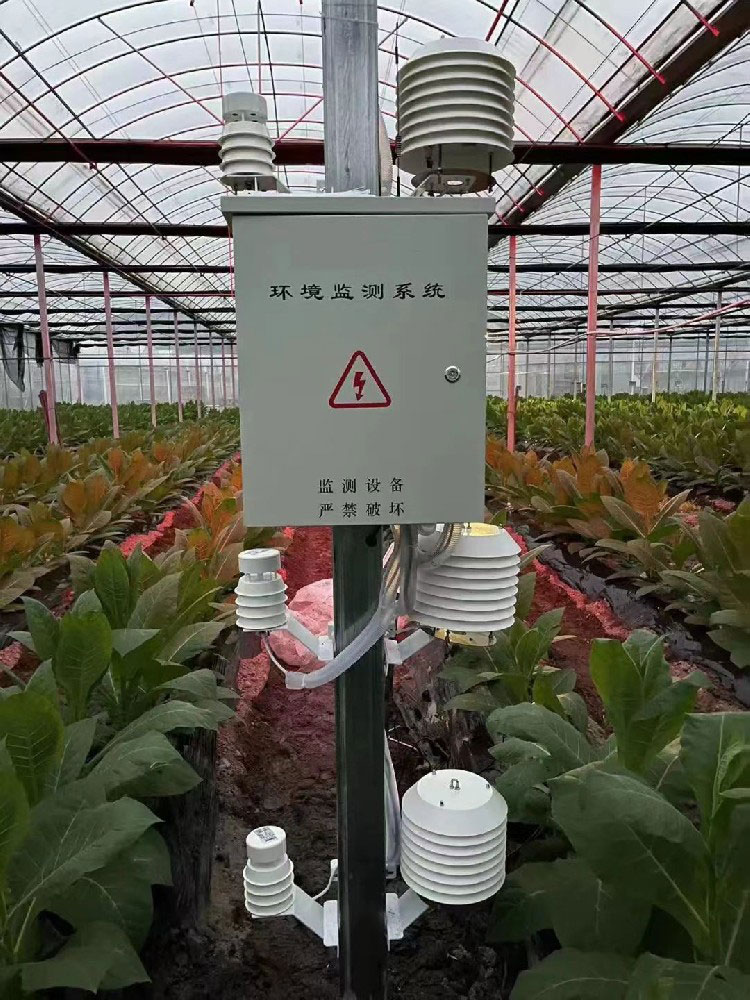
The CO2 sensor is usually installed in the perception layer of a smart greenhouse. It works together with air temperature and humidity sensors, illumination sensors, soil moisture sensors, irrigation controllers, fan controllers, curtains and data acquisition terminals. The sensor does not replace the climate controller; it supplies reliable concentration data so the controller can act based on a measured value.
In small greenhouses, one sensor may be installed near the representative crop area. In larger or multi-span greenhouses, several monitoring points are often more useful because CO2 concentration can vary by bay, ventilation zone and crop density. If wall mounting is not suitable, a suspended bracket or steel pipe installation can place the sensing point close to the plant canopy.
For industrial greenhouse projects, RS485 output is valuable because it supports longer cable runs and multi-device communication. A Modbus RTU greenhouse CO2 sensor can be connected to a data logger, PLC, RTU, greenhouse controller or IoT gateway after confirming slave address, baud rate, register mapping and power supply.
Analog 4-20mA output is still useful when the control cabinet has analog input modules or when the project wants a simple one-to-one signal. RS485 is normally preferred when the greenhouse already has multiple sensors, centralized data collection, historical records or platform visualization requirements.

| Parameter | Reference Value | Engineering Note |
|---|---|---|
| Measurement range | 0 to 5000 ppm CO2 | Suitable for greenhouse carbon dioxide monitoring and enrichment reference |
| Accuracy | ±(50 ppm + 3%FS) | Accuracy should be reviewed with the control threshold and ventilation strategy |
| Resolution | 1 ppm | Supports detailed trend observation and alarm configuration |
| Supply voltage | DC 12-24V | Compatible with common greenhouse control cabinet power supplies |
| Output signal | RS485 or 4-20mA | Select RS485 Modbus RTU for multi-sensor network integration |
| Power consumption | About 0.2W | Low power demand helps distributed greenhouse nodes |
| Cable length | 2.5 m standard cable | Longer cable requirements should be confirmed before shipment |
| Working temperature | -10 to 50℃ | Matches typical protected cultivation environments |
| Working humidity | 0 to 100%RH | Installation should still avoid direct condensation on the enclosure |
| Current load | RL≤250Ω for current output | Relevant when selecting analog acquisition modules |
| Weight | About 140g | Allows wall, bracket or suspended installation |
Site challenge: Closed greenhouse operation may reduce CO2 concentration during high photosynthesis periods, especially when ventilation is limited.
System integration scheme: Install RS485 CO2 sensors at crop canopy height and connect them to the climate controller or gateway.
User value: The operator can enrich CO2 or ventilate based on measured concentration instead of a fixed time schedule.
Site challenge: Large connected greenhouses have different air movement patterns between spans and ventilation zones.
System integration scheme: Use several Modbus CO2 sensor points with unique addresses and display them by greenhouse zone.
User value: Managers can identify uneven distribution and improve control logic for different crop areas.
Site challenge: Research sites need historical CO2 records to compare crop response, lighting and ventilation conditions.
System integration scheme: Connect CO2, temperature, humidity and illumination sensors to a data platform with exportable records.
User value: The project gains a traceable dataset for agronomic analysis and control optimization.
Site challenge: Buyers may request CO2 monitoring together with weather, soil, irrigation and controller equipment.
System integration scheme: Supply the CO2 sensor with wiring diagrams, Modbus registers and installation recommendations.
User value: Distributors can quote a complete greenhouse monitoring package with fewer missing accessories.
Site challenge: Operators may not be on site when CO2 concentration changes quickly after curtain, fan or heater action.
System integration scheme: Connect the RS485 CO2 sensor to an IoT gateway and configure platform alarms.
User value: Remote teams can review concentration trends and respond before crop conditions drift.
Confirm whether the greenhouse only needs monitoring or requires automatic CO2 enrichment control.
Choose RS485 Modbus RTU when several sensors must share one data acquisition bus.
Use 4-20mA when the existing control cabinet only supports analog input.
Place the sensor near the crop canopy rather than near doors, vents or heaters.
For large multi-span greenhouses, specify the number of zones and monitoring points.
Confirm whether the supplier can provide register tables, wiring diagrams and address configuration.
Review humidity and condensation conditions before deciding the mounting position.
Define the alarm threshold and control response before commissioning the system.
The RS485 bus should use suitable shielded cable, correct polarity, stable DC power and a clear grounding plan. If several sensors are on the same bus, each device must have a unique address. The project should record the sensor position, installation height and corresponding greenhouse zone in the platform so historical data can be interpreted correctly.
CO2 enrichment should not be controlled by concentration alone. Integrators should coordinate CO2 values with illumination, temperature, ventilation state and crop stage. This prevents enrichment during periods when vents are open or when low light limits photosynthesis response.
Before ordering a greenhouse CO2 sensor, the buyer should describe the greenhouse size, crop type, ventilation method, enrichment method and intended mounting height. These details decide whether one central measuring point is enough or whether the greenhouse needs several sensors by zone.
For crop production, CO2 control should be reviewed together with light and ventilation. Enrichment during low light may not create useful crop response, while enrichment during open ventilation may waste gas. A practical control plan should define when the controller enriches, when it ventilates and when it only records data.
The handover document should include the sensor address, output type, wiring color, installation height, greenhouse zone name and alarm thresholds. This makes later troubleshooting much easier when workers compare platform values with crop performance.
Greenhouse area, crop height and planting density are recorded before deciding sensor quantity.
Sensor points are placed near representative canopy areas, not directly beside vents or enrichment nozzles.
The buyer confirms whether the controller needs RS485 Modbus data or a 4-20mA analog signal.
CO2 alarm thresholds are reviewed together with light intensity and ventilation status.
Cable length, mounting bracket and cabinet terminal position are confirmed before shipment.
Commissioning includes a comparison between sensor output, local display and platform data.
Using one sensor for a large greenhouse without checking airflow zones.
Placing the sensor too close to enrichment equipment and reading a local high value.
Buying an analog output sensor when the project platform needs Modbus data.
Setting a CO2 alarm without considering whether vents are open or light is sufficient.
A final acceptance test should compare the platform value, local controller value and sensor output under the same condition. This simple check prevents address errors, scaling mistakes and control threshold mismatches from becoming crop management problems later.
A: A greenhouse needs a CO2 sensor because carbon dioxide concentration directly affects photosynthesis. The sensor provides measured data for enrichment, ventilation and crop climate control decisions.
A: RS485 is often better when multiple greenhouse sensors are connected to one controller or platform. 4-20mA is suitable for simple analog control cabinets with one sensor per input channel.
A: It should be installed near the representative crop canopy, away from doors, exhaust fans, heaters and direct enrichment nozzles. Large greenhouses may require several monitoring points.
A: One sensor can be enough for a small representative area, but multi-span greenhouses usually need zone-based monitoring because air movement and crop density are not uniform.
A: Check measurement range, accuracy, output signal, supply voltage, cable length, working temperature, humidity tolerance and Modbus documentation.
A: The sensor provides the measurement signal. Direct control should normally be handled by a greenhouse controller, PLC or RTU with defined control logic.
A: Buyers should ask for installation guidance, maintenance requirements, calibration notes and historical data handling, not only the initial sensor reading.
A: Yes. Temperature and humidity describe climate comfort, while CO2 describes a photosynthesis input. They answer different control questions.
A: A quotation should include the sensor model, output type, cable length, mounting accessories, protocol document, control cabinet interface and platform requirements.
A: NiuBoL can provide CO2 sensors and related greenhouse monitoring devices with RS485 or analog outputs for distributors, contractors and integrators.
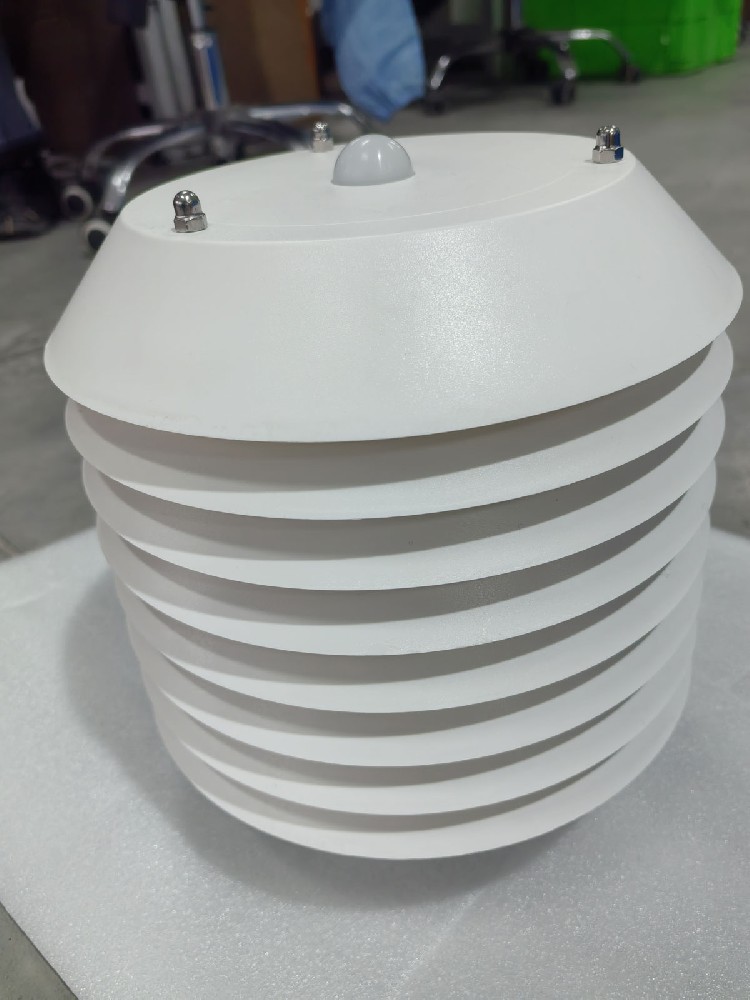
A greenhouse CO2 sensor is a decision point in the climate control system. For procurement teams, the main value is not the display of a number, but the ability to connect crop photosynthesis demand with ventilation, enrichment and platform records. NiuBoL CO2 sensors with RS485 or 4-20mA output give greenhouse projects a practical path for integration and expansion.
 NBL-W-CO2-Carbon-Dioxide-Sensor-Instruction-Manual-2000ppm.pdf
NBL-W-CO2 Carbon-Dioxide-Sensor-Instruction-Manual-5000ppm.pdf
NBL-W-THPLC-5in1-Temperature-Humidity-Pressure-Illumination-CO2-Sensor-data-sheet.pdf
Prev:Leaf Temperature and Humidity Sensor: Plant Disease Risk Monitoring and RS485 Integration Guide
Next:Smart Multi-Span Greenhouse System Design Guide for Sensors, Control and Procurement
Related recommendations
Sensors & Weather Stations Catalog
Agriculture Sensors and Weather Stations Catalog-NiuBoL.pdf
Weather Stations Catalog-NiuBoL.pdf
Agriculture Sensors Catalog-NiuBoL.pdf
Water Quality Sensor Catalog-NiuBoL.pdf
Related products
 Combined air temperature and relative humidity sensor
 TDR Soil Moisture & Temperature Sensor for irrigation| RS485 |4-20mA| NBL-S-THR
 Soil pH sensor RS485 soil Testing instrument soil ph meter for agriculture |NBL-S-PH
 Wind Speed sensor Output Modbus/RS485/Analog/0-5V/4-20mA
 Tipping bucket rain gauge for weather monitoring auto rainfall sensor RS485/Outdoor/stainless steel
 Pyranometer Solar Radiation Sensor 4-20mA/RS485

Screenshot, WhatsApp to identify the QR code
WhatsApp number:+8615367865107
(Click on WhatsApp to copy and add friends)

