





— Blogs —
—Products—
 Consumer hotline +8618073152920
 WhatsApp:+8615367865107
Address:Room 102, District D, Houhu Industrial Park, Yuelu District, Changsha City, Hunan Province, China
Product knowledge
Time:2026-07-23 16:04:59 Popularity:375
IoT projects fail when the architecture is assembled after procurement. Channel selection, bus addressing and maintenance roles should be defined before the first PO is issued.
A stable IoT stack for water quality uses two layers: field reliability and cloud visibility. RS485 should be treated as the reliable edge layer, while cloud is the operational layer.
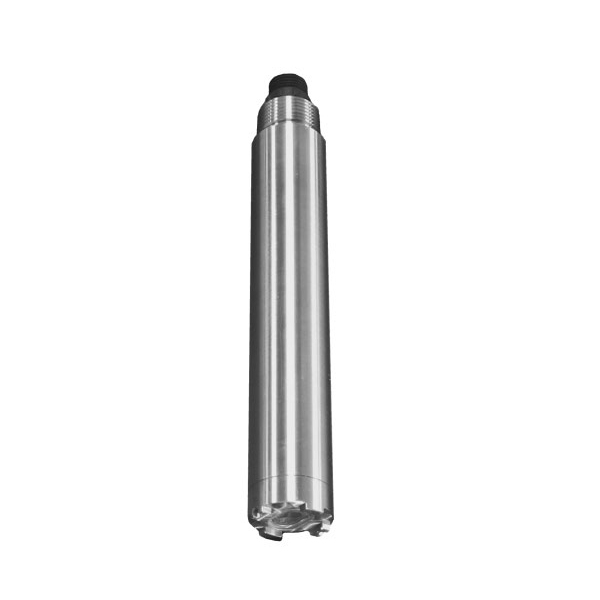
Plan how each point will be polled, buffered and uploaded. If polling intervals vary by site, define profiles in the architecture document.
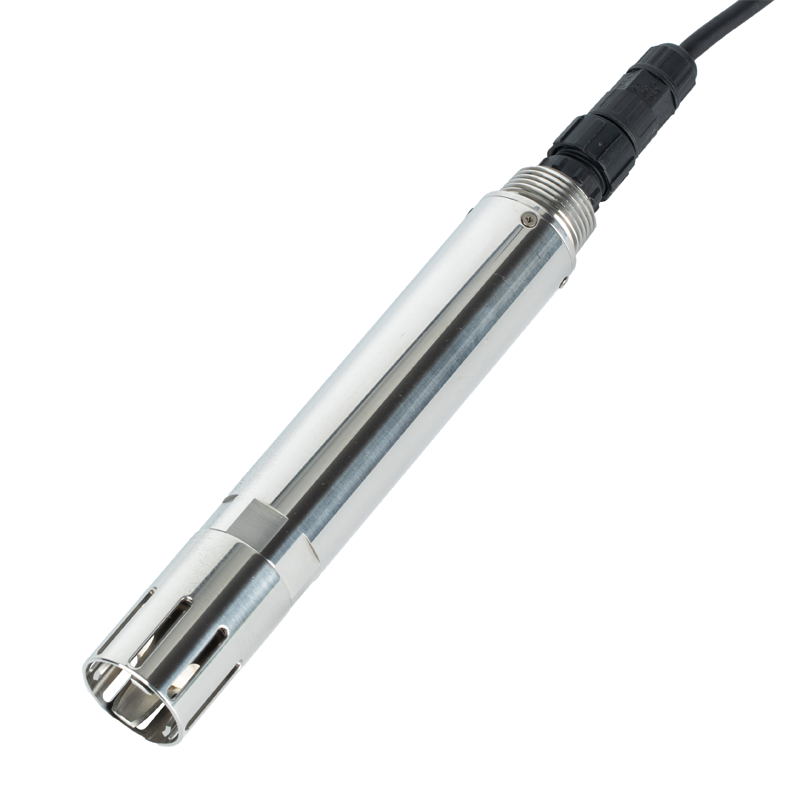
Bus collision and address conflict are common when channels are added during installation without pre-assignment.
Gateway should support retries, timestamp preservation and register map updates. Without these, packet loss appears as process uncertainty.
Use one account model and one owner model for all sites. Fragmented data owners lead to delayed fault response.
IoT visibility is not only dashboard design. Set role-based access, trend export and event ownership in early planning.
For industrial sites, operation continuity is often better than feature volume. Keep alarm rules minimal but explicit.
Implement one site end-to-end first, then replicate with the same templates for other points.
Collect commissioning deviations in one logbook format that links bus settings, signal values and maintenance actions.
| Specification | Value | Project meaning |
|---|---|---|
| Edge protocol | RS485 Modbus RTU sensor bus | Reliable field signal acquisition |
| Connectivity | Gateway or controller conversion | Enables remote visibility |
| Data quality | Timestamped value and status register | Supports diagnostics and audit trails |
| System design | Profile-based polling and retry | Survives unstable network conditions |
| Scope control | Role matrix and alarm ownership | Improves response and accountability |
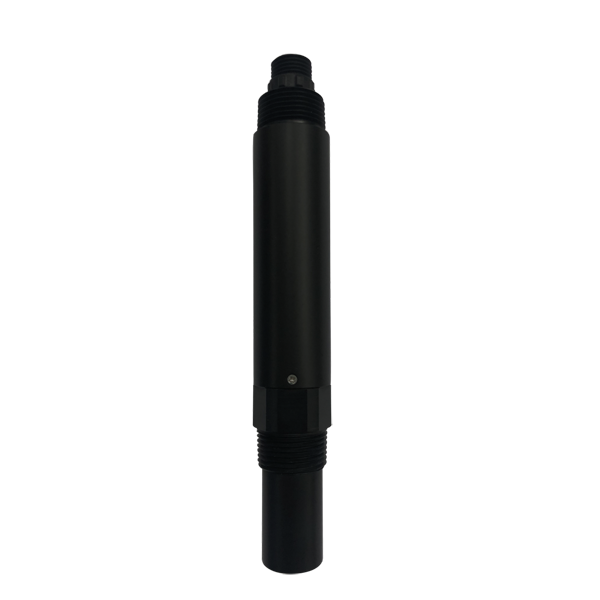
Field environment challenge: Multiple sites with diverse operating habits.
System integration plan: Use one edge profile with standardized RS485 mapping and centralized rule templates.
User value: Lower project learning curve and better alarm consistency.
Field environment challenge: Different process lines and shared management center.
System integration plan: Isolate bus segments by zone and keep one gateway policy by site type.
User value: Simplified operations and easier troubleshooting.
Field environment challenge: Remote locations and power variability.
System integration plan: Keep local buffering and upload window strategy to handle intermittent connectivity.
User value: Reduced data loss and predictable maintenance planning.
In IoT architectures, bus planning and cloud buffering are usually designed together; mismatch here creates delayed quality alerts, not only data delay.
Review bus conflict, field power noise and maintenance mismatch in one acceptance pass, then freeze the protocol map used by every controller.
At handover, keep one short register dictionary and one wiring map per integration channel owner.
| Decision point | Practical recommendation |
|---|---|
| Network core | Define polling and retention policy before buying devices |
| Bus plan | Assign RS485 addresses and register names in template |
| Gateway plan | Set upload windows and reconnect behavior in specs |
| Maintenance | Add remote reset and field service access rules |
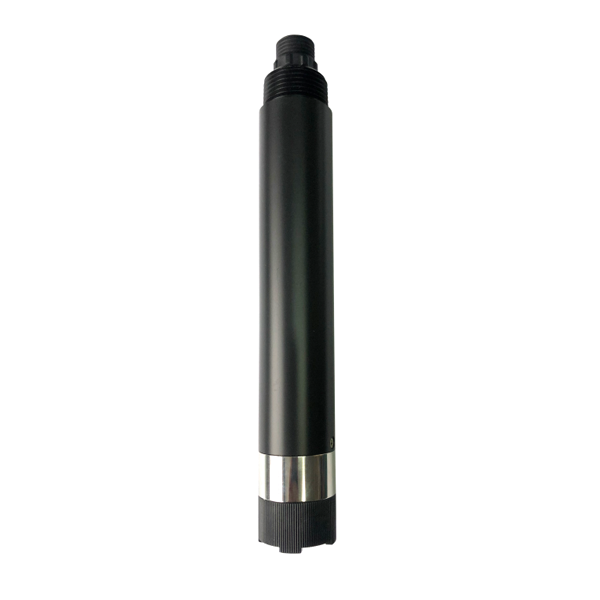
Before hardware PO, define RS485 register ranges and data tags by point, not by sensor brand. This avoids interface mismatch at commissioning and avoids field rewiring.
Set a fixed sequence: physical wiring, local output verification, Modbus registration verification, then platform ingest. Reversing this usually hides errors.
Confirm where alarm buffering lives when network is unstable. Edge buffering and retry policy are required for sites where backhaul is intermittent.
Build the architecture from data ownership and control ownership. Ownership is the first item before device model or cloud option.
Lock bus plan, node roles, and fallback behavior at procurement stage. A fixed architecture map avoids field negotiation during commissioning.
For mixed systems, define which channels are critical and which channels are trend-only. This reduces alarm noise while preserving future scalability.
| Item | Validation method | Failure signal |
|---|---|---|
| Address map | Sample register table | Address conflict |
| Scaling | Unit test with known raw values | Wrong process value |
| Alert | Severity mapping by scenario | Nuisance alerts |
| Failure fallback | Buffered upload design | Missing data during outages |
Plan capacity for one architecture variant. If you keep one architecture path, you reduce test matrix and shorten start-up.
Use a pilot that includes full acceptance script from wiring to alert escalation. If pilot fails one item, do not scale until fixed.
For water quality IoT architecture, clarify how this affects implementation scope before award. In the first 30 days, teams often lose time on retests. For architecture design, check bus address planning and protocol boundary assumptions before final BOQ lock..
Define a pre-award acceptance protocol now: who validates topology, who signs the bus health report, who confirms protocol and addressing setup, and who confirms commissioning sign-off.
In IoT architecture projects, define owners for electrical, data, and maintenance handover to avoid fragmented protocol changes.
| Check item | Owner |
|---|---|
| Reference method | Project quality lead |
| RS485 mapping | Integrator |
| Installation constraints | Site contractor |
| Data handover | Purchasing or PM |
Now evaluate water quality IoT architecture by risk and recurrence rather than headline model price. Track three technical anchors: bus health, commissioning pass rate, and post-startup service traceability..
Create an evaluation grid that checks architecture compliance, commissioning readiness, and support quality.. Avoid choosing the cheaper architecture if escalation and replacement visibility is not explicit..
Keep a written decision log that documents addressing, gateway assumptions, and maintenance responsibility boundaries for future project revisions.
| Decision line | What to reject | What to accept |
|---|---|---|
| Protocol certainty | No Modbus/RS485 examples | Working map in annex |
| Maintenance clarity | No cleaning cycle | Explicit intervals |
| Acceptance | Only sample value | Acceptance and report method |
| Support | No service boundary | Defined scope and scope-out items |
For water quality IoT architecture, finalize a commissioning playbook that maps action by timeline, not only by deliverable list. Define milestones for wiring completion, initial run, and thirty-day system behavior review..
Use this plan to verify measurable behavior from each option at operating points.. If network or sensor outputs cannot be measured under normal operation, this architecture path should be deprioritized before acceptance..
Once this stage is complete, add a 30-day performance check and a 90-day operation review with threshold evidence and spare-part readiness criteria.
This stage should also define extension boundaries and failure handling, then lock who approves each type of scope change before operations start.
| Review interval | Main output |
|---|---|
| Commissioning | Baseline acceptance and threshold verification |
| 30-day | Cleaning/drift trend and false alarm rate |
| 90-day | Operational stability and spare utilization |
| Handover | Final close decision and optimization list |
For water quality IoT architecture, run a pre-commissioning simulation in parallel with contract signing. topology response, bus routing and threshold update flow before final approval.
This simulation step is often skipped in smaller projects. For topology design, this simulation usually reduces late-stage change because protocol issues are exposed before interface freeze.
Require both an issue change template and a commissioning training matrix in the offer.. This gives operations a clean handover, reducing maintenance confusion after the first warranty period.
| Milestone | Evidence | Decision owner |
|---|---|---|
| Dry test | Wiring and register continuity | PM |
| Wet test | Trend stability and alarm logic | Project lead |
| Post-startup | Service call count and false alarm rate | Site owner |
After the deployment plan is fixed for water quality IoT architecture, make extension logic explicit in the same bid package. Clarify quotation change points versus operational support requests in the handover record..
When extension logic is explicit, follow-up discussions are faster and less likely to trigger contract interpretation gaps.
Build six-month data quality checkpoints here before expansion requests are opened.. Without this, teams cannot verify architecture performance after short-term operation.
| Six-month review item | Acceptance sign | Owner |
|---|---|---|
| Maintenance trend | Threshold within expected range | Operations owner |
| Spare and consumables | Usage and lead time trend | Purchasing |
| Model drift | Calibration record analysis | Integrator |
| System health | Missing data and alert latency | PM |
A: They can in theory if power, security and uptime are handled per site, but direct cloud-only is often blocked by local policy and intermittent links.
A: The first risk is usually data contract ambiguity. Fix register ranges, units, and failure codes before hardware installation. This is a procurement checkpoint: include register schema, timeout policy and restart behavior in the annex, then require a validation run before handover.
A: Start with one template per class of site and keep a versioned register template. This accelerates onboarding without duplicating engineering efforts.
A: Keep analog output for fallback only where controllers are legacy-only. For new channels, RS485 and normalized registers reduce future integration effort.
A: Measure ROI by alarm-to-corrective-action cycle, onsite visit reduction, and sampling reduction after a fixed observation period, not by number of dashboards created.
A: A gateway is usually needed unless the station already has a stable protocol bridge. Even then, firmware and security controls remain mandatory.
A: The first risk is address conflict and scaling inconsistency; resolve these before site wiring. Set a numbered address plan and a scale policy before install so every device follows the same mapping when expansion is added.
A: Use historical packet-loss logs, reconnection time and alarm delay trend for a 30-day stability check before full acceptance. Use a baseline scorecard with packet-loss and reconnect time for 30 days. Keep historical trend data for acceptance.
Register mapping and address policy should be in written annexes with one sample payload example. This rule should be written as an acceptance clause with a test sample. Without that test, the deployment should be treated as partial completion.
Choose phased for sites with uncertain staffing and unstable power. Use full integration only after phase-one reliability is verified. If staffing is limited, include a phased integration plan with explicit cutover conditions and a temporary fallback window in each milestone.
IoT architecture only adds value when edge collection, network retry behavior and platform storage are designed as one chain.
RS485 remains the stable acquisition layer for many water projects; design polling interval, buffer rules and alarm arbitration before selecting devices.
Set architecture acceptance with replay tests and clock-alignment checks. This keeps the installed system usable when communication interruptions appear in real operation.
Prev:Water Quality Sensor Procurement Guide: 12 Questions Before You Send RFQ
Next:Smart Water Quality Monitoring System: What Makes a Deployment Practical
Related recommendations
Sensors & Weather Stations Catalog
 Agriculture Sensors and Weather Stations Catalog-NiuBoL.pdf
Weather Stations Catalog-NiuBoL.pdf
Agriculture Sensors Catalog-NiuBoL.pdf
Water Quality Sensor Catalog-NiuBoL.pdf
Related products
 Combined air temperature and relative humidity sensor
 TDR Soil Moisture & Temperature Sensor for irrigation| RS485 |4-20mA| NBL-S-THR
 Soil pH sensor RS485 soil Testing instrument soil ph meter for agriculture |NBL-S-PH
 Wind Speed sensor Output Modbus/RS485/Analog/0-5V/4-20mA
 Tipping bucket rain gauge for weather monitoring auto rainfall sensor RS485/Outdoor/stainless steel
 Pyranometer Solar Radiation Sensor 4-20mA/RS485

Screenshot, WhatsApp to identify the QR code
WhatsApp number:+8615367865107
(Click on WhatsApp to copy and add friends)

