





— Blogs —
—Products—
 Consumer hotline +8618073152920
WhatsApp:+8615367865107
Address:Room 102, District D, Houhu Industrial Park, Yuelu District, Changsha City, Hunan Province, China
Product knowledge
Time:2026-09-13 15:00:00 Popularity:209
Quick Answer: Landscape river water quality monitoring is most useful when it distinguishes oxygen stress, runoff, sediment disturbance and poor circulation. A multi-parameter monitor combines related observations at one point, but the operator still needs to interpret their timing and location. Select the channels around the river's recurring problems, then use the trends to decide where to inspect, when to sample and whether an intervention changed conditions.
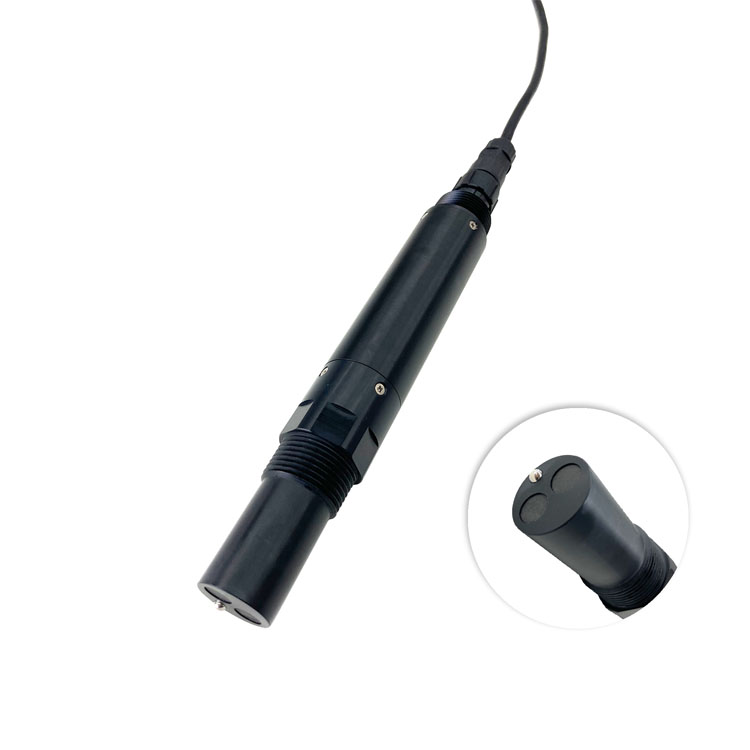
Urban and ornamental rivers are judged by visible and noticeable conditions: cloudy water after rain, floating growth, odor, or fish gathering near an inlet. Those observations matter, but they do not identify a cause by themselves. A river can look clear while dissolved oxygen is low, and a temporary turbidity increase can result from disturbed sediment rather than a new dissolved contaminant.
The monitoring design should follow the management task. A reach with recurring early-morning oxygen problems needs overnight observations. A channel receiving stormwater needs records around rainfall and inflow changes. A slow side arm needs comparison with a better-mixed section. Purchasing the maximum number of parameters at one convenient point may leave the actual problem unobserved.
Conductivity is one useful background channel. A rapid change can indicate that water with a different dissolved-ion composition has arrived, while gradual changes may follow evaporation, replenishment or seasonal conditions. It does not identify the source or toxicity of the dissolved substances. Establish the normal range for that location before treating a conductivity departure as evidence of a particular discharge.
Where aquatic photosynthesis and respiration are important, dissolved oxygen and pH can change through the day. Oxygen may increase during daylight and decline overnight; pH can also move as carbon dioxide is consumed and released. The size and timing of the cycle depend on biological activity, mixing, weather and inflows. An afternoon inspection can therefore miss the condition that causes difficulty before sunrise.
Record continuously across several complete day-night cycles before interpreting a single high or low point as the normal condition. Compare similar times of day when reviewing changes. If an aerator is switched on in the morning and oxygen rises later in daylight, the observed rise cannot be attributed entirely to the aerator without considering the existing daily pattern.
Organic inputs can increase oxygen demand, but a low oxygen reading does not identify the responsible material. An optical organic-load channel may help locate the timing of a change. Its relationship to laboratory BOD depends on the water matrix and the method; an online estimate should not simply be reported as a laboratory BOD5 result.

| Observed pattern | Possible explanation to investigate | Useful next check |
|---|---|---|
| Repeated overnight oxygen decline with a daytime recovery | Biological daily cycle combined with limited exchange | Compare pre-dawn readings, pH and circulation in affected and better-mixed areas |
| Turbidity rise during an inflow event | Runoff particles or disturbed sediment | Inspect the inflow and compare upstream/downstream observations |
| Conductivity changes abruptly without a matching turbidity rise | Arrival of water with a different ionic composition | Check inflow operation and collect a timely sample for the suspected constituents |
| One channel drifts while neighboring observations remain stable | Sensor fouling, local effects or a real parameter-specific change | Inspect the probe and perform an independent measurement before assigning a cause |
| Several channels change after replenishment | Mixing of source water and river water | Measure the replenishment source and follow the affected reach over time |
These patterns are starting points for investigation, not chemical diagnoses. The same trend can have more than one cause. Record the operational context, including cleaning, pumping, replenishment and visible disturbances, so a later review can distinguish an intervention from an unexplained water-quality event.
Turbidity responds to optical scattering by material in the water. Suspended-solids concentration is a different reported quantity, and the relationship depends on particle properties. Do not convert NTU into mg/L with a universal factor. Fine mineral particles, biological material and changes in particle size can alter the relationship at the same site.
For a river maintenance team, the distinction changes the response. Cloudiness following dredging or bank work calls for investigation of sediment disturbance and transport. Cloudiness coinciding with an inlet event may require sampling at the inlet. A clear-water conductivity change may justify a different sampling plan. The monitor should help direct the investigation rather than replace it with a generic water-quality score.
A separate suspended-solids sensor can be appropriate when the project needs a solids concentration trend. Establish how its readings will be checked against samples from the actual river. Avoid placing the probe so close to the bed that routine movement, retrieval or a cleaning action creates a particle cloud that is mistaken for the surrounding reach.

A main-channel station and a stagnant side-arm station answer different questions. If the complaint comes from a low-circulation pocket, a probe in the main flow may report satisfactory conditions while the pocket remains problematic. Conversely, a sensor in the most stagnant corner should not be presented as representing the entire river.
Use attended measurements to compare candidate locations and depths before fixing the installation. Include at least the affected area and a meaningful comparison point. Where depth or stratification matters, define the sampling depth rather than allowing a suspended probe to move unpredictably with water level or cable slack.
Keep the sensing point out of direct aeration plumes when the aim is to understand the condition of the reach. Bubbles and very local mixing can affect measurements or make the location unrepresentative. To evaluate the plume itself, label the location as a plume measurement and retain a separate point for the surrounding water.
The NiuBoL NBL-WQ-MPS-5A can combine up to eight parameters including temperature, with the fitted modules selected for the project. A useful starting combination for daily biological behavior is dissolved oxygen, pH and temperature. Conductivity adds information about changing water composition, while turbidity supports investigation of particles and runoff. Add ammonia or optical organic-load channels when there is a specific management question they can help answer.
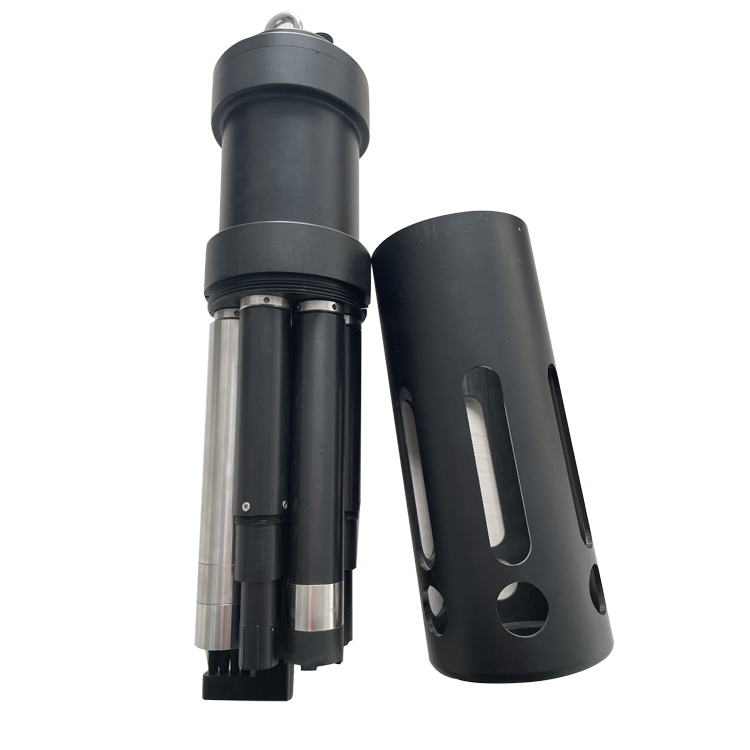
| Selected MPS-5A channel or platform item | Specification | Selection consideration |
|---|---|---|
| Dissolved oxygen | 0-20 mg/L; 0.01 mg/L resolution; stated accuracy +/-2% | Clarify the percentage basis in the project acceptance specification |
| pH | 0-14; +/-0.1 pH; 0.01 pH resolution | Supports interpretation of daily biological changes and unusual inflows |
| Temperature | 0-50 C measurement range; +/-0.3 C | Provides context for seasonal and daily comparisons |
| Conductivity range options | 0-5000 uS/cm or 0-200 mS/cm; +/-1.5% FS | Select a range appropriate to the water, rather than the widest available range |
| Turbidity range options | 0-100 NTU or 0-1000 NTU; 0.1 NTU resolution | Balance normal background readings against likely event peaks |
| Supply and power | 12 V DC +/-5%; 5 W at 12 V | Include voltage drop and other station loads in the power design |
| Communication | RS485 Modbus RTU; default 9600 baud, 8N1 | Connect through a compatible logger or RTU with the correct channel map |
| Cable and cleaning | Standard 5 m shielded cable; adjustable automatic brush cleaning | Keep connections protected and allow access for inspection and verification |
The table describes selected options, not a promise that every channel is included. A temperature measurement range is also not the complete assembly's environmental rating. Confirm the final module list, immersion conditions, cable construction and maintenance requirements for the installation. Keep the quoted configuration and the logger's enabled channels consistent.
Separate three conditions in the dashboard: a water-quality departure, a sensor requiring attention and a communications fault. A missing reading is not equivalent to normal water. The MPS-5A can return zero for an absent or disconnected module under some conditions, so the integration must use the configured channel inventory and tested fault behavior rather than relying on value alone.
For dissolved oxygen, establish the action limit from the project's ecological or operational requirements, then test the response using real site variation. Use a defined persistence rule where appropriate, while ensuring it does not delay recognition of a genuinely rapid event. The correct duration depends on the monitoring purpose and sensor response; a universal delay copied from another project is not defensible.
Record sensor removal and cleaning periods so they are not interpreted as river events. After cleaning, allow the probe to return to stable conditions and compare the result when needed. Automatic brushing reduces one source of fouling but does not verify calibration, remove every deposit or eliminate visits after debris accumulation.
When evaluating circulation changes or aeration, compare several similar periods before and after the intervention. Consider weather, water temperature, inflow and the time of day. A single favorable reading after work is completed cannot establish sustained improvement. The practical outcome is a more useful maintenance decision, not an unsupported percentage improvement claim.
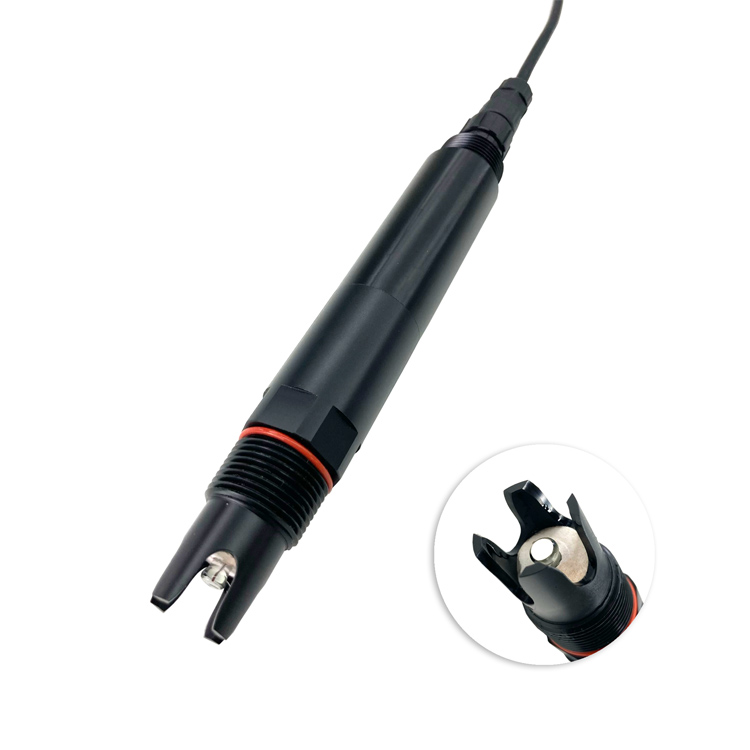
A separate pH probe can be useful where a second measuring location needs independent observation. It should be logged and maintained as its own channel, with the location clearly identified. Adding another point may resolve a spatial question more effectively than adding another parameter at the original point.
For recurring oxygen concerns, start with dissolved oxygen, temperature and pH observed across the full day. Add conductivity for changing ionic composition and turbidity for particle events. Further channels should answer an identified question, such as suspected ammonia input, rather than simply fill the available module positions.
No. It describes the selected parameters at a particular point and depth. River condition also depends on spatial variation and factors not necessarily measured by that station. Use site surveys and appropriate biological or laboratory assessment where those are required by the project's objectives.
Daylight photosynthesis, changing flow and other processes can raise oxygen after an overnight decline. A later acceptable reading does not invalidate the earlier observation. Review the complete trend and compare pH, temperature and operational events before deciding whether the problem has disappeared.
No. The brush addresses fouling at accessible sensing surfaces, not every blockage, deposit or calibration issue. Inspect the assembly and compare readings at intervals suited to the site. Shorten the inspection interval when deposits or post-event debris begin to affect the record.
Buy another point when the unresolved question is spatial, such as a stagnant pocket differing from the main channel. Add a module when an unmeasured parameter prevents interpretation at the existing point. A preliminary survey helps distinguish these cases before equipment is ordered.
Provide the recurring water-quality concern, a site layout, expected depth and level changes, available power and preferred data connection. Identify whether the scope includes only sensors or also a logger, mounting and remote access. This allows the configuration to match the river's management task instead of pricing an undefined full-feature station.
Landscape river water quality monitoring should help the team choose its next action: inspect an inlet, compare a stagnant reach, verify a sensor or assess an intervention over time. NiuBoL multi-parameter sensors can supply the related observations, while careful siting and interpretation make those observations useful. Choose the configuration around the river's recurring problems and retain enough context to explain why the readings changed.
Prev:Multi-Parameter Water Quality Monitor Functions for Online Monitoring Projects
Next:Secondary Water Supply Online Monitoring System: What It Does in a Project
Related recommendations
Sensors & Weather Stations Catalog
 Agriculture Sensors and Weather Stations Catalog-NiuBoL.pdf
Weather Stations Catalog-NiuBoL.pdf
Agriculture Sensors Catalog-NiuBoL.pdf
Water Quality Sensor Catalog-NiuBoL.pdf
Related products
 Combined air temperature and relative humidity sensor
 TDR Soil Moisture & Temperature Sensor for irrigation| RS485 |4-20mA| NBL-S-THR
 Soil pH sensor RS485 soil Testing instrument soil ph meter for agriculture |NBL-S-PH
 Wind Speed sensor Output Modbus/RS485/Analog/0-5V/4-20mA
 Tipping bucket rain gauge for weather monitoring auto rainfall sensor RS485/Outdoor/stainless steel
 Pyranometer Solar Radiation Sensor 4-20mA/RS485


Screenshot, WhatsApp to identify the QR code
WhatsApp number:+8615367865107
(Click on WhatsApp to copy and add friends)

