





— Blogs —
—Products—
 Consumer hotline +8618073152920
WhatsApp:+8615367865107
Address:Room 102, District D, Houhu Industrial Park, Yuelu District, Changsha City, Hunan Province, China
Product knowledge
Time:2026-09-13 16:00:00 Popularity:228
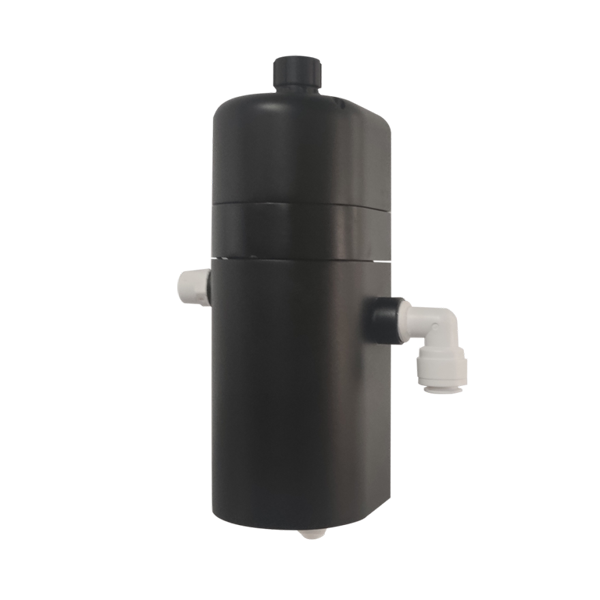
Secondary water supply online monitoring needs a representative sample and a suitable flow path for each instrument. For the NiuBoL NBL-WQ-TSA-4 turbidity cell and NBL-WQ-CL chlorine cell, the recommended flows differ: below 300 mL/min for the TSA-4 and 500–1000 mL/min for the CL. Use separately controlled sample branches rather than assuming one series flow suits both.
In this context, secondary water supply means the building or site storage and booster arrangement downstream of the incoming supply. An inlet sample describes incoming water; a tank-outlet sample describes water leaving storage; a terminal point describes the water after additional distribution. These locations cannot be treated as interchangeable on the trend screen.
Choose the point according to the change the operator needs to detect. Avoid a long, intermittently flushed dead leg. Record the take-off location, tubing route and normal hydraulic conditions. No instrument can correct a sample that is old or unrepresentative before it reaches the measuring cell.
Turbidity, disinfectant residual and pH answer different operational questions. A fluorescence-based BOD estimate is intended for organic-load investigation and is not an interchangeable substitute for those channels. Do not specify a BOD instrument as a default building-water safety monitor simply because its output connects to the same controller.

Suspended-solids concentration is also different from low-range turbidity. The NBL-WQ-TSS-408S has a 0–2000 mg/L concentration range; the TSA-4 is a 0–10.000 NTU turbidity instrument. A mass-concentration channel cannot be relabelled NTU. For low-turbidity distribution water, evaluate the actual turbidity method and low-range performance rather than selecting a wastewater solids probe.

| Design item | NBL-WQ-TSA-4 turbidity | NBL-WQ-CL chlorine |
|---|---|---|
| Measuring arrangement | Wall-mounted integrated flow cell | Electrode installed in its matching flow cell |
| Sample flow | Recommended below 300 mL/min | 30–60 L/h, equivalent to 500–1000 mL/min |
| Pressure limit | ≤0.2 MPa | <0.1 MPa |
| Measurement range | 0–10.000 NTU | 0–2.000 mg/L on the HClO basis |
| Turbidity performance | 0.001 NTU resolution; accuracy ±5% or ±0.02 NTU, whichever is greater | Assess chlorine performance against its own reference method, not the turbidity specification. |
| Protection | IP65 assembly | IP68 probe |
| Supply and power | 12–24 VDC; 0.2 W at 12 V | 12–24 VDC ±10%; 0.2 W at 12 V |
| Output | RS485 Modbus RTU; 4–20 mA option to confirm | RS485 Modbus RTU |
The quoted pressure is the condition at the instrument, not permission to connect an unrestricted pressurised main. Provide suitable pressure reduction, separate flow adjustment and drainage. Verify flow at each branch in the completed installation, including during normal pump operation. Use fittings matched to the actual assembly; do not infer their size from a photograph.
Keep the TSA-4 outlet straight and free of restrictions that alter flow or trap bubbles. For the CL, position the electrode in the matching cell as intended and retain steady sample movement. Service isolation should allow one branch to be inspected without silently leaving another with a stagnant sample.
Even a fast sensor reports water that has already travelled through the sample line. As an idealized calculation, a 10 m tube with a 4 mm internal diameter holds about 126 mL. At 200 mL/min, nominal travel time is approximately 38 seconds, before cell mixing and instrument response. This example is not a recommended tubing size or a full response-time guarantee.
The two branches may therefore report changes at different times. Record line dimensions and operating flows before interpreting a brief mismatch as a water-quality event. Chlorine can also change during sample transport; reduce avoidable residence time and evaluate wetted materials rather than correcting a poor line arrangement through arbitrary calibration offsets.
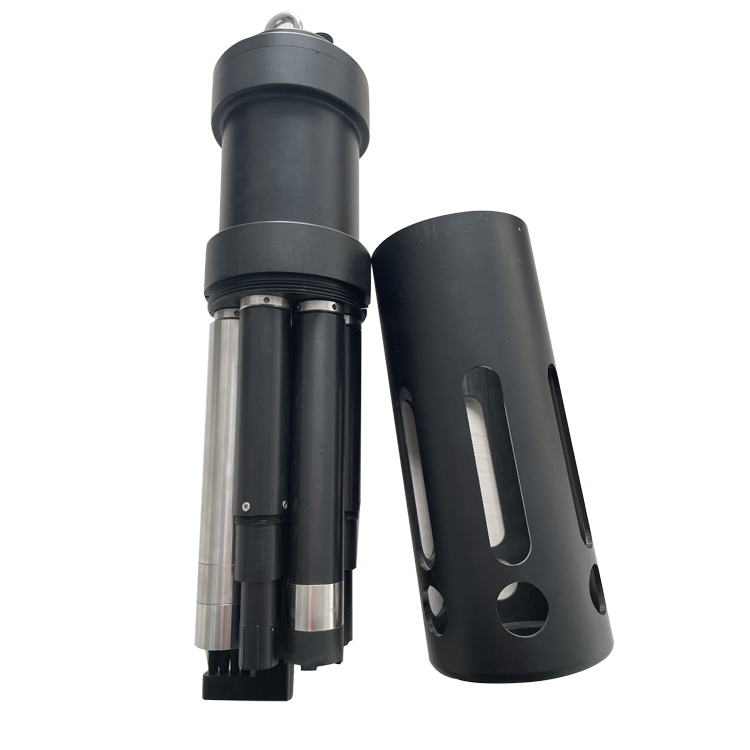
An integrated multiparameter probe can serve other monitoring duties, but its immersion arrangement and fitted channels do not automatically replace a low-turbidity and chlorine sampling panel. Confirm the required methods and ranges before consolidating instruments.
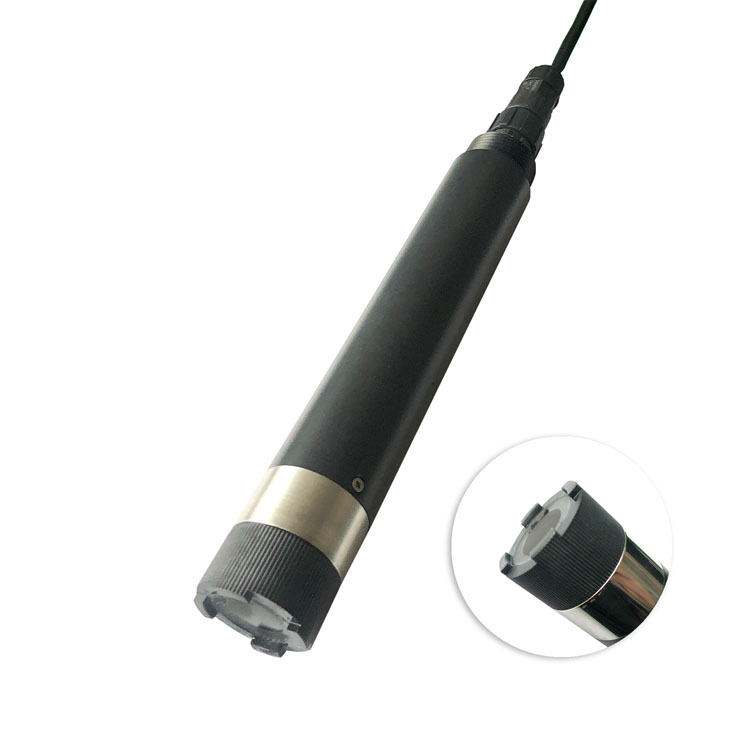
The NBL-WQ-CL is specified on an HClO basis. Do not relabel its indication as total chlorine or assume it is numerically identical to every free-chlorine reference result. Establish the comparison method, reporting units and any required interpretation before commissioning. Automatic temperature compensation does not imply automatic pH compensation.
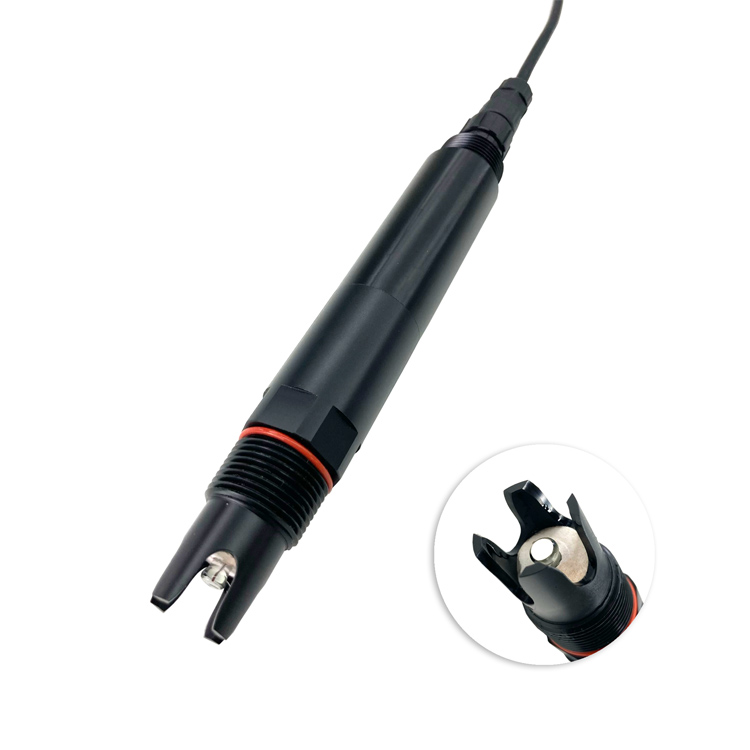
A separate pH measurement helps describe the sample condition. Place reference sampling where its water matches the online cell, and take paired observations close in time. A pH reading is context, not an independent chlorine measurement or a substitute for a defined reference test.
Verify isolation, reduced pressure, measured branch flows, drainage and bubble removal before adjusting instrument calibration. Then compare suitable reference readings and confirm the same values, units and timestamps at the data logger. Repeat the sample-flow checks during representative booster operation rather than only with the pumps idle.
Dissolved oxygen has uses in other water processes, but an oxygen probe is not evidence of disinfectant residual or microbiological condition. Keep any optional investigation channels separate from the building's routine operational measurements. For a NiuBoL inquiry, provide the sample-point drawing, pressure range, required quantities, tubing lengths and drain arrangement.
Only if both instruments' hydraulic requirements are demonstrably compatible. The TSA-4 and base CL flows above do not overlap, so specify separate controlled branches for that pairing.
No. Its operating pressure is below 0.1 MPa. Housing protection and process pressure are separate specifications; use the matching cell and suitable pressure reduction.
No. First inspect flow, sample age, line condition, bubbles and the reference method. A stagnant or changed sample can produce a real cell reading that does not represent the intended pipe location.
Include the actual hydraulic location, such as incoming supply or storage outlet, and retain that identity in the logger and platform. Do not give different points one generic building-water label.
For the versions discussed, keep the TSA-4 within the current product limit of 0–50 °C and the CL within 5–50 °C. Check cabinet conditions separately and do not assume every component shares the widest sensor range.
Compare the same instruments, sample branches, pressure and flow components, fittings, reference checks and acquisition equipment. A probe-only offer does not include the complete sampling arrangement unless explicitly stated.
A secondary-supply monitoring panel is only as useful as the water delivered to its cells. Choose representative take-offs, separate incompatible flows and account for transport delay. Correct hydraulic design makes turbidity and chlorine records more interpretable and prevents avoidable commissioning disputes.
Prev:Landscape River Water Quality Monitoring with Multi-Parameter Sensors
Next:Pump Room Water Quality Monitoring: Chlorine Data and PLC Interlocks
Related recommendations
Sensors & Weather Stations Catalog
 Agriculture Sensors and Weather Stations Catalog-NiuBoL.pdf
Weather Stations Catalog-NiuBoL.pdf
Agriculture Sensors Catalog-NiuBoL.pdf
Water Quality Sensor Catalog-NiuBoL.pdf
Related products
 Combined air temperature and relative humidity sensor
 TDR Soil Moisture & Temperature Sensor for irrigation| RS485 |4-20mA| NBL-S-THR
 Soil pH sensor RS485 soil Testing instrument soil ph meter for agriculture |NBL-S-PH
 Wind Speed sensor Output Modbus/RS485/Analog/0-5V/4-20mA
 Tipping bucket rain gauge for weather monitoring auto rainfall sensor RS485/Outdoor/stainless steel
 Pyranometer Solar Radiation Sensor 4-20mA/RS485


Screenshot, WhatsApp to identify the QR code
WhatsApp number:+8615367865107
(Click on WhatsApp to copy and add friends)

