





— Blogs —
—Products—
 Consumer hotline +8618073152920
WhatsApp:+8615367865107
Address:Room 102, District D, Houhu Industrial Park, Yuelu District, Changsha City, Hunan Province, China
Product knowledge
Time:2026-09-13 17:00:00 Popularity:254
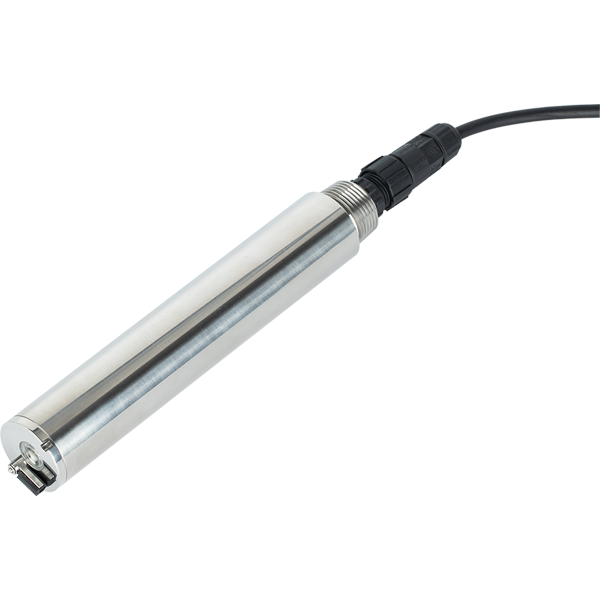
Pump room water quality monitoring should distinguish a valid chlorine measurement from a failed sample or data channel. A controller must not interpret loss of sample flow, stale communications or a service condition as a confirmed zero residual. With the NiuBoL NBL-WQ-CL, verify the HClO measurement basis and sample conditions before designing alarms or any separately engineered dosing interlock.
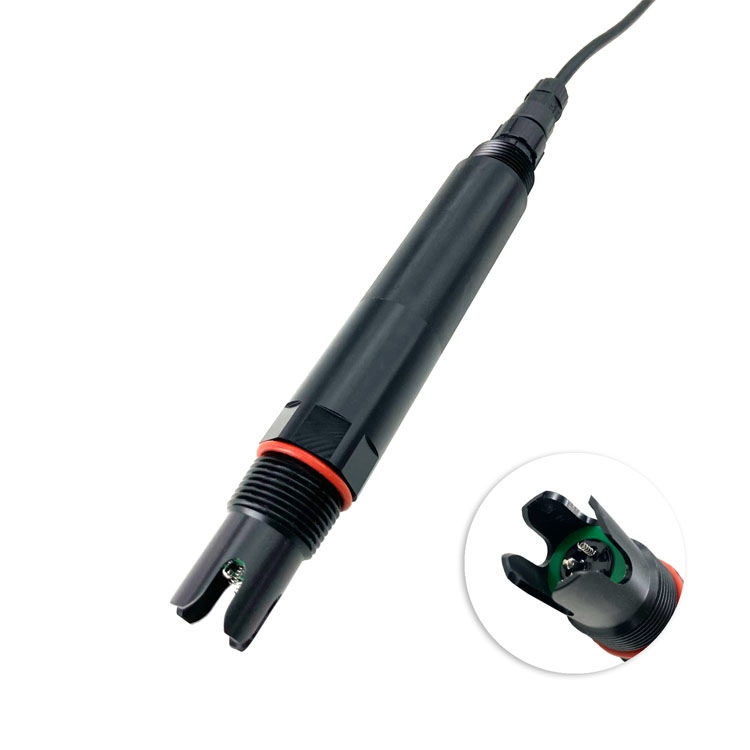
A booster-pump controller already handles pressure and pump duty. Adding a water-quality value does not automatically turn it into a disinfectant controller. Identify whether the project needs operator notification, retained trends or automatic equipment action. The last option requires a separate control design appropriate to the water system.
Do not infer chlorine from an unrelated channel. A suspended-solids probe measures an optical particle response, not disinfectant concentration. Clear-looking water, a low solids indication and a normal chlorine value are different observations; none should be assigned another's name in a PLC tag list.

| Item | NBL-WQ-CL specification | Integration consequence |
|---|---|---|
| Principle and range | Constant-voltage method; 0–2.000 mg/L HClO | Define the reported chlorine basis before matching a reference result or alarm limit. |
| Resolution | 0.001 mg/L | Display increments are not the measurement uncertainty. |
| Chlorine accuracy | ±5% or ±0.05 mg/L | Agree the applicable error basis and comparison procedure before setting tight pass limits. |
| Sample conditions | 30–60 L/h; pressure <0.1 MPa; pH 4–9 | Verify the matching flow cell, pressure reduction and actual sample supply. |
| Working temperature | 5–50 °C; automatic Pt1000 compensation | Do not treat temperature compensation as pH compensation. |
| Supply and consumption | 12–24 VDC ±10%; 0.2 W at 12 V | Size supply and cable voltage drop for the installed circuit. |
| Interface | RS485 Modbus RTU | Confirm the PLC serial port and register interpretation. |
| Construction | POM and PTFE; IP68 probe; standard 5 m cable | Protect cabinet entries and verify any cable extension and jacket requirements. |
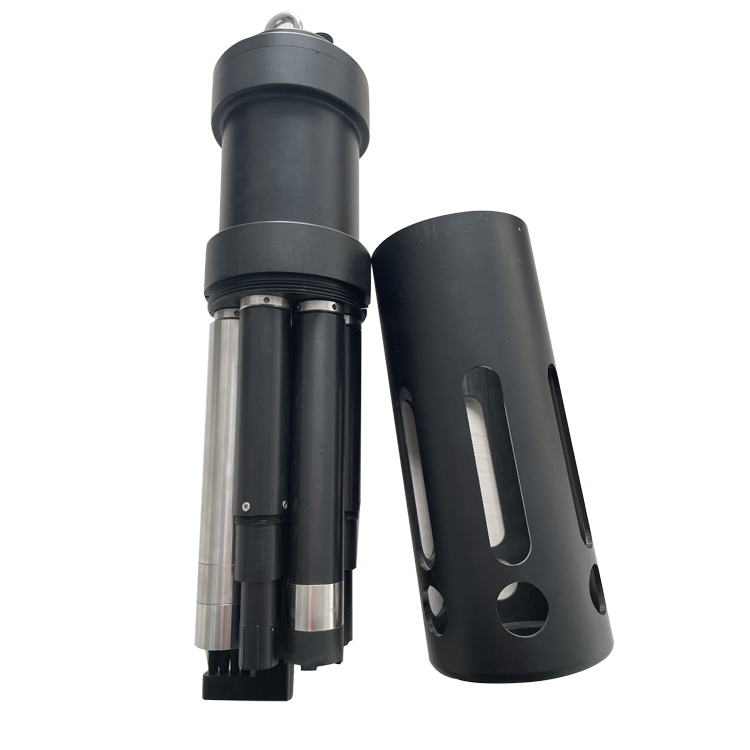
The multiparameter assembly is a different device with an ordered module list. A generic protocol field labelled chlorine does not prove that a chlorine module is fitted or that its hydraulic conditions match the base CL. Confirm hardware and method rather than copying a tag from another installation.
| Condition | What the operator should see | Control-design question |
|---|---|---|
| Fresh value with acceptable sample conditions | Concentration, unit, point identity and observation time | Does the value meet the site's approved operating logic? |
| Insufficient or lost sample flow | Sample unavailable or invalid, using a separately specified flow check | What action is permitted without a representative sample? |
| Modbus timeout | Communication fault and age of the last valid observation | How long may an old value remain available, and for what purpose? |
| Probe activation, cleaning or reference work | Identified service state | Which automatic functions need an approved temporary mode? |
A flow switch or flow measurement is an additional panel function, not a diagnostic automatically provided by the chlorine electrode. Specify it where sample validity is needed for control. Preserve the last value for investigation if useful, but show its age and do not keep presenting it as a fresh observation.
Record pH when it matters to interpreting the chlorine result. Free chlorine comprises hypochlorous acid and hypochlorite under normal water-treatment conditions, whereas the CL specification states HClO. Establish a suitable comparison or validated conversion before matching it to a differently defined result. Do not apply an unexplained multiplier merely to make two instruments agree.
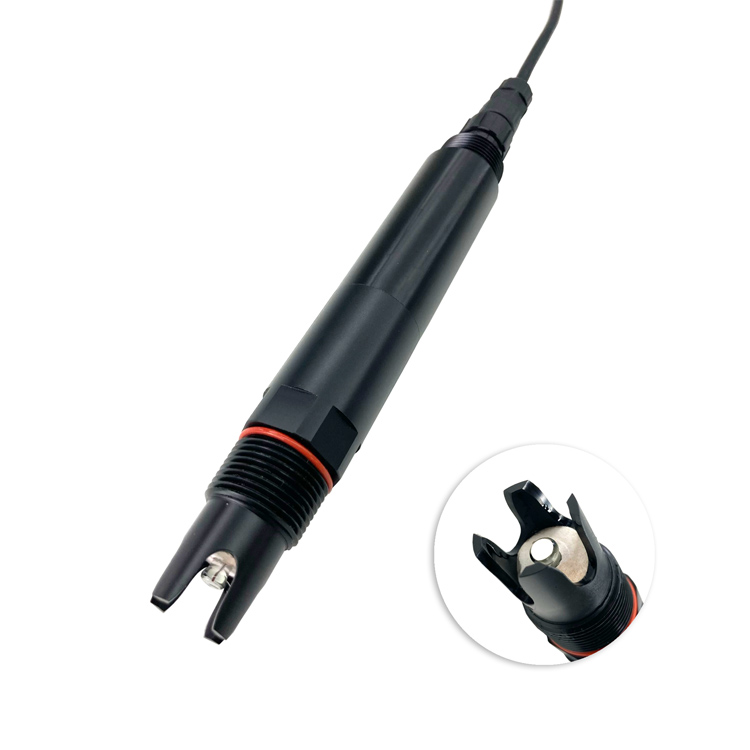
The base CL uses a default 9600 bps, no parity, eight data bits and one stop bit. Its measurement block beginning at 0x0000 contains four 16-bit values: chlorine value, its decimal position, temperature value and its decimal position. Interpret the value with its decimal-position field instead of assuming a fixed floating-point format.
Test the exact PLC implementation using a recorded response from the installed instrument. Confirm engineering units, point labels, timeout handling and timestamps in historical storage as well as the display. A gateway may provide remote upload, but the sensor's RS485 interface does not itself deliver internet connectivity or operator messages.
A low residual indication can arise from a genuine change, incorrect sample conditions or an unsuitable comparison basis. Automatic dosing must therefore not be specified as an unqualified instruction to increase output whenever the displayed number falls. The responsible control engineer should establish sample-validity requirements, equipment limits, permissives and manual operation for the actual installation.
Keep unrelated process measurements separate. A dissolved oxygen probe is not a backup chlorine detector. If both are present, name their independent duties. Check alarm and interlock logic using an approved simulation or test arrangement, not by deliberately degrading water supplied to users.
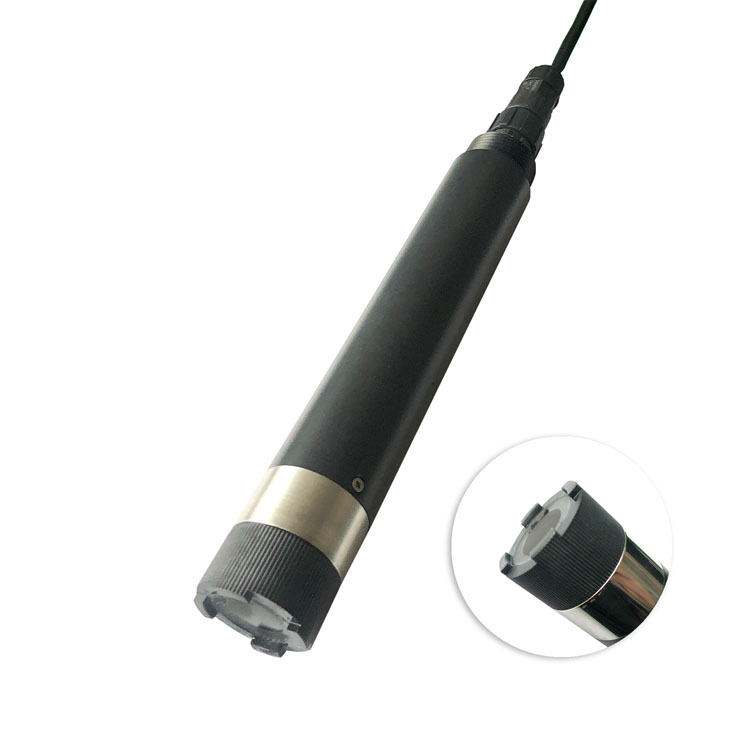
A turbidity channel can support a separate operational warning, but it must retain its own sample-validity and range checks. The immersion TS-408-S and flow-through TSA-4 are different arrangements; choose according to the actual water and sample panel, not simply a shared RS485 label. Provide NiuBoL with the PLC model, chlorine reporting basis, sampling layout and required operating states for an integration review.
No. The specified basis is HClO. Establish the required analyte and reference method before assigning the platform label or comparing it with total or free chlorine results.
Do not assume it does. If flow validity is required, provide and test a suitable separate panel input. A responding Modbus device can still be exposed to stagnant water.
No. Preserve the distinction between a measured zero and unavailable data. The controller's response to a failed channel must be designed and tested separately from its concentration limit logic.
The base CL is specified with RS485 Modbus RTU. Use a compatible serial acquisition arrangement or assess an explicitly ordered analog-capable configuration; do not infer analog output from a different model.
Include the existing PLC and available ports, sample pressure and flow, required chlorine basis, alarm destination and whether automatic dosing is included. Supply the existing point names so the new channel can be integrated without confusing older records.
Reliable pump-room integration depends on knowing when the chlorine value is usable, not only whether a number is received. Match the chemical basis, engineer the sample path and pass validity information into the PLC. Verify any automatic action as a separate control function before relying on it in operation.
Prev:Secondary Water Supply Online Monitoring: Turbidity and Chlorine Sampling
Next:Wastewater Online Monitoring System Equipment by Treatment Stage
Related recommendations
Sensors & Weather Stations Catalog
 Agriculture Sensors and Weather Stations Catalog-NiuBoL.pdf
Weather Stations Catalog-NiuBoL.pdf
Agriculture Sensors Catalog-NiuBoL.pdf
Water Quality Sensor Catalog-NiuBoL.pdf
Related products
 Combined air temperature and relative humidity sensor
 TDR Soil Moisture & Temperature Sensor for irrigation| RS485 |4-20mA| NBL-S-THR
 Soil pH sensor RS485 soil Testing instrument soil ph meter for agriculture |NBL-S-PH
 Wind Speed sensor Output Modbus/RS485/Analog/0-5V/4-20mA
 Tipping bucket rain gauge for weather monitoring auto rainfall sensor RS485/Outdoor/stainless steel
 Pyranometer Solar Radiation Sensor 4-20mA/RS485


Screenshot, WhatsApp to identify the QR code
WhatsApp number:+8615367865107
(Click on WhatsApp to copy and add friends)

