





— Blogs —
—Products—
 Consumer hotline +8618073152920
 WhatsApp:+8615367865107
Address:Room 102, District D, Houhu Industrial Park, Yuelu District, Changsha City, Hunan Province, China
Product knowledge
Time:2026-07-23 16:04:58 Popularity:331
COD projects are often priced as hardware only, then delayed by calibration, cleaning and interpretation issues. The final invoice is usually shaped by what was not written in the quotation.
Use this checklist to separate hardware capability from operational cost before purchase, then ask suppliers for model-specific scope and service limits.
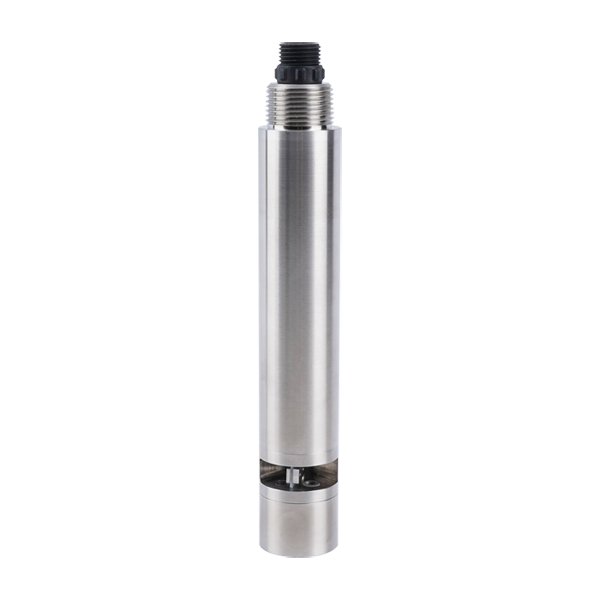
Range and optical design are the first differences. If project wastewater is stable, a simpler range may be enough.
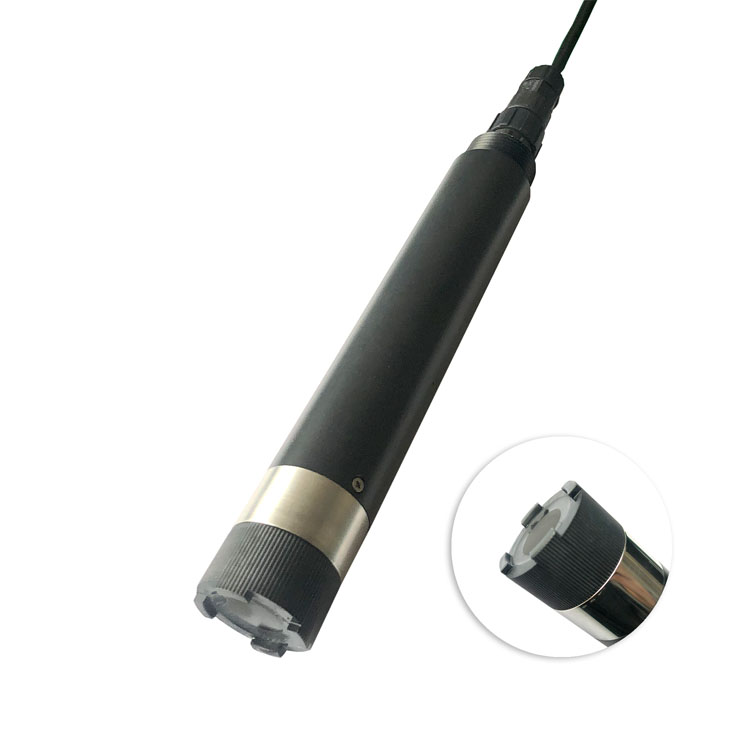
When influent variation is large, choose a model with wider range and stronger compensation logic even if unit price is higher.
For most wastewater applications, COD is not a standalone point. It is usually paired with turbidity and temperature for interpretation.
This pairing should be designed in procurement, not after installation, because it affects register set and alarm definition.
Ask for calibration standard handling, acceptance sample range and maintenance service windows in the same contract. Otherwise quote comparison is not real procurement comparison.
If COD and trend quality is the only issue, upgrade one core point first. If compliance reporting is also weak, expand the full stack earlier.
| Specification | Value | Project meaning |
|---|---|---|
| Measurement principle | Dual wavelength UV absorption | Common for online COD trending |
| Measurement range | Typical 0?00 mg/L and higher models by selection | Choose range by influent variability |
| Resolution | 0.1 mg/L | Fine step for process trend quality |
| Accuracy | Typically around +/-5% F.S. | Supports operation tuning and compliance checks |
| Output | RS485 Modbus RTU | Easy integration with PLC, DCS and software |
| Environment | 0~45 degC, pressure <0.1 MPa | Typical wastewater in-service conditions |
| Power | 12~24 VDC, about 0.3W | Low energy demand for remote cabinets |
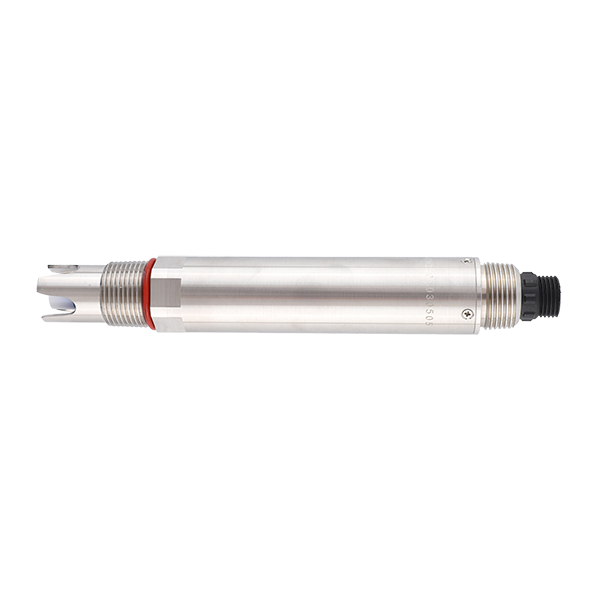
Field environment challenge: Single-point requirement but periodic quality swings.
System integration plan: Choose a robust range model and schedule monthly joint checks with offline samples.
User value: Reduces mismatch between online trend and manual reports.
Field environment challenge: High variation and high uptime demand.
System integration plan: Use RS485 monitoring in one bus with clear exception handling and spare planning.
User value: Improved alarm confidence and clearer production handover evidence.
Field environment challenge: Different media and inconsistent operator maturity.
System integration plan: Keep interface standards fixed and train local teams on same register and maintenance policy.
User value: Lower commissioning variance across sites.
COD optical systems are sensitive to flow changes, so integration should explicitly map flow profile to acquisition frequency and alarm hold time.
Resolve register conflict, bus noise, and sample conditioning timing before commissioning; these three points drive most early project delays.
At handover, keep one register dictionary and one wiring map per channel owner, and include sample trace examples for each line.
| Decision point | Practical recommendation |
|---|---|
| Measurement range | Match range to influent load rather than catalog standard |
| Optical approach | Choose UV method if maintenance intervals are constrained |
| Communication | RS485 as primary data path for integration and alarms |
| Service terms | Quote calibration and spare parts separately from unit price |
| Acceptance | Define sample protocol at identical flow and time points |

Select points by process dynamics, not by installation convenience. COD in one point may not describe upstream variation if residence time is short.
Ask for lamp life, optical path and cleaning method assumptions in writing. UV module reliability changes maintenance cost more than first price.
Collect a short parallel test period with manual reference values before acceptance signing; include deviation range and correction policy in the protocol.
Compare COD proposals by process representativeness, not only response time. If representativeness is weak, stable response can still mislead operations.
Require one scenario benchmark from each major influent state. This reveals sampling assumptions and cleaning burden before final award.
For compliance projects, require documented retention windows and report format early.
| Checkpoint | Required check | Buyer decision |
|---|---|---|
| Pre-award | Sample path and UV assumptions | Choose feasible installation mode |
| Commissioning | Reference cross-check | Release alarm confidence |
| After 30 days | Drift trend and cleaning burden | Confirm maintenance feasibility |
A common pitfall is comparing base price after ignoring consumables and reagent handling. Add these to your scoring so the bid stays realistic.
For multi-site deployment, standardize the same baseline spec and allow optional variants only by site risk.
For COD optical monitoring, clarify how this affects implementation scope before award. In the first 30 days, teams often lose time on retests. In COD analyzer projects, confirm standard procedures and transmission reliability before purchase order release..
Define a pre-award acceptance protocol now: who validates sample chain-of-custody, who approves calibration with mixed standards, who checks reagent consumption tracking, and who confirms RS485 frame response.
For COD projects, separate ownership for sampling logistics, reagent management, and bus integration to prevent fragmented decisions by email.
| Check item | Owner |
|---|---|
| Reference method | Project quality lead |
| RS485 mapping | Integrator |
| Installation constraints | Site contractor |
| Data handover | Purchasing or PM |
Now evaluate COD optical monitoring by risk and recurrence rather than headline model price. Track three points: sampling validity, analytics stability, and maintenance response time..
Use a scorecard weighted for signal quality, maintenance visibility, and spare-path readiness.. A lower analyzer price is not a win if no spare path is defined for drift and failures..
Keep a written decision log for the COD analyzer chain so later requests for reagent extension, cleaning interval, or software patch scope can be reviewed against the original bid basis.
| Decision line | What to reject | What to accept |
|---|---|---|
| Protocol certainty | No Modbus/RS485 examples | Working map in annex |
| Maintenance clarity | No cleaning cycle | Explicit intervals |
| Acceptance | Only sample value | Acceptance and report method |
| Support | No service boundary | Defined scope and scope-out items |
For COD optical monitoring, finalize a commissioning playbook that maps action by timeline, not only by deliverable list. The plan should map start day, first week, and first month validation activities..
Use this plan to validate that each proposal shows measurable improvement at the site.. If one key result cannot be measured under practical process conditions, the proposal should be trimmed before quotation review..
When this stage closes, include a 30-day verification review and a 90-day performance review against threshold evidence and backup replacement readiness.
This stage should also define expansion limits and maintenance assumptions, because hidden scope drift usually appears during the first expansion request.
| Review interval | Main output |
|---|---|
| Commissioning | Baseline acceptance and threshold verification |
| 30-day | Cleaning/drift trend and false alarm rate |
| 90-day | Operational stability and spare utilization |
| Handover | Final close decision and optimization list |
For COD optical monitoring, run a pre-commissioning simulation in parallel with contract signing. sample-to-cloud response, alarm routing and threshold update flow before final approval.
This simulation step is often skipped in smaller projects. For COD deployment, this simulation usually lowers late-stage change because parameter and response gaps are detected before interface freeze.
Demand a change-ticket template and a training plan that covers operator handover.. This lowers post-warranty ambiguity and keeps maintenance actions traceable.
| Milestone | Evidence | Decision owner |
|---|---|---|
| Dry test | Wiring and register continuity | PM |
| Wet test | Trend stability and alarm logic | Project lead |
| Post-startup | Service call count and false alarm rate | Site owner |
After the deployment plan is fixed for COD optical monitoring, make extension logic explicit in the same bid package. Write down the trigger table for scope change versus support scope in this stage..
When extension scope is explicit, each follow-up request is easier to review and less likely to create disputes over whether a change is within contract scope.
Set six-month quality review rules here so expansion is based on verified data behavior.. Without this, teams cannot verify system value after short-term operation.
| Six-month review item | Acceptance sign | Owner |
|---|---|---|
| Maintenance trend | Threshold within expected range | Operations owner |
| Spare and consumables | Usage and lead time trend | Purchasing |
| Model drift | Calibration record analysis | Integrator |
| System health | Missing data and alert latency | PM |
A: They can, but only with clear scope split and maintenance responsibility. Quote separately for core COD point and auxiliary points with clear interface definitions.
A: The first technical risk is usually sample conditioning and reactor condition, not sensor optics alone. Validate sample representativeness before comparing vendor prices.
A: Dual wavelength often improves robustness, but verify maintenance requirement and replacement interval; the extra channel is not always required for your process.
A: Sequence should be sample path, sample handling, sensor installation, communication verification, then threshold test. Reversing order hides acceptance problems.
A: Use normalized cost per active measurement hour and maintenance burden, not just quoted price. Projects fail when hidden maintenance is ignored.
A: Compare by same sample path design, same data output logic, same acceptance protocol, then finalize price comparison. Use this test in parallel with the target method for a fixed period; do not accept a supplier who cannot provide historical reference data.
A: Lamp condition is visible in test reports. Ask for lamp life, fouling method and replacement schedule as explicit contractual clauses.
A: Parallel operation with reference method for a stable period is the only practical test that confirms output behavior under real process load.

Ask for raw trend sample, raw register example, and one known concentration point. If these are clear, integration risk becomes manageable.
Yes, if the support scope is also clearly matched. If cheaper only on paper and weak in maintenance, operating cost usually dominates quickly.
COD monitoring budgets are usually underestimated because optical drift and maintenance scope are treated as optional.
Check reactor conditions, UV source maintenance cycle, sample handling, and software retention together with the sensor model.
Procurement documents should define who owns acceptance samples, register mapping and response alarm policy. Integration risk drops sharply when these three points are explicit.
Prev:Aquaponics Sensors: Build a Practical pH, DO, EC, Temperature Stack
Next:Water Quality Sensor Procurement Guide: 12 Questions Before You Send RFQ
Related recommendations
Sensors & Weather Stations Catalog
 Agriculture Sensors and Weather Stations Catalog-NiuBoL.pdf
Weather Stations Catalog-NiuBoL.pdf
Agriculture Sensors Catalog-NiuBoL.pdf
Water Quality Sensor Catalog-NiuBoL.pdf
Related products
 Combined air temperature and relative humidity sensor
 TDR Soil Moisture & Temperature Sensor for irrigation| RS485 |4-20mA| NBL-S-THR
 Soil pH sensor RS485 soil Testing instrument soil ph meter for agriculture |NBL-S-PH
 Wind Speed sensor Output Modbus/RS485/Analog/0-5V/4-20mA
 Tipping bucket rain gauge for weather monitoring auto rainfall sensor RS485/Outdoor/stainless steel
 Pyranometer Solar Radiation Sensor 4-20mA/RS485

Screenshot, WhatsApp to identify the QR code
WhatsApp number:+8615367865107
(Click on WhatsApp to copy and add friends)

