





— Blogs —
—Products—
 Consumer hotline +8618073152920
WhatsApp:+8615367865107
Address:Room 102, District D, Houhu Industrial Park, Yuelu District, Changsha City, Hunan Province, China
Product knowledge
Time:2026-06-06 09:36:39 Popularity:315
Quick Answer: Online DO meter remote monitoring needs a trustworthy measurement time, not just a recently refreshed screen. Keep sensor acquisition, local storage and cloud receipt distinct. A NiuBoL RS485 DO probe can supply oxygen data to a logger or PLC, but buffering, telemetry, local alarms and recovery after an outage depend on the rest of the installed system.
The first time is when the logger acquires a measurement. The second is when it stores or processes that observation locally. The third is when a remote platform receives it. These can be close during normal operation and widely separated after a communications interruption.
Suppose a station stores a reading at 02:00 and uploads it at 02:20 after a connection returns. A dashboard should retain 02:00 as the observation time. Displaying the upload time alone makes old water conditions look current. This example describes a data-handling requirement, not a built-in feature of every logger.
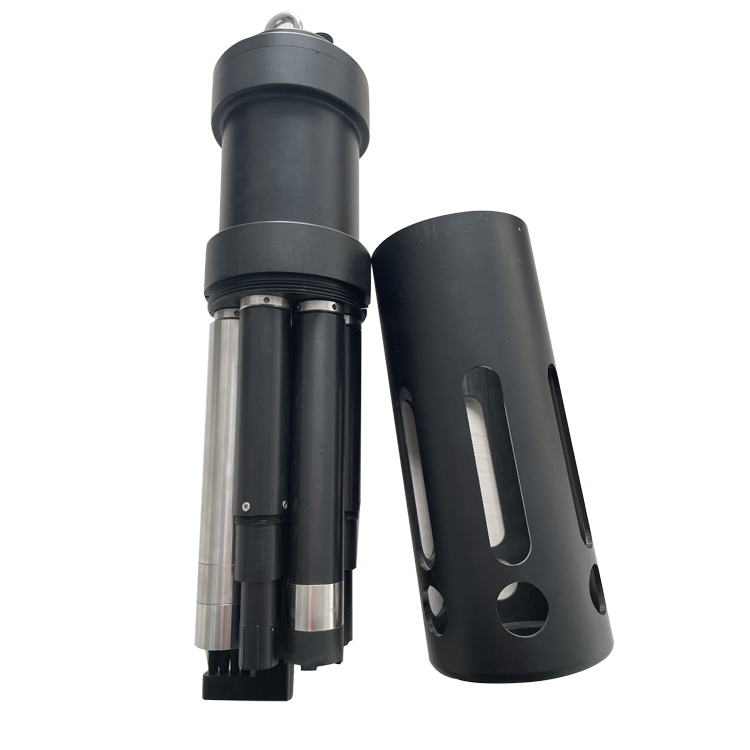
A multiparameter assembly, illustrated above, can supply several channels at one point. Determine whether the receiving system time-stamps each channel's successful acquisition. A fresh temperature message should not make a failed oxygen channel appear fresh merely because they share a station identifier.
For a wastewater aeration basin, a local control loop may need to operate independently of a remote dashboard. For an aquaculture pond, warning and intervention arrangements should follow the farm's approved response plan. For an environmental station, preserving observations through an outage may be the main requirement. These duties call for different equipment and acceptance tests.
| Function | What to establish |
|---|---|
| Sensor acquisition | Does the local master continue polling the correct DO channel when the external network is unavailable? |
| Local recording | Is storage included, what is retained, and what happens when capacity is reached? |
| Local alarm or control | Which device makes the decision, and what happens when the sensor itself becomes invalid? |
| Remote transmission | How are missed records transferred later, and how are old records distinguished from current conditions? |
| Return to service | Are duplicate records, time changes and alarm recovery handled without silently overwriting history? |
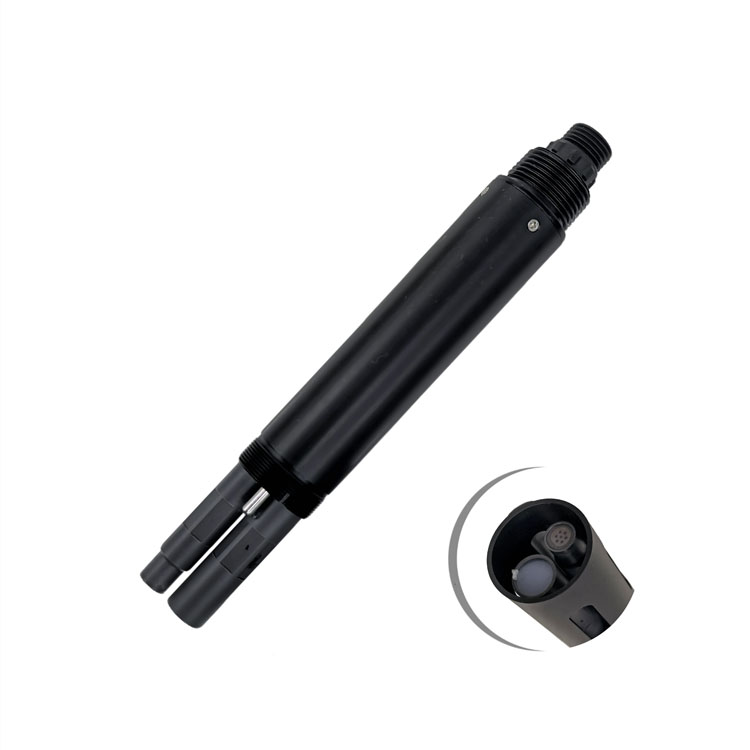
The ammonia nitrogen probe below is another possible station channel. Adding it to the bus does not establish that the logger supports its registers, sample timing or diagnostic state. List each measurement and its acquisition behavior separately.
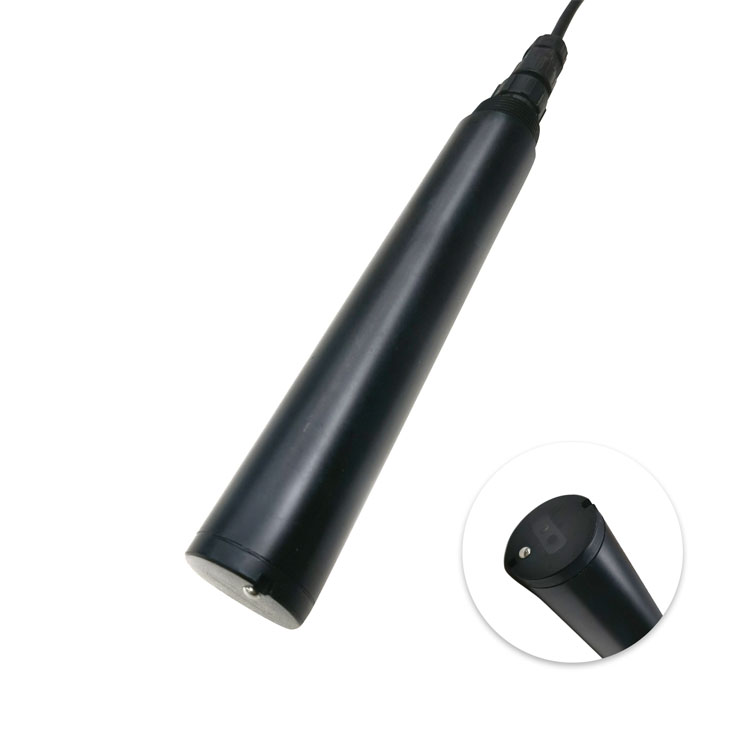
The NiuBoL NBL-WQ-DO-4A uses fluorescence measurement. Its sensor specifications are separate from logger storage, gateway transmission and the enclosure's power budget.
| Item | NBL-WQ-DO-4A |
|---|---|
| Range / resolution | 0-20.00 mg/L and 0-200% saturation; 0.01 mg/L; temperature 0.1 degrees C |
| Accuracy | +/-2% of reading; temperature +/-0.3 degrees C |
| Response | T90 below 30 s; sampling and data transmission delays are additional |
| Compensation | Pt1000 temperature compensation; configurable salinity correction |
| Output | RS485 Modbus RTU; optional 4-20 mA |
| Supply / consumption | 12-24 V DC; 0.2 W at 12 V |
| Working conditions | 0-50 degrees C; pressure at or below 0.2 MPa |
| Construction | POM and ABS/PC alloy; IP68 |
| Installation scope | Confirm mounting, cable length, jacket suitability and site access for the ordered assembly |
The DO probe does not independently measure salinity or provide a cellular connection. Confirm the salinity input and the logger/gateway functions explicitly. Where another sensor has a different supply tolerance or cleaning load, include that requirement rather than multiplying the oxygen probe's 0.2 W figure by the channel count.
Use the supplied Modbus map to establish the oxygen register, format, byte order and unit. Compare a stable local reading with the PLC, stored record and dashboard. A number that looks reasonable is insufficient if it is scaled incorrectly or if percent saturation is displayed as mg/L.
Assign an explicit maximum data age for each operating use. A trend review and an automatic control decision may have different tolerances. When the age is exceeded, show a stale or invalid state; do not substitute zero or continue displaying the last value as a new measurement.
Check sensor power cycling separately from telemetry failure. Restored communications does not establish that the optical cap, water contact and compensation settings are ready for use. The optical DO startup checks address that measurement recovery.
The turbidity probe below supplies a different optical measurement. Its presence can add water-condition context, but a successful NTU update must not clear a DO communication fault.
External connection interrupted: keep the local station powered, interrupt telemetry using an authorized test and verify which acquisition, storage and local functions continue. After reconnection, check record times and completeness rather than only the return of a live icon.
DO acquisition interrupted: simulate the agreed sensor failure condition and confirm the timeout, local handling and remote invalid indication. This test should not be confused with a genuine low-oxygen condition.
Station power restored: verify the actual restart sequence, settings, clock and measurement validity. Check whether stored records survive and whether control is resumed only under the authorized conditions. Specify these functions in the logger and controller scope; they are not guaranteed by the sensor's Modbus interface.
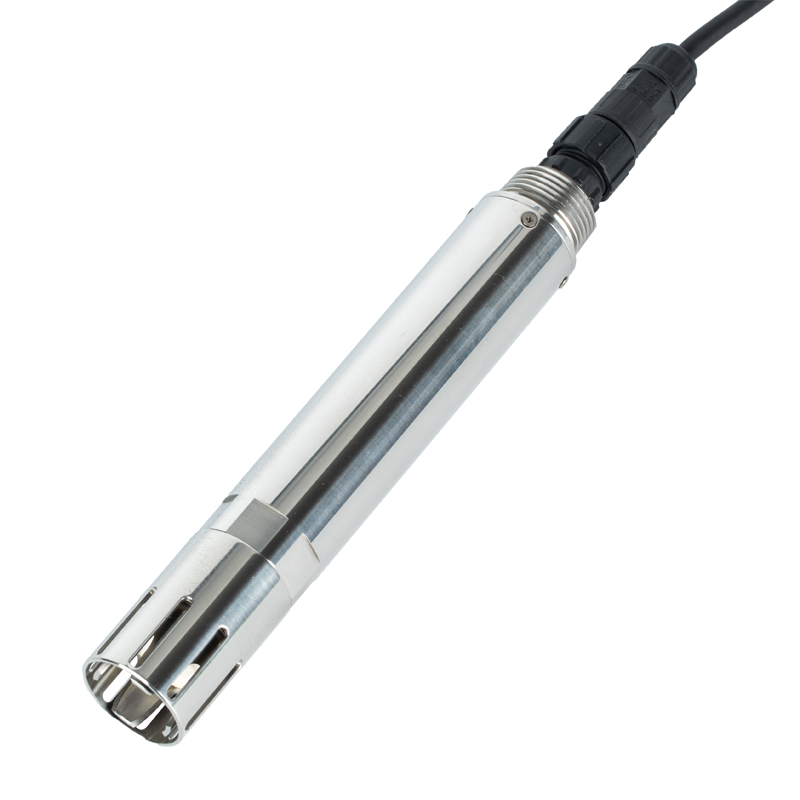
For an enquiry, provide the required local function, acceptable data age, expected outage duration, storage requirement and existing controller interface. Include water conditions and model details for the sensing channel. Separate electrodes, such as the assembly below, retain their own service and restart requirements.
No. Compare the acquisition time and validity state, not only the page or upload time. A platform can refresh while displaying an old stored observation.
Do not assume it. Specify storage and retransmission in the logger or gateway configuration and test the supplied equipment.
It can reduce acquisition delay but cannot remove sensing response or sample-exchange delay. Choose the recording and polling intervals for the actual task.
Only where the project's risk assessment and response requirements permit that arrangement. Define behavior during network loss and invalid sensor data before relying on remote commands.
Inspect time-stamped local and remote records, missing/duplicate handling, alarm states and any equipment response. A screenshot showing reconnection alone does not demonstrate those functions.
Online DO meter remote monitoring works when the installed system preserves measurement identity, time and validity through normal operation and outages. Select the NiuBoL sensing channel for the water duty, then verify logger, gateway and control functions against explicit tests.
Prev:Industrial pH Electrode Maintenance and RS485 Integration
Next:Suspended Solids Sensor for Rivers: Reading Sediment Events
Related recommendations
Sensors & Weather Stations Catalog
 Agriculture Sensors and Weather Stations Catalog-NiuBoL.pdf
Weather Stations Catalog-NiuBoL.pdf
Agriculture Sensors Catalog-NiuBoL.pdf
Water Quality Sensor Catalog-NiuBoL.pdf
Related products
 Combined air temperature and relative humidity sensor
 TDR Soil Moisture & Temperature Sensor for irrigation| RS485 |4-20mA| NBL-S-THR
 Soil pH sensor RS485 soil Testing instrument soil ph meter for agriculture |NBL-S-PH
 Wind Speed sensor Output Modbus/RS485/Analog/0-5V/4-20mA
 Tipping bucket rain gauge for weather monitoring auto rainfall sensor RS485/Outdoor/stainless steel
 Pyranometer Solar Radiation Sensor 4-20mA/RS485


Screenshot, WhatsApp to identify the QR code
WhatsApp number:+8615367865107
(Click on WhatsApp to copy and add friends)

