





— Blogs —
—Products—
 Consumer hotline +8618073152920
 WhatsApp:+8615367865107
Address:Room 102, District D, Houhu Industrial Park, Yuelu District, Changsha City, Hunan Province, China
Product knowledge
Time:2026-07-28 10:07:51 Popularity:254
An optical dissolved oxygen sensor is usually selected when the project needs continuous data with lower routine maintenance than membrane-type electrochemical probes. The method is attractive in aquaculture ponds, aeration basins, river stations and remote water quality cabinets where operators cannot service the probe every few days.
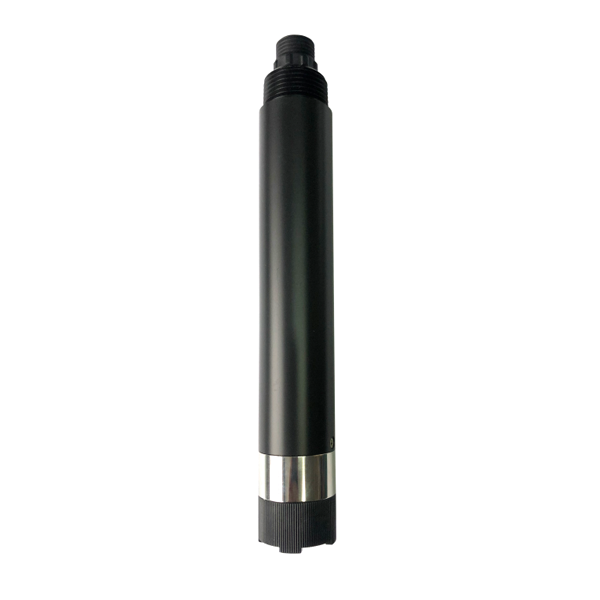
The buyer still has to check the site. Fluorescence dissolved oxygen measurement does not remove installation problems. Fouling, air bubbles, wrong depth, strong turbulence, damaged caps and poor cable protection can still produce data that looks digital but is not usable for process decisions.
Optical DO sensors use fluorescence quenching rather than oxygen consumption at a membrane. That is why they do not need electrolyte replacement in the same way as many older electrochemical probes. In low-flow tanks or ponds, this matters because the sensor does not depend on a strong sample flow across a membrane.
For aquaculture, continuous DO data is often tied to aerator control and night-time alarms. For wastewater, it supports aeration management and process diagnosis. For river monitoring, it gives trend data that manual sampling cannot capture during rainfall, pollution events or temperature shifts.
| Decision item | Optical DO advantage | Site condition to verify |
|---|---|---|
| Low-flow water | Does not consume oxygen during measurement. | Avoid stagnant pockets and trapped bubbles. |
| Maintenance route | No routine electrolyte refill for typical optical designs. | Check optical cap cleaning and replacement interval. |
| Digital output | RS485 Modbus RTU supports multi-point logging. | Confirm address plan and cable distance. |
| Long-term trend | Stable for continuous monitoring when cleaned correctly. | Keep calibration and cleaning records. |
An optical DO sensor is not a license to ignore the sampling point. If the probe is installed next to an aerator outlet, readings may represent local mixing instead of the pond or basin. If it is too close to sludge, biological growth can cover the sensing surface and flatten the trend.
High-pressure pipelines, aggressive solvents or locations with frequent mechanical scraping need extra review. Some sites also require a flow-through cell or protective holder. The sensor choice should follow the mechanical environment as much as the measurement principle.
For project documents, write the expected cleaning interval into the operation plan. A project that has no named maintenance owner will eventually treat bad readings as a sensor fault, even when the real problem is fouling.
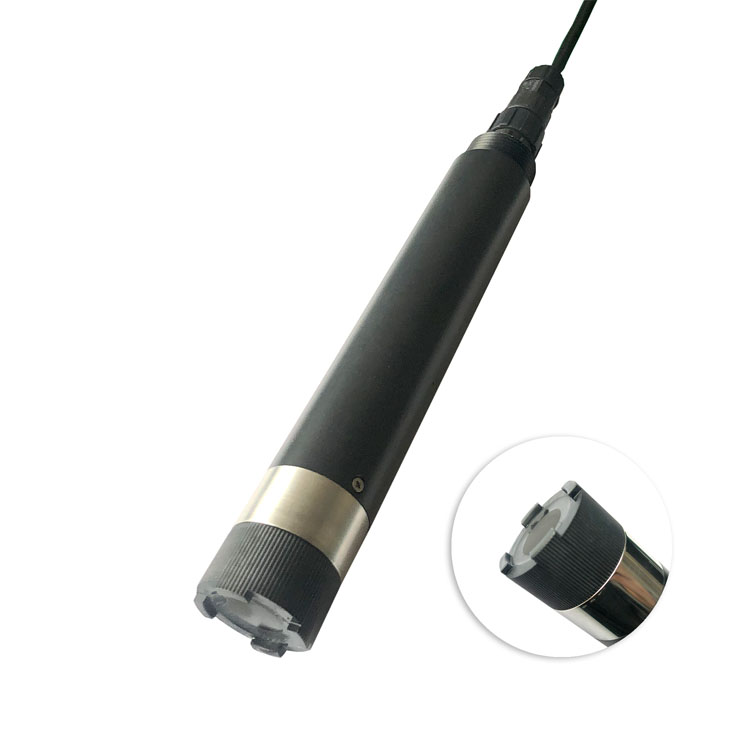
In a NiuBoL water quality system, the dissolved oxygen probe is the field measurement point. It can connect to a controller, data logger, PLC, RTU or IoT gateway depending on the project. RS485 and Modbus RTU are common choices for digital projects because DO, pH, EC and turbidity can share the same communication architecture.
For an integrator, the Modbus register map, power supply, cable shielding and grounding plan should be requested before cabinet assembly. This is especially important where aerators, pumps and VFDs create electrical noise.
| Integration field | Recommended buyer action | Reason |
|---|---|---|
| Power supply | Confirm voltage and current budget from the selected datasheet. | Prevents undersized field power. |
| Communication | Ask for RS485 Modbus RTU settings and register map. | Reduces commissioning time. |
| Mounting | Specify immersion depth, holder material and cleaning access. | Protects the optical window. |
| Alarm logic | Define low DO thresholds by species or process stage. | Avoids generic alarms that operators ignore. |
For fish or shrimp farming, the main concern is stable low-range response during night and early morning. A farm buyer should describe pond depth, aerator layout, salinity, power availability and whether the probe will be fixed or moved between points.
For municipal wastewater, the question is usually aeration control and treatment stability. The DO sensor must survive fouling and cleaning. Cable protection and bracket strength matter because basins are not laboratory environments.
For river and lake stations, buyers often combine DO with pH, conductivity, turbidity, temperature and ammonia nitrogen. A multi-parameter package simplifies power, communication and maintenance planning, especially when the station is solar powered or maintained by a small team.

The quotation changes when the project adds holders, junction boxes, controllers, solar power, data transmission, extra cable, spare optical caps, calibration accessories or site documentation. Asking for a bare optical DO sensor price is useful only at the first screening stage.
A practical RFQ should include water type, expected DO range, installation depth, cable length, output signal, communication protocol, quantity, documentation needs and whether NiuBoL should quote a single probe or a complete monitoring node.
In aquaculture farms, optical DO is usually purchased because the reading is tied to risk. Low dissolved oxygen during the night can harm stock before a manual inspection happens. The sensor should be installed at a depth that represents fish or shrimp activity, not at the surface where aeration looks better than the pond average.
In wastewater aeration basins, the same optical dissolved oxygen sensor has a different job. It helps operators understand whether aeration is too low, excessive or unstable. The buyer should define whether DO is only displayed, used for alarms, or connected to aeration control. Those three uses have different acceptance requirements.
Remote river stations need a conservative design. Cleaning access, cable protection, solar power, anti-fouling and data transmission should be discussed together. A probe-only purchase often leaves these details to the installer, which increases site work.
| Application | Engineering focus | RFQ detail to add |
|---|---|---|
| Aquaculture pond | Low oxygen alarms and representative depth | Pond depth, aerator layout, species and alarm threshold |
| Aeration basin | Fouling, bracket strength and process trend | Basin type, cleaning access and controller output |
| River station | Power, telemetry and anti-fouling | Solar condition, communication coverage and visit interval |
Ask for the wiring diagram, Modbus settings, calibration procedure, cleaning instruction and spare-part recommendation with the shipment. For integrators, these documents are as important as the sensor because they allow panel assembly and software mapping before the field team arrives.
If the optical DO sensor is part of a larger NiuBoL package, request a parameter list with addresses and units for every probe. This prevents duplicate RS485 addresses and inconsistent units on the dashboard.
Optical DO is suitable for project owners who need continuous trend data, remote alarms and lower routine consumable work. It is also suitable for integrators who want digital water quality nodes with pH, EC, turbidity and ammonia on the same platform.
It is less suitable for a buyer who cannot clean the probe, cannot protect the cable or only needs an occasional dissolved oxygen spot check. In that case, a portable meter or a simpler measurement plan may be more practical than a permanent online point.
For procurement, separate the sensor decision from the station decision. A probe-only order may be enough for an experienced panel builder. A farm or municipal buyer may need probe, bracket, controller, telemetry, power and spare cap planning as one scope.
Most dissolved oxygen disputes are easier to solve when the site has photos, cleaning records, calibration records and controller screenshots. Before requesting warranty support, the operator should check whether the optical window is clean, the cable is dry and secured, and the controller receives stable data.
For export projects, ask for manuals and wiring labels with the shipment. A technician who receives ten probes at different stations should not guess cable cores or Modbus addresses on site.
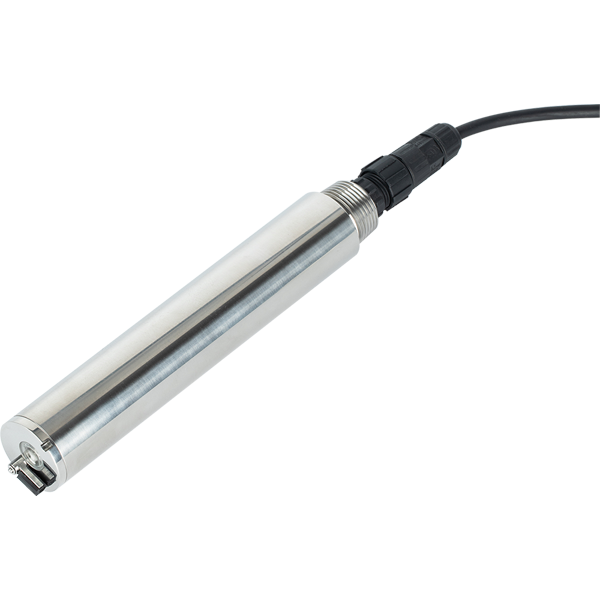
Q1: What is an optical dissolved oxygen sensor used for?
A: It is used for continuous DO monitoring in aquaculture, wastewater aeration, river stations and water treatment systems where trend data, alarms and lower routine maintenance are more important than occasional manual readings.
Q2: How is an optical DO sensor different from an electrochemical DO probe?
A: Optical DO measurement uses fluorescence quenching and does not consume oxygen during measurement. Electrochemical probes often depend on membranes and electrolyte, so they may need more frequent consumable maintenance.
Q3: Does an optical dissolved oxygen sensor need water flow?
A: It does not need flow for oxygen consumption in the same way as many electrochemical probes, but the installation still needs representative water. Avoid dead zones, bubbles and positions too close to aerator outlets.
Q4: Can optical DO sensors connect to PLC or SCADA systems?
A: Yes, when the selected model provides RS485 Modbus RTU or analog output. The buyer should request the register map, baud rate, address settings, wiring diagram and scaling rules before panel commissioning.
Q5: What causes unstable DO readings in the field?
A: Common causes are biofouling, bubbles on the optical window, poor grounding, cable damage, wrong installation depth, rapid temperature changes and calibration records that do not match the site condition.
Q6: Is optical DO suitable for aquaculture ponds?
A: It is suitable when the probe is installed at a representative depth and cleaned on schedule. The buyer should define alarm thresholds by species, stocking density, temperature and aeration strategy.
Q7: What spare parts should be considered?
A: Ask about optical caps, protective guards, cables, holders and calibration accessories. Spare planning is important for remote ponds or stations where a replacement visit is costly.
Q8: What should be included in a project acceptance test?
A: Check readings in air or calibration condition, stable response after immersion, communication data at the controller, alarm triggering and a documented cleaning and calibration schedule.
Q9: When should a buyer choose a multi-parameter system instead of one DO probe?
A: Choose a multi-parameter system when DO decisions depend on pH, temperature, ammonia, conductivity or turbidity. The combined package simplifies wiring and gives better context for abnormal readings.
Q10: What information should be sent to NiuBoL for quotation?
A: Send application, water type, installation method, cable length, output requirement, quantity, power and communication plan, and whether the project needs a probe only or a complete monitoring package.
An optical dissolved oxygen sensor is a strong choice for continuous monitoring when the installation and maintenance plan are defined. Its value is not only lower consumable work; it is the ability to produce stable trend data that operators can act on.
For a precise NiuBoL quotation, provide the water body, mounting position, communication interface and maintenance expectation. Those details determine whether a single DO probe or a wider water quality monitoring package is the right scope.
Prev:What Determines pH Electrode Price? A Procurement Cost Breakdown
Next:Amperometric Chlorine Sensor Explained: Flow, pH and Calibration Requirements
Related recommendations
Sensors & Weather Stations Catalog
 Agriculture Sensors and Weather Stations Catalog-NiuBoL.pdf
Weather Stations Catalog-NiuBoL.pdf
Agriculture Sensors Catalog-NiuBoL.pdf
Water Quality Sensor Catalog-NiuBoL.pdf
Related products
 Combined air temperature and relative humidity sensor
 TDR Soil Moisture & Temperature Sensor for irrigation| RS485 |4-20mA| NBL-S-THR
 Soil pH sensor RS485 soil Testing instrument soil ph meter for agriculture |NBL-S-PH
 Wind Speed sensor Output Modbus/RS485/Analog/0-5V/4-20mA
 Tipping bucket rain gauge for weather monitoring auto rainfall sensor RS485/Outdoor/stainless steel
 Pyranometer Solar Radiation Sensor 4-20mA/RS485

Screenshot, WhatsApp to identify the QR code
WhatsApp number:+8615367865107
(Click on WhatsApp to copy and add friends)

