





— Blogs —
—Products—
 Consumer hotline +8618073152920
WhatsApp:+8615367865107
Address:Room 102, District D, Houhu Industrial Park, Yuelu District, Changsha City, Hunan Province, China
Product knowledge
Time:2026-08-23 09:08:00 Popularity:313
Quick Answer: Compare an optical dissolved oxygen sensor price for an aeration retrofit only after checking the low-DO accuracy requirement, existing controller input and safe removal arrangement. The probe quotation may exclude a transmitter, optical cap spare, holder or control-system work. A lower probe price is not a lower installed cost when those items still have to be supplied.
A wastewater plant replacing a failed oxygen probe often wants to retain its PLC, display and mounting assembly. Those retained components can reduce new hardware, but only if they are genuinely compatible. The existing transmitter may accept a manufacturer-specific probe signal rather than a general RS485 device.
Start with the duty of the point. Does it supply an operating trend, an alarm or a feedback value used by the blower control strategy? A continuous display and a dependable control input are not equivalent acceptance tests. Identify the concentration region where the measurement changes an operating decision before comparing price or headline resolution.
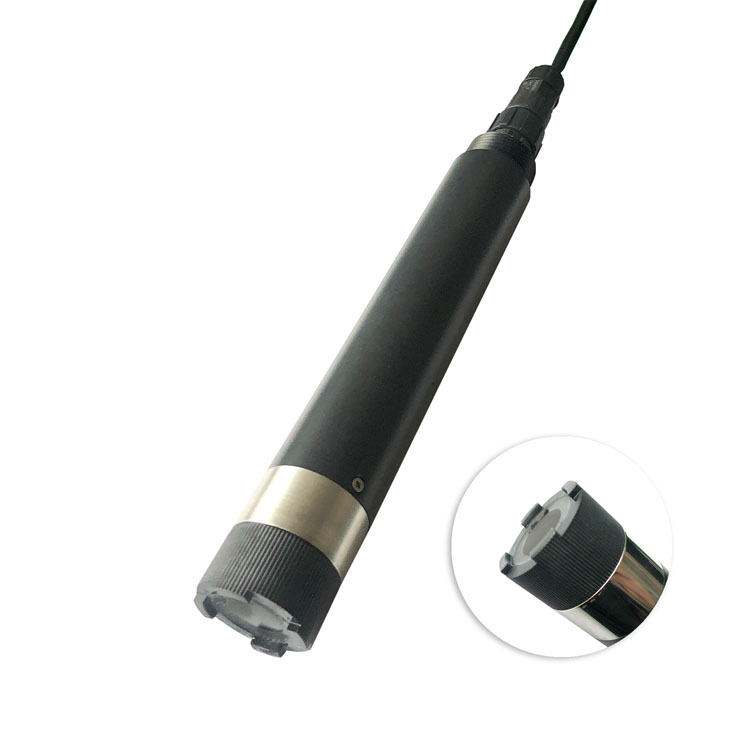
The NiuBoL NBL-WQ-DO optical probe uses fluorescence quenching and provides RS485 Modbus RTU. It measures oxygen without consuming it and does not require electrolyte. Those method characteristics remove some electrochemical service tasks, but the fluorescent cap, exposure and cleaning condition still need attention.
For the 0-20 mg/L NBL-WQ-DO configuration, the stated oxygen accuracy is +/-2% full scale. Two percent of 20 mg/L is 0.4 mg/L. That is different from 2% of a displayed reading. The 0.01 mg/L resolution does not mean that a 0.01 mg/L process change can be measured accurately.
For an illustrative operating value of 2.0 mg/L, 0.4 mg/L is 20% of that value. This arithmetic does not prescribe a target or predict the error at your plant. Compare the accuracy basis with the required control tolerance; display increments alone cannot establish suitability for the duty.
If the operating decision requires a tighter uncertainty than the candidate configuration provides, request a suitable alternative and its applicable specification. Do not pay for unrelated interface options while leaving the essential measurement requirement unmet. Likewise, do not compare two prices as equivalent when one accuracy figure is full scale and the other is reading-based.
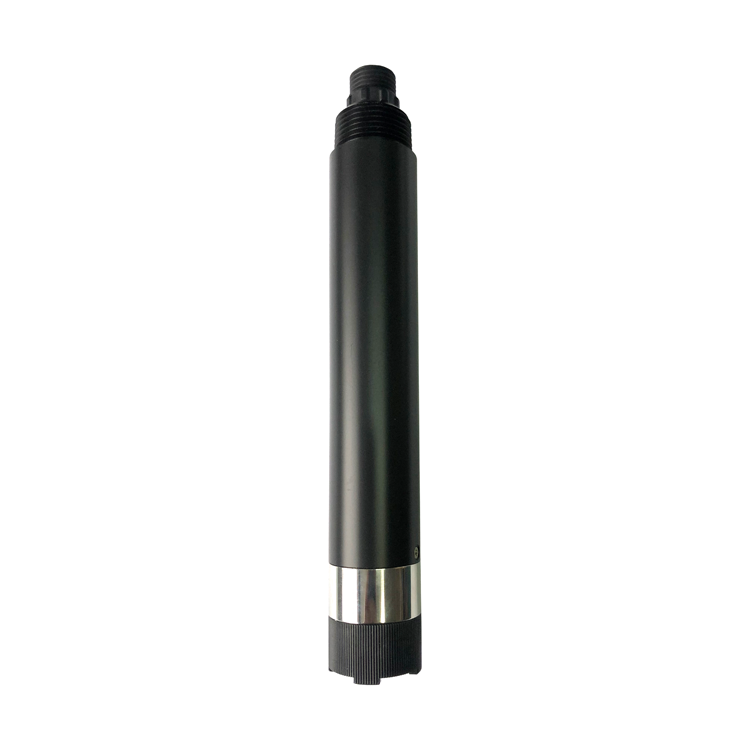
Ask the integrator to identify which existing components can remain. Check the installed power supply, available serial port, PLC communication role, cable condition and mechanical holder. A connector that physically fits is not enough: pin assignments, voltage, protocol and probe identification can differ.
Where the PLC can act as a compatible Modbus RTU master, it may read the digital probe without a separate display transmitter. Confirm the actual device definition and software work required. Where the plant has only an analogue input, quote a suitable analogue-output configuration or conversion arrangement instead of connecting RS485 A/B to the current input.
| Quotation item | What to establish | Reason for a price difference |
|---|---|---|
| Optical probe | Exact model, range, accuracy basis and ordered output | Different measurement and interface configurations are not equivalent |
| Receiving hardware | Retained PLC port, new transmitter or required converter | A probe-only offer may omit the interface that makes it usable |
| Holder and removal access | Reusable mount, new support or lifting arrangement | Safe service can require more than a bracket adapter |
| Cable and joints | Length, connector, routing and protected connection point | Extensions and rewiring may be outside the probe price |
| Commissioning | Channel mapping, verification and controlled handover | Engineering labour is not automatically included with hardware |
| Service parts | Compatible optical cap, seals and replacement procedure | Availability and replacement work affect continuing cost |
Request a dated quotation stating currency, quantity, validity and included work. Separate freight, taxes and local installation where applicable. An undated generic online amount cannot settle the cost of a particular aeration retrofit. NiuBoL can quote the identified configuration once the measurement and receiving-system requirements are known.
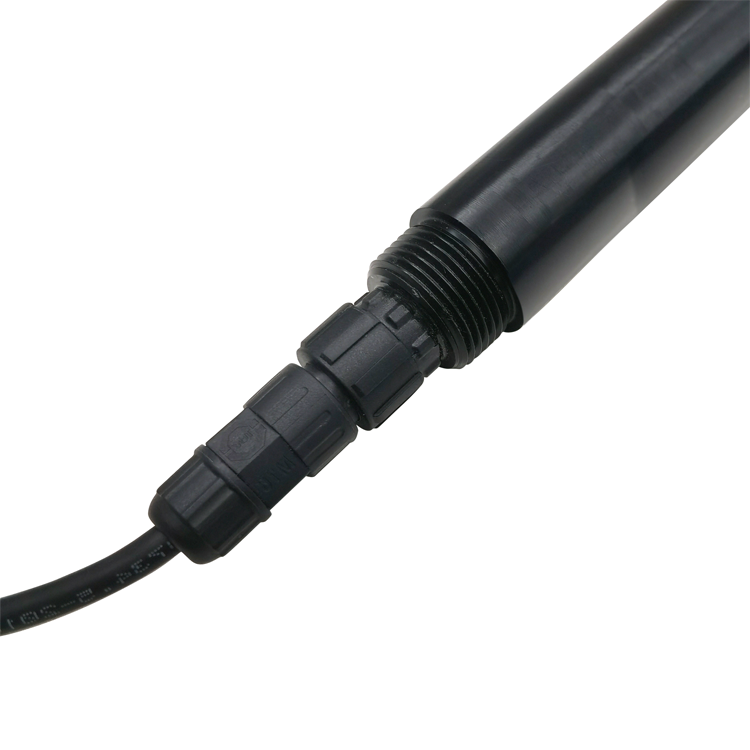
Inspect the cable and connector arrangement pictured below against the actual installation. Standard cable length is not permission to extend every assembly by any method, especially across a wet connection point or an electrically noisy plant route.
The following values apply to the described basic digital probe. A separately ordered output option or another DO model needs its own specification. Do not assign a 4-20 mA output to the basic RS485 version simply because a related probe offers it.
| Parameter | NBL-WQ-DO | Retrofit check |
|---|---|---|
| Measurement | Fluorescence; 0-20 mg/L | Check the required concentration band |
| Resolution and accuracy | 0.01 mg/L; +/-2% full scale | Resolution is not control accuracy |
| Temperature channel | Pt1000 compensation; accuracy +/-0.3 degrees C | Compare temperature as well as oxygen during verification |
| Working conditions | 0-45 degrees C; pressure below 0.2 MPa | Use operating limits, not storage limits |
| Supply and consumption | 12-24 V DC; less than 0.3 W at 12 V | Add controller and communications loads separately |
| Output | RS485 Modbus RTU | Confirm the receiving port, settings and register conversion |
| Construction | POM and 316L stainless steel; IP68 | Check water chemistry and protect external terminals |
| Mounting and cable | Immersion installation; standard 5 m cable | Confirm holder, retrieval path and required cable length |
Salinity compensation uses a configured value; it is not an independent salinity measurement. Check the water conditions and compensation settings used in the verification. Keep oxygen concentration, percentage saturation and temperature as distinct reported quantities rather than relabelling one tag to fit an existing display.
The replaceable fluorescent cap remains a service part. Annual replacement is a planning recommendation under normal use for this configuration, not a promise that every cap will last exactly a year. Obtain the correct cap identity, storage requirements, replacement instructions and post-replacement checks with the quotation.
Inspect the cap and clean it gently using a suitable procedure. Avoid scraping the sensing surface or allowing sediment to cover it. A fixed calendar interval should be reviewed against observed fouling, particularly in viscous wastewater or locations exposed to deposits. Optical probes still need inspection and maintenance.
Count labour and access costs explicitly. As an illustrative labour calculation, six separate visits taking 1.5 hours each require nine staff-hours before travel. If those inspections occur during already planned plant rounds, the incremental cost can be lower. Neither assumption is a NiuBoL maintenance interval or a quoted service charge; use the site's actual work arrangement.
A stocked cap is not the same as a ready-to-use spare probe. A cap replacement may require removal, inspection, reassembly and verification before the point is returned to service. A complete spare probe may shorten the equipment swap, but its storage condition, configuration and measurement check still matter. Ask for both options where the consequence of losing the aeration input justifies that comparison.
Establish who authorises the temporary control mode and who confirms restoration. A portable instrument can support checks during service, but it does not become a continuous automatic feedback signal merely because an operator can read it. Do not assume the existing control programme will recognise a newly connected probe or manage the service interruption correctly.
Price the parts and work over the same operating period when comparing proposals. Include planned replacements and realistic labour assumptions, but keep speculative production losses or energy savings out of a supplier price comparison unless the project has an agreed way to substantiate them. This gives procurement a testable comparison rather than a claimed payback built on unknown site behaviour.
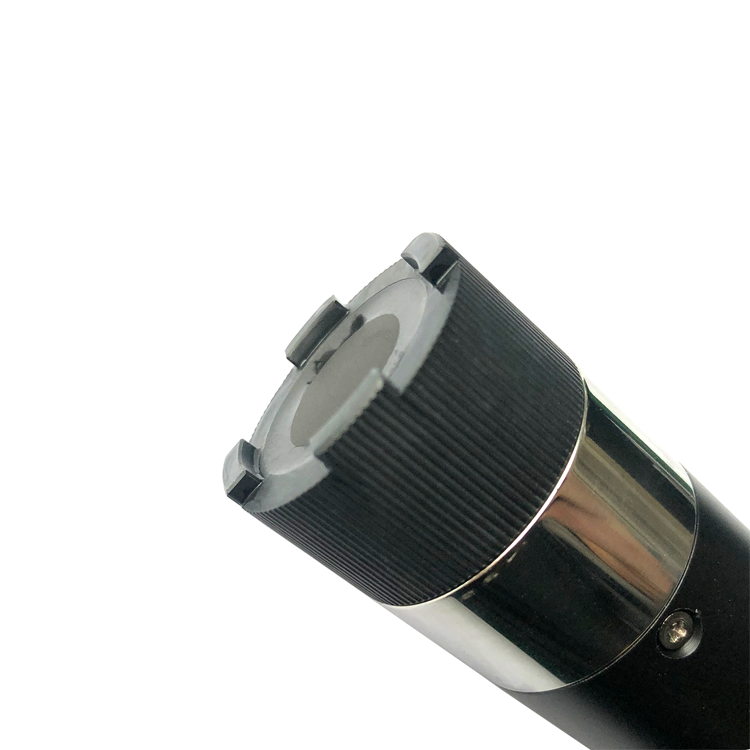
The sensing end shown below needs a holder that allows inspection without pulling on the cable. If removal requires stopping equipment, an access platform or another safety measure, include that in the installation review. Do not assume IP68 provides mechanical protection against contact with moving equipment or abrasive solids.
An aeration basin can contain oxygen gradients and bubble-rich regions. Position the probe around the intended control zone and provide repeatable mounting after service. A noisy local signal may reflect exposure rather than a need for a more expensive transmitter.
Filtering can reduce short fluctuations but also delays the value reaching the control strategy. Changes to filtering, alarm delays or blower commands need an authorised commissioning procedure. A replacement oxygen probe does not by itself establish a safe or efficient aeration-control design.
Test loss of communication and stale values before returning the point to automatic use. A frozen last-good reading must not continue to appear current. Agree the fallback action with the plant's control engineer rather than embedding an unreviewed default in a new gateway.
The exact probe configuration is only one part. Existing controller compatibility, holder reuse, cable work, commissioning and optical-cap spares can change the installed total. Request those lines separately so omitted work is visible.
No. Check whether it accepts the new probe's electrical interface and protocol, not just the same connector shape. A proprietary probe input is not automatically an RS485 Modbus input.
No. On a 20 mg/L full scale it corresponds to 0.4 mg/L. Compare that basis with the plant's required measurement uncertainty and decision band before accepting the configuration.
No. It removes electrolyte service, but the optical cap remains replaceable. Budget for the compatible part, safe access and verification after replacement.
Not without checking the old measurement and conditions. Verify the new channel through an appropriate reference procedure, confirm units and compensation, then test the actual receiving-system value and fault indication.
Send the control duty, operating DO band, wastewater temperature and chemistry, installation depth, holder photographs, cable length and existing controller details. State the required output and any commissioning or spare-cap support needed.
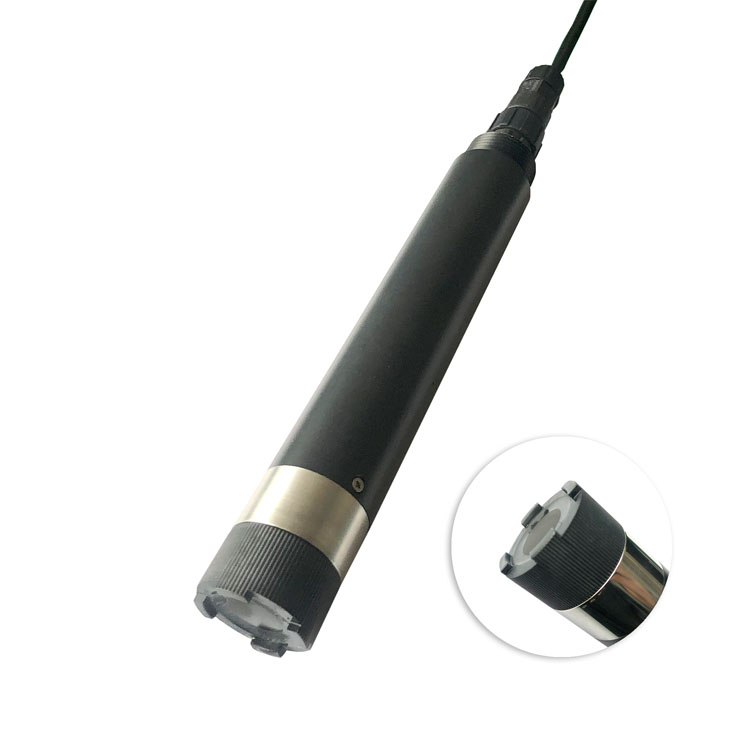
An optical dissolved oxygen sensor price is useful when it identifies a measurement point that fits the plant and can be maintained. Check low-range accuracy first, establish what existing hardware can remain, then compare the itemised retrofit and service scope. That produces a clearer quotation than selecting the lowest probe amount and discovering the integration work afterwards.
Prev:pH Conductivity TDS Meter Price: Compare the Actual Equipment Scope
Next:Camera Pest Detection: From Trap Images to Reviewed Counts
Related recommendations
Sensors & Weather Stations Catalog
 Agriculture Sensors and Weather Stations Catalog-NiuBoL.pdf
Weather Stations Catalog-NiuBoL.pdf
Agriculture Sensors Catalog-NiuBoL.pdf
Water Quality Sensor Catalog-NiuBoL.pdf
Related products
 Combined air temperature and relative humidity sensor
 TDR Soil Moisture & Temperature Sensor for irrigation| RS485 |4-20mA| NBL-S-THR
 Soil pH sensor RS485 soil Testing instrument soil ph meter for agriculture |NBL-S-PH
 Wind Speed sensor Output Modbus/RS485/Analog/0-5V/4-20mA
 Tipping bucket rain gauge for weather monitoring auto rainfall sensor RS485/Outdoor/stainless steel
 Pyranometer Solar Radiation Sensor 4-20mA/RS485


Screenshot, WhatsApp to identify the QR code
WhatsApp number:+8615367865107
(Click on WhatsApp to copy and add friends)

