





— Blogs —
—Products—
 Consumer hotline +8618073152920
WhatsApp:+8615367865107
Address:Room 102, District D, Houhu Industrial Park, Yuelu District, Changsha City, Hunan Province, China
Product knowledge
Time:2026-08-23 09:09:00 Popularity:321
Camera pest detection is useful when a farm needs comparable records from fixed locations between scouting visits. It is not a substitute for identifying the target insect or deciding whether a treatment is justified. A station can attract, collect, photograph and transmit insects; the project still needs a review rule that turns an image into a confirmed count. For a NiuBoL NBL-IoT-SRPMS deployment, specify the insects of interest, the collection schedule and the person who will resolve uncertain images before deciding how many field terminals to buy.
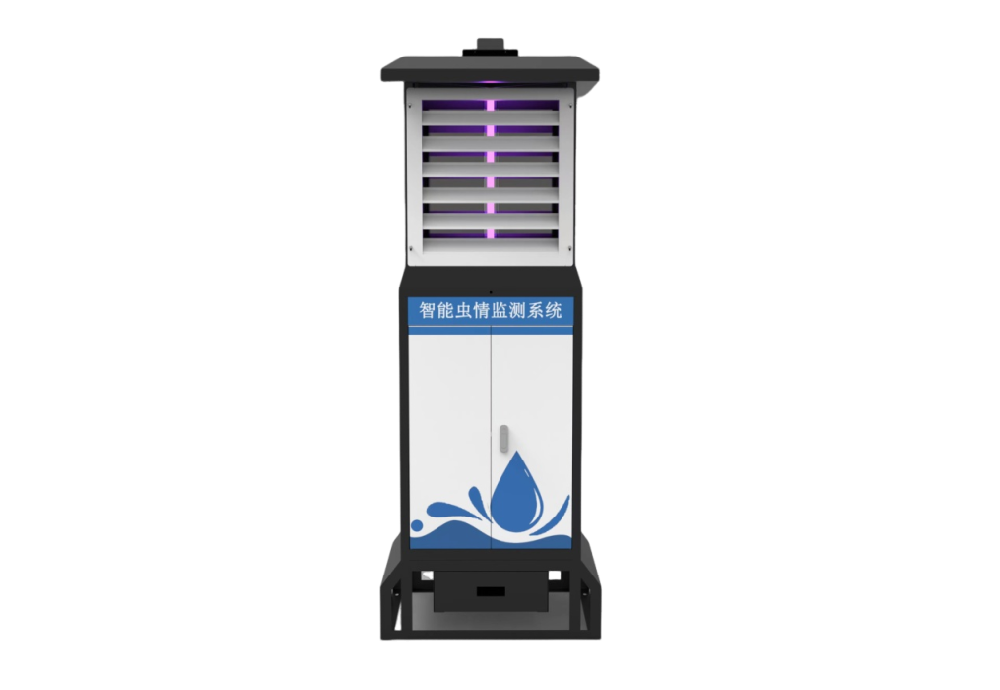
There are three different numbers in a pest report: objects visible in a photograph, insects identified by the software, and specimens accepted after review. They should not be presented as interchangeable. Debris, overlapping insects, damaged specimens and species with similar appearance can change the automated result. A useful report retains the original image, its capture time, station location, automated label and any later reviewer correction. Where a crop-protection decision depends on a threshold, use the reviewed count and local scouting evidence rather than an unexamined daily total.
Start the field map with crop blocks, likely pest entry routes, prevailing site conditions and practical service access. A single trap on an exposed edge does not necessarily represent a sheltered interior block. Conversely, placing several terminals close together does not automatically produce independent observations. Define which locations will be compared, what collection period counts as a day, and how missing or interrupted collection is displayed. These choices determine whether a rise in counts reflects pest activity or a change in operation.
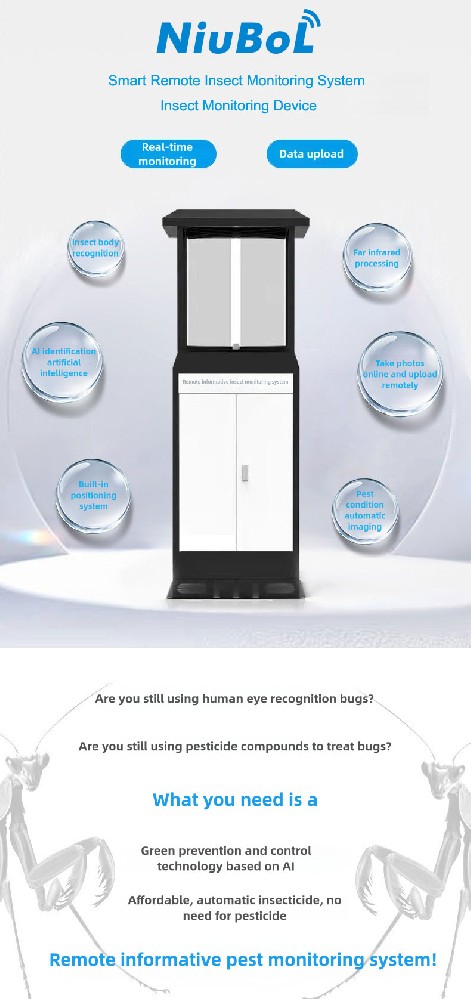
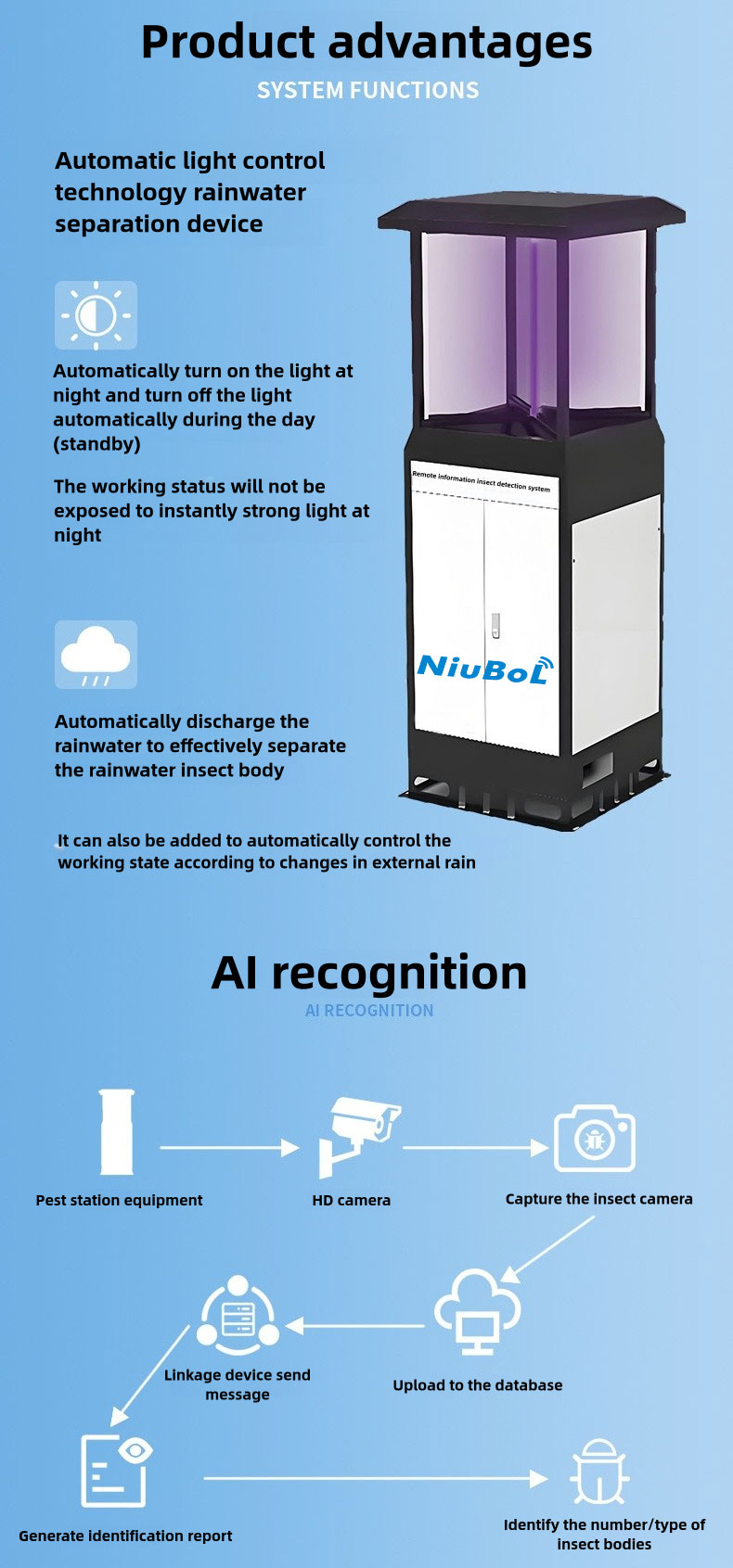
The linked NBL-IoT-SRPMS is an integrated insect monitoring terminal with attraction, specimen handling, image capture and reporting functions. The product information describes an industrial camera and image-recognition workflow, with 4G or Ethernet available for transmission and RS485/RS232 interfaces for expansion. Those are different functions: an RS485 connection may carry local device data, but a register value is not a replacement for transmitting the original photograph. The quotation should identify the ordered communications configuration, platform access and whether image export is included.
| Stage | Record to retain | Field test before acceptance |
|---|---|---|
| Attraction and collection | Station ID, operating period and target-season settings | Observe the programmed start and stop cycle at the installed location. |
| Image capture | Original image, capture time and camera status | Inspect several day and night images for sharpness, overlap and visible specimen detail. |
| Recognition | Automated label and count, with model or rule version where available | Compare a selected local image set with a competent manual review. |
| Transmission | Upload time, delivery status and any retry record | Disconnect and restore the link; confirm whether photographs and metadata arrive intact. |
| Field decision | Reviewed count, scouting note and action taken | Trace one alert from image to reviewer and the recorded farm response. |
For a trial, include ordinary days as well as periods with high insect activity. A system tested only with a few clean demonstration images may appear more accurate than one used in rain, dust or a crowded collection tray. Agree on how many local photographs will be manually checked, who adjudicates disputed labels, and how an accepted correction appears in later reports. Do not infer a field-wide detection rate from a manufacturer's recognition list or from a single sample image.
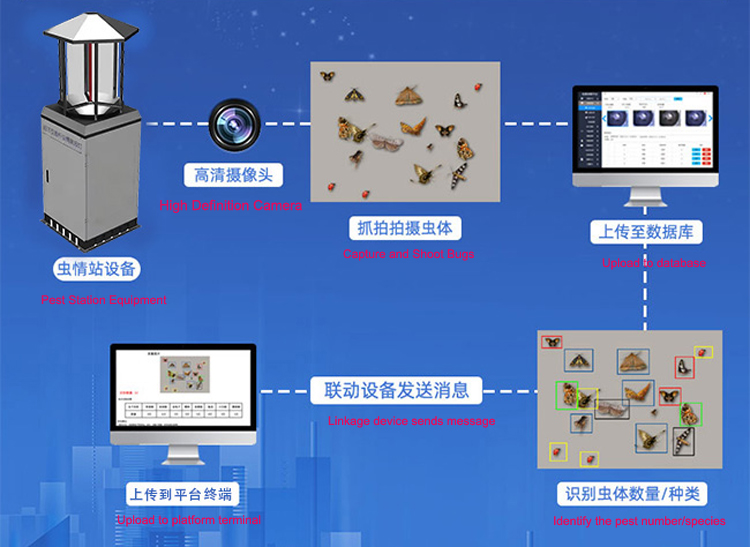
A camera cannot recover detail after insects overlap or adhere to a dirty surface. During commissioning, photograph the collection area before and after the cleaning cycle, and check whether the process leaves old specimens in the next counting period. Inspect the lens and lighting, not merely whether the device is online. Ask the operator to confirm that the photographed area covers the collection surface and that the device clock is correct. A photograph with an accurate-looking count but the wrong date is a poor basis for comparing spray windows.
Field technicians should be able to review a small sample from each station without changing the raw image or overwriting the automated output. Store both the first count and the corrected count. That distinction lets agronomists find whether a sudden jump was biological, a cleaning fault, or a software classification problem. If the project requires identification of a specific species, obtain representative local images for evaluation; a general statement that the platform recognises pests is not a species-level acceptance criterion.
The communication design must support the file size and reporting interval of images. A remote terminal with a strong RS485 link to a local controller can still fail to upload photographs if cellular coverage is weak. Check the actual SIM or wired-network provision, antenna position, account ownership and data charges. If the selected package includes solar power, calculate demand from the complete operating cycle: attraction light, camera, processing, heating or cleaning functions, modem and standby load. Panel and battery capacity are project choices, not properties implied by the terminal name.
In a remote orchard, put the station where target insects can reach it and technicians can service it safely, rather than choosing the only point with apparent mobile coverage. Test the network at the intended mounting height during the reporting hours. If reception is inadequate, revise the antenna or data route and record the trade-off. The same procedure matters at dispersed grain and vegetable production sites, where an offline station could otherwise be mistaken for a zero-count station.
A dashboard should show the current collection period, last successful image, reviewed count, trend and station health. Keep a missing-image warning separate from a low-count message. A rise in one trap can prompt a scouting visit, but treatment timing depends on crop stage, pest identity, local thresholds and field inspection. The pest-detection system supplies evidence for that judgment; it should not send an unconditional pesticide command from an unreviewed image count.
For an integrator, this separation also makes the API contract clearer. A third-party farm platform may ingest counts and event timestamps, while the image archive remains in the monitoring platform. Identify the device ID, block name, time zone, species label, count status and review status for each exported record. If the receiving system only accepts a numeric count, document where the image can be retrieved during an audit. Ask for a sample export before promising compatibility with the client's existing dashboard.
Send NiuBoL the crop and target insects, proposed site map, operating season, power availability, network survey, image frequency, data-retention requirement and number of users who will review records. Request the exact NBL-IoT-SRPMS hardware configuration, ordered communication option, power package, mounting parts, platform scope, service consumables and onboarding work as separate lines. No fixed online price can cover both a grid-powered terminal beside a wired network and a solar-powered remote station with cellular service.
Acceptance should use one real installed terminal before expanding the order. Witness the attraction and collection cycle, inspect image quality, compare a local sample with manual identification, confirm timestamp and station identity, and interrupt the link to test recovery. The handover package should include configuration, account ownership, service instructions and a way to retrieve original images. These checks matter more than a screenshot of a dashboard showing a non-zero count.
No. Recognition depends on the available model, image quality and whether the local species appear clearly. Evaluate a sample of the project's target insects and define how uncertain identifications are reviewed.
Begin with the zones whose observations will drive separate actions. Use the field map, crop blocks, likely entry routes and service access to select a pilot layout, then adjust after checking whether adjacent stations tell a meaningfully different story.
Do not assume so. The product offers RS485/RS232 expansion, while image delivery requires the ordered network and platform arrangement. Ask for the interface list and a sample image export for the exact supplied configuration.
Show an offline or incomplete-collection state, not a zero count. Retain the last successful capture time and investigate power, cleaning, clock and communications before interpreting a trend.
No. Use it to prioritise scouting. Confirm the species, crop stage, local action threshold and field distribution before selecting any treatment.
Assign inspection of the collection area, lens, light, cleaning mechanism, power system and communication status. The interval should reflect insect load and site conditions, then be revised from operating records.
Keep original and reviewed images, count reports, station IDs, time settings, one demonstrated outage-recovery test, account ownership and the agreed reviewer workflow. A single clean catalogue image is not a field acceptance result.

Camera pest detection earns its place in a farm monitoring project when each count can be traced to a usable image, a defined location and a responsible review decision. NiuBoL NBL-IoT-SRPMS can supply the collection and reporting terminal; the buyer must specify the local species test, communications package and service workflow that make its records actionable. A short field pilot with explicit image and recovery checks is a sound basis for a wider deployment quotation.
Prev:Optical Dissolved Oxygen Sensor Price: Aeration Retrofit Costs
Next:Weather Station Package Pricing: Sensor Head or Complete System?
Related recommendations
Sensors & Weather Stations Catalog
 Agriculture Sensors and Weather Stations Catalog-NiuBoL.pdf
Weather Stations Catalog-NiuBoL.pdf
Agriculture Sensors Catalog-NiuBoL.pdf
Water Quality Sensor Catalog-NiuBoL.pdf
Related products
 Combined air temperature and relative humidity sensor
 TDR Soil Moisture & Temperature Sensor for irrigation| RS485 |4-20mA| NBL-S-THR
 Soil pH sensor RS485 soil Testing instrument soil ph meter for agriculture |NBL-S-PH
 Wind Speed sensor Output Modbus/RS485/Analog/0-5V/4-20mA
 Tipping bucket rain gauge for weather monitoring auto rainfall sensor RS485/Outdoor/stainless steel
 Pyranometer Solar Radiation Sensor 4-20mA/RS485


Screenshot, WhatsApp to identify the QR code
WhatsApp number:+8615367865107
(Click on WhatsApp to copy and add friends)

