





— Blogs —
—Products—
 Consumer hotline +8618073152920
WhatsApp:+8615367865107
Address:Room 102, District D, Houhu Industrial Park, Yuelu District, Changsha City, Hunan Province, China
Product knowledge
Time:2026-08-24 09:00:00 Popularity:247
Quick Answer: Weather station package pricing should distinguish the sensor head from a complete installed data point. A six- or seven-parameter RS485 unit may still need a logger, communications, power supply and mounting system. Compare named channels, operating limits and included hardware line by line; the number of parameters alone is not a reliable basis for comparing quotations.
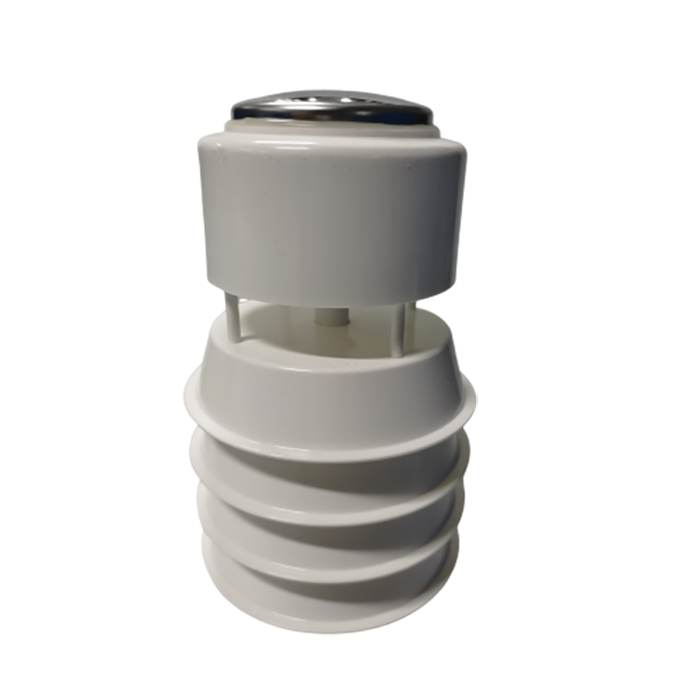
The same package name can describe an integrated sensor with a cable, a sensor plus local logger, or a remote station with solar power and a mast. Before comparing totals, label the supply boundary. A site with a compatible powered logger may need only the sensing assembly; an undeveloped field site needs considerably more.
Keep the existing infrastructure visible in the comparison. A quotation that assumes customer-provided power and communications should state that assumption. Another offer including those parts is not automatically more expensive for the same result. Conversely, buying duplicate loggers or communications modules adds cost when the installed system can already acquire the measurements correctly.
| Component | New powered monitoring point | Remote site without infrastructure |
|---|---|---|
| Sensor head and compatible lead | Specify the required model and connection | Specify the required model and connection |
| Acquisition | Verify any retained PLC or logger; price configuration work | Include a suitable logger or gateway |
| Uplink | Check the existing network and server path | Include the selected communications and connectivity arrangement |
| Power | Verify the installed supply and protection | Include a site-sized power system |
| Structure | Check the existing support and exposure | Include support, brackets and assigned local civil work |
Use an included, optional or customer-provided status beside every line of the actual offer. An empty cell is unresolved scope, not evidence that the component is unnecessary. When accepting a lower-cost alternative, record which technical or service requirement changed; otherwise later teams may assume the original requirement was met in full.
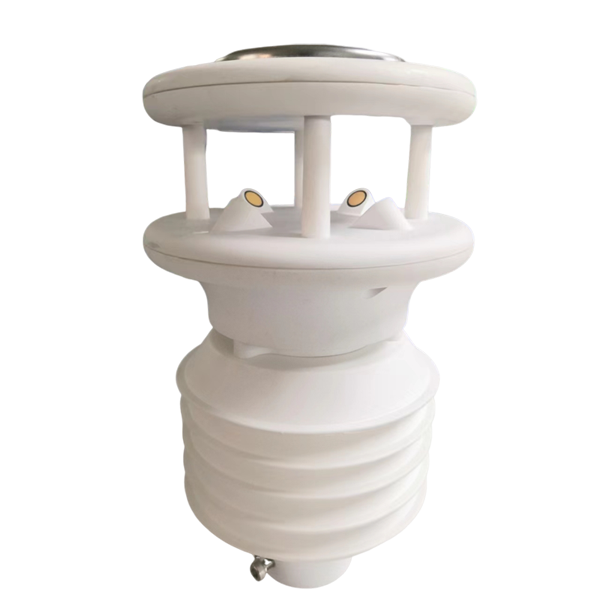
The pictured NBL-W-61MUWS six-parameter sensor measures wind speed, wind direction, temperature, humidity, pressure and rainfall. It provides RS485 Modbus RTU, not a complete cellular reporting station inside the sensor head. Its integrated rainfall method is piezoelectric impact detection, not a tipping bucket.
Write the required parameter, unit and purpose beside each quoted channel. Temperature in degrees C, rainfall in mm and radiation in W/m2 are not interchangeable options. A larger parameter count may add measurements the project does not need while still omitting the one that matters.
For the NBL-W-71GUWS seven-parameter configuration, the additional light measurement is either solar radiation or illuminance. Specify the selected option. The standard seven-parameter configuration does not supply both as independent channels simply because both appear in a product-family specification.
Illuminance in Lux does not replace solar irradiance in W/m2, and neither is automatically a PAR/PPFD measurement. For a photovoltaic project, identify the required radiation measurement and mounting plane. For a crop-light project, specify the actual light quantity rather than requesting an unspecified light sensor and expecting a later unit conversion to resolve the difference.
| Required result | Candidate package decision | Check in the offer |
|---|---|---|
| Six core weather measurements | NBL-W-61MUWS with integrated rainfall | Exact model, operating limits and supplied cable |
| Weather plus solar radiation | Seven-parameter radiation configuration | Radiation in W/m2, selected range and exposure |
| Weather plus visible-light level | Seven-parameter illuminance configuration | Lux output, not a substituted radiation channel |
| Both radiation and illuminance | A configuration or separate sensors that actually supplies both | Named hardware and independent data fields |
| Soil or crop-light measurements | Separate suitable sensors where required | Logger inputs, power and mounting for the added channels |
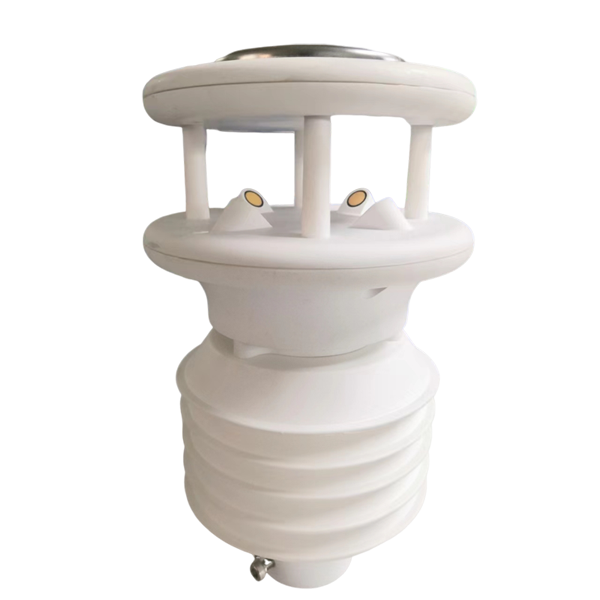
An integrated head reduces the number of separate supports and field connections. It can suit a compact monitoring point where the shared exposure meets the project objective. It does not allow every variable to be installed independently at its preferred height and location.
A modular arrangement can place a dedicated rain gauge, radiation sensor and temperature assembly separately, with additional installation and acquisition work. Compare that work against the measurement requirement rather than assuming modular is always better or integrated is always cheaper. The site layout and required data quality decide whether separation is worthwhile.
Also compare maintenance consequences. Ask whether a failed channel requires servicing the entire integrated head or whether the relevant part can be replaced separately. Do not assume either capability from a photograph. A spare complete head, spare individual sensors and a short service interruption represent different operating strategies and costs.
The higher-parameter unit illustrated below is another configuration choice, not evidence that every extra sensing function is included in every station. Have the quotation list enabled channels and the actual model before approving a substitute.
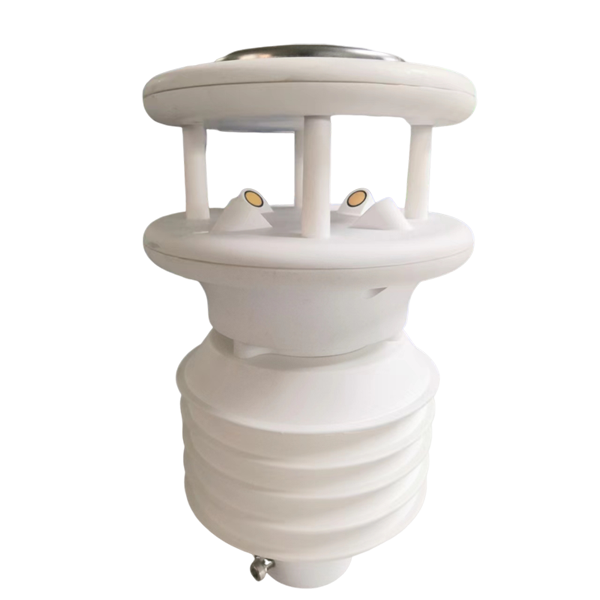
These NBL-W-71GUWS details provide a concrete reference for the seven-parameter sensor. They do not define the complete station's power demand, enclosure protection or every other model in the family.
| Item | NBL-W-71GUWS configuration | Quotation implication |
|---|---|---|
| Wind speed | 0-60 m/s; accuracy +/-(0.3 m/s + 3% full scale) | Compare the accuracy expression, not only the upper range |
| Wind direction | 0-359 degrees; +/-3 degrees | Include north alignment in installation work |
| Temperature and humidity | -40 to 80 degrees C, +/-0.5 degrees C; 0-100% RH, +/-5% RH | Confirm representative exposure for the intended duty |
| Rainfall | Piezoelectric; 0-8 mm/min; +/-10% | Do not substitute a tipping-bucket specification |
| Light option | Solar radiation 0-1500 W/m2 or illuminance 0-200,000 Lux | Order the required seventh parameter |
| Supply and consumption | DC 9-24 V documented configuration; average 0.4 W without a dust sensor | Confirm the ordered supply version and separate station loads |
| Output | RS485 Modbus RTU; 9600 bps | A compatible acquisition device is still needed |
| Operating environment and protection | -40 to 80 degrees C; 0-95% RH; IP65 | Check enclosure, connectors and power equipment separately |
Define the route as sensor, acquisition device, network and destination. The RS485 Modbus RTU connection is the local sensor interface. A logger or gateway supplies any implemented 4G, Ethernet or other remote link. Ask which device polls the measurements and which component timestamps and stores them.
If using an existing PLC, RTU or data logger, confirm the port, supported Modbus roles, register definitions and engineering units. Check available addresses and capacity for the proposed channel count. The presence of an RS485 terminal alone does not prove the installed software can acquire and interpret a new sensor without engineering work.
At the remote end, specify the required data destination and sample export. A supplier platform account is different from integration with a private server. Clarify any interface development, account term, data retention and recurring connectivity charges. Do not assume MQTT, an API, offline replay or unrestricted data export from a general statement that the station is connected.
For a simple sizing example, 12 selected values recorded every 10 minutes produce 1728 scalar values per day: 12 x 144 intervals. That is not 1728 bytes or a cellular data-plan estimate. Timestamps, quality flags, transport overhead and retries add data. Use an actual message sample to price communications and storage.
A 0.4 W sensor head consumes 9.6 Wh over 24 hours at that average load. This arithmetic covers the head only. Add the logger, modem, display, converters and any heated or separately powered accessories before selecting solar and battery equipment. A low sensor figure cannot justify a claim about several days of complete-station autonomy.
For a solar package, request the load calculation, usable battery capacity, charging arrangement and design assumptions for the site. For mains power, identify the appropriate supply, isolation and protection. Confirm whether the battery is included and how the chosen battery and installation are handled for the destination; do not infer the delivered power system from a panel in a photograph.
List the mast or support, brackets, enclosure, cable routing, grounding and local civil work. Mast height changes structural and service requirements. A taller support is not automatically a better exposure if the sensor remains affected by nearby structures. Assess the site with the responsible installer and do not apply a generic foundation dimension to every soil and wind condition.
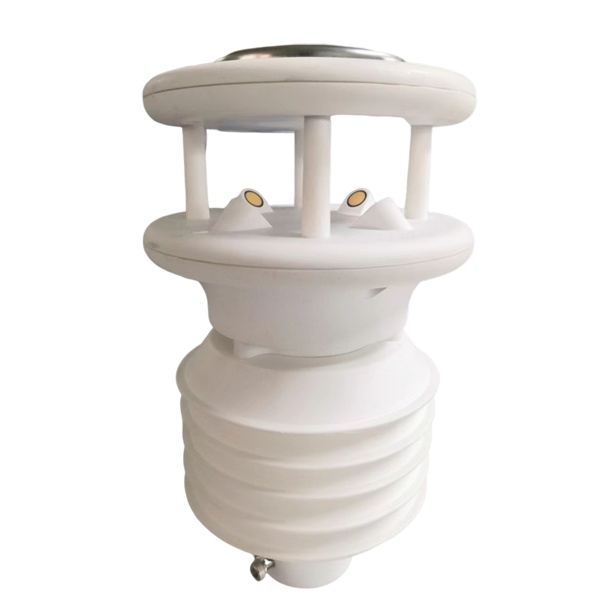
The ten-parameter package pictured below still needs its own load and mounting review. More integrated channels do not remove the need to define those responsibilities.
They may cover different systems. Compare the enabled measurements, sensor model, logger, network, power supply, mounting and local work. An offer excluding customer-provided infrastructure should identify it explicitly.
Only if the additional measurement matches the requirement. On NBL-W-71GUWS, choose radiation or illuminance as the seventh parameter. A project needing both requires a configuration that actually supplies both.
Yes, where its power, ports, protocol support, capacity and software can handle the selected sensors. Verify those conditions before removing the new logger from the quotation, and include any required configuration work.
No. RS485 is the local interface. Remote communications, storage, platform access and server integration are separate functions that must be included or provided by the existing system.
Provide the required channels and units, site and mounting layout, existing logger details, power arrangement and data destination. Identify required spares, installation support and recurring services so the offer distinguishes supplied parts from local work.
Check that the ordered channels arrive with the correct units, timestamps and status at the intended destination. Verify the installed configuration and power arrangement, and test the specified failure indication. A powered sensor or a local display alone does not demonstrate complete remote operation.
Weather station package pricing becomes comparable when each offer describes the same measurements and a complete, usable data path. Choose the required channels first, verify the selected model, and separate reusable infrastructure from new equipment and local work. A clear component list gives NiuBoL the information needed to quote the system the project will actually install.
Prev:Camera Pest Detection: From Trap Images to Reviewed Counts
Next:Water Quality Measurement Device: Qualify a Prototype for Permanent Use
Related recommendations
Sensors & Weather Stations Catalog
 Agriculture Sensors and Weather Stations Catalog-NiuBoL.pdf
Weather Stations Catalog-NiuBoL.pdf
Agriculture Sensors Catalog-NiuBoL.pdf
Water Quality Sensor Catalog-NiuBoL.pdf
Related products
 Combined air temperature and relative humidity sensor
 TDR Soil Moisture & Temperature Sensor for irrigation| RS485 |4-20mA| NBL-S-THR
 Soil pH sensor RS485 soil Testing instrument soil ph meter for agriculture |NBL-S-PH
 Wind Speed sensor Output Modbus/RS485/Analog/0-5V/4-20mA
 Tipping bucket rain gauge for weather monitoring auto rainfall sensor RS485/Outdoor/stainless steel
 Pyranometer Solar Radiation Sensor 4-20mA/RS485


Screenshot, WhatsApp to identify the QR code
WhatsApp number:+8615367865107
(Click on WhatsApp to copy and add friends)

