





— Blogs —
—Products—
 Consumer hotline +8618073152920
 WhatsApp:+8615367865107
Address:Room 102, District D, Houhu Industrial Park, Yuelu District, Changsha City, Hunan Province, China
Product knowledge
Time:2026-06-09 11:32:02 Popularity:266
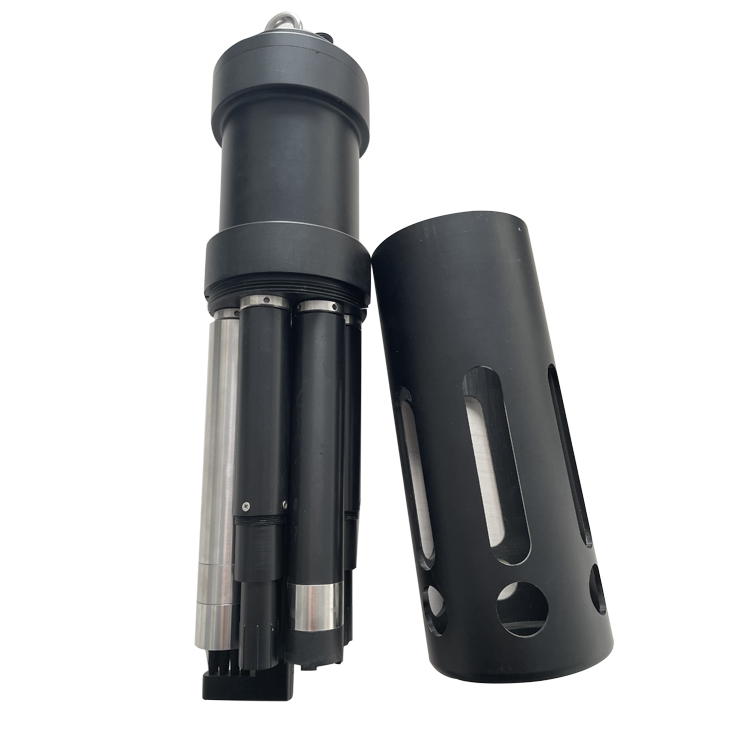
pH and ORP are often specified together because many treatment decisions depend on both acid-base condition and oxidation-reduction state. A neutral pH value alone does not confirm disinfection strength, and an ORP value without pH context can be misread.
In project specifications this requirement is often described as online pH sensor, online pH ORP analyzer, RS485 Modbus pH sensor, industrial ORP monitoring, with operating contexts such as wastewater neutralization, industrial process water, environmental monitoring.
System integrators use online pH and ORP sensors in wastewater neutralization, drinking water disinfection, food and beverage water, pharmaceutical utilities, agricultural irrigation and environmental monitoring stations. The project demand is continuous measurement, stable communication and a sensor structure that can survive wet industrial locations.
A system integrator normally has to combine online sensing, cabinet wiring, field protection, data acquisition, alarm logic and maintenance access in one deliverable. The sensor therefore has to be judged by more than a single accuracy line: the interface, cable length, enclosure material, calibration method, spare-part plan and compatibility with the existing control platform all affect project risk.
In the monitoring system, the pH probe reports acid-base condition, while the ORP probe reports oxidation-reduction potential. Both can feed the same RTU, PLC or IoT gateway, allowing the control layer to compare chemical dosing, process stability and alarms.
In a complete architecture the probe is the field data source, the controller or gateway is the data concentrator, and the SCADA or cloud platform is the decision layer. NiuBoL sensors are suitable for this layered structure because measured values can be read directly through digital communication, while local displays, relay logic or analog outputs can be added when a plant specification requires them.
For engineering delivery, RS485 and Modbus RTU are often more important than the display style of the instrument. The sensor should expose stable registers for measured value, temperature, calibration status and device address, so that a PLC, RTU, DCS, SCADA server or IoT gateway can read the same data without rewriting the control logic. A shielded cable, correct A/B polarity, single-point grounding and documented baud-rate settings reduce commissioning time on long cable routes. Where analog 4-20 mA is required by an older cabinet, the analog signal can be retained for local control while RS485 Modbus RTU is used for diagnostics and remote data acquisition.
When pH and ORP are installed as separate Modbus devices, each sensor should have a unique address and documented register mapping. This simplifies commissioning when the integrator later adds conductivity, turbidity, dissolved oxygen or residual chlorine sensors.
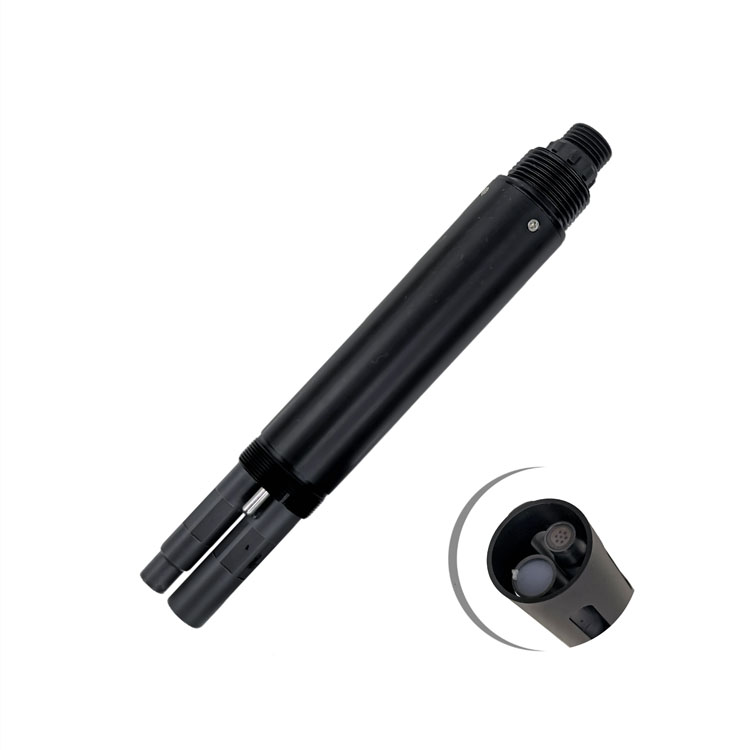
The following pH sensor parameters are used as the procurement reference. ORP can be added as a companion probe where oxidation-reduction potential is part of the control logic.
| Parameter | Specification |
|---|---|
| Model | NBL-WQ-PH |
| Measurement principle | Glass electrode method |
| Measurement range | 0 to 14.00 pH |
| Resolution | 0.01 pH, 0.1 degC |
| Measurement accuracy | +/-0.1 pH; temperature +/-0.3 degC |
| Response time | T90 < 30 s |
| Power supply | 12 to 24 VDC |
| Output signal | RS485, Modbus RTU |
| Power consumption | 0.2 W at 12 V |
| Protection rating | IP68 |
| Working conditions | 0 to 50 degC, <=0.2 MPa |
| Temperature compensation | Automatic Pt1000 temperature compensation |
| Installation | Immersion installation, 3/4 NPT thread |
| Cable material / length | Shielded waterproof cable, standard 5 m, customizable |
| Housing material | ABS/PC alloy |
The online pH sensor is valuable when its reading is connected to a decision: dosing adjustment, pump operation, aeration control, filter inspection, operator alarm, maintenance ticket or compliance record. During design review, the integrator should define whether the measured value is used for closed-loop control, interlock protection, supervisory alarming or trend documentation. These choices affect polling interval, alarm delay, register scaling, local display requirements and whether the cabinet needs redundant manual sampling points.
For many water projects, the most useful engineering output is not a single number but a stable trend. A short spike may indicate bubbles, cleaning activity or sample disturbance; a sustained drift may indicate chemical imbalance, fouling, biological change or a real process event. By keeping the sensor on a documented Modbus map, the project team can compare the reading with flow, pump status, chemical dosing rate and laboratory checks. This makes troubleshooting easier after handover, especially for distributors supporting remote customers.
Site environment challenge: Several indicators change together, and a single parameter rarely explains the full process condition.
System integration scheme: Build a station with pH, turbidity, conductivity, DO and optional ammonia or chlorine sensors.
User value delivered: Operators can see linked trends and decide whether an alarm is sensor-specific or process-wide.
Site environment challenge: Clarification, filtration and disinfection require different monitoring points.
System integration scheme: Use multiple Modbus sensors under one SCADA architecture for raw water, filtered water and finished water.
User value delivered: The plant reduces isolated instruments and gains unified data acquisition.
Site environment challenge: pH, residual chlorine, turbidity and temperature must be controlled together.
System integration scheme: Use a compact monitoring cabinet connected to dosing and circulation equipment.
User value delivered: Facility managers get continuous data for water safety and maintenance planning.
Site environment challenge: Reclaimed water quality varies by upstream load and treatment stage.
System integration scheme: Deploy a multi-parameter station at reuse outlets and critical user branches.
User value delivered: The owner can document reuse water stability and protect downstream processes.
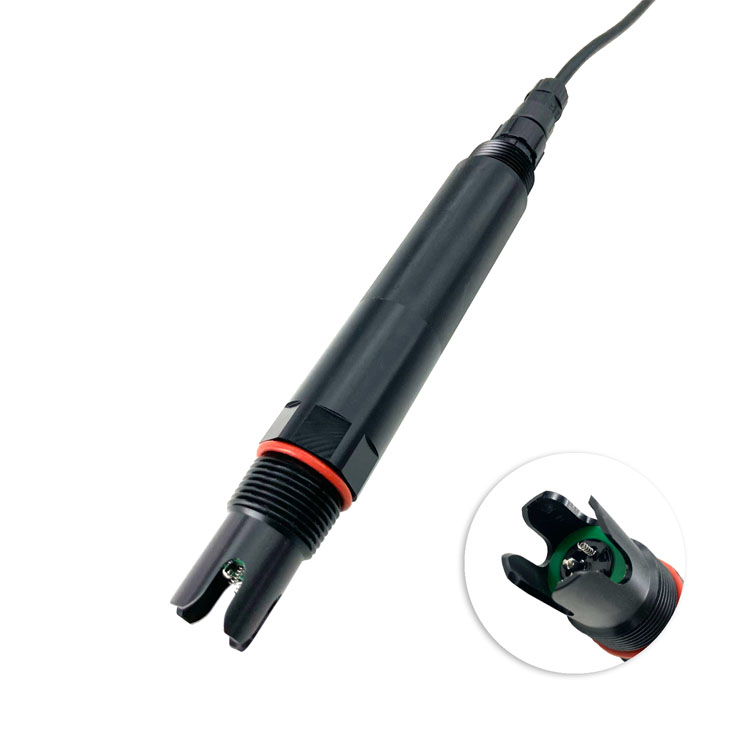
Selection should start from the process objective, not from a catalogue picture. A plant that needs closed-loop chemical dosing, a monitoring station that needs evidence-quality trends and an OEM cabinet that needs repeatable Modbus registers may all choose different mechanical and output configurations.
For a distributor, the evaluation is different from a laboratory buyer's checklist. The product has to be repeatable across many customer sites, easy to explain during quotation and clear enough for after-sales troubleshooting. A practical offer should state the sensor model, available outputs, installation accessories, cable option, expected maintenance parts and the type of controller or gateway it can connect to. This helps the distributor answer technical questions without delaying every inquiry for a full engineering review.
For OEM cabinet builders and engineering contractors, the main concern is integration repeatability. If the same RS485 Modbus RTU structure is used across pH, DO, turbidity, chlorine, hardness or sludge sensors, the cabinet drawing, PLC program and commissioning checklist can be reused with minor changes. That lowers project delivery risk and makes expansion easier when the customer later requests more monitoring points, remote data upload or a combined water quality station.
Most commissioning problems appear at the boundary between the probe and the control cabinet. The following checks help distributors and integrators reduce site rework.
A purchase order should include more than model name and quantity. For each instrument, confirm the measured parameter, range, power supply, output signal, cable length, mounting accessories, wetted material, protection level, calibration accessories and required documentation. When the project includes several sensors, a register list and address plan should be prepared before cabinet wiring starts. This prevents duplicate Modbus addresses and helps the PLC engineer reserve the correct data blocks.
At handover, the owner should receive the wiring record, Modbus settings, installation photos, calibration record, cleaning interval, recommended spare parts and acceptance-test readings. For engineering contractors, this documentation is also a commercial advantage: it shows that the sensor package was delivered as an integrated measurement subsystem, not as loose parts. For distributors, the same file becomes useful when a customer requests replacement probes, longer cables, protocol clarification or additional monitoring points months after the first installation.
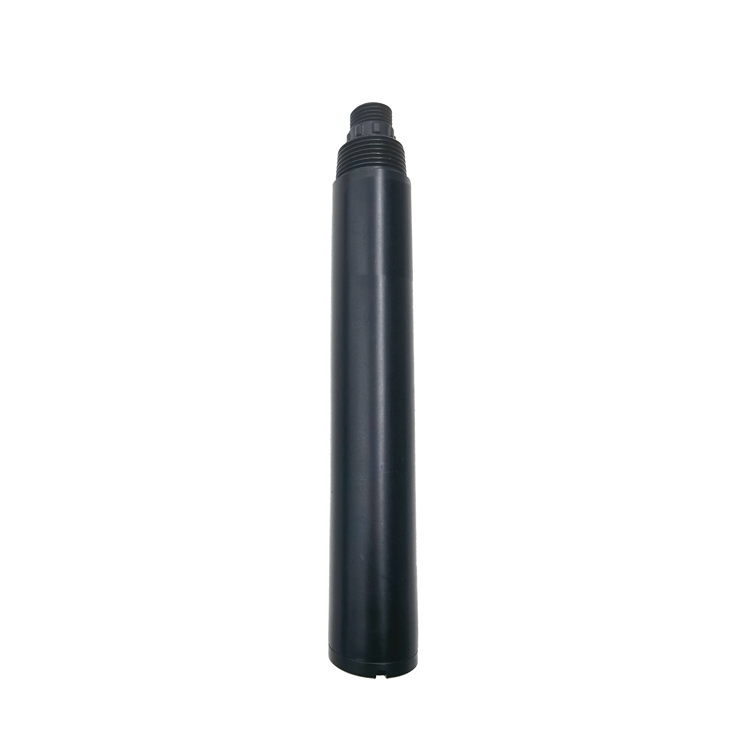
Yes. The standard integration path is RS485 with Modbus RTU, allowing connection to PLC, RTU, DCS, SCADA and IoT gateways that support serial polling.
The relevant NiuBoL online water quality probes are designed with IP68 protection. The final installation method should still protect junction boxes, cable glands and cabinet entries from water ingress.
Calibration interval depends on water quality, fouling level and required data confidence. Drinking water and process control projects usually define a fixed calibration schedule, while wastewater projects may also trigger cleaning and calibration after abnormal drift.
Yes, each sensor can be assigned a separate Modbus address and polled by the same gateway or PLC serial port if the bus design is correct.
Use a single-parameter sensor when one control variable is critical and wiring must be simple. Use a multi-parameter station when pH, ORP, turbidity, DO, conductivity or chlorine data must be correlated for operation decisions.
Modbus RTU is preferred for digital acquisition and diagnostics. 4-20 mA is useful when an existing PLC card, recorder or dosing controller only accepts analog input.
ABS/PC and POM are suitable for many water treatment projects. 316L stainless steel is preferred when mechanical strength, corrosion resistance or long-term submerged service is more demanding.
No. ORP provides an oxidation condition and is useful for control context, while residual chlorine provides a chemical concentration. Many disinfection projects use both.
Provide the measured parameter, expected range, water type, temperature, pressure, installation method, cable length, output requirement, controller type and whether a datasheet or Modbus register map is needed.
Yes. For project delivery, NiuBoL can provide datasheets, wiring instructions, protocol information and selection support for matching sensors with gateways, PLCs and monitoring platforms.
Online pH and ORP sensors give the automation system chemical context that manual tests cannot provide continuously. For NiuBoL projects, RS485 Modbus RTU communication, IP68 probe protection and compatibility with PLC, RTU and IoT gateways help integrators build maintainable water quality monitoring systems.
Prev:Residual Chlorine Sensor FAQ for Disinfection Control Projects
Next:Correct Use and Calibration of Online pH Sensors in Industrial Projects
Related recommendations
Sensors & Weather Stations Catalog
 Agriculture Sensors and Weather Stations Catalog-NiuBoL.pdf
Weather Stations Catalog-NiuBoL.pdf
Agriculture Sensors Catalog-NiuBoL.pdf
Water Quality Sensor Catalog-NiuBoL.pdf
Related products
 Combined air temperature and relative humidity sensor
 TDR Soil Moisture & Temperature Sensor for irrigation| RS485 |4-20mA| NBL-S-THR
 Soil pH sensor RS485 soil Testing instrument soil ph meter for agriculture |NBL-S-PH
 Wind Speed sensor Output Modbus/RS485/Analog/0-5V/4-20mA
 Tipping bucket rain gauge for weather monitoring auto rainfall sensor RS485/Outdoor/stainless steel
 Pyranometer Solar Radiation Sensor 4-20mA/RS485

Screenshot, WhatsApp to identify the QR code
WhatsApp number:+8615367865107
(Click on WhatsApp to copy and add friends)

