





— Blogs —
—Products—
 Consumer hotline +8618073152920
WhatsApp:+8615367865107
Address:Room 102, District D, Houhu Industrial Park, Yuelu District, Changsha City, Hunan Province, China
Product knowledge
Time:2026-08-18 09:09:00 Popularity:285
Quick Answer: A pest monitoring system must match the organism it is intended to detect. A light-attraction insect station records insects entering its collection and imaging mechanism; it does not establish rodent activity. For farms with both crop insects and storage-area rodents, specify separate detection methods and keep their records distinguishable, even if a common management platform is used.
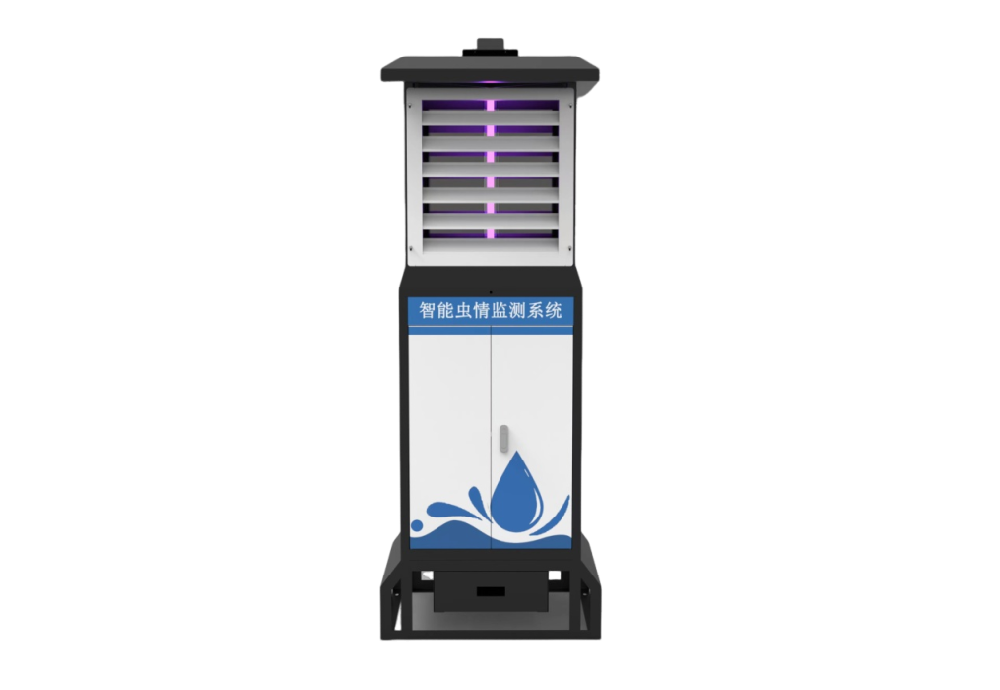
Connected rodent monitoring is a different problem from flying insect monitoring. The difference starts at the detection point, not the dashboard. An insect-attracting lamp, a specimen collection plate and an image of captured insects provide observations about that collection method. They do not show whether a rodent entered a store, crossed a doorway or disturbed a monitored station.
For a distributor or farm-system integrator, the risk is an ambiguous request for a pest monitoring system. The customer may mean moth activity in an orchard, insects associated with stored grain, or rodents around a feed building. These are not alternative software labels for the same instrument. Identify the target organism, its relevant activity and the location before choosing the hardware.
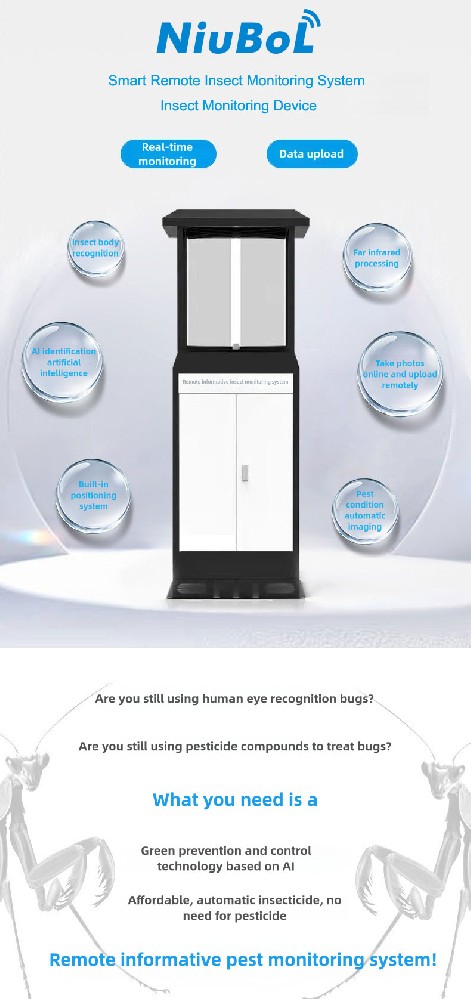
The NiuBoL NBL-IoT-SRPMS remote insect monitoring system is an insect collection and reporting device. Its light source attracts responsive insects, which pass through processing and imaging stages. It belongs in the insect-monitoring part of a farm project. A requirement for rodent detection needs a separately assessed device and method; it should not be assigned to this insect station by changing a platform tag.
| Project question | Useful observation | What it does not establish |
|---|---|---|
| Are relevant flying insects appearing at this field point? | Time-associated specimens or images from a suitable insect collection method | Total insect population, crop damage or activity of species not effectively collected |
| Is a particular crop showing damage? | Crop inspection with location and growth-stage information | The cause of every symptom from a trap count alone |
| Is there rodent activity at a building or storage point? | Records from an appropriate rodent inspection or detection method | Activity inferred from a light-trap image or a lack of captured insects |
| Did the monitoring equipment operate? | Device status, actual operating periods and available records | Absence of pests during periods with missing observations |
An insect station that reports no captured specimens and a station that did not run must not produce the same interpretation. Preserve operating status alongside the insect observations. Similarly, a closed inspection record at a rodent point should identify what was inspected and when, rather than appearing as a zero in an unrelated insect-count chart.
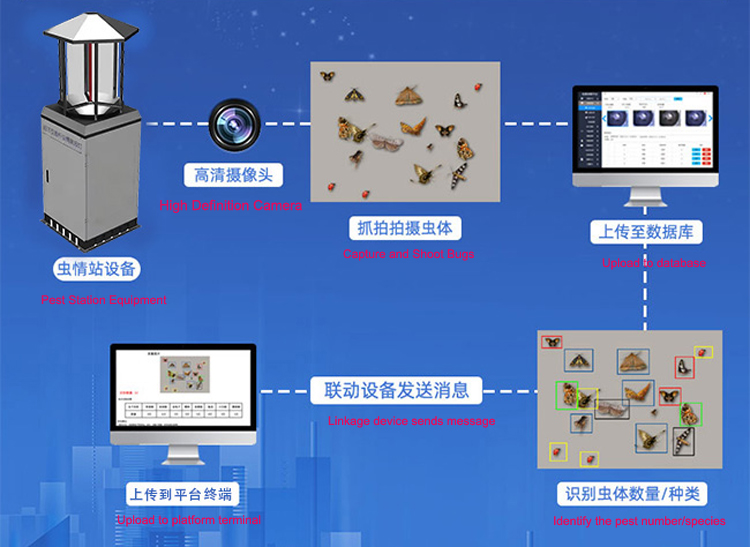
The insect station combines light attraction, insect processing, collection-plate imaging and removal of processed specimens. Light, rain and timed operating modes control its collection cycle. These functions reduce the need to visit a field point merely to retrieve every observation, but they do not remove the need to inspect the site, maintain the mechanism or review uncertain specimens.
Images help a reviewer examine the captured material rather than accepting an unexplained count. The review still needs a target list and a rule for unclassified or damaged specimens. Do not treat a named species in a general equipment description as proof that the delivered classification configuration has been validated for that species at the intended farm.
| NBL-IoT-SRPMS function | Configuration detail | Engineering significance |
|---|---|---|
| Attraction | 365-395 nm insect-attracting light source | Collection depends on insect response to the method; it is not universal pest detection |
| Image acquisition | 12-megapixel industrial camera in the described configuration | Verify usable specimen detail, lighting and image access with the actual device |
| Local operation | 10-inch touch display; timed, light and rain operating functions | Check the configured mode rather than assuming continuous collection |
| Collection handling | Infrared processing, plate distribution and cleaning mechanism | Inspect specimen transfer and collection-plate condition during service |
| Remote connection | 4G or Ethernet configuration; serial expansion interfaces | Identify which connection carries records, images and device status |
| Power arrangement | Mains or an optional solar-and-battery package | Size for the entire collection cycle, including processing, not the lamp alone |
Use a target-appropriate insect station where its observations can be interpreted alongside crop inspections. Record the block, crop and operating period. Avoid moving a device without recording the move: a new background light, changed crop canopy or a different field edge can change the collected insects independently of a change in crop infestation.
Do not assume that a field light trap represents insects inside an enclosed store, and do not use it as a rodent detector. Identify storage insects and rodents as separate tasks. Keep inspection points associated with the actual rooms, access areas or storage zones concerned. The project may need multiple methods; a single outdoor cabinet does not cover them by default.
A common map can show different observation types, provided each point retains its method and unit. An insect-image record, a rodent inspection and a crop-damage assessment should remain separately identifiable. This allows a manager to allocate the appropriate follow-up without presenting unrelated counts as one combined measure of pest pressure.
A count only has meaning with its observation period and operating conditions. If one night has a complete collection cycle and the next is interrupted by rain control or loss of power, a lower count may reflect less collection time. Retain those operating differences. Do not fill missing periods with zero merely to produce a continuous chart.
Inspect the attraction source, impact surfaces, transfer path and collection plate when results change unexpectedly. A working modem does not prove that insects reached the camera. A successful photograph does not prove that the preceding collection interval was complete. Reviewing the physical sequence is more useful than adjusting count thresholds to hide a mechanical problem.
For a pilot, compare accessible specimens with their associated images and reviewed classifications. Include quiet and busy collection periods. Check whether overlapping specimens remain interpretable and whether the removal mechanism clears the plate. Agree how uncertain observations will be marked. This tests the actual insect record rather than only the connection between a cabinet and a server.
RS485 is a local electrical interface; Modbus RTU can carry defined numeric values and status registers where implemented. A serial connector does not establish how a full-resolution insect image reaches a third-party platform. For image access, establish the applicable network interface, retrieval method and access permissions separately from any register list.
Ask for a sample image record and the associated device identifier, observation time and operating status. Check whether the time represents collection, photography or upload. Where weather or soil measurements are linked, confirm the timestamps rather than assuming that a common dashboard makes the observations simultaneous. The serial expansion needs its own device compatibility check.
The processing and imaging stages add loads that a simple attraction lamp does not have. A solar package therefore needs a cycle-based energy review using the configured heating, collection and communications duties. Battery capacity in Ah alone is not an energy figure without its nominal voltage and usable operating limits. Do not promise an autonomy period from a panel rating alone.
Leave access to the collection drawer and rain-control surfaces, and provide a suitable foundation and electrical protection for the location. Maintenance should include the parts that affect specimen quality, not only the camera lens. An automatic plate-cleaning mechanism does not empty every storage compartment or guarantee that dirt never enters the collection path.
For model matching, send NiuBoL the crop, target insect list, proposed locations, collection season and required image destination. If the wider project also includes rodents, list that as a separate task. This avoids an insect-system quotation being interpreted as an offer for a different detection technology.
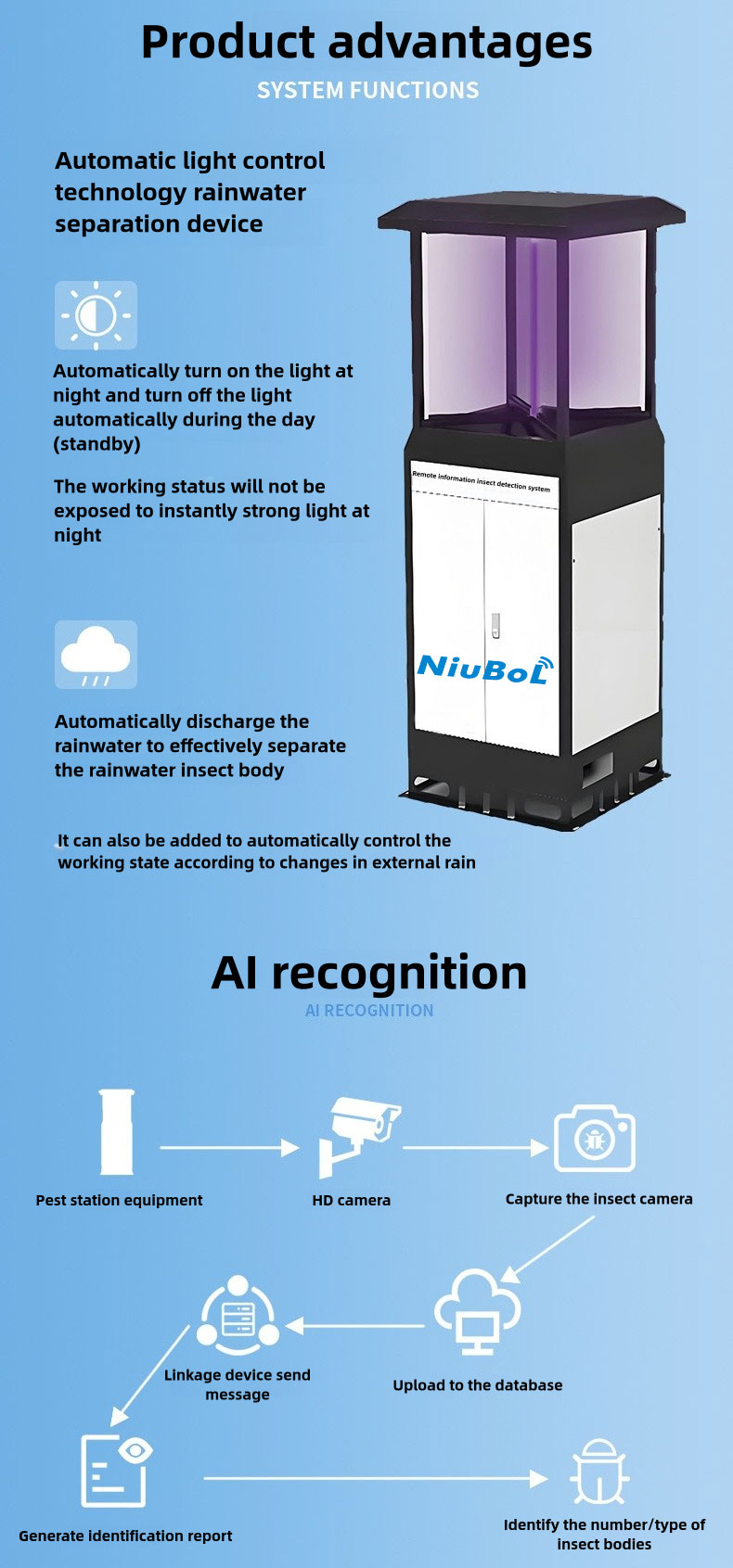
The NBL-IoT-SRPMS described here uses insect attraction, processing and imaging. Those observations do not demonstrate rodent activity. Specify a separate rodent detection or inspection method rather than treating the insect station as a combined device.
No. It is a count associated with a particular collection method, location and operating period. Interpret it with target-species suitability and field observations. It should not be converted into a total field population without a justified, application-specific method.
They can share a platform if compatible data access is provided, but the records need separate method labels, point identities and meanings. Verify the actual integration path for each device; a shared screen is not evidence that one detector measures both targets.
A stated RS485 interface does not define an image-transfer service. Confirm numeric registers separately from network image access. Request an example of the complete image record and test retrieval by the intended third-party system.
Run a representative pilot covering collection, specimen handling, image review and maintenance access. Confirm the target list, operating schedule and power duty. Compare usable observations across real conditions before deciding the deployment quantity; a generic area-per-device claim is not a substitute for that assessment.

A pest monitoring system is useful only when its records correspond to the target organism and the intended observation. NiuBoL's remote insect station provides a collection-and-imaging route for appropriate insect tasks. Keep rodent monitoring separate, qualify target insects locally and verify the full collection cycle before expanding a farm deployment.
Prev:Portable DO Meter Comparison: Define an Online DO Acceptance Limit
Next:Greenhouse Weather Station Price: Indoor and Outdoor Sensor Costs
Related recommendations
Sensors & Weather Stations Catalog
 Agriculture Sensors and Weather Stations Catalog-NiuBoL.pdf
Weather Stations Catalog-NiuBoL.pdf
Agriculture Sensors Catalog-NiuBoL.pdf
Water Quality Sensor Catalog-NiuBoL.pdf
Related products
 Combined air temperature and relative humidity sensor
 TDR Soil Moisture & Temperature Sensor for irrigation| RS485 |4-20mA| NBL-S-THR
 Soil pH sensor RS485 soil Testing instrument soil ph meter for agriculture |NBL-S-PH
 Wind Speed sensor Output Modbus/RS485/Analog/0-5V/4-20mA
 Tipping bucket rain gauge for weather monitoring auto rainfall sensor RS485/Outdoor/stainless steel
 Pyranometer Solar Radiation Sensor 4-20mA/RS485


Screenshot, WhatsApp to identify the QR code
WhatsApp number:+8615367865107
(Click on WhatsApp to copy and add friends)

