





— Blogs —
—Products—
 Consumer hotline +8618073152920
WhatsApp:+8615367865107
Address:Room 102, District D, Houhu Industrial Park, Yuelu District, Changsha City, Hunan Province, China
Product knowledge
Time:2026-08-18 09:08:00 Popularity:344
A portable DO meter comparison needs an agreed acceptance rule before anyone adjusts the online probe. Two instruments can disagree within their respective error limits, while two matching displays can still share an incorrect setting. For an online replacement project, define the reference instrument, comparison conditions and permitted difference before deciding whether a probe passes or fails.
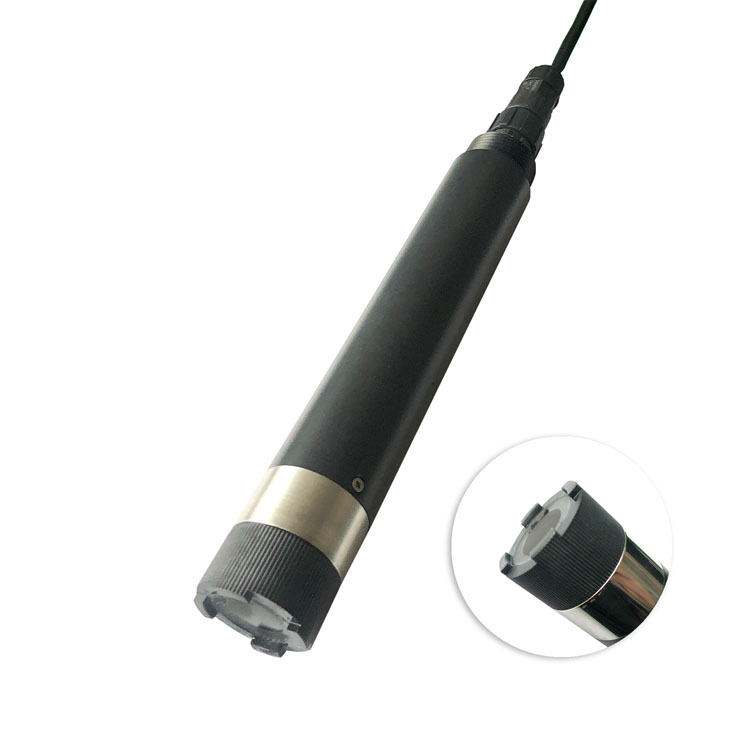
Start with the oxygen region that matters to the process. A purchasing specification that requires a small error near a low-oxygen decision point cannot be satisfied merely by showing close agreement once. Review the selected online probe's specification, the portable reference's performance and the repeatability of the proposed comparison.
The NiuBoL NBL-WQ-DO has a 0-20.00 mg/L range and an accuracy specification of +/-2% FS. On this span, that corresponds to +/-0.4 mg/L. The 0.01 mg/L display resolution is not a +/-0.01 mg/L accuracy statement. Do not reject or accept an installation by counting the final displayed digits.
| Comparison item | Value or information required | Meaning for acceptance |
|---|---|---|
| Online DO performance | NBL-WQ-DO: 0-20.00 mg/L; +/-2% FS; 0.01 mg/L resolution | The specified error limit is +/-0.4 mg/L over this span, subject to applicable conditions. |
| Portable reference | Actual model, applicable error specification, recent check and compensation settings | Portability alone does not establish reference accuracy or calibration status. |
| Probe operating conditions | 0-45 degrees C; pressure below 0.2 MPa; IP68 | Conduct the comparison within the online probe's operating limits. |
| Online power and output | 12-24 V DC; less than 0.3 W at 12 V; RS485 Modbus RTU | Confirm the host is receiving the intended value, unit and scale. |
| Installation and cable | Immersion mounting, 3/4 NPT thread; standard 5 m cable, customizable | Provide safe access to place a reference probe beside the fixed sensing point. |
Suppose the selected portable instrument has an applicable error limit of +/-0.2 mg/L under the test conditions. This hypothetical reference specification must be replaced by the actual instrument's specification when preparing a test procedure. Combining its absolute limit with the online probe's +/-0.4 mg/L gives a possible difference of 0.6 mg/L when the two errors act in opposite directions.
This simple sum is a screening bound, not a statistical uncertainty budget, a calibration certificate or an automatically valid acceptance tolerance. It assumes both instruments meet their specifications and observe the same water. The project still needs a documented decision rule appropriate to its measurement requirement.
For illustration, an online value of 4.8 mg/L and reference value of 5.1 mg/L differ by 0.3 mg/L. That difference alone does not demonstrate failure against the example specifications. A difference of 0.9 mg/L would require investigation under the same assumptions, but would not identify which instrument or comparison condition was responsible. These are calculation examples, not field test results.
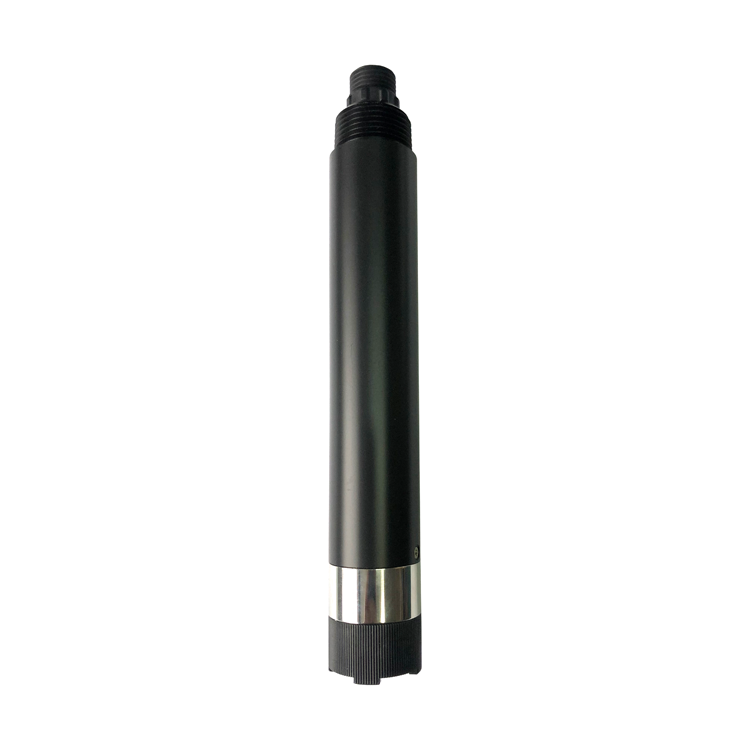
Place both sensing ends in the same representative water zone and at comparable depth. Avoid putting one in attached bubbles or an aerator plume. Allow each instrument to stabilize by its procedure. Record the time, temperature and process state rather than comparing a current reading with a value written down earlier.
Use the same oxygen unit. Review temperature, salinity and any pressure-related settings required by each instrument. The base online probe's salinity correction uses a configured value; it does not independently measure changing salinity. A settings mismatch must be resolved before a calibration change is considered.
Repeat the paired observation under stable conditions. If the spread between repeated checks is already larger than the proposed tolerance, examine the procedure and water variability first. Repeated measurements do not remove a systematic reference error, so a narrow spread alone is not proof of traceable accuracy.
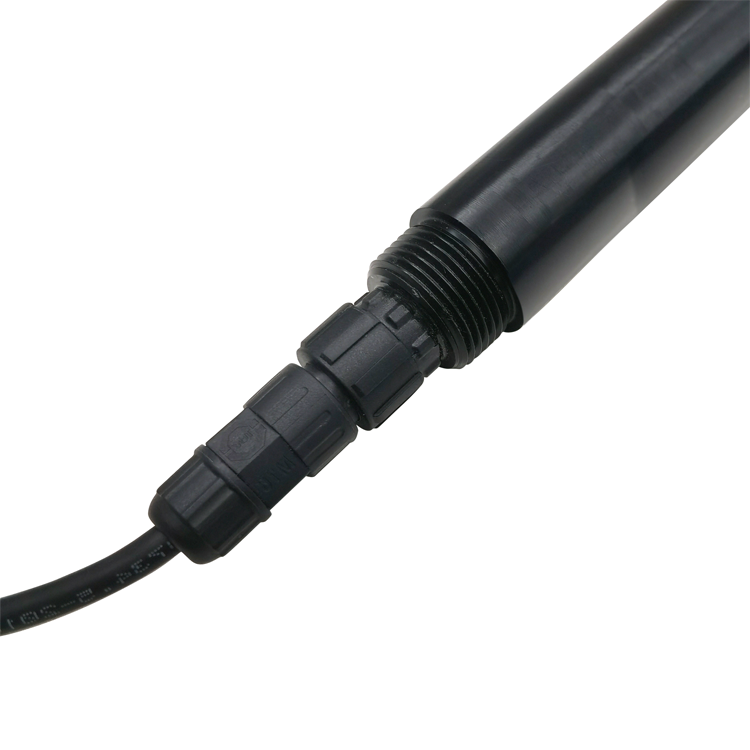
Where possible, compare the probe's value from a suitable configuration tool with the PLC, RTU or data logger. A wrong register, decimal scale or oxygen unit can make the dashboard disagree even when the probe measurement is correct. Verify the delivered Modbus map rather than adjusting calibration to compensate for a host decoding error.
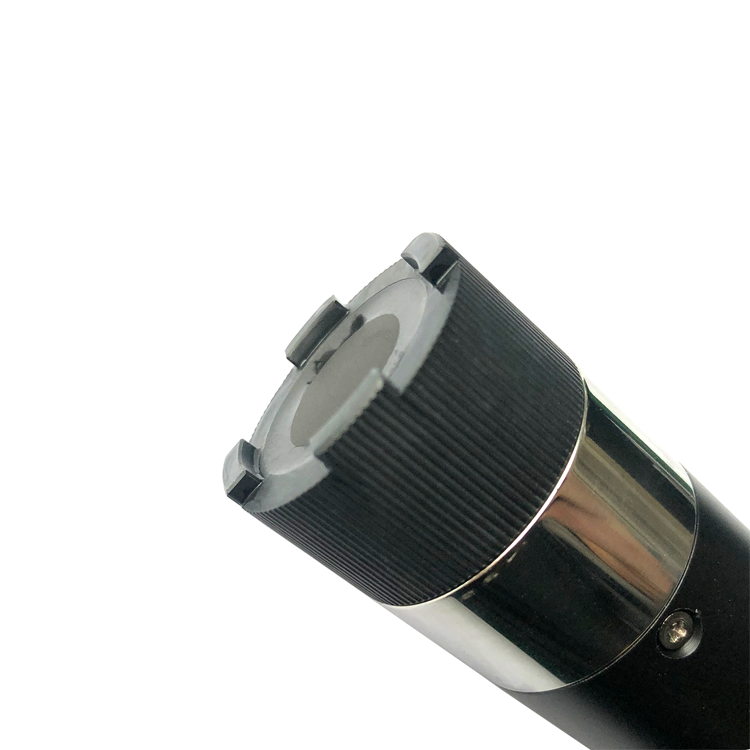
Keep an as-found record before cleaning or recalibration. Then inspect the optical cap for deposits, attached bubbles and damage, and perform the appropriate service and reference checks. Record any change after service. Forcing one reading to match another without this sequence can hide fouling or transfer a reference problem into the online record.
When agreement is satisfactory at one location but operating readings differ elsewhere, review the sample location rather than the tolerance. A portable meter moved through different depths and a fixed probe may legitimately observe different oxygen conditions. The portable-to-online monitoring upgrade guide covers retaining those mobile checks after installation.
No. Establish its applicable specification, current check status and suitability for the comparison. A reference that is fouled, unstable or incorrectly compensated cannot determine whether the fixed probe meets its requirement.
No. The selected base DO probe's stated error limit is +/-0.4 mg/L over its span. A single close agreement does not change that specification. Select suitable measurement equipment and an appropriate acceptance method for the required limit.
No. It is the sum in the specific hypothetical example above. The actual criterion depends on the selected reference, operating region, comparison method and process requirement. Agree the rule before testing rather than adopting the example as a universal limit.
Only after checking the reference, common sample conditions, compensation, sensing surface and receiving-system interpretation. Follow the probe's calibration procedure when the appropriate checks establish a calibration problem; do not correct an unexplained field difference by trial and error.
Request the exact accuracy basis, operating limits, register map and applicable calibration procedure. Provide the intended oxygen region and reference method so NiuBoL can review whether the proposed configuration suits the required comparison and process decision.
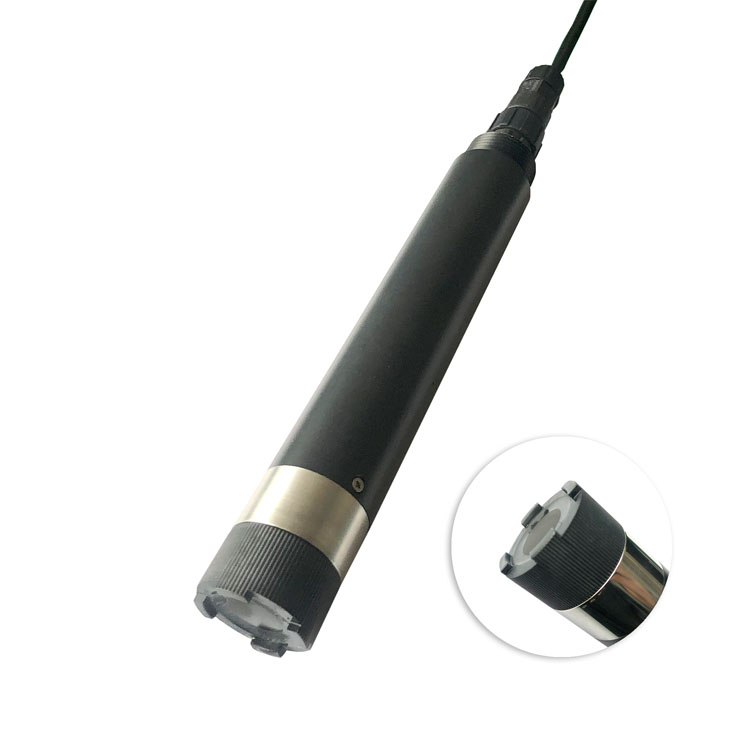
A portable DO meter comparison is useful when the reference and decision rule are defined. Separate specification compliance, field agreement and host decoding. Preserve the original readings and resolve conditions before recalibration; close-looking numbers alone are not a sufficient acceptance method.
Prev:Dissolved Oxygen and pH Meter: Keep Aeration and Dosing Decisions Separate
Next:Pest Monitoring System: Why Insect Traps Do Not Monitor Rodents
Related recommendations
Sensors & Weather Stations Catalog
 Agriculture Sensors and Weather Stations Catalog-NiuBoL.pdf
Weather Stations Catalog-NiuBoL.pdf
Agriculture Sensors Catalog-NiuBoL.pdf
Water Quality Sensor Catalog-NiuBoL.pdf
Related products
 Combined air temperature and relative humidity sensor
 TDR Soil Moisture & Temperature Sensor for irrigation| RS485 |4-20mA| NBL-S-THR
 Soil pH sensor RS485 soil Testing instrument soil ph meter for agriculture |NBL-S-PH
 Wind Speed sensor Output Modbus/RS485/Analog/0-5V/4-20mA
 Tipping bucket rain gauge for weather monitoring auto rainfall sensor RS485/Outdoor/stainless steel
 Pyranometer Solar Radiation Sensor 4-20mA/RS485


Screenshot, WhatsApp to identify the QR code
WhatsApp number:+8615367865107
(Click on WhatsApp to copy and add friends)

