





— Blogs —
—Products—
 Consumer hotline +8618073152920
WhatsApp:+8615367865107
Address:Room 102, District D, Houhu Industrial Park, Yuelu District, Changsha City, Hunan Province, China
Product knowledge
Time:2026-08-18 09:07:00 Popularity:317
A dissolved oxygen and pH meter package should let operators compare two valid water measurements without allowing one channel to stand in for the other. Low oxygen can require an aeration response; a pH deviation needs its own investigation. Buying both probes together is useful when the system preserves their separate units, locations, calibration and fault states.
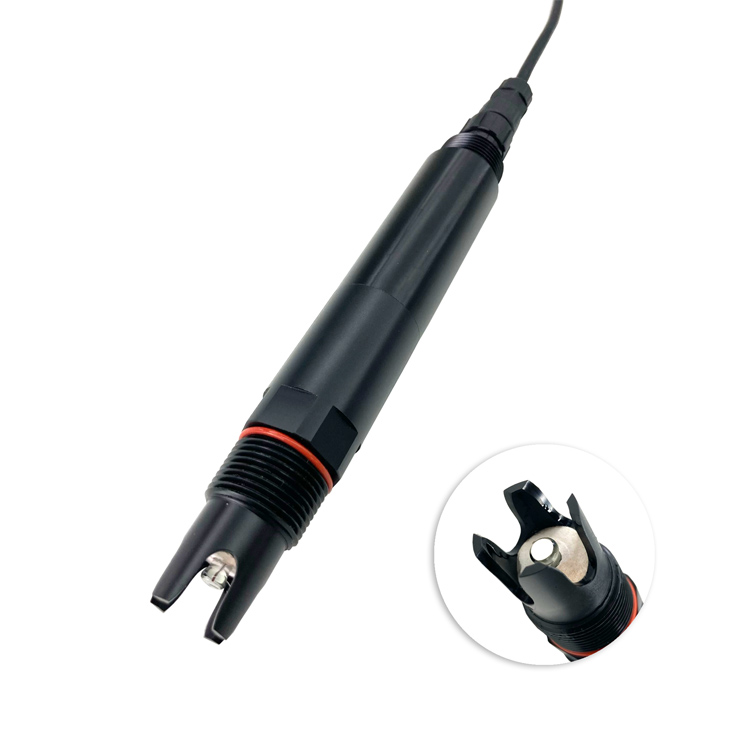
In aquaculture or biological treatment, oxygen and pH can change during the same operating period. That does not establish a fixed conversion between them or justify driving a dosing system from oxygen alone. Define what each measurement is intended to influence before configuring alarms or automatic actions.
A practical NiuBoL package can use an independent pH probe and optical DO probe connected to a compatible PLC, RTU or data logger. A common display is a receiving-system feature, not evidence that the two probes share a measuring method. Confirm the actual equipment included rather than assuming a controller, gateway or dosing output comes with the probes.
| Item | NBL-WQ-PH | NBL-WQ-DO |
|---|---|---|
| Range and accuracy | 0-14 pH; +/-0.1 pH | 0-20.00 mg/L; +/-2% FS, equivalent to +/-0.4 mg/L over this span |
| Temperature and pressure | 0-65 degrees C; pressure below 0.2 MPa | 0-45 degrees C; pressure below 0.2 MPa |
| Supply and power | 12-24 V DC; 0.2 W at 12 V | 12-24 V DC; less than 0.3 W at 12 V |
| Output | RS485 Modbus RTU | RS485 Modbus RTU |
| Protection and cable | IP68; standard 5 m cable, customizable | IP68; standard 5 m cable, customizable |
| Temperature compensation | NTC-based automatic compensation | Pt1000 automatic temperature compensation; configured salinity correction |
The common water-temperature limit for these two selected probes is 45 degrees C, not the higher pH limit. Assess each instrument's wetted-material compatibility as well as temperature and pressure. IP68 describes protection of the specified probe; it does not approve a shared pressure chamber or every cable junction.
The alternative DO-4A optical oxygen probe uses a different accuracy basis, +/-2% of reading, and a 0-50 degrees C operating range. If substituted, revise the DO specification and acceptance criteria rather than borrowing the base DO full-scale statement.
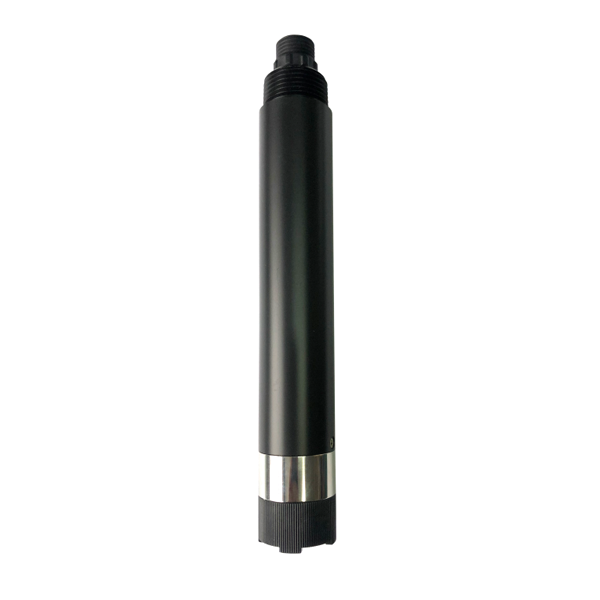
When the purpose is to interpret DO and pH together, start with a shared representative water zone and record the actual probe depths. Avoid comparing oxygen in an aerator discharge with pH at an inlet without labeling the locations. Those observations can both be valid yet describe different water conditions.
Give each sensing end appropriate clearance and retrieval access. Keep the oxygen cap away from direct bubble impingement and sediment. Mount the NBL-WQ-PH sensing end downward; its installation guidance excludes horizontal or inverted mounting and requires at least a 15-degree inclination. Final brackets should follow the model's installation drawing, not the outline of the oxygen holder.
For bypass monitoring, obtain approval for both probes and the actual chamber. Air entering the sample route can change the oxygen observation, while sample transport can separate the timestamps from conditions in the main process. A common connector or thread does not resolve those sampling questions.
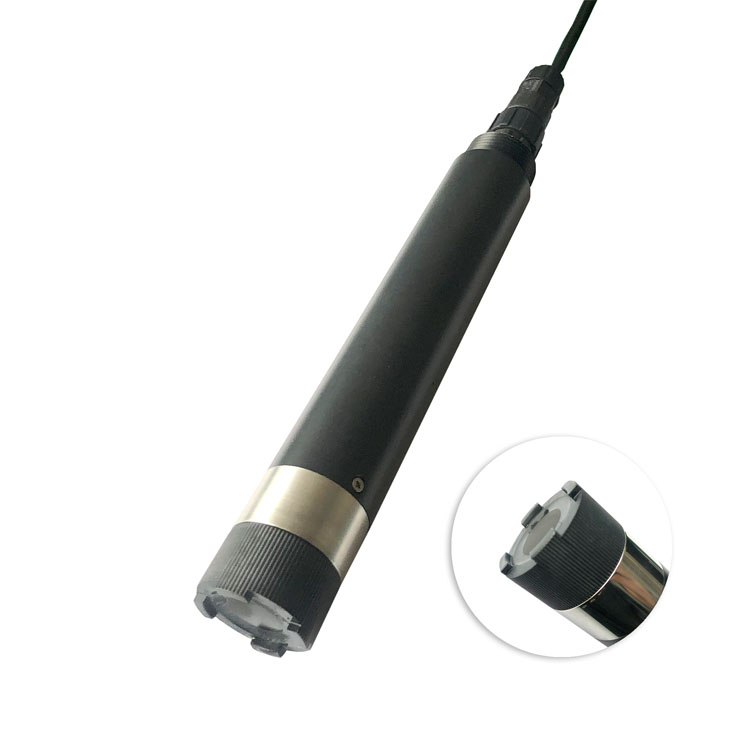
Give each RS485 device a unique non-conflicting address and use its own register map. Verify data type, units and scaling at the receiving host. Store pH without a concentration unit and oxygen in the selected unit, such as mg/L; do not label a percentage-saturation channel as concentration.
Maintain a validity and timestamp for each channel. If pH communication fails, the display may continue presenting valid DO, but it must identify the pH fault rather than retaining an indefinitely live-looking number. Whether aeration or dosing can continue depends on the approved process-control design, not simply on whether some data are still arriving.
During a supervised commissioning test, isolate one probe safely and verify the affected display, alarm and control condition. Repeat for the other probe, then restore both. Conduct these tests with any hazardous automatic action disabled or under an approved test procedure.
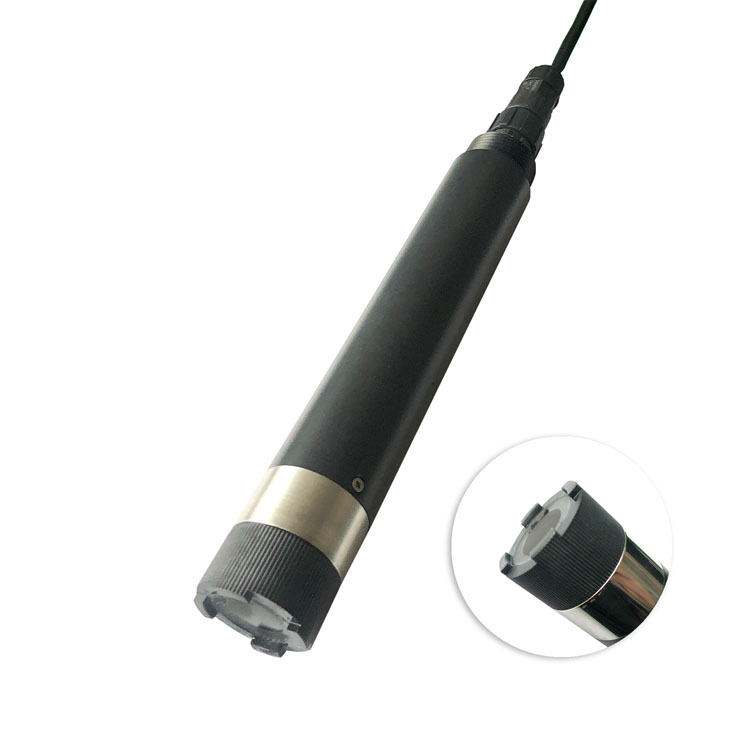
The pH electrode and optical oxygen cap do not share a storage or calibration procedure. When the base pH probe is removed from use, its specified storage medium is 3 mol/L KCl. Do not store it for extended periods in distilled water. The oxygen cap has its own moist-storage and inspection procedure; KCl electrode storage is not a universal water-sensor instruction.
Before recalibration, inspect contamination and compare an unexpected reading appropriately. Clean and verify each probe with the correct reference procedure. A successful pH buffer check says nothing about oxygen accuracy, and a DO reference check does not validate the pH electrode.
Record service start and return-to-measurement times by channel. After cleaning or replacement, wait for a stable reading and complete the applicable check before returning that channel to automatic use. Mark any missing period in the trend instead of treating a service reading in air or buffer as process water.
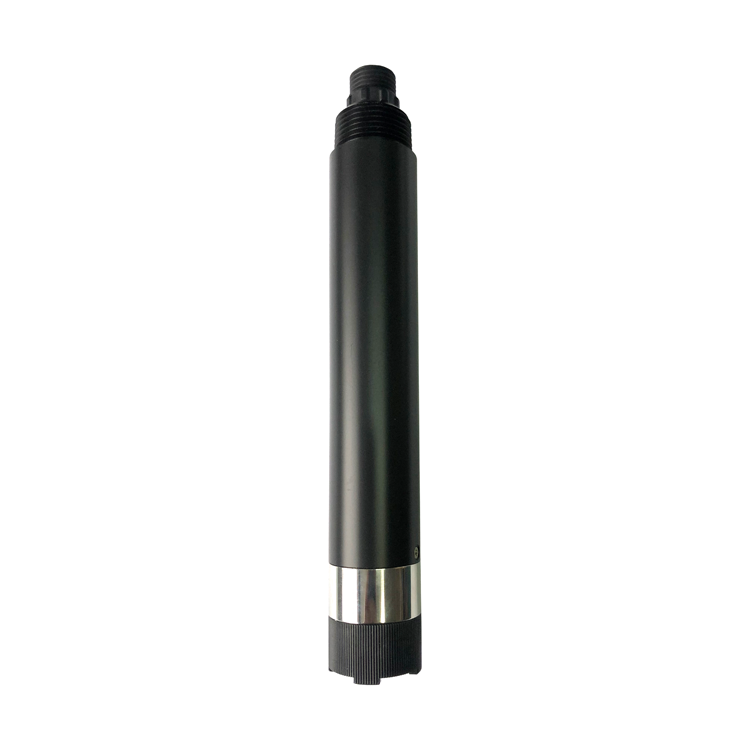
No. The term can describe separate probes feeding one controller, a configured multiparameter assembly or a portable instrument. This configuration uses independent online probes. Ask for the exact hardware and channel list when comparing quotations.
No. There is no general conversion that makes a pH reading a valid dissolved-oxygen measurement. If oxygen measurement is unavailable, follow the site's defined measurement-fault response rather than substituting pH.
Not necessarily when independent supports and safe access are provided. However, a shared holder can make removal affect both. Specify retrieval and process isolation arrangements if keeping one channel in service is important.
Not simply because they share a display. Select each delay from the measurement response, process risk and required action. Test aeration and dosing conditions separately; a delay acceptable for one control loop may be unsuitable for the other. Keep measurement-fault detection separate from either process alarm.
Specify the pH and DO models, separate cable lengths and holders, supply, host channels and any required gateway. State which control functions are required and which are provided by the site's existing equipment. Include appropriate buffers, oxygen-cap service items and commissioning responsibilities.
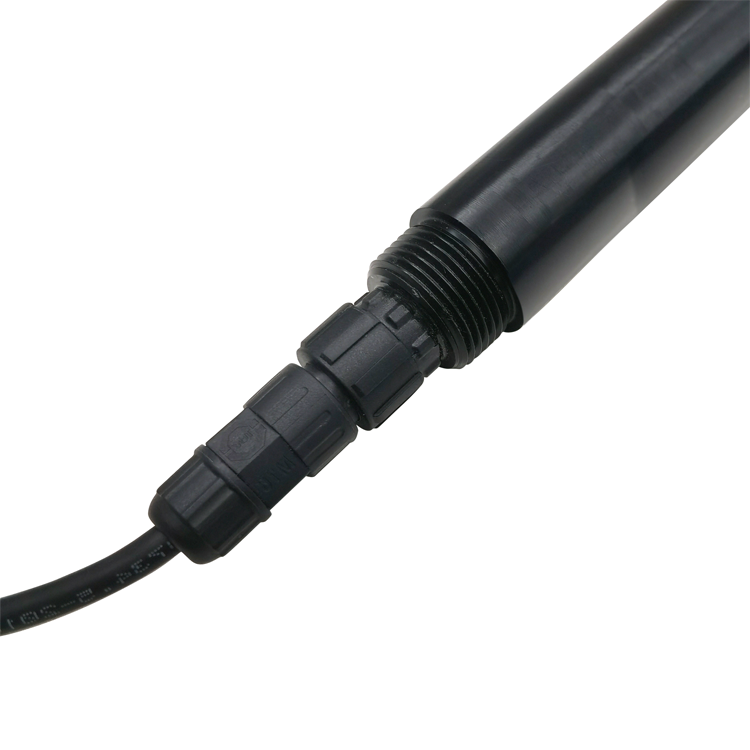
A dissolved oxygen and pH meter package is useful when both channels remain individually trustworthy and can be compared at known locations and times. NiuBoL can review a separate-probe configuration from the water conditions, receiving controller and service arrangement. Keep aeration, dosing and measurement-fault decisions explicit rather than merging them into one generic alarm.
Prev:TDS Sensor with Arduino: Connect and Decode an RS485 EC Probe
Next:Portable DO Meter Comparison: Define an Online DO Acceptance Limit
Related recommendations
Sensors & Weather Stations Catalog
 Agriculture Sensors and Weather Stations Catalog-NiuBoL.pdf
Weather Stations Catalog-NiuBoL.pdf
Agriculture Sensors Catalog-NiuBoL.pdf
Water Quality Sensor Catalog-NiuBoL.pdf
Related products
 Combined air temperature and relative humidity sensor
 TDR Soil Moisture & Temperature Sensor for irrigation| RS485 |4-20mA| NBL-S-THR
 Soil pH sensor RS485 soil Testing instrument soil ph meter for agriculture |NBL-S-PH
 Wind Speed sensor Output Modbus/RS485/Analog/0-5V/4-20mA
 Tipping bucket rain gauge for weather monitoring auto rainfall sensor RS485/Outdoor/stainless steel
 Pyranometer Solar Radiation Sensor 4-20mA/RS485


Screenshot, WhatsApp to identify the QR code
WhatsApp number:+8615367865107
(Click on WhatsApp to copy and add friends)

