





— Blogs —
—Products—
 Consumer hotline +8618073152920
 WhatsApp:+8615367865107
Address:Room 102, District D, Houhu Industrial Park, Yuelu District, Changsha City, Hunan Province, China
Product knowledge
Time:2026-09-05 14:00:00 Popularity:197
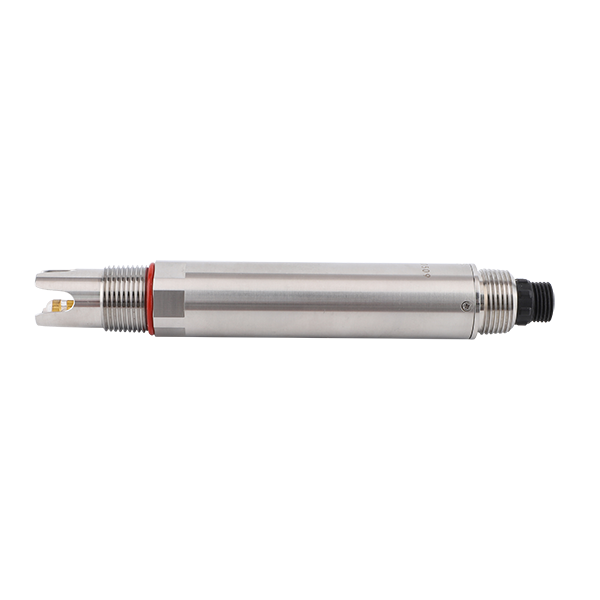
Residual chlorine flow cell design decides whether an online probe sees the water the operator intends to control. A chlorine sensor can be correctly wired and calibrated yet report a stale or unstable value if the sample branch stagnates, loses pressure or traps air. For NiuBoL's NBL-WQ-CL, specify the circulation cell and sample hydraulics with the probe; they are one measuring point.
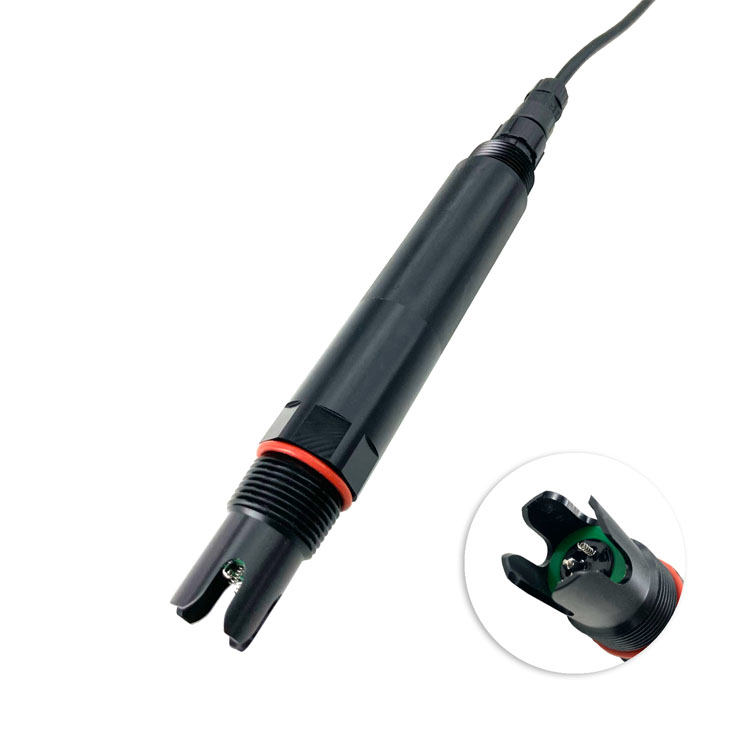
Start with the plant question: outlet residual, storage-tank turnover, network endpoint or circulating-water control. Those points do not have the same pipe pressure, transport delay or disinfection chemistry. Locate the takeoff where the stream represents the decision, and record the distance and route to the analyzer. A convenient tap on a dead leg may be easy to pipe but will not follow a process change promptly.
Keep the sample line practical, serviceable and protected from heat and light where chlorine loss is a concern. Provide isolation so the probe and flow cell can be serviced safely, and arrange the drain or return according to the site's water and backflow requirements. The flow indicator belongs where a technician can read it while inspecting the sensor, not hidden behind the enclosure.
The NBL-WQ-CL is an HClO-responsive constant-voltage sensor. Confirm that the project's required reported quantity is compatible with this method; do not assume that an HClO-sensitive reading is identical to total chlorine or another disinfectant measurement. Record pH and temperature with comparison samples because chlorine speciation and interpretation change with water chemistry.
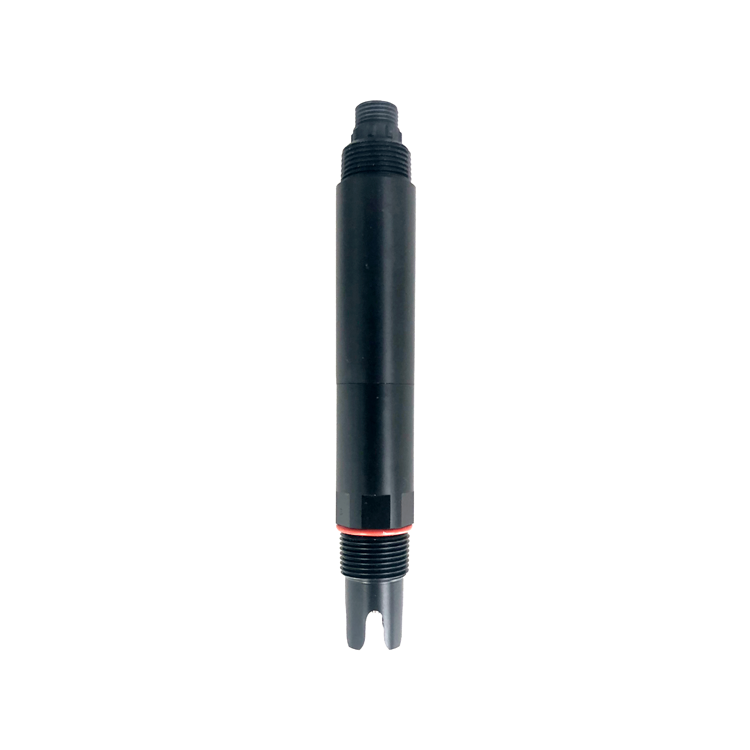
The NBL-WQ-CL instruction sheet calls for circulation-pool installation at 30-60 L/h. Put the sensing end near the inlet region but do not aim the outlet jet directly at it. The requirement is stable renewal across the measuring surface, not simply a high number at the inlet meter. A cell with an air pocket or a shortcut path can satisfy a nominal flow reading while exposing the electrode poorly.
Check flow under the lowest expected supply pressure and again when the line is at its usual high-pressure state. An unregulated branch that delivers the target flow only during daytime peak production is not an unattended design. Identify the valve, flow indicator and any strainer that can restrict flow as the system fouls. Document what an operator should do on low-flow alarm rather than leaving the last chlorine value on screen.
| Hydraulic feature | Design check | Failure it helps expose |
|---|---|---|
| Representative takeoff | Compare process and sample-point location; identify stagnant branches. | Delayed or unrepresentative residual. |
| Visible, adjustable flow | Record the actual flow at minimum and normal line pressure. | Electrode response that changes with plant pressure. |
| Bubble escape and cell orientation | Inspect the wetted electrode region during operation. | Short spikes or intermittent exposure. |
| Safe isolation and drain | Demonstrate removal without flooding the electrical cabinet. | Deferred cleaning and unsafe service. |
| Sample residence time | Measure response after a known process or sample change. | An alarm based on old water. |
Where several chlorine points are required, repeat these checks for each takeoff. A station at a plant outlet and one at a remote network point may use the same sensor but need different panel locations, hydraulic components and alarm timing.
| Item | NBL-WQ-CL user-manual specification | What to verify in the project |
|---|---|---|
| Measurement | Constant-voltage method, 0-2.000 mg/L as HClO; 0.001 mg/L resolution | Required chlorine species and routine residual band. |
| Accuracy | ±5% or ±0.05 mg/L | Acceptance tolerance with reference-method uncertainty. |
| Water conditions | pH 4-9; 5-50 °C; pressure below 0.1 MPa | Actual conditions at the sensor cell, not the main pipe only. |
| Sample flow | 30-60 L/h in the circulation cell | Minimum and maximum available branch pressure. |
| Power / output | 12-24 VDC ±10%; 0.2 W at 12 V; RS485 Modbus RTU | Panel supply and receiving PLC or logger interface. |
| Construction | POM/PTFE wetted materials; IP68 sensor protection | Chemical exposure and separate enclosure rating. |
These limits are from the NBL-WQ-CL product family and its current user manual. Other NiuBoL chlorine housings shown on this page have different specifications and optional interfaces. Do not combine a 4-series range or pressure rating with the standard NBL-WQ-CL just because the photographs look similar.
In particular, use the cell pressure rather than the main-pipe pressure to judge suitability. A regulator and bypass arrangement may make a high-pressure process line usable, but that must be demonstrated in the hydraulic design; the sensor itself should not be exposed above its stated operating limit.
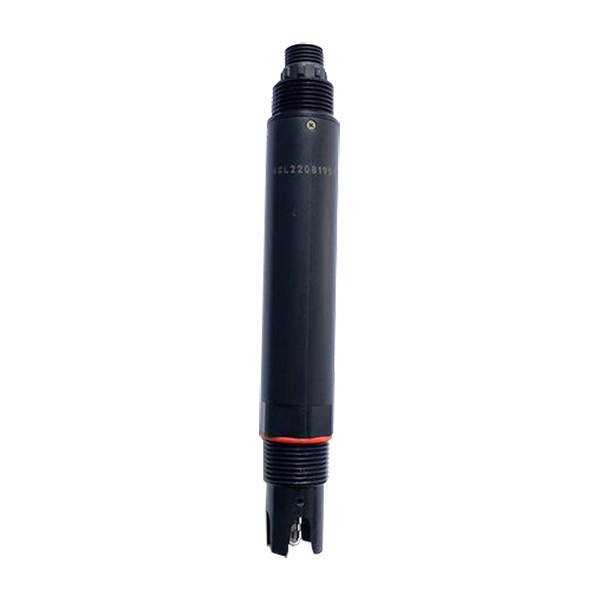
Flush the bypass, inspect for leaks and bubbles, set the flow within the specified band, then record pH, temperature and an independent residual measurement at a sample point close to the cell. A reagent comparison from another tank or a different time is weak evidence for a sensor fault. Use the site's approved reference procedure and note whether it reports free chlorine, HClO or another basis.
New or long-stored electrodes need preparation before a final accuracy judgment; the NBL-WQ-CL instructions call for activation in tap water for 24 hours. Do not treat a first wet reading as an acceptance result. After stabilization, compare the as-found value. The product supports zero and slope calibration, but its instructions advise against unnecessary field recalibration because preparing the standard requires care. If adjustment is justified, document the reference concentration, procedure, operator and before/after readings.
Test dynamic response separately from steady agreement. Make a controlled, safe process or sample change and time when the difference appears at the cell, in the PLC and on the remote display. This separates transport delay from sensor response and gateway delay. Set alarm persistence with those observed delays in mind; a rapid display response cannot be promised solely from a sensor data-sheet number.
For RS485 Modbus RTU, assign a unique address and confirm baud rate, parity, register map, decimal scaling and temperature channel for the delivered unit. Compare a direct sensor read with the PLC, RTU or data logger value, then with the SCADA display. Test unplugged sensor, stopped sample flow and power restoration. A held last value must show a fault or stale-data status rather than appearing to be a valid dosing signal.
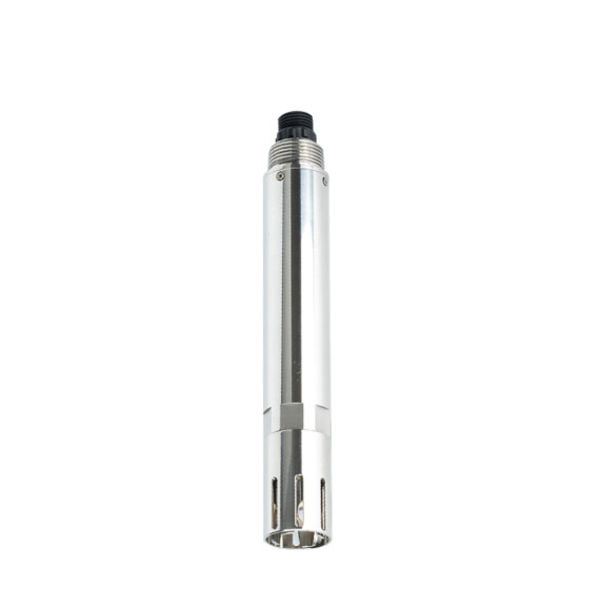
Keep signal and power wiring serviceable and protect external cable joints from moisture. The NBL-WQ-CL manual identifies a shielded cable and calls for waterproofed joints; the IP68 probe rating does not rate the entire panel or junction. If a project needs a 4-20 mA input, specify a compatible model or converter explicitly; the standard NBL-WQ-CL reference here is RS485 Modbus, not an assumed analog loop.
A complete acceptance file should show the takeoff and return or drain, panel sketch, normal and minimum-pressure flow readings, pH and temperature, comparison results, alarm test and data mapping. Include instructions for checking flow before changing calibration. On a low reading, operators should first distinguish a genuinely low residual from no flow, poor sample renewal, an old sample or a fouled electrode.
For a quotation, give NiuBoL the required chlorine measurement basis, expected range, water pH and temperature, main-line and cell pressure, available sample flow, drain arrangement, cable route, receiving system and number of stations. Ask whether the offer includes the matched circulation cell, valves, flow indication, fittings, sensor, panel, logger and commissioning. A probe-only price cannot be compared fairly with a complete installed analyzer loop.
Q1. Can the NBL-WQ-CL be placed directly in an open tank?
A1. The referenced unit is specified for a circulation cell. Design a representative bypass with stable 30-60 L/h flow rather than assuming a static immersion point will deliver the same measurement.
Q2. Why can chlorine appear low when the process has not changed?
A2. Check branch flow, trapped air, sample residence time, pH, electrode condition and a matched reference reading before adjusting the slope. A stagnant branch can lose residual before water reaches the sensor.
Q3. Which pressure should be compared with the sensor limit?
A3. Use the pressure at the circulation cell under all operating modes. The NBL-WQ-CL manual specifies below 0.1 MPa; a higher main-pipe pressure needs a properly designed and verified bypass.
Q4. When should calibration be attempted?
A4. After activation and stable flow, take a matched reference sample and preserve the as-found result. Adjust only when the comparison and the delivered procedure justify it; record the standard and before/after values.
Q5. Can a PLC use the sensor value to control dosing immediately?
A5. First validate the measurement basis, sample delay, flow-fault alarm, Modbus scaling and process response. A digital value alone does not prove that the entire loop is suitable for closed-loop control.
Q6. Is 4-20 mA standard on every pictured NiuBoL chlorine probe?
A6. No. The NBL-WQ-CL reference is RS485 Modbus RTU. Specify an analog-capable variant or converter and verify the ordered configuration when the PLC has only analog inputs.
Q7. What should the integrator ask for before pricing a panel?
A7. Request process and sample pressure, normal/minimum flow, drain route, chemistry, pH, temperature, mounting space, power, communication method and required accessories. These determine the cell and panel scope.
Residual chlorine flow cell design is not an accessory decision to make after the sensor is selected. The flow path determines sample freshness, stability, serviceability and response time. Specify the NBL-WQ-CL with its matched hydraulic path, then accept the complete measurement chain from takeoff to operator display.
Prev:Water Disinfection Monitoring Parameters: Residual, Contact and Control
Next:Fluorescence Dissolved Oxygen Sensor Maintenance: Cap Life, Fouling and Calibration
Related recommendations
Sensors & Weather Stations Catalog
 Agriculture Sensors and Weather Stations Catalog-NiuBoL.pdf
Weather Stations Catalog-NiuBoL.pdf
Agriculture Sensors Catalog-NiuBoL.pdf
Water Quality Sensor Catalog-NiuBoL.pdf
Related products
 Combined air temperature and relative humidity sensor
 TDR Soil Moisture & Temperature Sensor for irrigation| RS485 |4-20mA| NBL-S-THR
 Soil pH sensor RS485 soil Testing instrument soil ph meter for agriculture |NBL-S-PH
 Wind Speed sensor Output Modbus/RS485/Analog/0-5V/4-20mA
 Tipping bucket rain gauge for weather monitoring auto rainfall sensor RS485/Outdoor/stainless steel
 Pyranometer Solar Radiation Sensor 4-20mA/RS485

Screenshot, WhatsApp to identify the QR code
WhatsApp number:+8615367865107
(Click on WhatsApp to copy and add friends)

