





— Blogs —
—Products—
 Consumer hotline +8618073152920
 WhatsApp:+8615367865107
Address:Room 102, District D, Houhu Industrial Park, Yuelu District, Changsha City, Hunan Province, China
Product knowledge
Time:2026-09-05 13:00:00 Popularity:200
Water disinfection monitoring parameters should distinguish disinfectant addition, remaining residual, contact conditions and the surrounding water quality. Chlorine, pH, turbidity, temperature and relevant hydraulic data answer different questions; ORP is a supporting redox indicator, not a substitute chlorine concentration. Select each measuring point around the treatment decision. A stable residual at an analyser does not by itself demonstrate adequate disinfection throughout the system.
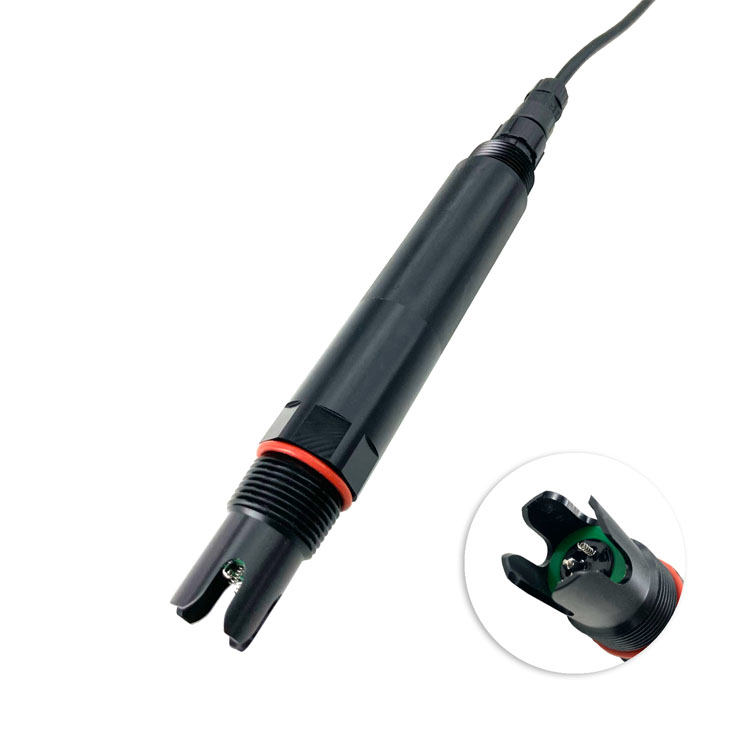
The chemical-feed setting describes what the equipment is commanded to add. Residual describes what remains at a particular point after reactions and transport. Disinfection performance also depends on the process design and relevant operating conditions. Treating these as one quantity can conceal a failed feed pump, a changed demand or insufficient effective contact.
Begin a monitoring drawing with the intended treatment objective and water path. Mark dosing, mixing, contact volume, sample take-offs and the downstream point that matters to the operator. Then decide which instruments can reveal a deviation before it affects that objective.
| Measurement | Question it answers | What it cannot establish alone |
|---|---|---|
| Chemical feed and water flow | Is the intended dosing equipment operating in relation to throughput? | The remaining disinfectant after demand and contact |
| Defined chlorine residual | What chlorine-related quantity remains at this point? | Complete treatment effectiveness or downstream residual everywhere |
| pH and temperature | What conditions influence chlorine chemistry and interpretation? | A direct pathogen count or universal dosage requirement |
| Turbidity | Has the particle-related condition changed? | Which organism is present or whether disinfection is adequate |
| ORP | Has the measured redox condition shifted? | A unique free-chlorine concentration |
| Contact-system hydraulics | How does water pass through the designed treatment volume? | An effective contact time from tank dimensions alone |
This separation helps a contractor choose useful instrumentation instead of duplicating similar displays. It also prevents a commissioning test of the chlorine sensor from being mistaken for validation of the whole disinfection process.
Free chlorine, total chlorine, combined chlorine and hypochlorous-acid response are not interchangeable labels. Identify the required analytical result and reporting basis. If the process uses another disinfectant or a combined-chlorine strategy, establish a suitable method rather than assuming that any residual-chlorine probe will respond correctly.
For free-chlorine chemistry, the distribution between HClO and hypochlorite changes with pH. A sensor responding to HClO needs an explicit interpretation when the project requests a different reported quantity. Verify the instrument's actual compensation and calibration arrangement; a temperature-compensated channel does not automatically correct for pH or all water chemistry.
EPA chlorine-disinfection guidance discusses chlorine chemistry and operating influences. Use the relevant process design and applicable requirements to establish the treatment duty. This is not a basis for copying one residual or contact-time target into every installation.
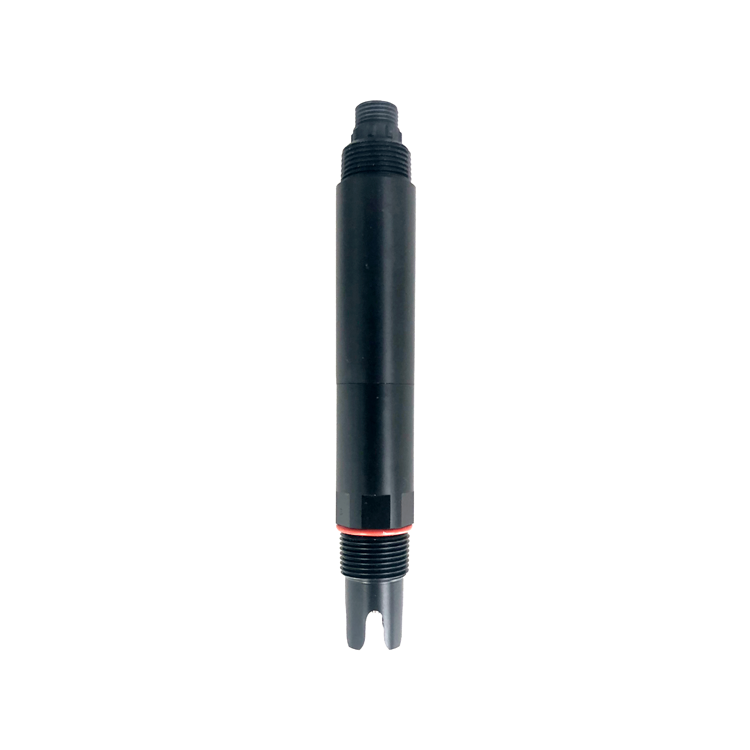
A post-mixing point can help assess dosing response, but it may not describe the residual after the intended contact stage. A downstream point can reveal decay or a local demand, but its signal arrives later. Label the purpose of each point so operators know whether they are viewing feed response, contact-outlet condition or distribution behaviour.
A side-stream analyser adds a separate transport path. Determine its hold-up from actual internal volume and flow, then check the installed response. Deposits, air or a partially closed valve can change that delay. Place the reference sampling provision so a technician can compare the analyser with water representing the same condition.
For contact calculations, total tank volume divided by flow is only a nominal hydraulic estimate. Effective contact depends on the actual flow arrangement and validation approach. A chlorine probe cannot detect every short-circuiting path or establish a validated treatment claim from a single outlet value.
The NBL-WQ-CL is a constant-voltage sensor with a specified HClO range. Its matching flow cell is part of the measuring arrangement. Compare its limits with both the normal residual and any credible over-range condition before using it in a control loop.
| Parameter | NBL-WQ-CL | Engineering consequence |
|---|---|---|
| Range | 0-2.000 mg/L HClO | Confirm the required quantity and whether another configuration is needed |
| Resolution and accuracy | 0.001 mg/L; +/-5% or +/-0.05 mg/L | Clarify the applicable error rule; resolution is not low-level accuracy |
| Sample conditions | pH 4-9; 5-50 deg C; below 0.1 MPa | Provide conditioning compatible with the measured quantity where needed |
| Flow-cell duty | 30-60 L/h through the matching cell | Observe and supervise fresh sample flow |
| Temperature channel | Pt1000 compensation; stated +/-0.5 deg C | Confirm any additional chemistry compensation separately |
| Electrical supply | 12-24 VDC +/-10%; 0.2 W at 12 V | Account for the separate controller and auxiliary equipment |
| Communication | RS485, Modbus RTU | Verify registers, units and fault handling in the PLC or RTU |
| Materials and protection | POM and PTFE wetted materials; IP68 sensor | Review fittings, panel and junction protection as separate components |
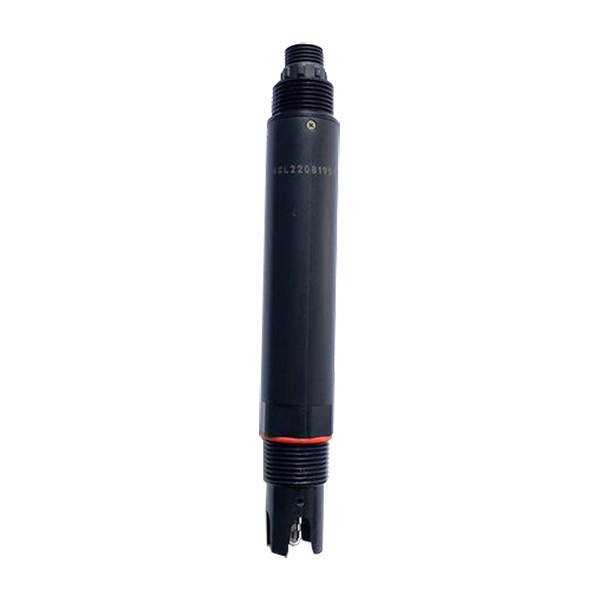
If residual falls while commanded feed is unchanged, check water throughput, actual feed delivery, sample flow and water chemistry. The cause may be greater demand, a mechanical dosing problem or a measuring-loop fault. Increasing the command without checking these possibilities can create another problem when the fault clears.
If ORP changes while the chlorine result remains steady, inspect pH and the broader water condition. Do not recalibrate ORP to force a familiar millivolt value or apply a universal millivolt-to-mg/L conversion. These channels observe different properties and can legitimately respond differently.
If turbidity rises, investigate the relevant upstream treatment and sampling condition. The optical channel helps locate an abnormal event; it does not identify pathogens or demonstrate that additional chemical alone will resolve the condition. Retain the plant's defined response and any independent analysis required for that event.
A stable display can be misleading when the sample has stopped. Supervise the sample path where loss of flow affects safe control. Test the agreed response to a closed sample valve, failed acquisition and sensor maintenance using an approved safe method, without exposing the treatment system to an uncontrolled chemical-feed command.
At the RS485 Modbus RTU interface, verify engineering values against the field device and distinguish a new reading from a retained last value. Define what the PLC does when the value is stale, outside the usable range or flagged for maintenance. The correct fallback depends on the treatment design; holding output, stopping feed or switching modes must not be chosen casually.
Verify recovery as well as failure. Restored communications should not release an abrupt unreviewed dosing change. Check controller limits, restart state and the operator's indication of whether automatic control has resumed.
Compare the chlorine channel with a suitable independent method at the same sample condition. Include relevant pH and residual variation, record sample flow and verify that the measuring delay is acceptable for the intended action. Keep calibration adjustment separate from the later comparison used to assess performance.
For a NiuBoL proposal, supply the disinfectant type, required reporting quantity, normal and peak conditions, sample pressure, flow arrangement and control objective. Ask for the exact sensor, cell, auxiliary measurement and interface needed. A clear measuring duty is more useful than a request for a universal disinfection panel.
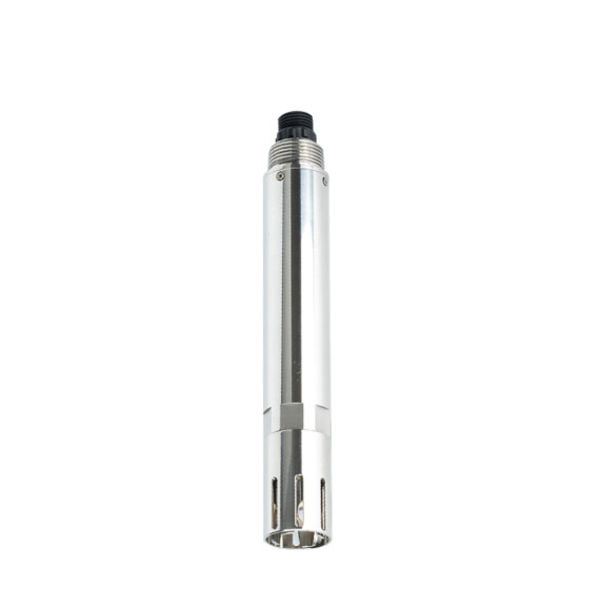
No. It represents the measured quantity at a defined location. Process validation, contact conditions, downstream behaviour and applicable independent checks address questions that one residual reading cannot answer.
pH affects chlorine speciation and can influence the relationship between an HClO-sensitive response and the required reported chlorine quantity. Confirm the compensation and interpretation used by the selected instrument.
No. The stated range is HClO-based. Total chlorine requires a suitable analytical method and an explicit performance assessment; renaming the historian tag does not change the sensing principle.
Treat the measuring point as invalid according to the approved control strategy and restore representative flow. Do not interpret stagnant-cell water as a current process result or automatically increase feed on that basis.
It gives a nominal estimate, not proof of effective contact throughout the tank. Use the hydraulic and treatment-validation approach required for the actual installation.
It should establish representative sampling, acceptable delay, correct PLC scaling and safe agreed responses to faults, maintenance and restart. These checks test whether the measurement can support the intended operating decision.
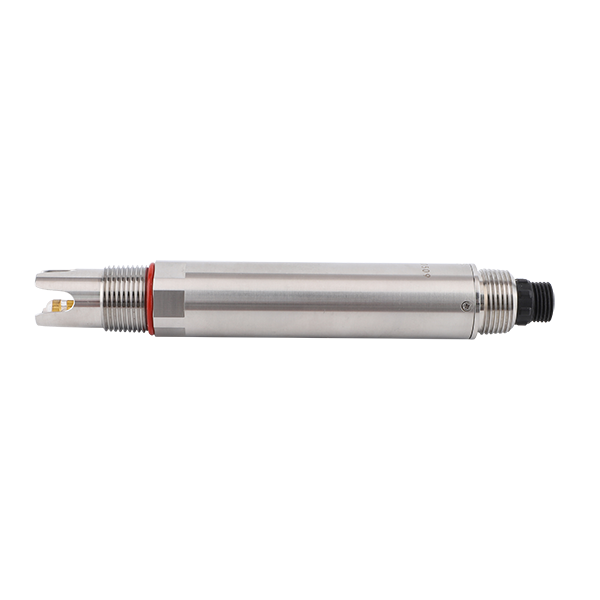
Choose water disinfection monitoring parameters by the question each one answers. Define the chlorine quantity, measure the conditions that affect interpretation and distinguish sampling faults from treatment events. NiuBoL hardware can form part of that system when its range, flow-cell conditions and interface have been matched to the actual process.
Prev:What Is Turbidity? NTU, Optical Methods and Water-Monitoring Limits
Next:Residual Chlorine Flow Cell Design and Acceptance Checks
Related recommendations
Sensors & Weather Stations Catalog
 Agriculture Sensors and Weather Stations Catalog-NiuBoL.pdf
Weather Stations Catalog-NiuBoL.pdf
Agriculture Sensors Catalog-NiuBoL.pdf
Water Quality Sensor Catalog-NiuBoL.pdf
Related products
 Combined air temperature and relative humidity sensor
 TDR Soil Moisture & Temperature Sensor for irrigation| RS485 |4-20mA| NBL-S-THR
 Soil pH sensor RS485 soil Testing instrument soil ph meter for agriculture |NBL-S-PH
 Wind Speed sensor Output Modbus/RS485/Analog/0-5V/4-20mA
 Tipping bucket rain gauge for weather monitoring auto rainfall sensor RS485/Outdoor/stainless steel
 Pyranometer Solar Radiation Sensor 4-20mA/RS485

Screenshot, WhatsApp to identify the QR code
WhatsApp number:+8615367865107
(Click on WhatsApp to copy and add friends)

