


Sprinkler irrigation control schedules water by zone while keeping flow and pressure within the installed system's capacity. Calculate each zone's application rate and required run time, then check whether the complete sequence fits the watering window. Soil observations can adjust demand, but they cannot correct undersized pipes or inadequate pressure.
Why equal run times leave different zones under-watered
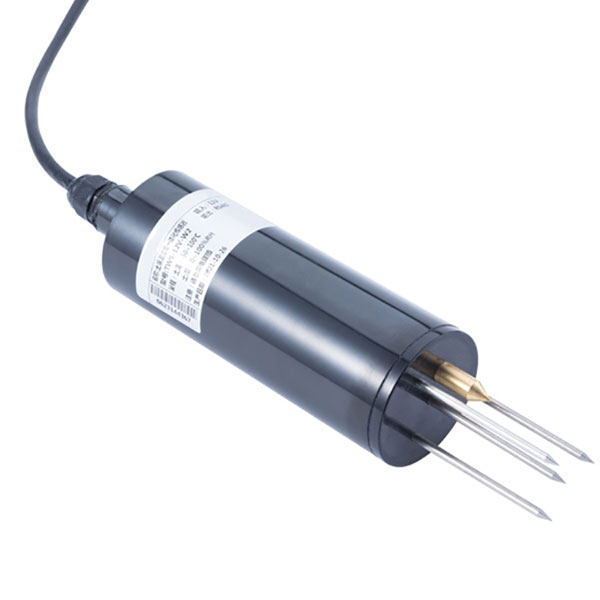
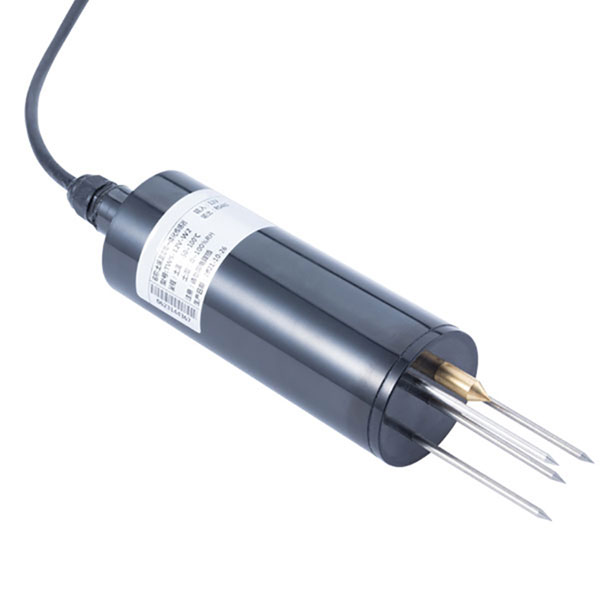
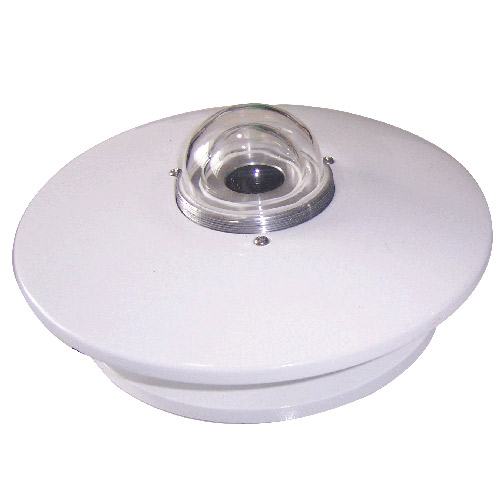
NBL-S-THR root-zone feedback sensor for a separately engineered sprinkler zone schedule
A timer assigns minutes; the field receives a depth of water. Those are different quantities. A small zone with high sprinkler discharge may receive its required depth before a larger zone finishes filling. Giving both zones the same duration can leave one wet and the other short, even when every valve responds correctly.
Start a sprinkler irrigation control plan with a zone register. Record irrigated area, sprinkler configuration, measured zone flow, elevation, soil condition and the approved watering window. Keep separate records for areas with different nozzle arrangements. A shared crop does not make two pipe networks hydraulically equivalent, and a shared valve does not prove uniform coverage.
Use average application rate as a starting calculation, not a distribution certificate. Rate in mm/h equals zone flow in m³/h multiplied by 1,000 and divided by area in m². Catch-container observations should then check the actual pattern. A correct average cannot reveal a dry strip caused by wind, spacing or an obstructed sprinkler.
Calculate sprinkler irrigation control run times by depth
The following schedule is an illustrative calculation based on assumed site values, not a measured field record. Every zone has an assumed net requirement of 4 mm and an assumed application efficiency of 0.80. Gross depth therefore equals 4 / 0.80 = 5 mm. Efficiency is a planning assumption here, not a NiuBoL performance claim.
| Zone | Area, m² | Flow, m³/h | Average rate, mm/h | Run time for 5 mm, min | Water, m³ |
|---|---|---|---|---|---|
| A | 600 | 3.60 | 6 | 50 | 3.00 |
| B | 720 | 5.76 | 8 | 37.5 | 3.60 |
| C | 800 | 8.00 | 10 | 30 | 4.00 |
| D | 900 | 10.80 | 12 | 25 | 4.50 |
| E | 500 | 3.00 | 6 | 50 | 2.50 |
| F | 640 | 5.12 | 8 | 37.5 | 3.20 |
| G | 750 | 7.50 | 10 | 30 | 3.75 |
| H | 840 | 10.08 | 12 | 25 | 4.20 |
| I | 960 | 5.76 | 6 | 50 | 4.80 |
| J | 1,080 | 8.64 | 8 | 37.5 | 5.40 |
For zone B, 5.76 × 1,000 / 720 gives 8 mm/h, and 5 / 8 × 60 gives 37.5 min. Multiplying flow by operating hours gives 5.76 × 37.5 / 60 = 3.60 m³. Record both time and volume so a later flow change does not hide behind an unchanged timer.
The assumed 7,790 m² site receives 38.95 m³ at 5 mm gross depth. Its net requirement is 31.16 m³ at 4 mm. The difference of 7.79 m³ belongs to the assumed efficiency allowance; it is not a measured loss. Do not use that allowance to excuse leaks or avoid checking sprinkler distribution.
If zone D instead runs for 50 min at its assumed 12 mm/h rate, average applied depth becomes 10 mm. That is twice its 5 mm gross target. Sprinkler irrigation control should therefore retain zone-specific run times rather than copy zone A's duration across the entire field. Recalculate after nozzle changes or repairs that alter discharge.
Can the watering window accommodate every zone?
Adding the ten operating times gives 372.5 min before any transition allowance. Assume nine transitions of 1.5 min each, with no transition before the first or after the final block. Sequential elapsed time becomes 386 min. A 360 min watering window is short by 26 min, so the original schedule cannot finish as written.
Do not solve the shortage by silently shortening every watering event. Identify whether demand can be deferred, whether the allowed window can change, or whether compatible zones can operate together. Keep requested depth separate from available operating time. A completed timer program does not establish that the intended water depth reached the crop.
The transition allowance is also an assumption to verify. Pipe filling, valve travel and pressure stabilization may take longer than the proposed gap, especially after draining a lateral. Record when usable delivery actually begins and ends. Otherwise, a runtime counter can include minutes that delivered little useful water, and the calculated depth becomes misleading even though the arithmetic remains correct.
Suppose the source can supply an assumed 12 m³/h at the pressure required by the proposed combined duty. Zones A and E together demand 6.60 m³/h. Running their equal 50 min events together removes 50 min of sequential operation and one 1.5 min transition, producing a conditional elapsed time of 334.5 min.
That overlap leaves 25.5 min within the assumed 360 min window. It is only a candidate schedule: check the shared main, branch pressures and pump operating point with both zones open. A source's maximum advertised flow is not evidence of available pressure at that flow. Sprinkler irrigation control must reject combinations that fail either condition.
Pressure at the far sprinkler sets the hydraulic limit
Subtract losses along the actual path to the limiting sprinkler. Do not subtract a friction estimate borrowed from a different zone combination. The next pressure budget is another assumed design calculation, using water density of 1,000 kg/m³ and gravitational acceleration of 9.81 m/s². A 3 m rise requires 29.43 kPa of static pressure.
| Path item | Assumed value, kPa | Condition |
|---|---|---|
| Available supply pressure | 330 | At the evaluated duty flow |
| Main and branch friction | 35 | Same operating configuration |
| Loaded filter loss | 20 | Assumed service condition |
| Valve and fitting loss | 15 | Evaluated flow path |
| Elevation pressure requirement | 29.43 | Terminal sprinkler 3 m higher |
| Terminal pressure remaining | 230.57 | Supply minus listed losses |
| Required terminal pressure | 240 | Assumed sprinkler requirement |
| Clean filter alternative loss | 8 | Replaces the 20 kPa entry |
| Terminal pressure after replacement | 242.57 | Other assumptions unchanged |
The loaded-filter calculation gives 330 − 35 − 20 − 15 − 29.43 = 230.57 kPa. Against an assumed 240 kPa requirement, the deficit is 9.43 kPa. Extending irrigation duration cannot restore the intended sprinkler pattern when operating pressure is inadequate. Measure pressure at the limiting outlet before accepting longer run times as a remedy.
Replacing the assumed filter loss with 8 kPa yields 242.57 kPa, only 2.57 kPa above the assumed requirement. Such a narrow calculated surplus cannot absorb unquantified measurement error or additional losses. Check the filter condition and pressure instruments, then repeat the operating test; do not interpret this arithmetic as approval of a particular filter or pump.
Split cycles when application exceeds infiltration
Cycle-and-soak scheduling changes elapsed time without changing required valve-on time. Suppose zone A's 50 min watering requirement is divided into two 25 min pulses, separated by an assumed 20 min soak. Valve-on time remains 50 min, but elapsed time becomes 70 min if no other zone uses that interval. A soak is not extra delivered water.
At the assumed 6 mm/h average rate, each 25 min pulse applies 2.5 mm. That split is suitable only if observation supports the selected pulse depth and redistribution interval. Sloping ground, surface crusting and compacted tracks can produce runoff before the average soil response suggests trouble. Record the onset of ponding instead of choosing a universal soak duration.
For sprinkler irrigation control, another zone may occupy the soak interval only when the hydraulic schedule permits it. A scheduler that counts a soak as idle time but also overlaps incompatible watering blocks creates a hidden capacity conflict. Rebuild the timeline with start, stop and soak states, including any required transitions, rather than merely adding daily runtime totals.
Use soil and rain observations without hiding delivery faults
The NiuBoL irrigation soil sensor supplies root-zone feedback to a compatible controller. It does not measure the average depth distributed across a sprinkler zone. Locate the sensing point deliberately, then compare its response with delivery observations. A probe in a wet depression can suppress a legitimate request from the drier part of the field.
A multi-depth soil monitoring probe can help distinguish shallow wetting from movement deeper into the profile. Treat depth identity and placement as part of the observation. A rapid deep response may indicate preferential flow rather than uniformly replenished roots. Do not increase all zone durations because one layer has not changed yet.
Add a tipping-bucket rain gauge where local rainfall informs scheduling. Gauge rainfall is not automatically effective root-zone rainfall: runoff, interception and uneven exposure affect the deduction. Keep the raw rain total and the accepted deduction separate. A missing rainfall record must not be silently replaced with a trustworthy-looking zero.
Before accepting sprinkler irrigation control, test single-zone delivery and each permitted overlap. Record flow, terminal pressure, observed distribution and filter condition. A blocked nozzle can coexist with apparently normal supply pressure; a leak can raise flow while lowering useful application. Suspend automatic depth calculations when the assumed delivery relationship is no longer valid.
Questions about sprinkler zone scheduling
How do I calculate sprinkler run time from zone flow?
Divide flow in m³/h by irrigated area in m² and multiply by 1,000 to obtain average mm/h. Divide required gross depth by that rate and convert hours to minutes. In the assumed zone B calculation, 5 mm divided by 8 mm/h gives 37.5 min. Check actual distribution before treating that average as uniform application.
Can two sprinkler zones run at the same time?
Only if their combined flow and the pressure at their limiting sprinklers both remain acceptable. The assumed A-plus-E combination needs 6.60 m³/h, below the example source capacity of 12 m³/h. That flow comparison alone does not approve overlap. Test the shared pipe path and pump duty with both zones operating, not each zone separately.
Does low sprinkler pressure mean I should water longer?
Not as the first response. Low pressure can change discharge, throw and overlap, leaving dry areas despite a longer event. The assumed pressure budget produces 230.57 kPa against a 240 kPa requirement. Check supply duty, filter loss, elevation and pipe friction before changing duration. Restore acceptable distribution before recalculating the volume delivered per minute.
How much time should cycle-and-soak add to a program?
Count the soak interval in elapsed time unless another hydraulically compatible zone occupies it. Two assumed 25 min pulses separated by 20 min require 70 min elapsed, although watering totals 50 min. Determine pulse length from observed runoff and soil response. Do not treat the example's soak duration as a setting suitable for every field.
Should measured rainfall be deducted directly from irrigation depth?
No. Measured rainfall is the gauge total; effective rainfall is the part accepted into the relevant root zone. Establish the deduction from site conditions, soil observations and the scheduling method. Keep the original rainfall value available for review. An exposed gauge and a sheltered crop block can experience different delivery even during the same storm.
What should I record after changing sprinkler nozzles?
Update nozzle identity, zone flow, terminal pressure and distribution observations before keeping the old duration. A discharge change alters average application rate, so the existing runtime may no longer deliver the planned depth. Also retest approved overlap combinations. A repair that changes one branch can change available pressure for another branch using the same main.
Approve the zone map before loading the schedule
Sprinkler irrigation control needs a water-depth calculation and a feasible hydraulic timeline. The assumed ten-zone example requires 386 min sequentially; a tested A-plus-E overlap could reduce that to 334.5 min. Confirm zone areas, operating flows and limiting pressures, then load only the combinations that satisfy the watering window and the installed equipment's requirements.
For a project-specific discussion, send your zone layout and measured operating conditions, including available supply pressure, desired depth and watering hours. Identify which observations are measured and which are provisional so the schedule can be checked without confusing assumed capacity with field evidence.