





— Blogs —
—Products—
 Consumer hotline +8618073152920
WhatsApp:+8615367865107
Address:Room 102, District D, Houhu Industrial Park, Yuelu District, Changsha City, Hunan Province, China
Product knowledge
Time:2026-09-17 08:00:00 Popularity:201
Quick Answer: A wastewater online monitoring control system needs more than sensors and a dashboard. It must define which measurements are advisory, which can change equipment operation, and what happens when those measurements become invalid. The PLC or approved controller executes the site-specific logic; a water quality probe supplies measurements and does not automatically provide dosing, aeration or emergency-stop control.
A treatment operator may need a low-DO warning, an aeration adjustment or a record explaining an upset. These are different functions, even when they use the same DO value. Specify the intended action before choosing software. A display with a red number is not equivalent to a tested blower-control function.
Separate process measurements from equipment information. pH, DO and turbidity describe conditions in the water. Tank level, sample flow, motor availability, valve position and overload status describe whether the plant can execute an action safely. Water quality probes do not replace the separate instruments and equipment feedback needed for those duties.
| Function | Required input | Expected result |
|---|---|---|
| Monitoring | Value, acquisition time, unit and quality state | Operators can identify current, stale and invalid measurements |
| Process alarm | Valid measurement and an approved threshold rule | A defined recipient receives an actionable event |
| Automatic adjustment | Valid input, controller logic and available actuator | The command remains within permitted operating limits |
| Equipment permissive | Plant-specific enabling conditions | An action is allowed only in its intended operating state |
| Historical analysis | Measurements, commands, feedback and events | The operator can reconstruct what the system actually did |
Choose advisory operation when the measurement has not yet been demonstrated to support automatic action. Moving to closed-loop control should require process review, suitable comparison results and a tested response to measurement failure. Do not turn an online trend into an automatic dosing input simply because a relay is available.
For neutralization, place the measurement where it represents the mixed liquid relevant to the control objective. A sensor immediately beside a chemical injection point may see a concentrated local plume. A sensor far downstream introduces delay. The designer must balance representative mixing against response time rather than treating either position as universally correct.
The controller must account for chemical-feed capacity and the process response. A measurement outside range, stale data or loss of mixing requires a defined operating response. Acid and alkali feed should not be enabled together merely because two independent alarm outputs are active. The process designer assigns the required interlocks and permitted manual operation.
Commissioning should include sensor failure, unavailable chemical feed, loss of relevant equipment feedback and recovery after an interruption. Use approved simulation or a controlled test arrangement; do not create an unsafe water condition to demonstrate an alarm. Site personnel must know which actions are automatic and which require confirmation.
An aeration basin is not a uniform sample container. Loading, mixing, aerator arrangement and sensor position affect the observed DO. Select a point that represents the zone associated with the controllable equipment, and keep it clear of direct bubble impingement. A basin-wide control claim needs more justification than a single convenient mounting point.
Blower or valve adjustment also depends on equipment limitations. Minimum permitted operation, command rate, controller tuning and other process requirements belong in the approved control design. Do not copy a DO setpoint from another plant without considering treatment duty, loading and the operator's biological process targets.
A co-located multi-parameter assembly can supply useful supporting pH, temperature or conductivity observations. Those channels should retain their own alarm rules. A pH excursion may help explain a DO change, but it does not authorize an undocumented chemical-feed response in the aeration controller.
A lost connection must not become a concentration of zero. Likewise, the last good value must not remain labeled live indefinitely. Define when a value becomes stale, how quality is represented and what each control function does with invalid data. The acceptable age depends on the process response, acquisition interval and consequences of an incorrect command.
Consider an illustrative system polled every ten seconds. Six consecutive failed polls mean one minute without a new result, not six new low readings. Whether one minute is tolerable is a process decision, not a property guaranteed by RS485. Show the last successful acquisition time independently of the screen-refresh time.
The approved response might be a bounded output, a fixed alternative mode, operator intervention or another engineered arrangement. There is no universal rule that stopping all equipment is safest. Document the choice for each function and test recovery so a returning value does not unexpectedly release an old command.
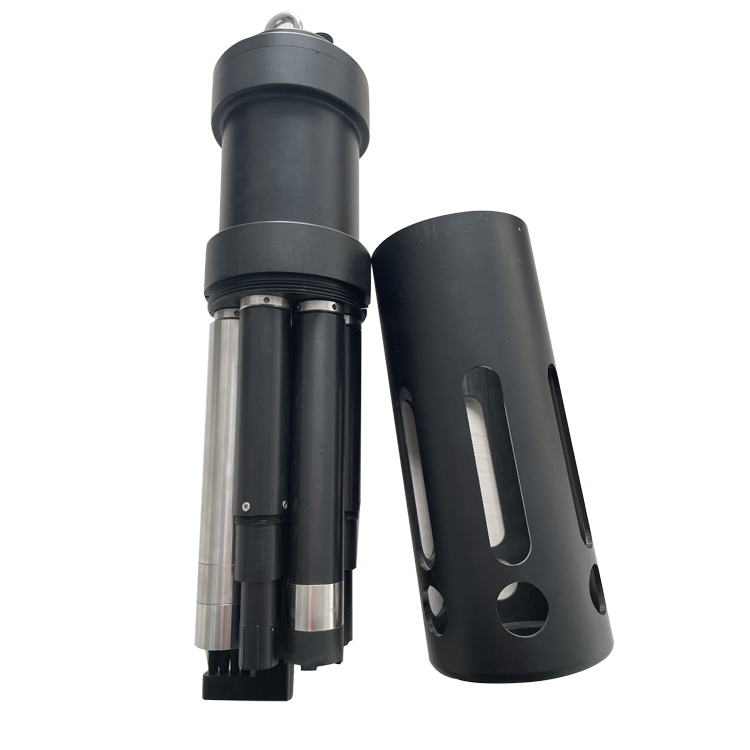
The NiuBoL NBL-WQ-MPS-5A can provide selected measurements over RS485 Modbus RTU at a shared location. It does not include the plant's complete control logic. Its configurable brush also requires the integrator to decide how cleaning and stabilization affect the usability of measurements.
| MPS-5A item | Technical detail | Consequence for integration |
|---|---|---|
| Capacity | Up to eight parameters including temperature | Order the fitted channel list, not just the maximum capacity |
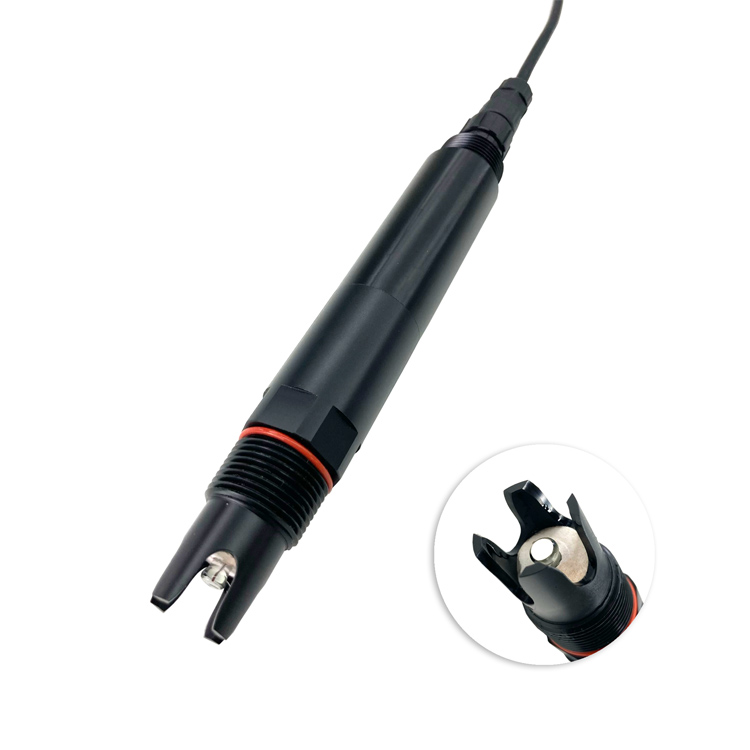
| pH option | 0-14 pH; +/-0.1 pH accuracy; 0.01 pH resolution | Set operating tolerances using measurement performance, not display decimals |
| ORP option | -1500 to +1500 mV; +/-6 mV accuracy | Preserve signed values; ORP is not a substitute for a nutrient measurement |
| Supply and power | 12 V DC +/-5%; 5 W at 12 V | Provide a compatible supply; do not assume direct 24 V cabinet connection |
| Output | RS485, Modbus RTU | Use a compatible master and a model-specific register map |
| Cleaning and cable | Automatic brush; 5 m standard cable | Allow cleaning access and confirm the installed extension arrangement |
Some standalone instruments offer different supply ranges or output options. Verify each ordered model. An existing analog controller cannot receive RS485 data directly through its 4-20 mA terminals. Any interface conversion must preserve the intended measurement, fault behavior and update timing, and must be tested with the actual controller.
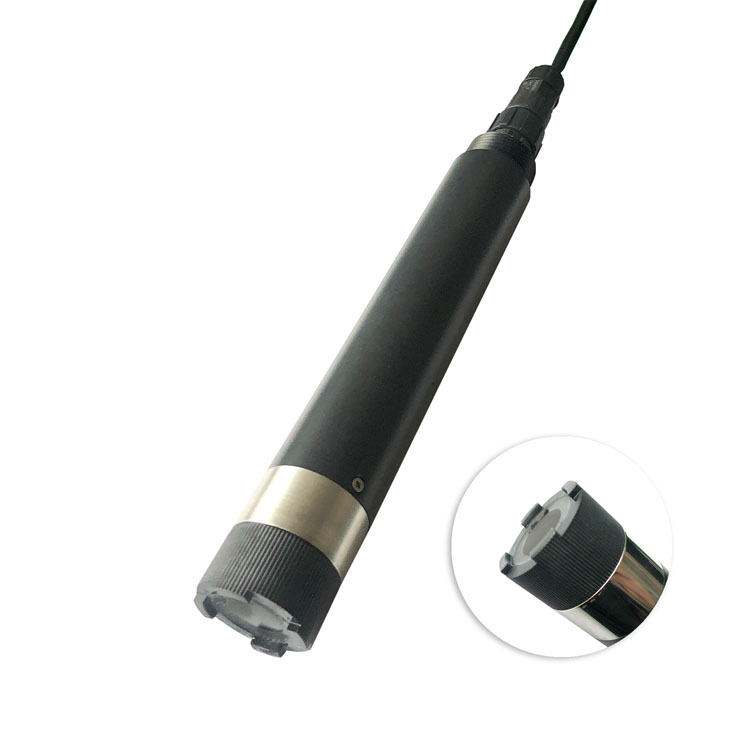
A turbidity increase after clarification or filtration may require inspection, sampling or a plant-specific diversion decision. It does not identify the cause by itself. Bubbles, particles, sample problems and real treatment deterioration can produce different operating consequences. A high alarm therefore needs an operator action, not just a color change.
Where an approved process includes a diversion valve, verify capacity, valve feedback, permissives and the procedure when the sensor fails. Do not infer permission to discharge, reuse or divert solely from a multiparameter reading. The applicable reporting method and operating authorization remain separate from the convenience of online measurement.
Record the measured event, the issued command and equipment feedback as separate events. This distinguishes a successful command transmission from actual movement or operation. Acknowledging an alarm should record operator recognition; it should not silently suppress a continuing abnormal condition.
Define which station owns control when local and remote operators are both connected. A local maintenance selection must not be defeated by a delayed remote command. Show the current mode and command source on the operating screen, and specify who can change them. After a communications interruption, reject or review outdated commands according to the approved design rather than replaying them blindly.
Keep enough event detail to investigate an excursion: the initiating measurement and quality state, active limit, selected mode, requested output and available feedback. A daily average can hide a short event that caused a valve action. Store operational events at a time resolution appropriate to those actions, even if routine reports use slower summaries.
Record outcomes against named functions rather than accepting the whole system because its dashboard looks correct. Unfinished automatic functions should remain identified and disabled as required until authorized acceptance. A display-only trial can verify measurement behavior without granting it control authority.
For an integration quotation, send the process diagram, relevant equipment list, existing PLC or controller details and the required automatic actions. Ask NiuBoL to identify the sensor configuration and interface documents, while the control contractor identifies programming, actuator interfaces and testing. This is more useful than requesting an unspecified complete automatic station.

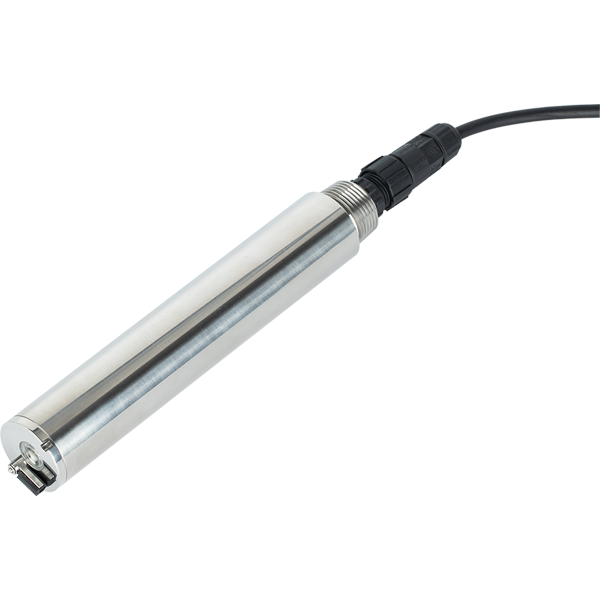
A measurement output alone does not establish a complete pump-control function. The receiving controller, suitable switching hardware, equipment feedback and approved logic are also needed. Check any relay capability on the exact reader rather than assuming the probe includes it.
No. The PLC needs a compatible interface and master function, as well as correct registers, data format and timing. Prove the complete value and invalid-state path before enabling automatic action.
Communication may continue, but that does not prove every reading is suitable for control during cleaning or stabilization. Check the assembly behavior and configure a justified validity rule; do not assume an unverified cleaning-status register exists.
Only where the approved architecture justifies the availability and delay. Treatment control commonly needs a defined local response when remote communication is unavailable. Specify what remains operational locally rather than relying on a cloud dashboard to imply resilience.
No. Sample transport, sensor response and polling delay determine when a result arrives. Alarm persistence adds a deliberate confirmation interval. Review the total elapsed time against the process event the operator needs to catch.
The number of physical points and automatic functions matters more than a channel total alone. State the required actuator interfaces, existing control hardware, remote functions and functional tests so suppliers can price the actual integration work.
A useful monitoring and control system makes the path from measurement to action explicit. Select representative sensor locations, preserve data validity, assign local control authority and test equipment feedback as well as commands. Automatic action should be enabled only for functions that have passed the plant's acceptance procedure.
Prev:Wastewater Online Monitoring System Problems: Fault Diagnosis
Next:Class I Surface Water COD Limit: 15 mg/L and Monitoring Choices
Related recommendations
Sensors & Weather Stations Catalog
 Agriculture Sensors and Weather Stations Catalog-NiuBoL.pdf
Weather Stations Catalog-NiuBoL.pdf
Agriculture Sensors Catalog-NiuBoL.pdf
Water Quality Sensor Catalog-NiuBoL.pdf
Related products
 Combined air temperature and relative humidity sensor
 TDR Soil Moisture & Temperature Sensor for irrigation| RS485 |4-20mA| NBL-S-THR
 Soil pH sensor RS485 soil Testing instrument soil ph meter for agriculture |NBL-S-PH
 Wind Speed sensor Output Modbus/RS485/Analog/0-5V/4-20mA
 Tipping bucket rain gauge for weather monitoring auto rainfall sensor RS485/Outdoor/stainless steel
 Pyranometer Solar Radiation Sensor 4-20mA/RS485


Screenshot, WhatsApp to identify the QR code
WhatsApp number:+8615367865107
(Click on WhatsApp to copy and add friends)

