





— Blogs —
—Products—
 Consumer hotline +8618073152920
WhatsApp:+8615367865107
Address:Room 102, District D, Houhu Industrial Park, Yuelu District, Changsha City, Hunan Province, China
Product knowledge
Time:2026-08-26 09:06:00 Popularity:331
Quick Answer: A portable dissolved oxygen and BOD meter enquiry involves two different duties. A handheld DO instrument measures oxygen at the inspection time; BOD requires an analytical procedure that assesses oxygen demand over defined conditions and time. Neither a waterproof enclosure nor a DO display supplies a continuous pond or treatment-plant alarm. Keep the portable verification tool, laboratory method and online monitoring point separate when specifying a replacement.
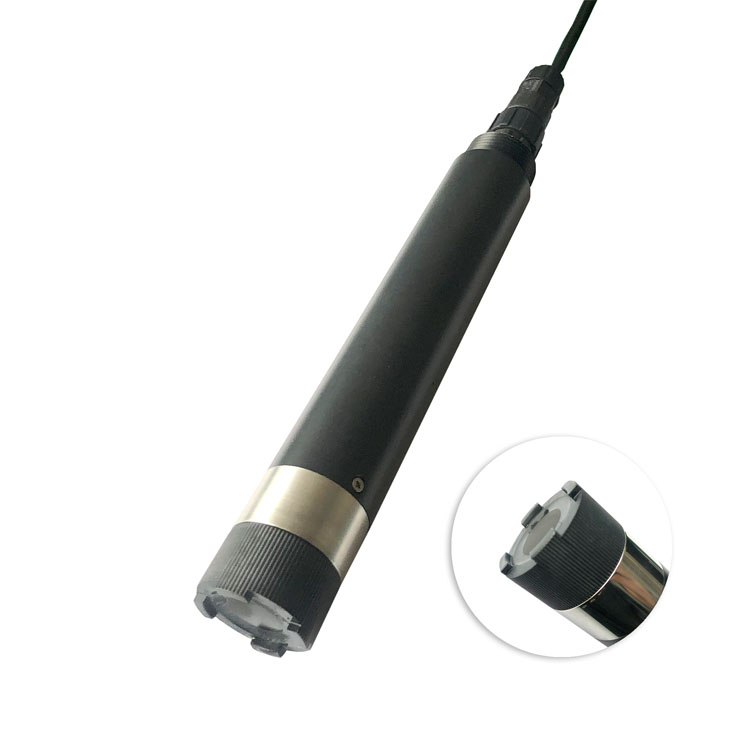
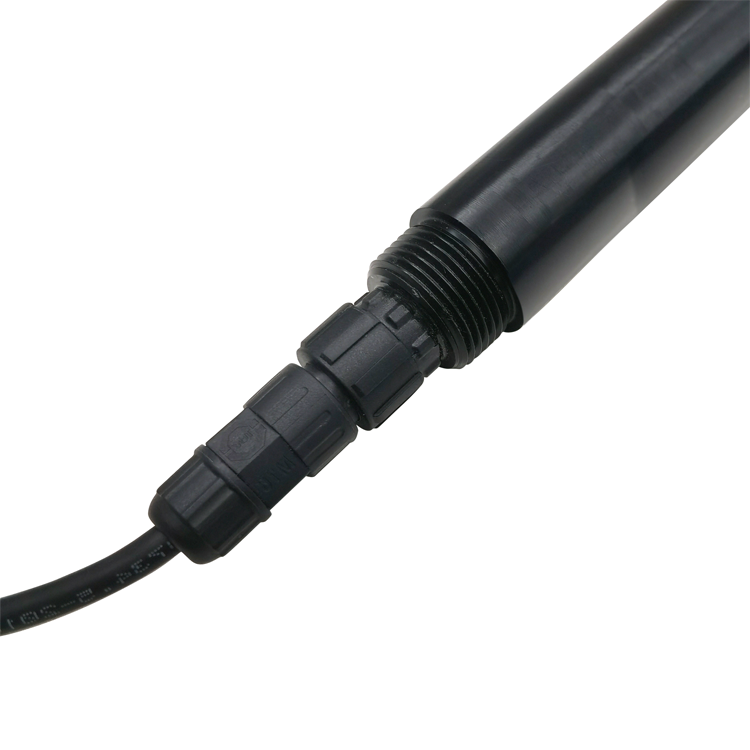
The NiuBoL probe above is an online fluorescence DO sensor, not a complete handheld meter. It is relevant when an inspection route leaves important periods unobserved. Retaining a portable instrument for checks while adding a fixed point can be more appropriate than expecting either device to perform both jobs.
A portable instrument can check several tanks during one visit and investigate a suspicious fixed reading. Its result belongs to the location, depth and time of that check. If operators inspect a pond during daylight, their records do not establish what happened overnight. The limitation is observation coverage, not necessarily portable-meter accuracy.
Describe the event that matters. A night-time oxygen decline needs observations during that period. A weekly survey of several independent sites may still be served by a portable instrument and a consistent route. A process feedback loop needs a suitable continuous input and an engineered control response. Buying a replacement handheld unit will not fill those different gaps automatically.
Before retiring the old instrument, retain its service history, applicable settings and recent standard checks. A damaged cable, failed cap or exhausted battery may be repairable. Conversely, an unsupported instrument with unavailable consumables can be a poor long-term reference even if its display still powers on. Compare a repair quotation with the actual replacement duty, not merely the age of the enclosure.
Dissolved oxygen describes oxygen present in water at the measurement point. Biochemical oxygen demand concerns oxygen consumed through biological processes under a defined test. A low DO reading can have several causes and does not, by itself, quantify BOD. An aerated sample can contain substantial oxygen while also having significant oxygen demand.
The USGS five-day BOD procedure describes a separate analytical workflow. A DO meter can be part of an oxygen-depletion method, but the result also depends on sample preparation, incubation and the method's quality controls. Replacing the DO instrument does not validate the whole BOD test.
For a laboratory replacement, identify the method and bottle arrangement first. Confirm whether the proposed probe can make the required measurements without unacceptable sample disturbance and whether the laboratory's procedure permits the change. Do not assign the online probe's IP68 rating or Modbus interface to a complete portable BOD system that has not been specified.
| Required result | Appropriate arrangement | What it does not replace |
|---|---|---|
| DO at an inspection point | Verified portable instrument and documented field procedure | Records between visits |
| Continuous local DO trend | Fixed probe and compatible acquisition device | A laboratory BOD determination |
| Remote oxygen alarm | Fixed measurement, communications and tested alert handling | An operator response plan or independent protection |
| Five-day BOD result | The applicable laboratory method, including its oxygen measurements and controls | A direct instantaneous DO reading |
Place the reference in equivalent water at the relevant depth and time. A surface reading taken beside an aerator is not a fair check of a fixed probe farther into the pond. In a basin, local circulation and bubble exposure can create differences. Record those positions before deciding that one instrument needs calibration.
Keep temperature, concentration units and compensation settings with the comparison. Percent saturation and mg/L are different outputs; do not compare their numerical values as if they share a unit. Check how each instrument handles salinity and pressure. A configured salinity value is not an independent salinity measurement.
Verify the portable unit against a suitable reference procedure before using it to judge the installed sensor. Then compare under stable conditions and account for the capabilities of both instruments. Agreement to the last displayed decimal is not a valid universal acceptance rule. If readings differ only at one installation position, investigate exposure and sampling before adjusting either instrument.
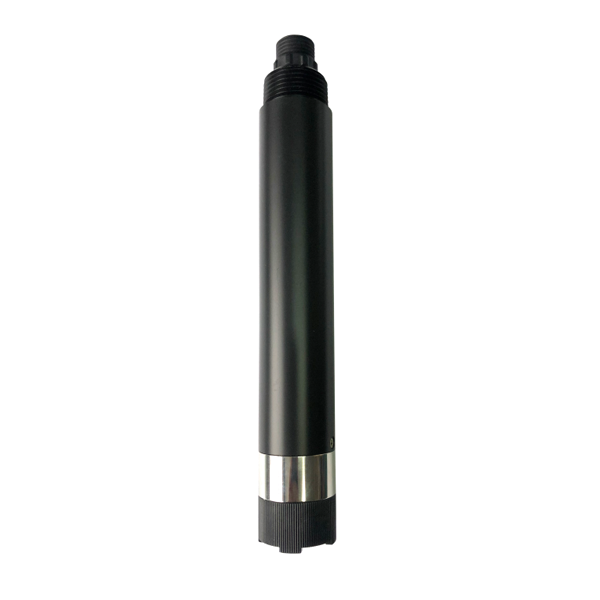
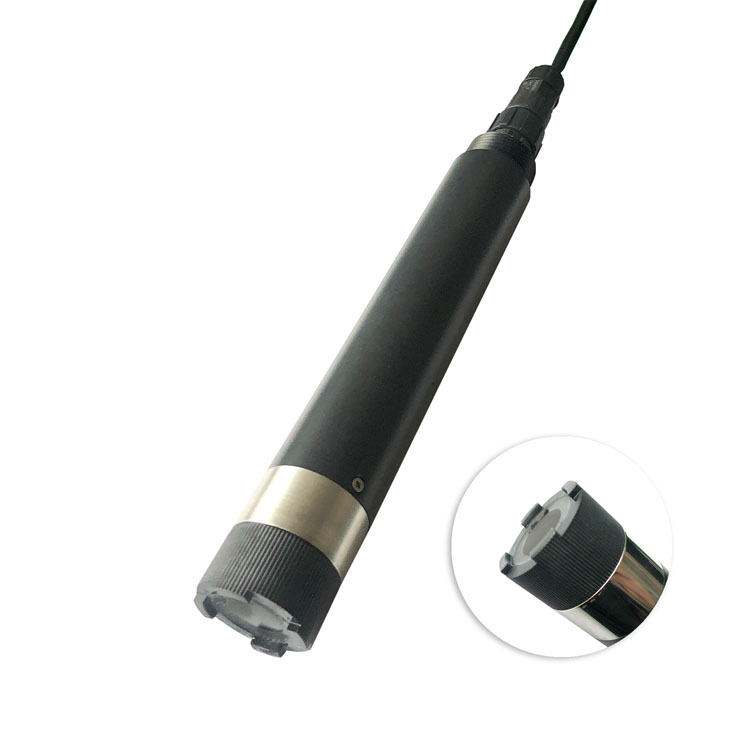
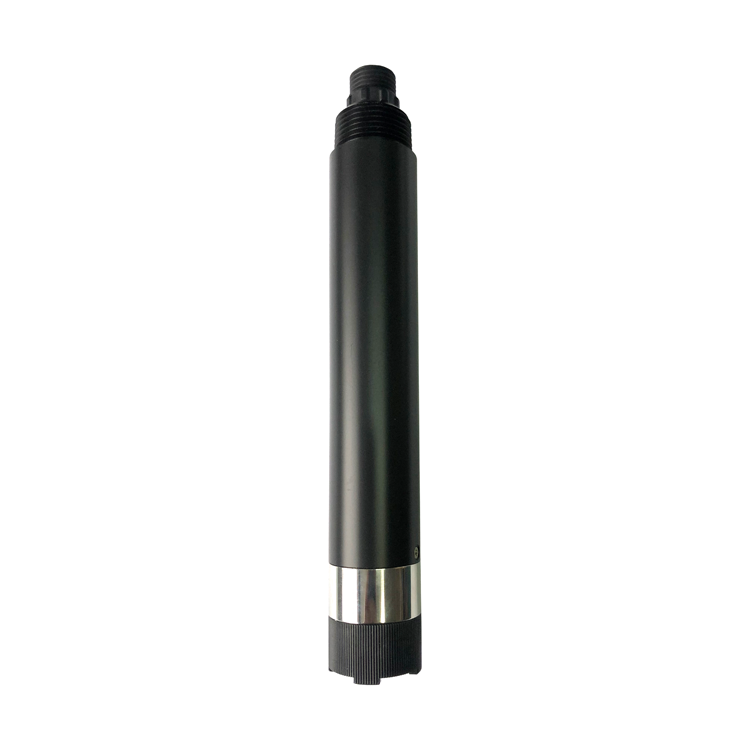
The NiuBoL NBL-WQ-DO uses fluorescence quenching and supplies RS485 Modbus RTU data. It does not consume oxygen during measurement or require electrolyte. The optical cap still needs inspection, suitable cleaning and replacement when required. These characteristics describe a fixed probe, not an included handheld display or a complete alarm package.
| Parameter | NBL-WQ-DO configuration | Replacement decision |
|---|---|---|
| Oxygen measurement | 0-20 mg/L; 0.01 mg/L resolution | Check the operating band rather than only the upper range |
| Accuracy | +/-2% full scale | On 20 mg/L full scale, the stated figure corresponds to 0.4 mg/L |
| Operating conditions | 0-45 degrees C; pressure below 0.2 MPa | Assess the actual water and mounting arrangement |
| Supply and consumption | 12-24 V DC; less than 0.3 W at 12 V | Provide separate power for the acquisition and uplink equipment |
| Output | RS485 Modbus RTU | Requires a compatible receiving device and register interpretation |
| Construction | POM and 316L stainless steel; IP68; standard 5 m cable | Protect external joints and provide a safe retrieval route |
Do not describe 0.01 mg/L resolution as 0.01 mg/L accuracy. A project working close to a low oxygen decision level must compare its allowable uncertainty with the applicable instrument specification. If the requirement is tighter, request another configuration and a suitable verification method instead of hiding the mismatch with additional decimal places.
Choose a position that represents the water the operator needs to manage and remains wetted through expected level changes. Keep the sensing cap away from sediment contact and avoid a bubble pocket. Provide a holder that can return to the same position after cleaning; lifting by the cable risks damage and makes the installation harder to reproduce.
Use the first visits to establish observed fouling and the work needed to retrieve, clean and verify the probe. A portable reference remains useful during those visits. Do not assume a remote connection removes cap inspection, or promise a fixed service interval without considering algae, deposits and access at the actual site.
List the spare part by the correct model and sensing assembly. A similarly shaped cap from another instrument is not necessarily compatible. For a critical point, compare a spare cap with a ready-to-install spare probe, including configuration and verification work. The lower parts price may not give the shorter monitoring interruption.
The field path is probe to PLC, RTU or data logger, then any network and receiving application. Confirm supply, address, serial settings, units and scaling. A working Modbus reply establishes communication, not representative exposure or accurate oxygen measurement. Treat those as separate checks.
Test sensor disconnection and network loss deliberately under an approved procedure. The application should distinguish unavailable data from an actual low oxygen value. A retained last-good reading needs an age or stale indication. Agree who receives an alert and what happens when the normal alert channel is unavailable; a dashboard cannot notify through a connection it has lost.
For procurement, separate the probe, holder, power system, logger, uplink and software work. State whether a portable verification instrument and commissioning support are included. A fixed price for an unidentified portable dissolved oxygen and BOD meter would conceal these differences rather than support a fair comparison.
A DO reading alone cannot. A BOD result requires the applicable analytical method. A meter may supply oxygen measurements within that procedure, but sample handling, incubation and quality controls remain essential.
No. A portable instrument suits surveys and verification. Add a fixed point where continuous observation changes an operating decision. Many installations need both rather than a one-for-one replacement.
No. The stated rating applies to the specified probe assembly. Logger, supply, connectors and field-made joints need their own protection. A wet probe does not justify installing an unprotected receiver beside it.
The described RS485 probe supplies data. Aerator operation requires a suitable controller, switching hardware and an approved control strategy. Define the response to invalid measurements independently of the normal low-oxygen threshold.
Send the existing instrument model, required DO band, purpose of any BOD work, inspection schedule, water conditions and proposed fixed location. Include the receiving equipment, cable route and service requirements so NiuBoL can distinguish a probe supply from a complete monitoring point.
Specify the missing measurement duty before replacing a portable instrument. Keep spot-check DO, laboratory BOD and continuous oxygen alarms distinct. NiuBoL online probes can support the continuous part where their range, installation and interface fit, while a verified portable meter remains useful for inspections and comparison.
Prev:Arduino pH Sensor: Keep Calibration Writes Out of Routine Polling
Next:5-in-1 Weather Station Package: Choose the Required Five Channels
Related recommendations
Sensors & Weather Stations Catalog
 Agriculture Sensors and Weather Stations Catalog-NiuBoL.pdf
Weather Stations Catalog-NiuBoL.pdf
Agriculture Sensors Catalog-NiuBoL.pdf
Water Quality Sensor Catalog-NiuBoL.pdf
Related products
 Combined air temperature and relative humidity sensor
 TDR Soil Moisture & Temperature Sensor for irrigation| RS485 |4-20mA| NBL-S-THR
 Soil pH sensor RS485 soil Testing instrument soil ph meter for agriculture |NBL-S-PH
 Wind Speed sensor Output Modbus/RS485/Analog/0-5V/4-20mA
 0.2mm Tipping Bucket Rain Gauge for Weather & Hydrology | NiuBoL
 Pyranometer Solar Radiation Sensor 4-20mA/RS485


Screenshot, WhatsApp to identify the QR code
WhatsApp number:+8615367865107
(Click on WhatsApp to copy and add friends)

