





— Blogs —
—Products—
 Consumer hotline +8618073152920
WhatsApp:+8615367865107
Address:Room 102, District D, Houhu Industrial Park, Yuelu District, Changsha City, Hunan Province, China
Product knowledge
Time:2026-08-26 09:05:00 Popularity:291
An Arduino pH sensor program should acquire readings without repeatedly writing calibration settings. With a NiuBoL digital probe, calibration is a deliberate service operation using appropriate buffers; it is not an automatic correction to run whenever process pH looks unusual. Keep routine polling separate from configuration writes so a software restart or retry cannot silently change the measurement.
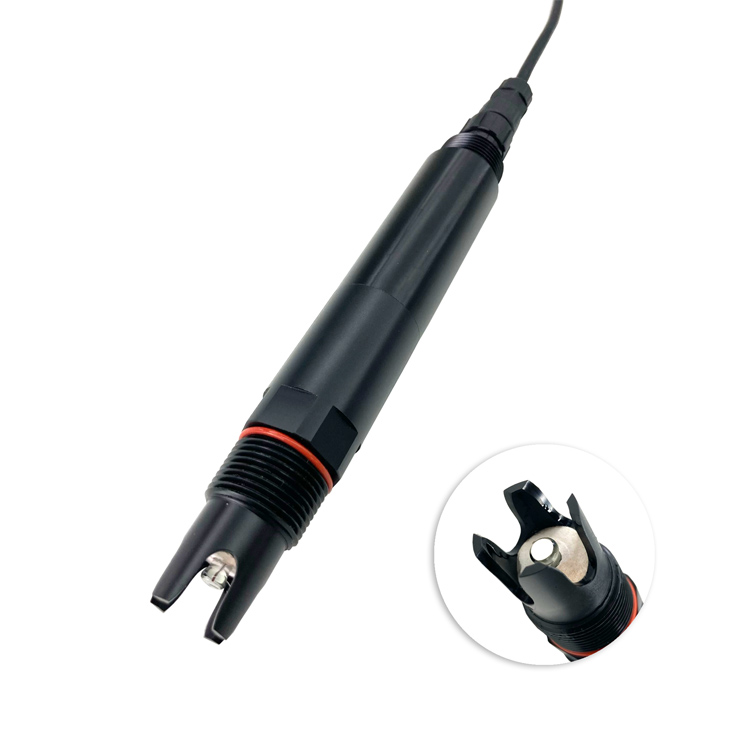
A typical controller needs to read pH, temperature and any supported status information, validate the response, and store the result. Changing the address, serial settings or calibration coefficients is a different operation. A program that sends a setup write on every loop can repeatedly alter the instrument or interrupt a stable acquisition path.
Review code copied from commissioning examples before using it in an unattended controller. Demonstration sketches may contain one-time address or calibration operations. Move such operations behind an explicit service action rather than leaving them in startup or repeated polling. Keep operating outputs in the site's approved maintenance condition while the probe is in buffer or out of process water.
| Program activity | Normal acquisition | Authorized service |
|---|---|---|
| Read pH and temperature | Acquire fresh valid values using the correct map | Observe stability and record reference checks |
| Change address or serial settings | No repeated writes | Identify the device and verify the new configuration |
| Apply calibration | No automatic adjustment from process readings | Use approved buffers, procedure and explicit operator action |
| Handle a timeout | Flag missing data and retry the read appropriately | Investigate the connection without blind calibration writes |
The NBL-WQ-PH online pH probe has integrated electronics and RS485 Modbus RTU output. It is not a bare glass electrode requiring the Arduino to convert a high-impedance millivolt signal. A suitable RS485 transceiver and the specified DC field supply are required.
The PH-4 series is a separate configuration with its own materials and temperature element. Do not reuse a calibration register merely because two devices share the NiuBoL brand or the Modbus protocol. Confirm the model-specific command, value encoding and response before enabling any write function.
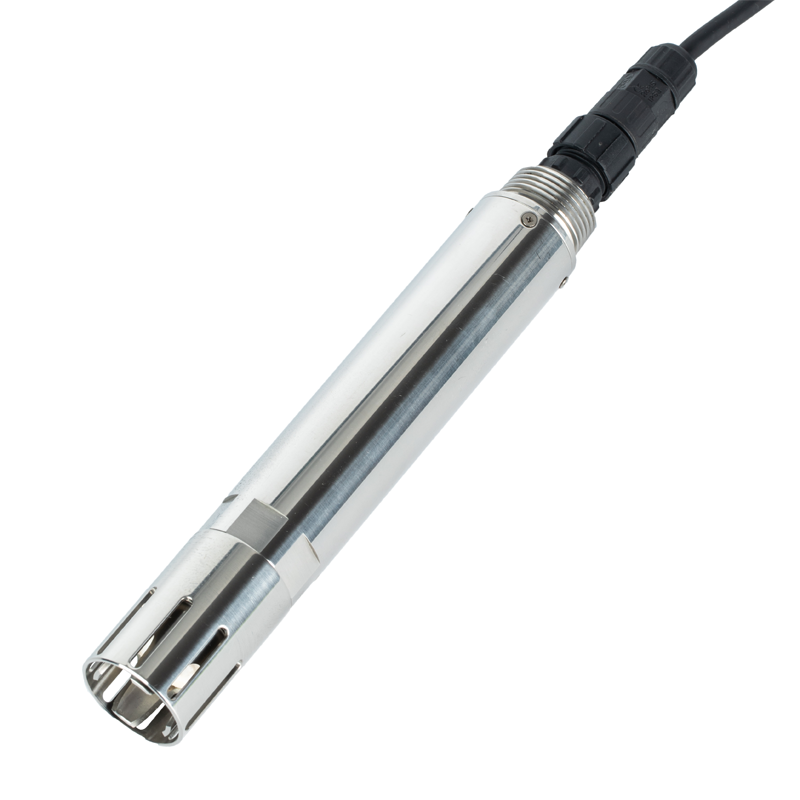
| Parameter | NBL-WQ-PH specification | Software or service consequence |
|---|---|---|
| Range and resolution | 0-14 pH; 0.01 pH | Apply the correct scale and stated accuracy |
| Accuracy | +/-0.1 pH; temperature +/-0.3 C | Set a suitable verification criterion |
| Temperature compensation | Automatic, NTC | Do not assume another model's Pt1000 configuration |
| Calibration | Two-point calibration | Keep it as a controlled buffer-based service |
| Output | RS485 Modbus RTU | Separate supported read and write operations |
| Power | DC 12-24 V; 0.2 W at 12 V | Do not power the probe from a logic output |
| Operating limits | 0-65 C; pressure below 0.2 MPa; IP68 | Check the installed process independently of the program |
| Mounting and cable | Immersion, 3/4 NPT; standard 5 m cable | Provide access for buffer checks and safe retrieval |
The base probe's NTC compensation and temperature limit should not be replaced with the PH-4 series values in a shared configuration file. Store the instrument model with its register definition and service procedure so maintenance cannot silently select the wrong profile.
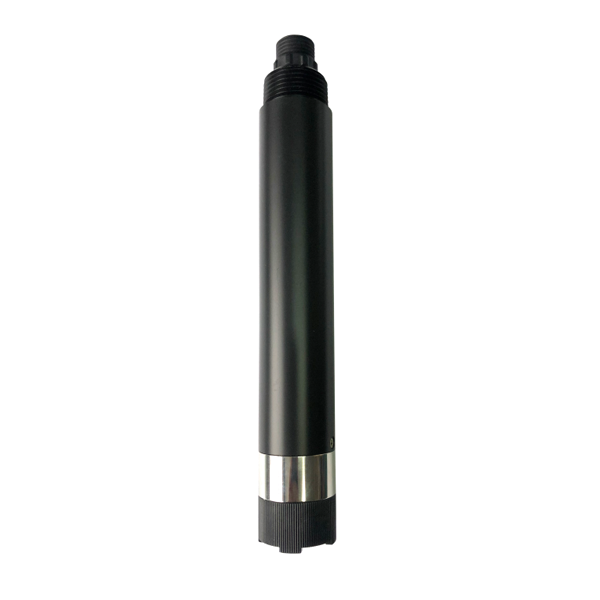
A lost reply does not prove that a write was rejected. The instrument may have applied the change before the controller timed out. Blindly repeating a calibration action can therefore produce an unintended second operation. Use the documented device behavior and, where supported, read back the affected setting or status before deciding what to do next.
Measurement retries need limits too, but their purpose is to obtain a valid observation, not to repair chemistry. If a read fails, mark the measurement unavailable and retain the last valid timestamp separately. Do not convert the timeout into pH zero, pH seven or a calibration request.
A process value outside the expected operating band may be real. Check water mixing, dosing history, probe condition and an appropriate reference before making an adjustment. Dissolved oxygen, salinity and optical BOD channels cannot provide a replacement pH calibration value; they measure different properties.
Do not use a timer to recalibrate simply because a calendar interval has elapsed. The maintenance plan can schedule inspection and verification; adjustment follows the applicable procedure and demonstrated need. Keep previous results so a new calibration does not erase evidence of drift or fouling.
With a safe test arrangement, restart the controller and verify that acquisition resumes without unintended configuration or calibration writes. Review transmitted function codes as well as displayed values. Repeat the test after a failed reply and after reconnecting the probe.
Use a simulated or otherwise controlled communication test to investigate lost acknowledgements; do not deliberately create an uncertain calibration state in an operating treatment process. If a controller stores service requests, ensure an old request cannot run again automatically after restart.
For NiuBoL integration review, provide the probe model, expected pH and temperature, controller interface and planned maintenance method. Ask for the correct read map and authorized service procedure. These details help define a usable probe package without assuming that a sample sketch is an accepted plant-control program.
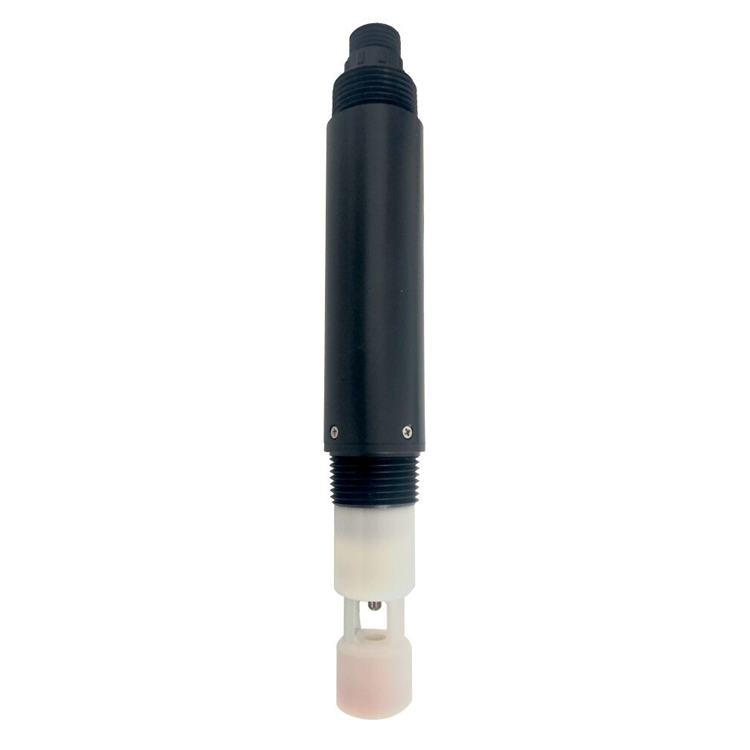
No. Routine polling should acquire data without changing calibration. Put authorized service operations in a separate controlled path with an identified operator action and the required buffer conditions.
Do not assume failure and repeat it blindly. Follow the device procedure, check supported readback or status, and resolve whether the change occurred. A transport timeout and a rejected command are not equivalent.
Not as a valid calibration method. The process may genuinely be acidic, or the point may have a sampling or probe problem. Calibration needs an appropriate reference under the model's procedure, not an expected process value substituted as truth.
Do not assume so. Their specifications include different temperature elements and operating limits. Confirm registers, encoding and service commands for the delivered model before changing settings.
It must identify the right point, acquire fresh valid data and avoid replaying old service commands. Confirm the process installation and remove maintenance overrides through the site's operating procedure, not merely because the serial link responds.

Use an Arduino pH sensor program that reads routinely and writes only through an authorized service path. Match the actual probe model, investigate uncertain write outcomes and test restart behavior. This preserves calibration history and prevents a communication retry from becoming an unplanned change to the measurement.
Prev:Water Testing TDS Meter Price: What Does Calibration Include?
Next:Portable Dissolved Oxygen and BOD Meter: When to Add Online DO
Related recommendations
Sensors & Weather Stations Catalog
 Agriculture Sensors and Weather Stations Catalog-NiuBoL.pdf
Weather Stations Catalog-NiuBoL.pdf
Agriculture Sensors Catalog-NiuBoL.pdf
Water Quality Sensor Catalog-NiuBoL.pdf
Related products
 Combined air temperature and relative humidity sensor
 TDR Soil Moisture & Temperature Sensor for irrigation| RS485 |4-20mA| NBL-S-THR
 Soil pH sensor RS485 soil Testing instrument soil ph meter for agriculture |NBL-S-PH
 Wind Speed sensor Output Modbus/RS485/Analog/0-5V/4-20mA
 0.2mm Tipping Bucket Rain Gauge for Weather & Hydrology | NiuBoL
 Pyranometer Solar Radiation Sensor 4-20mA/RS485


Screenshot, WhatsApp to identify the QR code
WhatsApp number:+8615367865107
(Click on WhatsApp to copy and add friends)

