





— Blogs —
—Products—
 Consumer hotline +8618073152920
WhatsApp:+8615367865107
Address:Room 102, District D, Houhu Industrial Park, Yuelu District, Changsha City, Hunan Province, China
Product knowledge
Time:2026-08-21 09:00:00 Popularity:265
A campus weather data station can serve three users at once: classes that need understandable observations, facilities staff who need a maintainable installation, and researchers who need defensible time series. Those users do not require the same sensor list or data access. Before requesting a NiuBoL quotation, the school should decide which measurements will be taught, displayed, archived or used for an operational alert. The station should then be sited and configured for those decisions, not chosen by the largest parameter count.
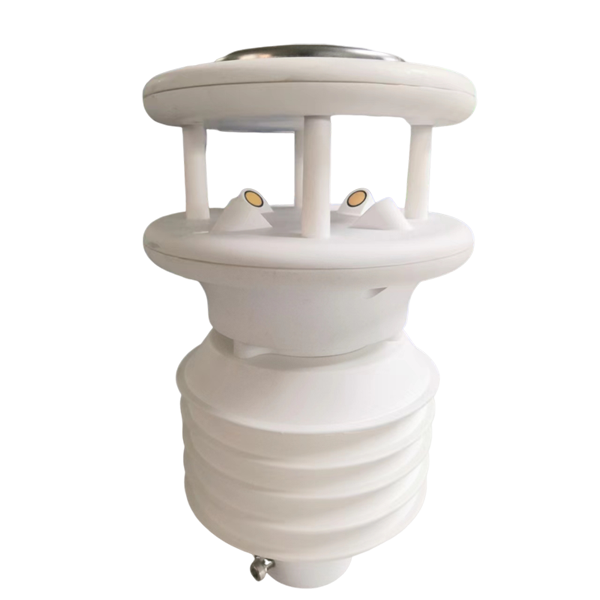
A teaching station may need reliable wind, temperature, humidity, pressure and rain records with a clear time stamp and a CSV export students can examine. A public dashboard can be useful, but it should not be the only place the data exists. Facilities may instead need a wind alarm or a local condition check and must know who responds when a device is offline. A research group may require documented sensor exposure, calibration history, quality flags and stable aggregation rules across several years.
Write separate acceptance questions for each use. Can a teacher download last week's raw and hourly data without administrator rights? Can a maintenance technician retrieve a sensor safely and see when a communication fault began? Can a researcher reconstruct a change in mounting height or sensor model from the station record? If none of those questions has an owner, adding more channels will not make the campus data more useful.
The first linked product is NiuBoL's NBL-W-81GUWS, which combines basic meteorology with PM2.5, PM10 and environmental noise. Those additional channels are valuable only if the campus has a defined air-quality or sound-monitoring purpose and understands the limits of the sensor for any formal reporting. It is not a substitute for a rain gauge merely because it has eight parameters. A school needing rainfall should verify the channel list of the exact ordered model.
| Campus task | Useful measurements | Selection caution |
|---|---|---|
| Basic weather teaching | Wind, air temperature, humidity, pressure and, where needed, rain | Agree on sampling and averaging so students know what each plotted value means. |
| Outdoor event planning | Wind and relevant rain observations | Do not use a general station as the sole safety authority without tested response rules. |
| Air-quality comparison | PM channels alongside weather context | Confirm placement, service and any reference-method requirements separately. |
| Solar or environmental study | Solar radiation in W/m2 where the study requires irradiance | Illuminance in lux is a different quantity; select the correct variant. |
| Indoor or greenhouse learning | Temperature, humidity and CO2 as needed | A CO2 environmental sensor is not an outdoor wind or rain station. |
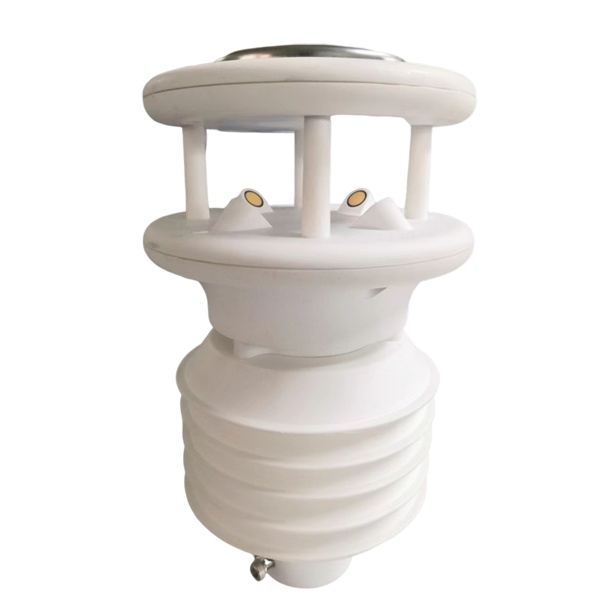
The NBL-W-10GUWS image links to a ten-parameter outdoor option that includes wind, air measurements, rainfall, PM2.5, PM10 and noise plus a selectable solar-radiation or illuminance channel. Solar radiation and illuminance are alternatives in its standard configuration, not two automatic outputs. This model may suit a campus environmental laboratory with staff to maintain the full instrument; it can be excessive for a class that only needs five basic weather variables. Ask for the exact register list and selected tenth parameter before ordering.
Campus grounds often contain roofs, trees, walls, paved courtyards and accessible pedestrian areas. A sensor above a hot roof can show a different temperature from an open lawn. Wind at a sheltered courtyard is not equivalent to wind above nearby buildings. Rainfall measurement is sensitive to obstruction and local splash. Decide what microclimate the station is meant to describe, then record height, orientation, coordinates and nearby obstacles so readers can interpret the data.
Choose a mast and enclosure location that can be serviced by authorized personnel without exposing students to equipment, cables or a climbing hazard. The project installer should handle structural fixing, electrical protection and any lightning or grounding design appropriate to the site. Do not place an instrument solely where it is prominent for visitors if exposure and access are poor. A public display can be elsewhere and receive the data remotely.
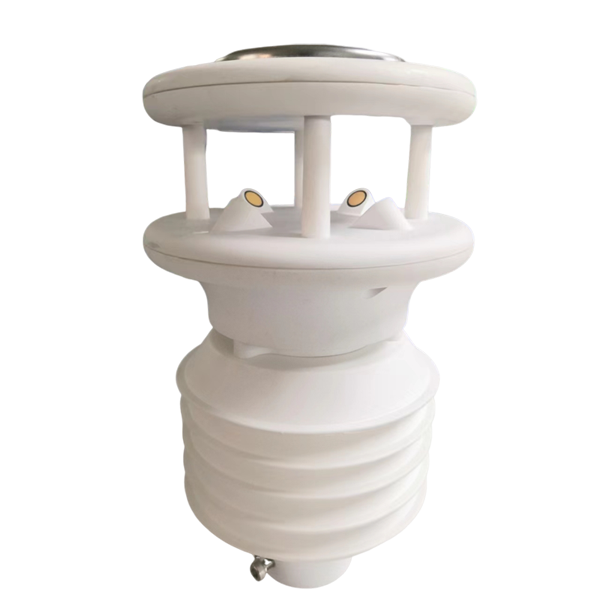
NiuBoL's all-in-one ultrasonic weather sensor has configurable channels. The linked product page describes five core meteorological channels and optional additions up to ten. A catalogue photo does not confirm which options are inside the quoted unit. The campus point list should state every ordered variable and unit, along with any separate logger, gateway, power package and platform service. This prevents a demonstration screen showing channels that the delivered configuration does not actually measure.
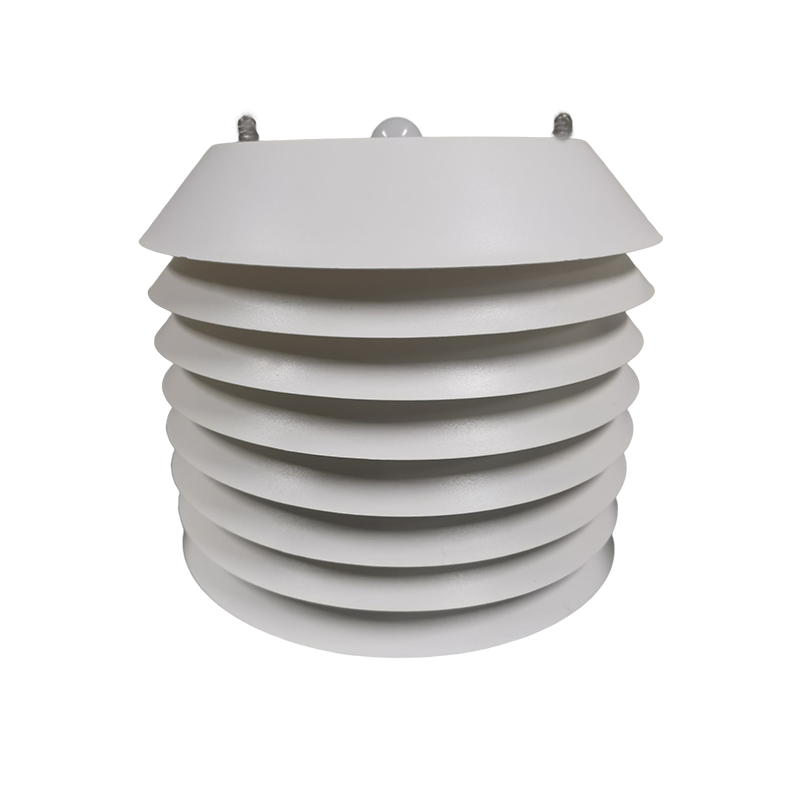
An integrated head reduces the number of brackets and cables and can suit an exposed teaching station with limited service resources. Separate sensors are useful when one measurement needs a different position, method or replacement schedule. For example, a project may choose a standalone cup anemometer for wind while placing temperature and humidity in a shielded location. The linked NBL-W-SS is a three-cup wind speed sensor, not a complete weather station; it is offered with several output options, including RS485 Modbus RTU on the selected variant.
If a facilities alarm depends on wind, define the mounting reference and compare the ordered speed range with the site's requirement. A student dashboard can display the same data, but the operational alarm needs its own approved threshold, delay, notification path and response procedure. A missing or stale sample should not be presented as calm weather. For a teaching-only installation, a simpler sensor and regular manual checks may be more appropriate than adding an alarm panel no one will maintain.

At the sensor, an RS485 Modbus RTU interface can feed a data logger, PLC or compatible gateway if the ordered model supports it. That field bus is not the same as campus Wi-Fi or internet publication. The logger must time-stamp values, retain them when the network is unavailable if required, and forward them to a platform or private server. Confirm the IT department's network rules, device authentication and who maintains subscriptions or SIM service before promising continuous public upload.
Provide a read-only display for students and visitors. Give teachers export rights and facilities staff configuration rights according to their responsibilities. Keep an administrator account under school ownership, not only the installer's email. The contract should specify data format, retention period, time zone, channel labels and the ability to obtain data if the platform service changes. A graph visible today is not a durable research record unless its underlying observations can be exported with units and quality notes.
For an indoor air or greenhouse teaching project, the linked NBL-W-THPLC measures temperature, humidity, pressure, illuminance and CO2. It can complement an outdoor weather station, but it cannot provide wind or rain. The two devices should have separate station IDs and locations. Do not combine indoor CO2 and outdoor weather into one unlabeled 'campus weather' curve; the measurement environments are different.
A quotation should separate the sensor variant, mast and brackets, logger, power supply, enclosure, network connection, dashboard or server access, installation, commissioning and service parts. Costs change with roof access, cable route, cellular or campus-network requirements, and data-retention scope. A published sensor price would not cover those site-dependent items. Ask for a point list and drawing with the offer so the school can compare proposals on the same delivered function.
At commissioning, witness every ordered channel at the logger and dashboard, verify units and timestamps, disconnect one sensor to see how missing data are marked, and test network recovery. Export a sample file as a teacher would. Record the mast location, orientation, exposure photographs, register map, account ownership and maintenance contact. If a facilities alarm is included, test the recipient and acknowledge procedure separately from the classroom display.
No. Choose channels from the teaching, facilities and research tasks. An 8- or 10-parameter sensor can add PM, noise or light data, but those channels have value only when someone will use and maintain them.
Only if it also meets the agreed storage, timestamp, export and outage requirements. A screen that shows the current number but cannot deliver inspectable historical records is insufficient for many class or research uses.
No. A roof may be secure and accessible to maintenance but can bias temperature or wind and complicate rain exposure. Select the site for the intended observation and document its limitations.
Yes. Provide a read-only view or export role while restricting changes to calibration, alarms and network settings. Test that separation during handover and keep the administrator account under school control.
It measures wind speed only. It can be one component of a modular station, but wind direction, air conditions, rain and logging require their own instruments or system components.
No. The configurable product family supports multiple channel sets. The quotation, serial-specific configuration and tested register list must identify the actual ordered measurements.
Request the as-built point list, installation photos, channel and unit test, sample data export, communication-recovery test, account ownership record and a service plan. Add a separate alarm demonstration if the station supports facilities decisions.
A campus weather data station is useful when its sensors, location and data access match the work of teachers, facilities teams and researchers. NiuBoL can supply integrated or modular sensor options. The buyer should identify each delivered channel, document the site exposure and retain control of the resulting data after installation.
Prev:Energy Efficient Pest Monitoring: Power and Seasonal Service
Next:Water Quality Instruments: Make Multi-Parameter Records Comparable
Related recommendations
Sensors & Weather Stations Catalog
 Agriculture Sensors and Weather Stations Catalog-NiuBoL.pdf
Weather Stations Catalog-NiuBoL.pdf
Agriculture Sensors Catalog-NiuBoL.pdf
Water Quality Sensor Catalog-NiuBoL.pdf
Related products
 Combined air temperature and relative humidity sensor
 TDR Soil Moisture & Temperature Sensor for irrigation| RS485 |4-20mA| NBL-S-THR
 Soil pH sensor RS485 soil Testing instrument soil ph meter for agriculture |NBL-S-PH Wind Speed sensor Output Modbus/RS485/Analog/0-5V/4-20mA
 Tipping bucket rain gauge for weather monitoring auto rainfall sensor RS485/Outdoor/stainless steel
 Pyranometer Solar Radiation Sensor 4-20mA/RS485


Screenshot, WhatsApp to identify the QR code
WhatsApp number:+8615367865107
(Click on WhatsApp to copy and add friends)

