





— Blogs —
—Products—
 Consumer hotline +8618073152920
WhatsApp:+8615367865107
Address:Room 102, District D, Houhu Industrial Park, Yuelu District, Changsha City, Hunan Province, China
Product knowledge
Time:2026-09-19 10:00:00 Popularity:201
TDS, conductivity and salinity are related but are not interchangeable specification terms. Specify conductivity when the task is to track the water's electrical response, a defined TDS method when dissolved-residue concentration is required, and a named salinity scale when salt content is the operating variable. If an instrument calculates TDS or salinity from conductivity, retain the measured conductivity and temperature alongside the calculation settings. Three displayed values may still come from one measurement principle.
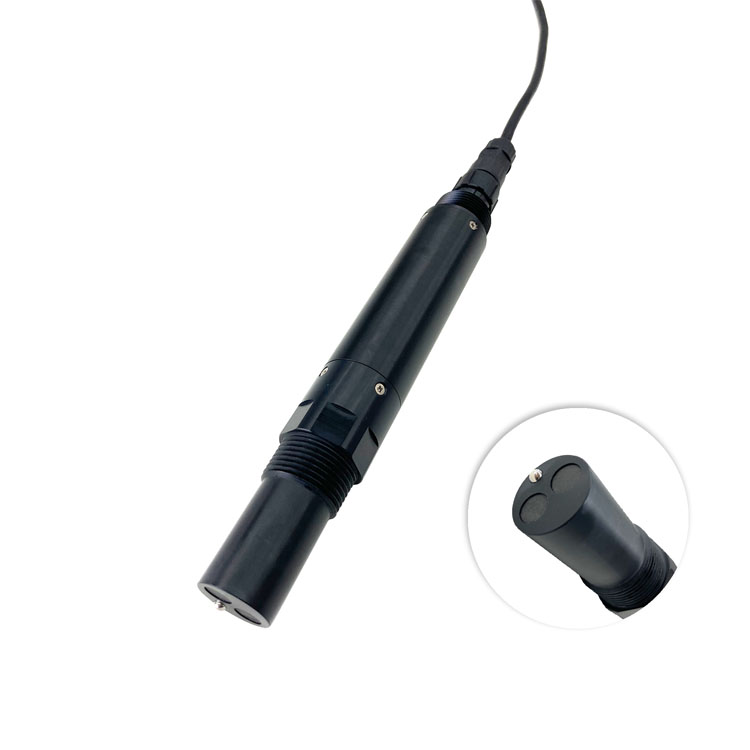
A project request for a "water salt sensor" can describe several different jobs. A process engineer may need an ionic carryover alarm. A laboratory may need dissolved residue reported in mg/L. An aquaculture operator may need salinity on the same scale as an operating procedure. Quoting a device before resolving that difference can produce a working signal that does not answer the customer's question.
| Specified parameter | What the result represents | What the specification must identify |
|---|---|---|
| Conductivity | Electrical conduction through the water, influenced by dissolved ions and temperature | uS/cm or mS/cm, actual or reference-temperature value, required range and uncertainty |
| Laboratory TDS | Dissolved residue determined by a stated analytical procedure | Method, sample preparation and reporting unit, usually mg/L |
| Conductivity-derived TDS | An estimate calculated from conductivity using a conversion relationship | Factor or algorithm, conductivity temperature basis and validation water types |
| Practical Salinity | A conductivity-based quantity on a defined salinity scale | Algorithm, temperature and pressure inputs, validity range and reporting convention |
| Mass-based salinity | Salt content expressed on a mass basis | Definition and method; do not silently relabel a Practical Salinity result as g/kg |
The 2023 USGS review, Salinity and total dissolved solids measurements for natural waters, explains that these quantities depend on their analytical definitions and are not equivalent for most waters. That is why a specification should name the method rather than accept "TDS/salinity" as a single parameter.
A screen label is part of the measurement contract. "EC at 25 C" and "conductivity at sample temperature" are different outputs, even when both use uS/cm. "Calculated TDS" should not be renamed "laboratory TDS" after data enters a dashboard. These distinctions belong in the instrument selection and data tags from the beginning.
A simple conductivity-to-TDS estimate has the form TDS in mg/L = factor x conductivity in uS/cm on the specified temperature basis. The factor incorporates the assumed relationship between ionic composition and dissolved solids. It is not a universal physical constant.
Consider an illustrative conductivity of 800 uS/cm. A factor of 0.50 gives 400 mg/L; a factor of 0.70 gives 560 mg/L. The 160 mg/L difference comes entirely from configuration. If a project alarm is expressed in calculated TDS, changing the factor can change the alarm state even though the electrical measurement is unchanged. These example factors are not recommendations for a particular water source.
Validate the relationship against appropriate paired samples when the TDS estimate will support an operating decision. Include the water sources and process conditions the instrument will encounter. Revisit the relationship after a source change, chemical change or unusual mixing event. Calibration against a conductivity standard checks the EC channel; it does not independently validate the TDS conversion for process water.
Retain conductivity in historical records even when operators prefer a TDS display. If the factor is later revised, the underlying EC record allows the change to be explained. Preserve the factor's effective date and avoid silently recalculating old results as though the new estimate had been available at the time.
Practical Salinity is dimensionless, although instruments often label it PSU. It is not obtained by treating every uS/cm reading as a fixed mass of salt. The TEOS-10 Practical Salinity calculation uses conductivity, in-situ temperature and sea pressure. Its conductivity input is in mS/cm, not S/m, and the algorithm includes a specific treatment for low salinity.
This matters when an integrator adds a calculation in a PLC or cloud application. A conductivity value already corrected to 25 C must not be inserted into an algorithm expecting in-situ conductivity without the appropriate conversion. Otherwise temperature is treated inconsistently. Use a tested implementation with documented inputs and compare its output against reference cases before applying it to site data.
For seawater-like water, a suitable salinity calculation may answer the operating question. For an industrial acid, alkali or unusual brine, do not assume a seawater relationship describes the solution. If the customer needs a particular chemical concentration, evaluate a composition-specific relationship or a selective analytical method rather than displaying a familiar salinity label.
In a brackish aquaculture system, specify the scale used in the operating procedure and the expected low-salinity range. In an irrigation project, EC can describe overall ionic loading, but crop and soil decisions may also need ion composition and other agronomic information. A single salt-related number should not be presented as a complete suitability assessment for either application.
The NBL-WQ-EC family provides a conductivity measurement that can support defined downstream calculations. Choose the electrode and range for the actual conductivity, then identify which additional values the ordered firmware or host will calculate. Do not count EC, TDS and salinity as three independently validated sensors merely because all three appear on a display.
| Configuration detail | NiuBoL conductivity options | Question resolved before ordering |
|---|---|---|
| NBL-WQ-EC range options | 0-20.00 uS/cm; 0-200.0 uS/cm; 0-5000 uS/cm; 0-200.0 mS/cm | Which ordered configuration covers the real water and decision level? |
| EC range resolutions | 0.01 uS/cm; 0.1 uS/cm; 1 uS/cm; 0.1 mS/cm respectively | What guaranteed accuracy accompanies that configuration? |
| NBL-WQ-EC-4A | 0-5000 uS/cm; 1 uS/cm resolution | Does the required conductivity fall within this model's useful range? |
| Communication | RS485 Modbus RTU; optional 4-20 mA on EC-4A | Which registers or output represent EC, temperature or a calculated value? |
| Supply and consumption | 12-24 V DC; 0.2 W at 12 V | What additional power does the host or transmitter require? |
| Installation limits for design review | Liquid 0-50 C; pressure below 0.6 MPa; IP68 probe; 3/4 NPT mounting | Are the sample connection and cleaning exposure compatible? |
| Temperature and cable | Pt1000 temperature compensation; standard 5 m cable | Where is compensation applied, and what temperature basis is transmitted? |
For the EC family, the standard cable connection is four-core shielded; the EC-4A uses a five-core shielded cable to accommodate its optional current output. Wetted configurations include ABS and SUS316L, with PVC among the EC family options. Identify the supplied combination and cable jacket in the order. None of these material names alone establishes compatibility with every concentrated salt or cleaning solution.
A computed TDS value has at least two sources of uncertainty: the conductivity measurement and the conversion relationship. Quoting only the EC resolution as the TDS accuracy omits the second. Salinity calculations similarly inherit input errors and assumptions. Ask for performance on the intended water and scale, not just the number of decimal places available.
A useful point list has separate entries for measured conductivity, sample temperature and each derived value. Include the units, temperature basis, algorithm or factor, configuration version and valid operating range. Mark an unavailable calculation as invalid instead of outputting zero. Zero can be a plausible low reading and should not double as a generic communication-failure code.
During commissioning, test the complete numerical chain. Confirm that 1 mS/cm is represented as 1000 uS/cm when a conversion is required. With an approved test value, verify the TDS multiplication and ensure it occurs only once. Then restart the sensor and host to check that the selected factor and reference temperature persist. Perform these tests in a test channel or with live control isolated.
Where an existing panel receives 4-20 mA, identify exactly one variable and its span for each conventional current loop. A current output representing EC does not also transmit independent temperature and salinity values. RS485 can carry multiple registers, but the host still needs to know which values are measured and which are derived.
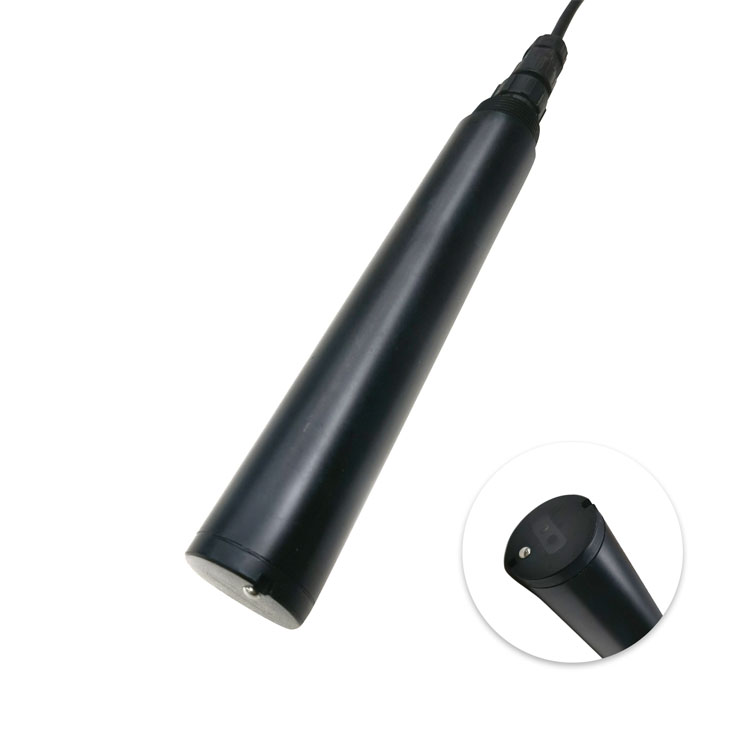
Keep optical particle measurements separate as well. The turbidity probe illustrated below can form part of a multi-parameter station, but turbidity does not supply the missing chemistry behind a TDS factor. Adding another channel should answer an additional site question rather than lend unjustified certainty to a calculated salt concentration.
Specify the quantity used by the operating decision. Conductivity is appropriate for an electrical trend or validated ionic carryover alarm. Use a defined TDS method when residue concentration is required, and a named salinity scale when salt-related operating limits are stated that way. Select hardware only after that distinction is settled.
Not automatically. A conductivity-derived display estimates TDS from a relationship that must suit the water. If a contract or reporting procedure requires an analytical TDS method, retain that method unless an alternative has been explicitly accepted. Agreement on one sample does not validate every later water composition.
Yes. Compare their temperature bases and conversion factors before altering calibration. The same 800 uS/cm input produces 400 mg/L at a factor of 0.50 and 560 mg/L at 0.70. Reconcile the definition of the reported value rather than forcing the EC channels apart to make the TDS displays agree.
No. Practical Salinity is a defined conductivity-based quantity, whereas g/kg denotes a mass ratio. Numerical similarities in some waters do not make the definitions identical. State the required scale and calculation in the project specification and preserve that label in exports and operator displays.
Provide the required reported quantity, units, water type, expected conductivity and temperature range, host interface and acceptance method. For derived TDS or salinity, include the required factor or algorithm and whether it will run in the sensor or host. This prevents an offer for EC hardware from being mistaken for a complete validated reporting method.
Not necessarily. One suitable conductivity channel and its temperature measurement can support several calculations. Independent measurements are needed when the project requires a quantity that the calculation cannot establish, or when separate verification is necessary. Confirm the ordered register set rather than assuming every display option is available on every model.
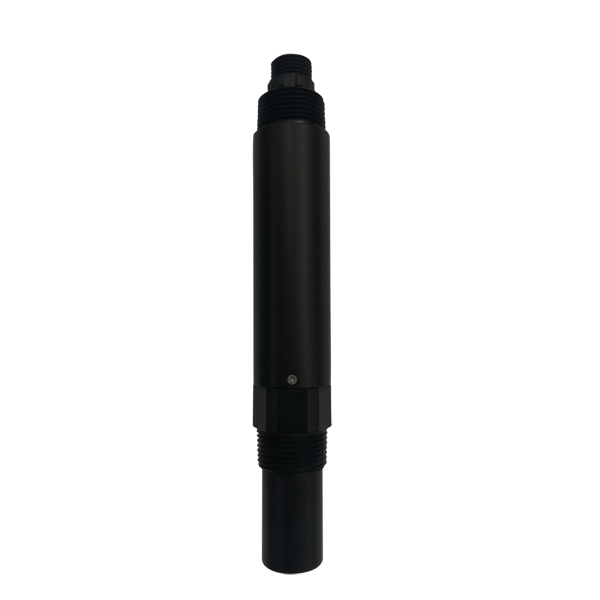
A TDS, conductivity and salinity specification is complete only when it defines the reported quantity and how it is obtained. Select the NiuBoL conductivity range for the water, document any conversion separately, and verify the units and calculations through to the final display. That gives engineers an interpretable measurement and gives purchasing a clear basis for comparing offers.
Prev:Conductivity Sensor Selection for Industrial Water, RO and Process Water
Next:Four-Electrode Conductivity Sensor Calibration: Confirm the Cell Design
Related recommendations
Sensors & Weather Stations Catalog
 Agriculture Sensors and Weather Stations Catalog-NiuBoL.pdf
Weather Stations Catalog-NiuBoL.pdf
Agriculture Sensors Catalog-NiuBoL.pdf
Water Quality Sensor Catalog-NiuBoL.pdf
Related products
 Combined air temperature and relative humidity sensor
 TDR Soil Moisture & Temperature Sensor for irrigation| RS485 |4-20mA| NBL-S-THR
 Soil pH sensor RS485 soil Testing instrument soil ph meter for agriculture |NBL-S-PH
 Wind Speed sensor Output Modbus/RS485/Analog/0-5V/4-20mA
 Tipping bucket rain gauge for weather monitoring auto rainfall sensor RS485/Outdoor/stainless steel
 Pyranometer Solar Radiation Sensor 4-20mA/RS485


Screenshot, WhatsApp to identify the QR code
WhatsApp number:+8615367865107
(Click on WhatsApp to copy and add friends)

